Quick Recipe Version (TL;DR)
Quick Ingredients
- 2 smoked ham hocks (about 1.2–1.5 kg total)
- 1 onion, 1 carrot, 1 leek or 2 celery sticks, 4 garlic cloves
- 2 bay leaves, 6 black peppercorns, 4 thyme sprigs
- 2 L cold water (about 8 cups)
- 75 g cornichons (about ½ cup), finely chopped
- 2 tbsp wholegrain mustard
- 1 tbsp yellow mustard seeds
- 2 tbsp cider vinegar
- 2 tbsp chopped fresh parsley
- Salt and black pepper to taste
- Optional: 3 gelatine leaves (about 6–7 g) if stock is not very gelatinous
Do This
- 1. Simmer ham hocks with onion, carrot, leek/celery, garlic, bay, peppercorns, thyme and 2 L water for 2.5–3 hours until the meat is very tender.
- 2. Lift out hocks and cool. Strain cooking liquid, discard solids, then boil the liquid hard until reduced to about 600 ml.
- 3. Toast mustard seeds in a dry pan 1–2 minutes. Add to hot stock and season carefully with salt and pepper; cool until just warm.
- 4. Pick all meat, skin and gelatinous bits from the hock bones. Shred into bite‑size pieces and discard excess fat and gristle.
- 5. In a bowl, mix shredded meat with chopped cornichons, parsley, wholegrain mustard, cider vinegar and a few spoonfuls of the reduced stock.
- 6. Line a 1-litre loaf tin with cling film. Pack in the meat mixture and press down firmly. Pour in the remaining stock to just cover, tapping to remove air bubbles.
- 7. Cover, weigh down lightly and chill at least 8 hours or overnight until well set. Slice and serve cold with extra pickles and mustard.
Why You’ll Love This Recipe
- Deep, smoky flavour from long-simmered ham hocks, balanced by bright, tangy pickles and mustard seeds.
- Beautiful, rustic slices that look impressive but are very forgiving and easy to make ahead.
- No fancy equipment required: a simple saucepan and loaf tin are all you need.
- Perfect for picnics, buffets, charcuterie boards or a smart starter with very little last-minute work.
Grocery List
- Produce: 1 onion, 1 carrot, 1 leek (or 2 celery sticks), 4 garlic cloves, fresh parsley, optional lemon for serving.
- Dairy: None required (serve with butter for toast if you like).
- Pantry: Smoked ham hocks, cornichons, wholegrain mustard, yellow mustard seeds, cider vinegar, bay leaves, dried thyme or fresh thyme sprigs, black peppercorns, salt, optional gelatine leaves, bread or crackers to serve.
Full Ingredients
For the Ham Hock Stock and Meat
- 2 smoked ham hocks (about 1.2–1.5 kg / 2.5–3.3 lb total)
- 1 medium onion, peeled and halved
- 1 medium carrot, scrubbed and halved (no need to peel)
- 1 leek (white and light green parts only), rinsed and halved lengthways
or 2 celery sticks, halved - 4 garlic cloves, lightly crushed
- 2 bay leaves (fresh or dried)
- 4 fresh thyme sprigs
or 1 tsp dried thyme - 6 whole black peppercorns
- 2 L cold water (about 8 cups), or enough to just cover the hocks in the pot
For the Terrine Mixture
- 75 g cornichons, finely chopped (about ½ cup)
- 2 tbsp wholegrain mustard
- 1 tbsp yellow mustard seeds
- 2 tbsp cider vinegar
- 2 tbsp finely chopped fresh flat-leaf parsley (plus a little extra for garnish)
- Freshly ground black pepper, to taste
- Fine sea salt or kosher salt, to taste (the hocks are salty, so you may need very little)
Optional (Gelatine Insurance)
- 3 gelatine leaves (about 6–7 g)
or 2¼ tsp powdered gelatine, only if your reduced stock is not very gelatinous
To Serve (Optional but Recommended)
- Extra cornichons or other small pickles
- Extra wholegrain or Dijon mustard
- Crusty bread, baguette, or toasted sourdough slices
- Lemon wedges, for squeezing over
Step-by-Step Instructions
Step 1: Simmer the Smoked Ham Hocks
Place the smoked ham hocks in a large, heavy-based pot. Add the onion, carrot, leek (or celery), garlic, bay leaves, thyme and peppercorns. Pour in 2 litres of cold water, or just enough to submerge the hocks by about 2–3 cm.
Bring the pot up to a gentle boil over medium-high heat. As it comes to a simmer, skim off any grey foam that rises to the surface with a spoon; this helps keep the stock clear. Once simmering, reduce the heat to low so the liquid just barely bubbles. Partially cover with a lid and cook for 2½–3 hours, turning the hocks once or twice, until the meat is very tender and pulls away easily from the bone.
Step 2: Strain and Reduce the Stock
When the hocks are tender, carefully lift them out of the pot with tongs and set them on a tray or large plate to cool until they are comfortable to handle. Strain the cooking liquid through a fine sieve into a clean saucepan, pressing gently on the vegetables to extract more flavor. Discard the vegetables, herbs and peppercorns.
Place the strained stock over medium-high heat and bring it to a strong boil. Let it bubble briskly, uncovered, until reduced to about 600 ml (roughly 2½ cups). This may take 25–35 minutes depending on your pan and heat. Skim off any fat or scum that gathers on the surface. You want a rich, clear, flavorful stock that is slightly syrupy and coats the back of a spoon.
Step 3: Toast the Mustard Seeds and Season the Stock
In a small dry frying pan over medium heat, toast the yellow mustard seeds for 1–2 minutes, shaking the pan often, until they smell fragrant and start to pop slightly. Be careful not to burn them. Tip the toasted seeds into the hot reduced stock.
Taste the stock carefully (it will be salty from the smoked hocks) and season with freshly ground black pepper and a small pinch of salt only if needed. Remember that the flavors become more pronounced when cold, so err on the side of slightly under-salted at this stage.
If you suspect your stock may not set firmly (for example, if the hocks were small or very lean), this is the moment to add gelatine: soften the leaves in cold water for 5 minutes, squeeze out excess water, then whisk into the hot stock until dissolved. If using powdered gelatine, sprinkle it over 3 tbsp cold water, let it bloom for 5 minutes, then stir into the hot stock until fully melted. Set the stock aside to cool until just warm, not hot, before assembling the terrine.
Step 4: Pick and Shred the Ham Hock Meat
While the stock is reducing and cooling, pick the meat. Once the hocks are cool enough to handle, use your fingers and a small knife to pull off all the meat, skin and gelatinous bits from the bones. Discard the bones, large pieces of fat, cartilage, and any unpleasantly chewy or sinewy parts.
Shred the meat into bite-sized chunks and strands, aiming for a rustic mix: some slightly larger pieces for texture and some finer shreds to help it hold together. Include some of the softer, gelatinous skin and connective tissue, as these pieces help the terrine set and add richness. Place all the shredded meat in a large mixing bowl.
Step 5: Combine with Pickles, Mustard and Herbs
Add the finely chopped cornichons, chopped parsley and wholegrain mustard to the bowl of shredded meat. Drizzle in the cider vinegar and add a few spoonfuls (3–4 tbsp) of the warm reduced stock. Season generously with black pepper and taste a little of the mixture: it should be well seasoned, slightly tangy and pleasantly smoky. Add a pinch of salt only if needed (remember the stock is also salty).
Use clean hands or a spoon to gently but thoroughly mix everything together, making sure the pickles, mustard and herbs are evenly distributed throughout the meat.
Step 6: Pack the Terrine and Add the Stock
Line a 1-litre (about 1 quart) loaf tin or terrine mold with a double layer of cling film, leaving plenty of overhang on all sides. This will make unmolding easier.
Spoon the meat mixture into the lined tin in layers, pressing down firmly with the back of a spoon or your fingertips to eliminate any large air pockets. Aim for an even, fairly compact layer from end to end. Once all the meat is in, tap the tin gently on the counter a few times to settle it.
Slowly pour the warm, seasoned stock (with its mustard seeds) over the packed meat. Pour in stages, pausing so the liquid can seep into gaps. You should use just enough stock to barely cover the top surface; you may have a little left over depending on your tin. Tap the tin again to release any trapped air bubbles, and, if needed, gently press the meat down to ensure it is fully submerged.
Step 7: Chill, Set, Unmold and Serve
Fold the overhanging cling film over the top to cover the surface. Place a piece of parchment or cling film directly onto the surface if any meat is poking through. For a neater, more compact terrine, set a small cutting board or a piece of cardboard wrapped in foil on top and weigh it down lightly with a few food cans. Do not make it so heavy that all the jelly squeezes out.
Refrigerate the terrine for at least 8 hours, or overnight, until completely cold and well set. To unmold, remove the weight, peel back the top cling film, and invert the tin onto a serving board or platter. Gently lift off the tin and peel away the cling film.
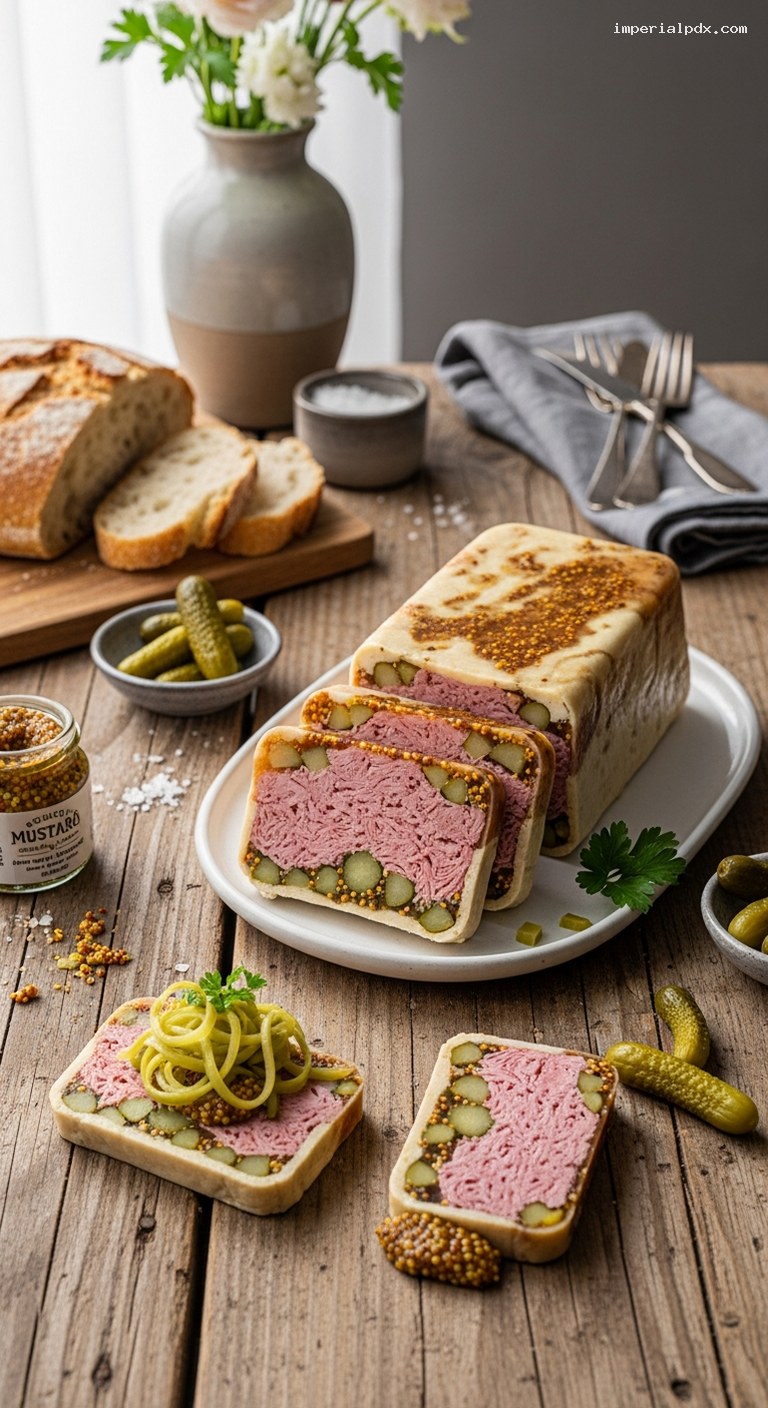
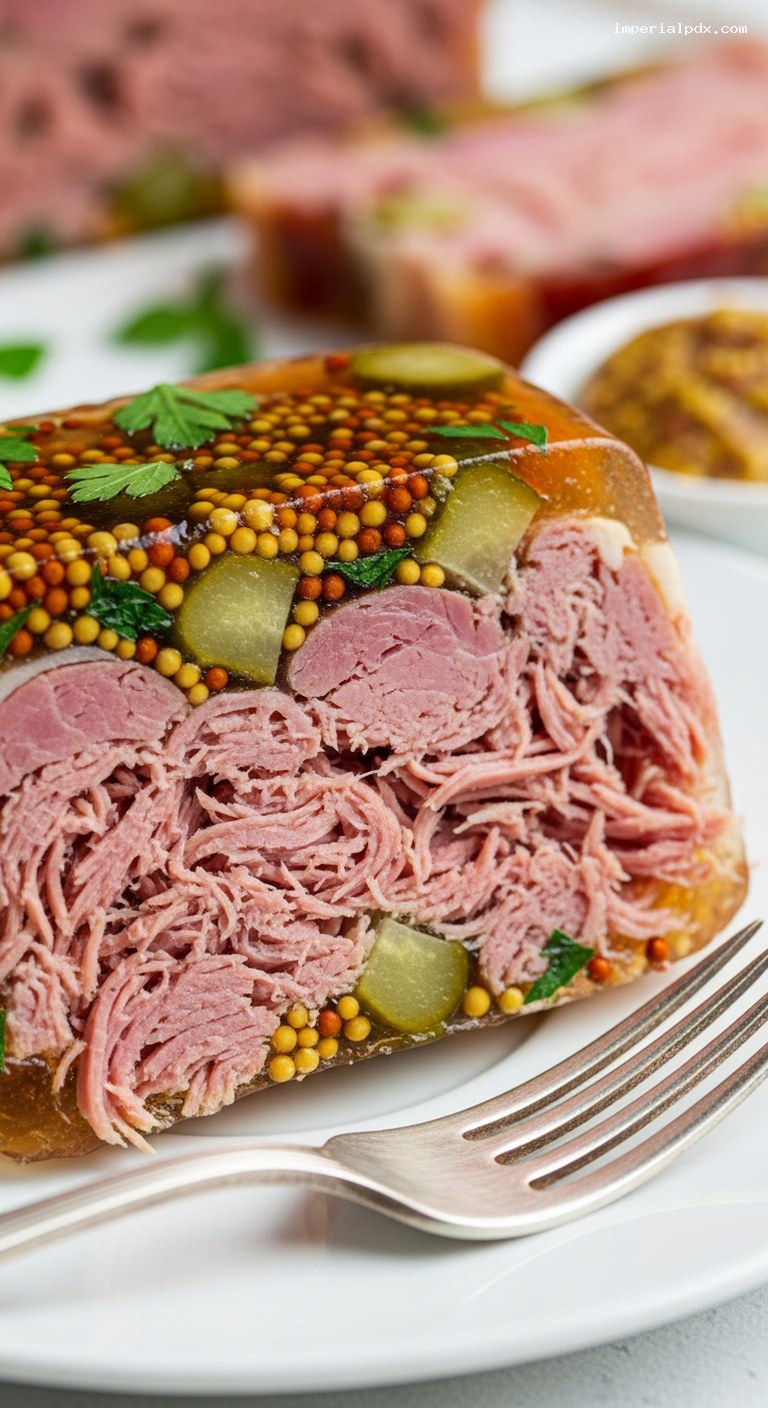
Use a long, sharp knife dipped briefly in hot water and wiped dry to slice the terrine into 1–1.5 cm (½ inch) slices. Serve well chilled or just cool, with extra cornichons, wholegrain mustard, crusty bread or toast, and a squeeze of lemon if you like. The slices should show pretty layers of pink shredded ham, green herbs, pickles and specks of mustard seed suspended in a clear, smoky jelly.
Pro Tips
- Check the jelly set before committing: Pour a teaspoon of the reduced stock onto a cold plate and chill it for 10 minutes; if it sets to a soft jelly, you are good. If it stays liquid, use the optional gelatine to ensure a firm but tender set.
- Season lightly when hot: Salt and smoke are more muted when warm and become more pronounced when chilled, so keep the stock and meat mixture just shy of perfectly seasoned while warm.
- Pack the meat firmly: Press the meat mixture down well in the tin and tap the mold as you pour in the stock. This prevents large air pockets and gives you clean, attractive slices.
- Slice when very cold: For sharp, tidy slices, cut the terrine straight from the fridge with a hot, dry knife, wiping the blade between slices.
- Use the leftovers cleverly: Offcuts and broken slices are wonderful chopped and folded into warm lentils, stirred through pea soup, or piled onto toast with extra mustard.
Variations
- Herb and Lemon Terrine: Add 1 tsp finely grated lemon zest and increase the parsley to 4 tbsp. You can also add 1 tbsp chopped fresh chives or tarragon for a brighter, more aromatic flavor.
- Apple and Mustard Terrine: Fold 1 small, tart apple (such as Granny Smith), finely diced, into the meat mixture along with the cornichons. The sweet-tart crunch works beautifully with the smoky ham and mustard.
- Chilli and Garlic Terrine: Add 1 finely chopped red chilli (deseeded if you prefer mild) and 1 extra clove of finely grated garlic to the meat mixture for a gentle heat and more punchy flavor.
Storage & Make-Ahead
This terrine is ideal for making ahead. Once fully set, keep it tightly wrapped in cling film or in an airtight container in the refrigerator for up to 4–5 days. For best texture and flavor, serve within 3 days. Slice only what you need and keep the rest covered to prevent it from drying out. Individual slices can be wrapped and refrigerated for 2–3 days. Freezing is possible, but the jelly can become slightly crumbly and release moisture when thawed, so it is not recommended if you want neat slices; if you do freeze, wrap well and use within 1 month, thawing overnight in the fridge. Always serve the terrine chilled, and return any leftovers to the fridge promptly.
Nutrition (per serving)
Approximate values per serving (1 of 8): 250 kcal; 23 g protein; 17 g fat; 6 g saturated fat; 2 g carbohydrates; 1 g sugars; 1 g fiber; 900 mg sodium. Values will vary depending on the exact fattiness and saltiness of your ham hocks and how much jelly you eat with each slice.