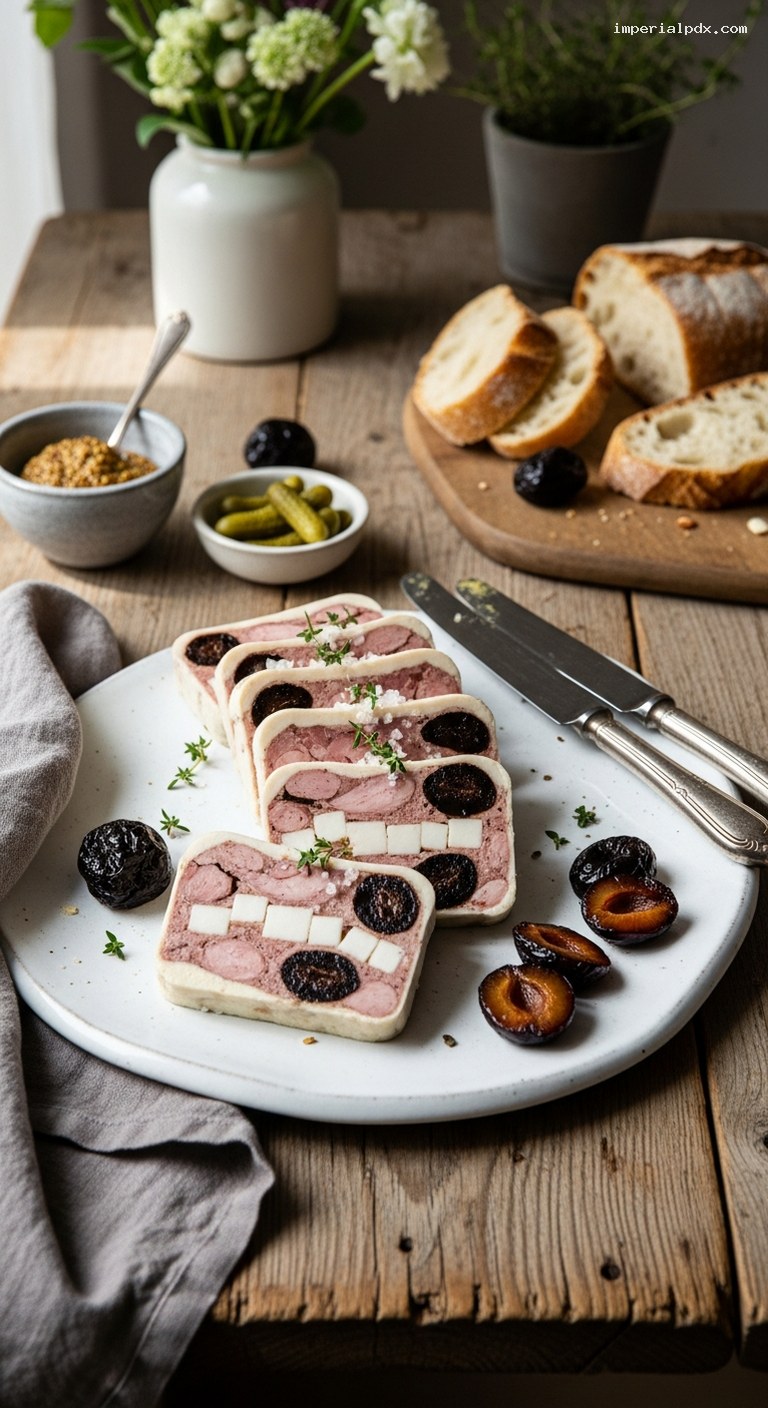
Quick Recipe Version (TL;DR)
Quick Ingredients
- 150 g (about 1 cup) pitted prunes
- 80 ml (1/3 cup) brandy or cognac
- 500 g (1.1 lb) boneless rabbit meat
- 250 g (9 oz) pork shoulder or pork belly
- 120 g (4.2 oz) pork back fat, diced small
- 2 tbsp finely chopped shallot, 2 garlic cloves
- 2 large eggs, 80 ml (1/3 cup) heavy cream
- 2 tsp kosher salt, 1 tsp black pepper
- 2 tsp fresh thyme, 2 tbsp chopped parsley
- 1/4 tsp each ground allspice and nutmeg
- 1 tsp Dijon mustard, 1 tsp sugar
- 1 tbsp olive oil or butter
- 1/4 cup fresh breadcrumbs (optional but helpful)
- Extra: bay leaves, cornichons, mustard, crusty bread for serving
Do This
- 1. Soak prunes in brandy 30–60 minutes. Preheat oven to 160°C / 325°F. Boil water for a bain-marie.
- 2. Gently sauté shallot and garlic in oil or butter until soft; cool completely.
- 3. Finely mince or coarsely grind rabbit and pork. In a bowl, mix meats with sautéed aromatics, eggs, cream, salt, pepper, herbs, spices, mustard, sugar, breadcrumbs, and 2 tbsp of the prune brandy.
- 4. Butter or line a 9 × 5 in (23 × 12 cm) loaf pan or terrine. Spread in half the meat mixture, then layer with half the drained prunes and half the diced pork fat. Repeat, finishing with meat on top.
- 5. Cover tightly with foil. Place pan in a larger roasting pan, pour in hot water to reach halfway up the sides, and bake 65–80 minutes until the center reaches 68–70°C / 155–160°F.
- 6. Remove from water bath. Carefully pour off excess fat if desired. Weight the top with a snug layer of foil and cans. Cool, then chill at least 8–12 hours.
- 7. Unmold, slice, and serve terrine slightly cool with cornichons, extra prunes, mustard, and crusty bread.
Why You’ll Love This Recipe
- Classic French bistro vibes at home: a beautiful sliceable terrine with a refined, old-world feel.
- Sweet-savory balance from brandy-soaked prunes, tender rabbit, and rich pork fat.
- Mostly make-ahead: prepare a day in advance and simply slice and serve when guests arrive.
- Surprisingly manageable: broken into clear steps with plenty of guidance for terrine beginners.
Grocery List
- Produce: Shallots, garlic, fresh thyme, fresh flat-leaf parsley, bay leaves (optional for garnish).
- Dairy: Heavy cream, large eggs, butter (or use olive oil).
- Pantry: Boneless rabbit meat, pork shoulder or pork belly, pork back fat (or very fatty bacon/salt pork), pitted prunes, brandy or cognac, olive oil, Dijon mustard, fresh breadcrumbs or dry (to make fresh), kosher salt, black pepper, ground allspice, ground nutmeg, sugar, cornichons, whole-grain mustard, crusty bread.
Full Ingredients
For the Brandy-Soaked Prunes
- 150 g pitted prunes (about 1 cup, packed)
- 80 ml brandy or cognac (1/3 cup)
For the Terrine Mixture
- 500 g boneless rabbit meat, preferably from legs and shoulders, all sinew removed (about 1.1 lb)
- 250 g pork shoulder or pork belly, trimmed of skin (about 9 oz)
- 120 g pork back fat, cut into 5 mm (1/4 in) dice (about 4.2 oz; or use very fatty bacon/salt pork, rind removed)
- 2 tbsp finely chopped shallot (about 1 large shallot)
- 2 garlic cloves, finely minced
- 1 tbsp olive oil or unsalted butter (for sautéing aromatics)
- 2 large eggs
- 80 ml heavy cream (1/3 cup)
- 2 tsp kosher salt (Diamond Crystal; use about 1 1/4 tsp if using Morton or fine sea salt)
- 1 tsp freshly ground black pepper
- 2 tsp fresh thyme leaves (or 1 tsp dried thyme)
- 2 tbsp finely chopped fresh flat-leaf parsley
- 1/4 tsp ground allspice
- 1/4 tsp freshly grated nutmeg
- 1 tsp Dijon mustard
- 1 tsp sugar
- 1/4 cup fresh breadcrumbs (from crustless white or country bread; lightly packed)
- 2 tbsp of the soaking brandy from the prunes (from above)
To Line the Terrine and Bake
- Soft butter, for greasing the pan (or neutral oil)
- 1 bay leaf, broken in half (optional, for the top)
- Foil or a terrine lid
- Hot tap water or recently boiled water (for the water bath)
For Serving (Optional but Recommended)
- Cornichons or small pickles
- Whole-grain or Dijon mustard
- Extra prunes, halved
- Crusty baguette or country bread, sliced
- A simple green salad with a sharp vinaigrette
Step-by-Step Instructions
Step 1: Soak the Prunes
Place the prunes in a small bowl and pour over the brandy or cognac. Stir to coat, then cover and let sit at room temperature for at least 30 minutes and up to 2 hours. This plumps the fruit and infuses it with flavor, so it stays moist and soft inside the terrine.
When you are ready to assemble the terrine, drain the prunes, reserving the soaking liquid. Pat the prunes dry with paper towels so they do not add excess moisture to the mixture. Measure out 2 tablespoons of the soaking brandy for the terrine mixture and set aside. The rest can be discarded or saved for another use (such as deglazing a pan).
Step 2: Prepare the Aromatics
In a small skillet, heat the olive oil or butter over medium-low heat. Add the finely chopped shallot and a pinch of salt. Cook gently for 3–4 minutes, stirring often, until the shallot is soft and translucent but not browned. Add the minced garlic and cook for 30–60 seconds more, just until fragrant.
Transfer the shallot and garlic to a plate or small bowl and let them cool completely. This step removes the harshness from the aromatics and prevents them from turning bitter in the terrine.
Step 3: Mince and Season the Meats
Using a sharp knife, finely chop the rabbit meat and pork shoulder into small pieces (or coarsely grind them using a meat grinder with a medium plate). Aim for a texture similar to coarse ground meat, not a smooth paste; this gives the terrine a pleasant, rustic bite.
Place the chopped rabbit and pork in a large mixing bowl. Add the cooled shallot and garlic, eggs, heavy cream, kosher salt, black pepper, thyme, parsley, allspice, nutmeg, Dijon mustard, sugar, breadcrumbs, and the reserved 2 tablespoons of prune brandy. Mix thoroughly with clean hands or a sturdy spatula until the ingredients are evenly distributed and the mixture feels slightly sticky and cohesive, 1–2 minutes. This helps the proteins bind so the terrine slices cleanly.
Step 4: Prepare the Terrine Mold and Diced Fat
Preheat your oven to 160°C / 325°F. Bring a kettle or large pot of water to a boil for the water bath. Grease a 9 × 5 in (23 × 12 cm) loaf pan or similar-sized terrine mold generously with soft butter. If you like, line the bottom and long sides with a strip of parchment paper, leaving an overhang to help with unmolding later.
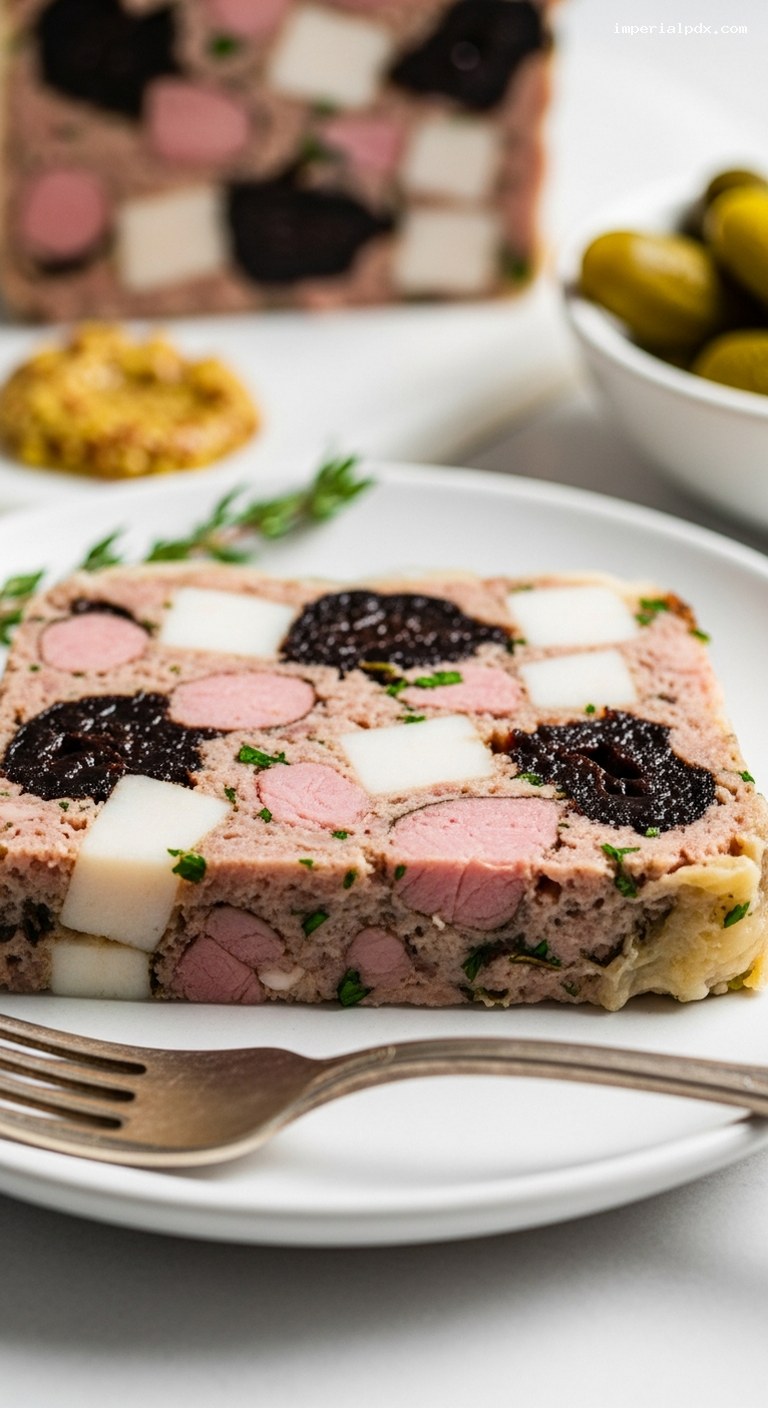
Make sure your pork back fat is cut into neat 5 mm (1/4 in) cubes. Pat them dry with paper towels so they stay distinct in the final slice. These little white cubes will create beautiful marbling and add juiciness.
Step 5: Layer the Terrine with Prunes and Pork Fat
Give the meat mixture a final stir. Spread half of it evenly into the prepared pan, pressing firmly into the corners and smoothing the surface. Take half of the diced pork back fat and scatter it evenly over the meat layer. Arrange half of the drained prunes in a single layer on top, spacing them fairly evenly so that each slice will have some sweet fruit.
Spread the remaining meat mixture over the top, pressing to eliminate air pockets and ensuring the prunes and fat are fully enclosed. Smooth the surface. Scatter the remaining diced pork fat over the top and gently press it into the surface so it is partly embedded. If using, press the pieces of bay leaf into the very top as a decorative touch (they can be removed before serving).
Step 6: Bake Gently in a Water Bath
Cover the terrine tightly with a piece of foil (or use the terrine lid). Place the pan inside a larger, deep roasting pan. Carefully pour hot water into the roasting pan to come about halfway up the sides of the terrine. This water bath ensures gentle, even cooking so the terrine stays tender.
Transfer the whole setup to the oven. Bake for 65–80 minutes, or until an instant-read thermometer inserted into the center reads 68–70°C / 155–160°F. Start checking at about 60 minutes. If you do not have a thermometer, the juices that bubble up at the edges should run clear, not pink.
Step 7: Press, Chill, and Serve
Carefully remove the terrine from the water bath and set it on a rack. Remove the foil. You will see some rendered fat on top; you can spoon off a few tablespoons if you prefer a lighter result, or leave it for richness and flavor.
To give the terrine its classic tight, sliceable texture, place a fresh piece of foil or parchment over the surface, then set a piece of cardboard or a small cutting board on top that fits just inside the rim of the pan. Weight it with a few cans or jars. Let it cool to room temperature like this, about 1–2 hours, then transfer (still weighted) to the refrigerator and chill for at least 8–12 hours, preferably overnight.
When ready to serve, remove the weights and run a thin knife around the inside of the pan. Invert onto a serving platter or board, lifting off the pan and peeling away parchment if used. Slice with a very sharp knife into 1–1.5 cm (about 1/2 in) slices. Serve slightly cool (not icy cold) with cornichons, mustard, extra prunes, and slices of crusty bread.
Pro Tips
- Chill thoroughly. The terrine needs an overnight rest to firm up and let flavors meld. Slicing too soon will give you crumbly, uneven slices.
- Use a thermometer. Gently cooking to 68–70°C / 155–160°F keeps the meat juicy while ensuring food safety. Overcooking will dry out the rabbit.
- Do not skip pressing. Weighing the terrine as it cools compacts the mixture, giving you those beautiful, clean layers of meat, fat, and prunes.
- Season boldly. Cold foods taste less salty, so the seasoning in the raw mixture should taste just a touch saltier than you think is necessary.
- Test a mini patty. For extra precision, pan-fry a teaspoon of the meat mixture and adjust seasoning before filling the mold.
Variations
- Country-style terrine: Replace half of the rabbit with dark-meat chicken thighs and add 2 tbsp roughly chopped pistachios for a more rustic, speckled interior.
- Bacon-wrapped terrine: Instead of just greasing the pan, line it with thin slices of streaky bacon, overlapping slightly. Let the bacon drape over the sides, then fold over the top before covering and baking.
- Holiday version: Add 1 tsp finely grated orange zest and a pinch of ground clove, and mix in a handful of chopped toasted hazelnuts along with the prunes for a festive flavor.
Storage & Make-Ahead
This terrine is ideal for making ahead. Once fully chilled and pressed, keep it well wrapped in the pan or unmold and wrap tightly in plastic wrap, then foil. It will keep in the refrigerator for 4–5 days and actually improves over the first 2 days as the flavors meld.
For longer storage, wrap slices individually and freeze for up to 1 month. Thaw overnight in the refrigerator, then serve slightly cool. Leftover slices are delicious as part of a ploughman-style lunch, tucked into sandwiches, or served with a simple salad.
Nutrition (per serving)
Approximate values per serving (1/8 of the terrine): about 450 calories; 28 g fat (10 g saturated); 15 g carbohydrates; 30 g protein; 1 g fiber; 1,000–1,200 mg sodium (highly dependent on salt brand and any added cured pork). These numbers are estimates and will vary with exact ingredients and portion sizes.