Quick Recipe Version (TL;DR)
Quick Ingredients
- 4 salmon steaks (about 170 g / 6 oz each, 2.5–3 cm thick)
- 1/2 tsp fine salt + 1/4 tsp black pepper
- 1 1/2 tbsp neutral oil (canola, vegetable, or avocado)
- 1/3 cup soy sauce (preferably low-sodium)
- 3 tbsp mirin
- 2 tbsp sake or dry sherry
- 2 tbsp brown sugar, packed
- 1 tsp rice vinegar
- 2 cloves garlic, minced
- 1 tbsp fresh ginger, finely grated
- 1 tsp cornstarch + 2 tsp water (slurry)
- 1 lb (450 g) baby bok choy
- 1 tbsp soy sauce (for bok choy)
- 2 tsp toasted sesame oil (for bok choy)
- 2 scallions, thinly sliced
- 1 tbsp toasted sesame seeds
Do This
- 1. Pat salmon dry, season both sides with salt and pepper, and let it sit at room temperature while you make the sauce.
- 2. Whisk soy sauce, mirin, sake, brown sugar, rice vinegar, garlic, and ginger in a small saucepan. Simmer 3–4 minutes, then stir in cornstarch slurry and cook until glossy and thickened. Set aside.
- 3. Halve baby bok choy lengthwise, rinse well. Place in a lidded skillet or pan with 2 tbsp water, 1 tbsp soy sauce, and 2 tsp sesame oil. Cover and steam 4–5 minutes until crisp-tender.
- 4. Heat neutral oil in a large skillet over medium-high. Sear salmon steaks 3–4 minutes per side until deep golden and just cooked through (internal temperature about 50–52 °C / 122–125 °F).
- 5. Turn heat to low, pour most of the teriyaki sauce over the salmon, and spoon it over the fish for 1–2 minutes until the steaks are lacquered and sticky.
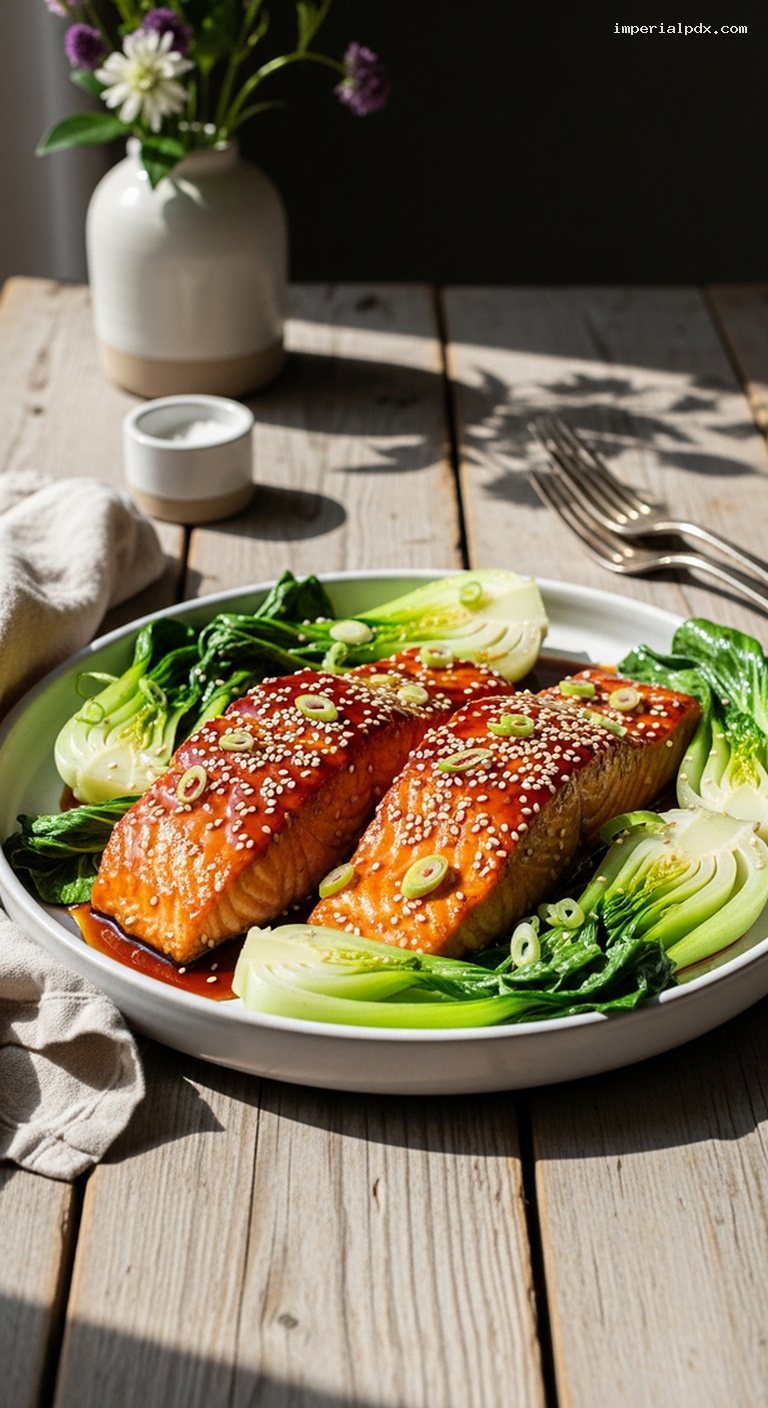
- 6. Serve salmon over steamed bok choy, drizzle with remaining sauce, and finish with toasted sesame seeds and sliced scallions.
Why You’ll Love This Recipe
- Deeply caramelized, restaurant-style teriyaki glaze made with simple pantry ingredients.
- Thick, juicy salmon steaks that stay moist and flaky with a gorgeous golden crust.
- Light, fresh balance from steamed baby bok choy, scallions, and toasted sesame.
- Ready in about 30 minutes, but impressive enough for a dinner party.
Grocery List
- Produce: Baby bok choy, garlic, fresh ginger, scallions (green onions), optional lime or lemon for serving.
- Dairy: None required (optional: a small knob of unsalted butter to enrich the sauce).
- Pantry: Salmon steaks, soy sauce, mirin, sake or dry sherry, brown sugar, rice vinegar, neutral cooking oil, toasted sesame oil, cornstarch, toasted sesame seeds, salt, black pepper.
Full Ingredients
For the Salmon
- 4 salmon steaks, skin-on, about 2.5–3 cm (1–1 1/4 inch) thick and 170 g (6 oz) each
- 1/2 tsp fine sea salt
- 1/4 tsp freshly ground black pepper
- 1 1/2 tbsp neutral oil (such as canola, vegetable, or avocado oil)
For the Teriyaki Sauce
- 1/3 cup (80 ml) soy sauce (low-sodium if possible)
- 3 tbsp mirin
- 2 tbsp sake or dry sherry
- 2 tbsp packed light brown sugar
- 1 tsp rice vinegar
- 2 cloves garlic, very finely minced
- 1 tbsp fresh ginger, finely grated
- 1 tsp cornstarch
- 2 tsp cold water (to mix with cornstarch)
- Optional: 1 tsp toasted sesame oil or 1 tsp unsalted butter for a richer finish
For the Bok Choy & Garnish
- 1 lb (450 g) baby bok choy (about 4–6 small heads), halved lengthwise
- 2 tbsp water
- 1 tbsp soy sauce
- 2 tsp toasted sesame oil
- 2 scallions (green onions), thinly sliced on the diagonal
- 1 tbsp toasted sesame seeds (white, black, or a mix)
- Optional: Lime or lemon wedges, for serving
Step-by-Step Instructions
Step 1: Prep the Salmon and Vegetables
Remove the salmon steaks from the refrigerator 15–20 minutes before cooking so they come closer to room temperature; this helps them cook more evenly. Pat each steak very dry on all sides with paper towels. Sprinkle both sides with the salt and pepper and gently press the seasoning into the surface. Set aside while you prepare the sauce and vegetables.
Trim the very end of the bok choy stems if they look dry or browned, but leave enough stem so the leaves stay attached. Slice each head lengthwise into halves (or quarters if very large). Rinse thoroughly under cold running water, fanning out the leaves to remove any grit near the base. Drain well and set aside.
Step 2: Make the Teriyaki Sauce Base
In a small saucepan, whisk together the soy sauce, mirin, sake (or dry sherry), brown sugar, rice vinegar, minced garlic, and grated ginger. Place the pan over medium heat and bring to a gentle simmer, stirring occasionally to dissolve the sugar. Once it reaches a simmer, cook for 3–4 minutes; the sauce should smell aromatic and slightly thicken as some of the liquid evaporates.
In a small bowl, stir the cornstarch and cold water together until completely smooth. Whisk this slurry into the simmering sauce. Continue to cook for 1–2 more minutes, stirring constantly, until the sauce is glossy and thick enough to lightly coat the back of a spoon. If using, stir in the sesame oil or butter off the heat for extra richness. Remove from heat and set aside; the sauce will thicken a bit more as it cools.
Step 3: Steam the Bok Choy
While the sauce is simmering, place a large lidded skillet or wide saucepan over medium heat. Add the 2 tbsp water, 1 tbsp soy sauce, and 2 tsp toasted sesame oil. Arrange the bok choy halves cut-side down in a single layer as much as possible. Once the liquid begins to steam, cover the pan with a tight-fitting lid.
Steam the bok choy for 4–5 minutes, depending on size, until the stems are just tender when pierced with the tip of a knife but still have a slight bite, and the leaves are bright green and wilted. Remove from heat and keep covered to stay warm, or transfer to a warm plate and tent loosely with foil while you cook the salmon.
Step 4: Sear the Salmon Steaks
Heat a large heavy skillet (cast iron or stainless steel works well) over medium-high heat. When the pan is hot, add the neutral oil and swirl to coat the bottom. Carefully place the salmon steaks in the pan, leaving space between them. You should hear a clear sizzle when the fish hits the pan; if not, let the pan heat a little longer next time.
Cook the salmon without moving it for 3–4 minutes, until the bottom is well browned and releases easily from the pan. Gently flip each steak using a spatula and tongs, and cook for another 3–4 minutes on the second side. The salmon is done when the outside is deep golden and the center is just opaque and flakes easily, with an internal temperature around 50–52 °C (122–125 °F). Adjust the heat down slightly if the pan starts to smoke heavily.
Step 5: Glaze the Salmon with Teriyaki Sauce
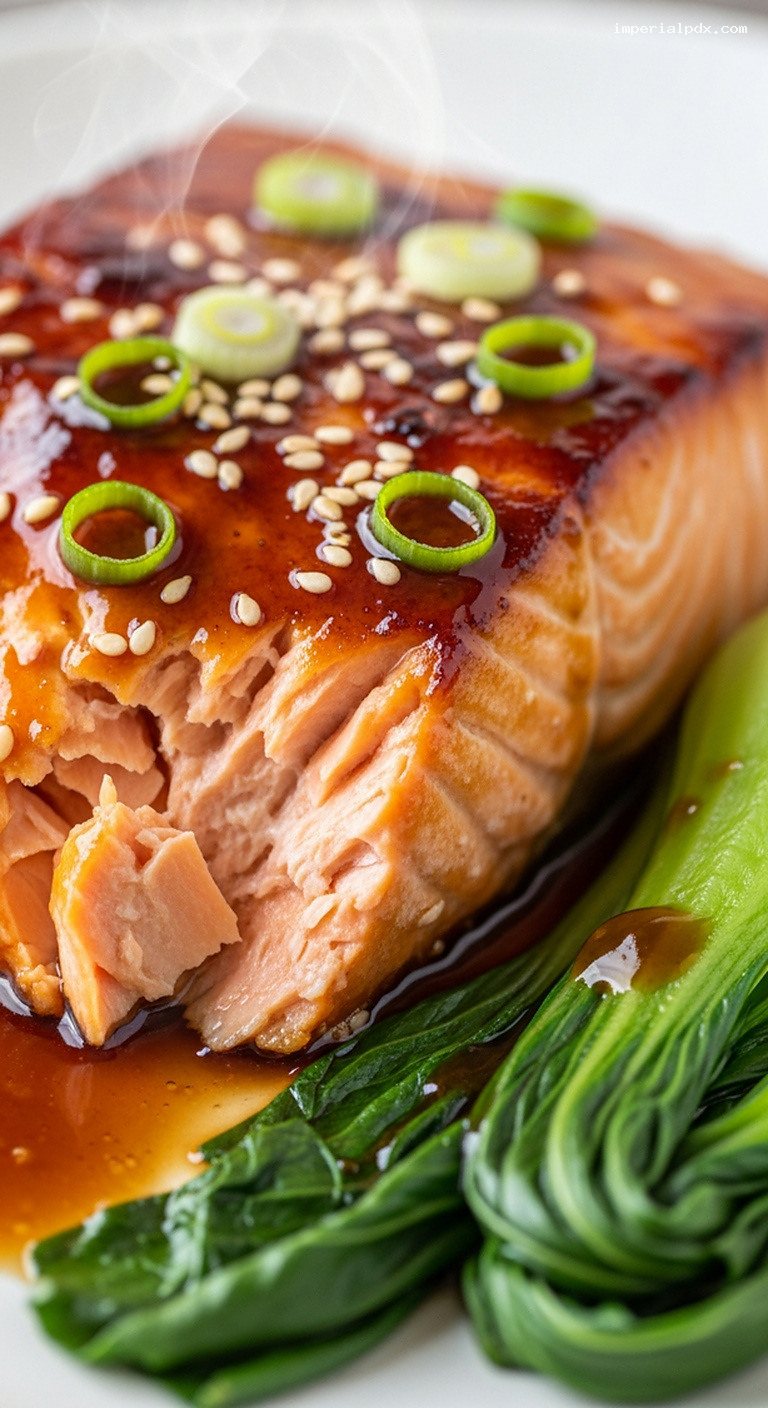
Reduce the heat to low. Pour about two-thirds of the prepared teriyaki sauce into the skillet around and over the salmon steaks. Tilt the pan and use a spoon to continuously baste the hot sauce over the top of each piece for 1–2 minutes. The sauce should bubble gently, thicken further, and cling to the salmon, forming a shiny, sticky glaze.
Turn each steak once more, if desired, to coat both sides fully in the sauce. Be careful not to overcook the fish at this point; the goal is just to lacquer the surface, not to continue cooking it for long. When the salmon looks well glazed and the sauce is syrupy, remove the pan from the heat. Reserve the remaining one-third of the sauce in the saucepan for serving at the table.
Step 6: Plate the Bok Choy and Salmon
To serve, arrange the steamed bok choy on a warm serving platter or individual plates, fanning the halves so the pale stems and dark green leaves are both visible. Spoon a small amount of the pan liquid from the bok choy over the vegetables for extra flavor.
Place a glazed salmon steak on top or alongside the bok choy on each plate. Drizzle a little of the reserved teriyaki sauce from the saucepan over the salmon and around the plate for color and extra flavor. The contrast of glossy dark sauce, rosy salmon, and bright green bok choy is part of the appeal, so do not drown everything; a light drizzle goes a long way.
Step 7: Finish with Garnishes and Serve
Sprinkle the toasted sesame seeds evenly over the salmon steaks and bok choy. Scatter the sliced scallions on top, focusing some on the fish and some on the vegetables for a fresh, crisp bite in every forkful. If you like a hint of citrus, serve with lime or lemon wedges on the side so people can squeeze a little juice over their plates.
Serve immediately while the salmon is hot and the glaze is still slightly sticky. This dish is excellent on its own for a lighter meal, or you can add steamed rice to soak up the extra teriyaki sauce.
Pro Tips
- Dry your salmon well: Patting the salmon very dry before searing is key to getting a deep golden crust instead of steaming in its own moisture.
- Do not rush the sauce: Let the teriyaki simmer and reduce before adding the cornstarch; this builds flavor and prevents a raw cornstarch taste.
- Control the heat when glazing: Glaze on low heat so the natural sugars in the sauce thicken and shine without burning.
- Cook salmon just to medium: Pull the fish from the heat when the center is still slightly translucent; it will finish cooking in the hot glaze and stay juicier.
- Toast your sesame seeds: If your sesame seeds are not pre-toasted, briefly toast them in a dry skillet over low heat until fragrant and lightly golden for much better flavor.
Variations
- Teriyaki Salmon Fillets: Use skin-on fillets instead of steaks. Cook 3–4 minutes skin-side down, then flip for 2–3 minutes, adjusting time based on thickness.
- Spicy Salmon Teriyaki: Add 1–2 tsp of sriracha or a pinch of red pepper flakes to the sauce for a gentle heat that balances the sweetness.
- Vegetable Swap: Replace the bok choy with steamed broccolini, green beans, or a mix of snap peas and carrots for a different but equally vibrant side.
Storage & Make-Ahead
The teriyaki sauce can be made up to 3 days in advance. Store it in an airtight container in the refrigerator; rewarm gently over low heat, adding a teaspoon of water if it becomes too thick. Cooked salmon teriyaki and bok choy keep well in an airtight container in the refrigerator for up to 2 days. To reheat, place the salmon and bok choy in a covered, oven-safe dish and warm in a 160 °C (325 °F) oven for about 10 minutes, or until just heated through. Alternatively, reheat gently in a covered skillet over low heat with a splash of water. Avoid microwaving at high power, which can dry out the salmon. This recipe is best cooked fresh for ideal texture, but leftovers make an excellent next-day lunch over rice.
Nutrition (per serving)
Approximate values per serving (1 salmon steak with sauce and bok choy): about 520 calories; 33 g protein; 30 g fat (6 g saturated); 16 g carbohydrates; 1 g fiber; 11 g sugars; 980 mg sodium. Values will vary based on exact salmon size, brand of soy sauce, and whether you use all of the sauce.