Quick Recipe Version (TL;DR)
Quick Ingredients
- 4 skinless salmon fillets (about 150 g / 5–6 oz each)
- 2 baby fennel bulbs, thinly sliced (fronds reserved)
- 1 small lemon, thinly sliced, plus extra wedges
- 2 garlic cloves, thinly sliced or minced
- 4 tbsp dry white wine
- 2 tbsp extra-virgin olive oil
- 2 tbsp unsalted butter, cut into small pieces
- 2 tbsp chopped fresh herbs (dill, parsley, tarragon, or chives)
- 1 kg small new potatoes, scrubbed
- 3 tbsp unsalted butter
- 2 tbsp chopped fresh parsley or chives
- Fine sea salt and freshly ground black pepper
- Parchment paper (4 large sheets)
Do This
- 1. Heat oven to 200°C / 400°F. Cut 4 large heart-shaped sheets of parchment; set on a baking tray.
- 2. Slice fennel, lemon, and garlic; chop herbs. Pat salmon dry and season both sides with salt and pepper.
- 3. On each parchment, layer fennel and lemon, sprinkle garlic, place a salmon fillet on top, then drizzle with olive oil and 1 tbsp wine.
- 4. Dot salmon with butter pieces and herbs. Fold parchment over and crimp edges tightly to seal each packet.
- 5. Bake 12–15 minutes, until salmon is just opaque and flakes easily. Rest packets 2–3 minutes before opening.
- 6. While salmon bakes, boil new potatoes in salted water 12–15 minutes, drain, then toss with butter, herbs, salt, and pepper. Serve alongside the salmon and spoon over the lemon-wine juices.
Why You’ll Love This Recipe
- Restaurant-style salmon with almost no mess, thanks to the parchment packets.
- White wine, lemon, fennel, and herbs create a fragrant, ready-made sauce inside each parcel.
- Buttered new potatoes make this a complete, comforting meal with simple ingredients.
- Perfect for entertaining: packets can be assembled ahead and baked just before serving.
Grocery List
- Produce: Baby fennel bulbs, lemon, garlic, fresh herbs (dill, flat-leaf parsley, tarragon, chives), new potatoes, optional fresh fennel fronds.
- Dairy: Unsalted butter.
- Pantry: Skinless salmon fillets, extra-virgin olive oil, dry white wine, fine sea salt, freshly ground black pepper, flaky sea salt (optional), parchment paper.
Full Ingredients
For the Salmon en Papillote
- 4 skinless salmon fillets (about 150 g / 5–6 oz each), pin bones removed
- 2 small baby fennel bulbs (about 200 g total), fronds reserved, bulbs trimmed and very thinly sliced
- 1 small lemon, very thinly sliced, plus extra lemon wedges for serving
- 2 garlic cloves, thinly sliced or minced
- 4 tbsp dry white wine (such as Sauvignon Blanc or Pinot Grigio)
- 2 tbsp extra-virgin olive oil
- 2 tbsp unsalted butter, cut into 8 small pieces (2 per fillet)
- 2 tbsp finely chopped fresh herbs (such as dill, flat-leaf parsley, tarragon, or chives), plus extra for garnish
- 3/4 tsp fine sea salt, divided (about 1/4 tsp per fillet, plus a pinch for the fennel)
- 1/2 tsp freshly ground black pepper, divided
- 4 large sheets parchment paper (about 30 x 40 cm / 12 x 16 in)
For the Buttered New Potatoes
- 1 kg small new potatoes, well scrubbed (no need to peel)
- 3 tbsp unsalted butter
- 2 tbsp finely chopped fresh parsley or chives
- 1/2 tsp fine sea salt, or to taste
- Freshly ground black pepper, to taste
To Serve (Optional)
- Extra lemon wedges
- Chopped fennel fronds
- Flaky sea salt
Step-by-Step Instructions
Step 1: Preheat the Oven and Prepare the Parchment
Preheat your oven to 200°C / 400°F (or 180°C fan). Line a large baking tray with one sheet of parchment to catch any drips, if you like.
Cut 4 large sheets of parchment paper, each about 30 x 40 cm (12 x 16 in). To make classic en papillote hearts, fold each sheet in half, then cut a large half-heart shape, starting at the folded edge. Open the paper out to reveal a heart. This shape makes it easy to seal the packets tightly so the steam stays inside.
Step 2: Prep the Fennel, Lemon, Garlic, and Herbs
Trim the fennel bulbs: remove any tough outer layers, cut off the stalks (reserve any feathery fronds for garnish), and slice the bulbs very thinly from top to bottom. The thinner the fennel, the more tender and sweet it will be after steaming.
Slice the lemon into very thin rounds, discarding any seeds. Thinly slice or mince the garlic cloves. Finely chop your chosen fresh herbs (dill, parsley, tarragon, chives, or a mixture) and set aside.
Toss the sliced fennel in a small bowl with a small pinch of salt and pepper and about 1 tsp olive oil taken from the 2 tbsp measured for the recipe. This light seasoning helps it soften and flavor the salmon evenly.
Step 3: Season the Salmon Fillets
Pat the salmon fillets dry on all sides with paper towels. Dry fish browns and steams more nicely, and it helps the seasoning stick.
Sprinkle both sides of each fillet with about 1/4 tsp salt and a pinch of black pepper. If any fillets are very thick at one end, you can lightly press them to even out the thickness a little, which helps them cook more evenly.
Step 4: Assemble the Papillote Packets
Lay one parchment heart flat on your work surface. On one half of the heart (next to the center fold), place a small bed of fennel slices, using about one quarter of the fennel. Top with 2–3 lemon slices and a few slices of garlic.
Place one seasoned salmon fillet on top of the fennel and lemon. Drizzle with about 1/2 tbsp olive oil and 1 tbsp white wine. Dot the fillet with 2 small pieces of butter, then sprinkle with about 1/2 tbsp chopped fresh herbs. Add a few pieces of fennel frond if you have them.
Fold the other half of the parchment over the salmon to close the heart. Starting at the top rounded edge, make small tight folds (about 1–2 cm / 1/2 in deep), overlapping each fold over the last as you work your way around the edge to the point. Press firmly as you go to seal. The goal is a tight, crimped seam with no gaps, so steam cannot escape.
Repeat with the remaining parchment hearts and ingredients to make four packets, then place them on the baking tray.
Step 5: Bake the Salmon en Papillote
Place the tray in the preheated oven and bake for 12–15 minutes, depending on the thickness of your salmon. Thinner fillets (about 2 cm / 3/4 in thick) will be closer to 12 minutes; very thick fillets may need 15 minutes.
The packets will puff up as the steam builds. Remove the tray from the oven and let the packets rest for 2–3 minutes. This allows the juices to settle and finish cooking the salmon gently.
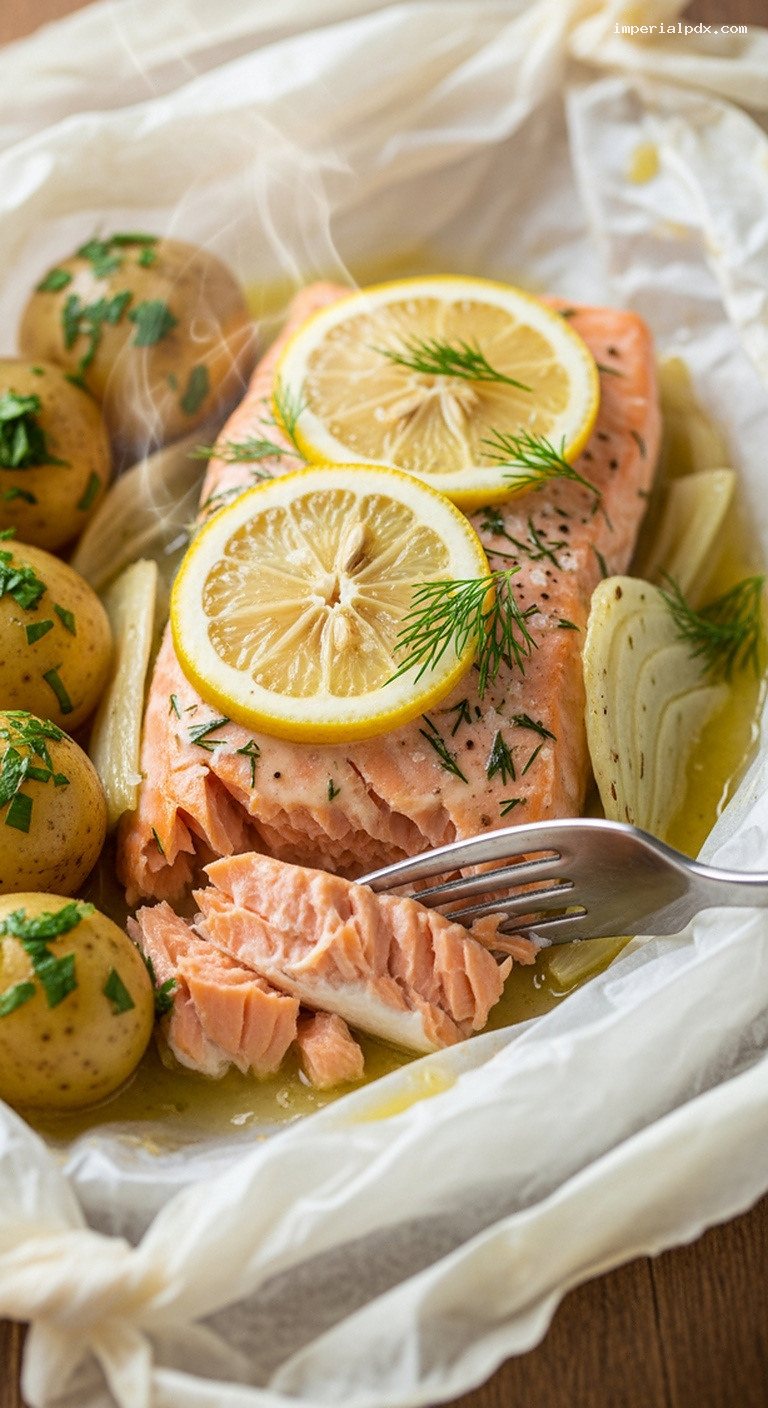
To check for doneness, carefully open one packet (watch for hot steam). The salmon should be just opaque and flake easily with a fork. If you use a thermometer, aim for about 50–52°C / 122–125°F in the thickest part for moist, medium salmon.
Step 6: Cook and Butter the New Potatoes
While the salmon bakes, place the scrubbed new potatoes in a large saucepan and cover with cold water by about 2.5 cm / 1 in. Add a generous pinch of salt.
Bring to a boil over medium-high heat, then reduce to a gentle boil and cook for 12–15 minutes, or until the potatoes are just tender when pierced with a knife.
Drain the potatoes well in a colander, then return them to the warm pan. Add 3 tbsp butter, the 2 tbsp chopped parsley or chives, and 1/2 tsp salt. Gently shake the pan or stir to coat the potatoes in the melted butter and herbs. Season with black pepper and more salt to taste.
Step 7: Plate and Serve
You can either serve the salmon directly in the parchment packets or transfer to plates:
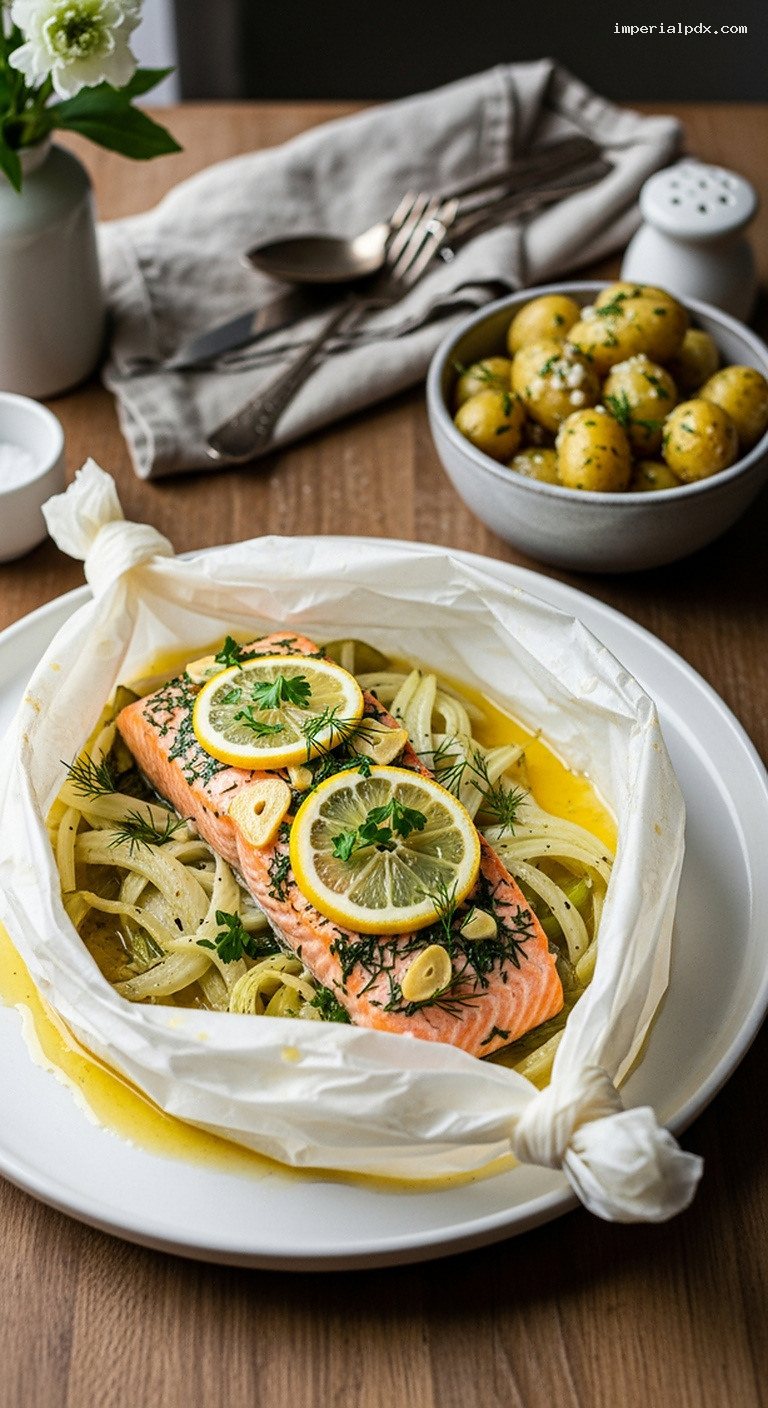
- For table-side drama: Place each sealed packet on a plate. At the table, carefully cut the top open with scissors or a small knife, pulling back the parchment to reveal the salmon, fennel, and fragrant lemon-wine sauce.
- For plated presentation: Open each packet in the kitchen, gently lift the salmon onto a warm plate, and spoon the fennel, lemon slices, and juices over the top.
Add a generous spoonful of the buttered new potatoes to each plate. Garnish with extra chopped herbs, fennel fronds, and a sprinkle of flaky sea salt if you like. Serve immediately with lemon wedges for squeezing over the salmon.
Pro Tips
- Slice fennel and lemon very thinly. This ensures they soften fully in the short steaming time and infuse the salmon with sweet, aromatic flavor.
- Seal the packets tightly. Overlapping folds around the edge are key; any gaps will let steam escape and dry out the fish.
- Do not overcook the salmon. It will continue to cook slightly in the hot steam after you remove it from the oven, so err on the side of just-done.
- Use a dry, crisp white wine. Wines like Sauvignon Blanc or Pinot Grigio keep the sauce bright and clean-tasting; avoid very sweet wines.
- Size the potatoes evenly. If some new potatoes are much larger, cut them in half so they cook at the same rate as the smaller ones.
Variations
- Mediterranean-style papillote: Swap the fennel for a mix of cherry tomatoes, thinly sliced red onion, and a few pitted olives. Add a pinch of dried oregano and a few capers along with the herbs.
- Creamy lemon version: Add 1 tsp of heavy cream or crème fraîche on top of each salmon fillet before sealing the packets, and increase the butter in the packets to 3 tbsp total for a richer sauce.
- Spring vegetable swap: Replace fennel with thin spears of asparagus and ribbons of zucchini, keeping the lemon and herbs for a fresh, green twist.
Storage & Make-Ahead
Make-ahead: You can assemble the parchment packets (with salmon, fennel, lemon, garlic, wine, oil, butter, and herbs) up to 6 hours in advance. Keep them on a tray in the refrigerator, well sealed, then bake straight from the fridge, adding 1–2 extra minutes if needed.
You can also slice the fennel, lemon, and garlic, and chop the herbs a day ahead. Store each component in separate airtight containers in the fridge.
Storage: Salmon en papillote is best enjoyed fresh, but leftovers will keep in an airtight container in the refrigerator for up to 2 days. Store the salmon and vegetables with their juices, and the potatoes separately. Reheat gently in a low oven (about 150°C / 300°F) until just warmed through, or enjoy the salmon cold flaked over a salad and the potatoes as a chilled side.
Nutrition (per serving)
Approximate values for 1 serving (1 salmon fillet with fennel-lemon sauce and about one quarter of the potatoes): about 630 kcal, 39 g protein, 31 g fat (of which about 11 g saturated), 50 g carbohydrates, 3 g fiber, and 600–700 mg sodium, depending on how much salt you add at the table.