Quick Recipe Version (TL;DR)
Quick Ingredients
- 200 g granulated sugar (1 cup)
- 90 g salted butter (6 tbsp), plus extra for crumbs if desired
- 600 ml heavy cream (2 1/2 cups), divided
- 500 ml whole milk (2 cups)
- 4 large egg yolks
- 80 g granulated sugar (about 1/3 cup)
- 30 g cornstarch (1/4 cup)
- 120 g sablé or shortbread cookies (about 10–12 cookies)
- Vanilla extract, powdered sugar, fleur de sel
Do This
- 1. Cook sugar and water to a deep amber, then carefully whisk in salted butter and 240 ml (1 cup) warm cream to make caramel; season with vanilla and fleur de sel, let cool.
- 2. For pastry cream, heat milk. In a bowl, whisk yolks, sugar, and cornstarch, then temper with hot milk and cook until thick. Whisk in 240 ml (1 cup) of the cooled salted-butter caramel. Chill completely.
- 3. Crush sablé cookies into coarse crumbs; optionally toss with a little melted butter for richer, sandier crumbs.
- 4. Whip 120 ml (1/2 cup) cream to soft peaks and fold gently into the chilled caramel pastry cream to make a light caramel cream.
- 5. Whip remaining 240 ml (1 cup) cream with powdered sugar and vanilla to soft-medium peaks for the topping.
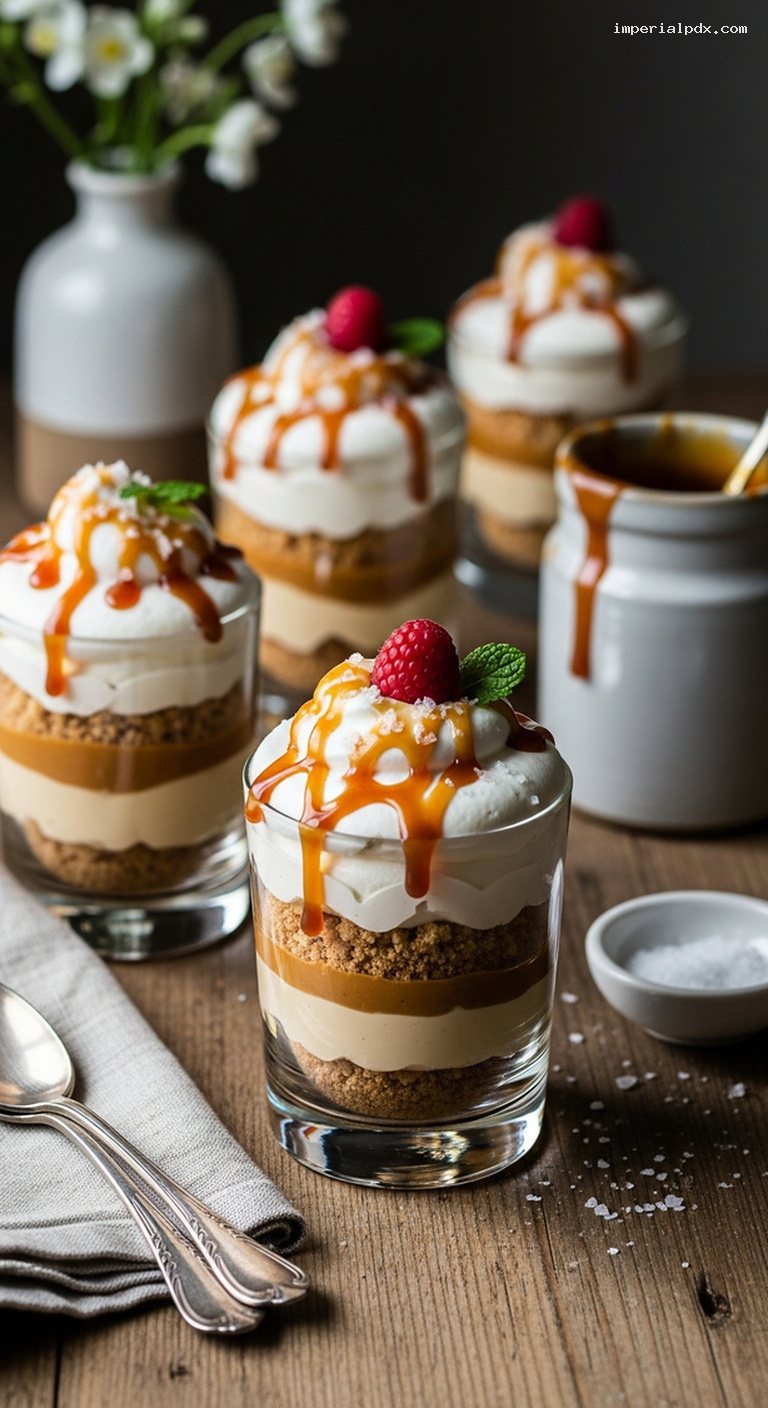
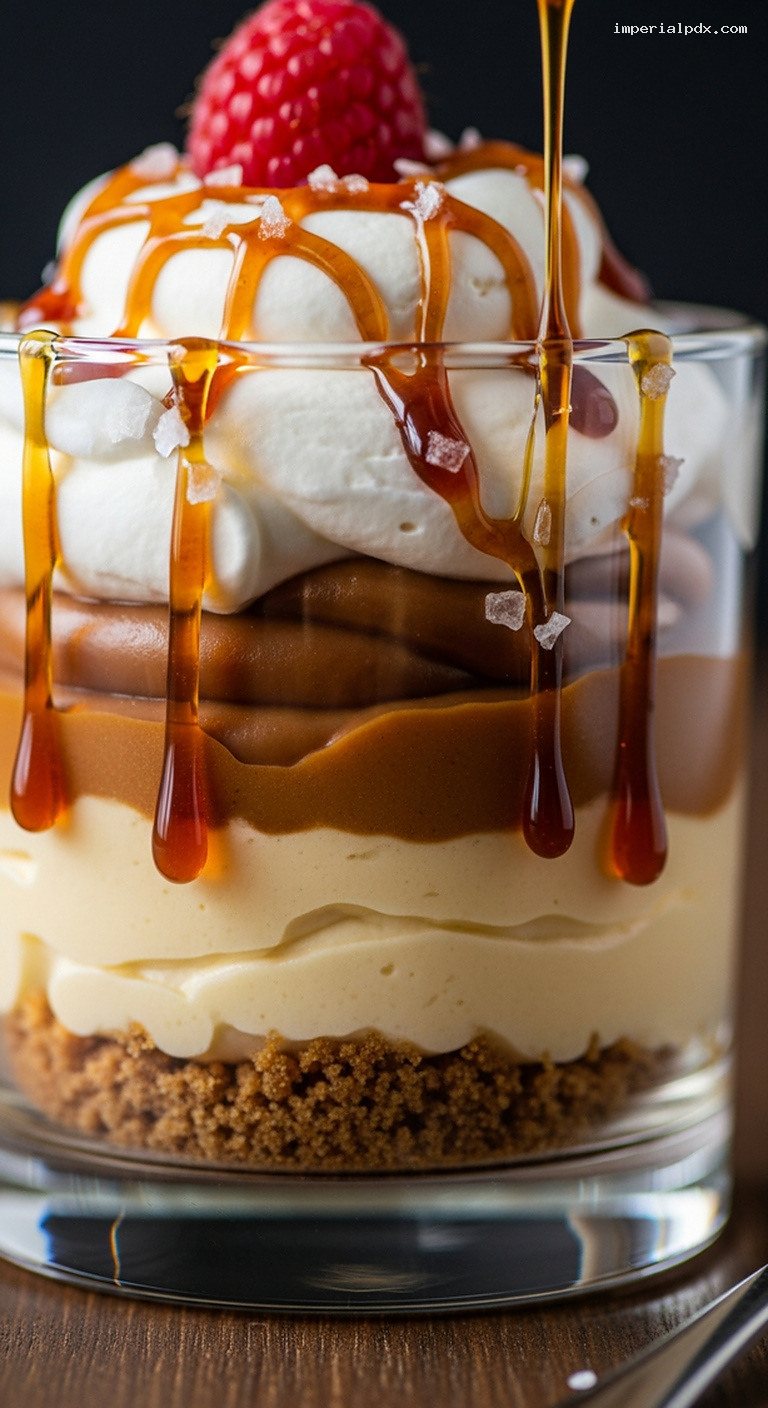
- 6. Layer glasses: cookie crumbs, caramel cream, more crumbs, then a generous swirl of whipped cream. Drizzle with leftover caramel and sprinkle fleur de sel.
- 7. Chill 30–60 minutes for the layers to settle, then serve cold.
Why You’ll Love This Recipe
- Elegant French-style verrines that look restaurant-fancy but are very achievable for home cooks.
- Deep, buttery salted caramel flavor balanced by light whipped cream and crunchy sablé crumbs.
- Great make-ahead dessert: prepare components in advance, assemble before serving.
- Flexible and forgiving: use store-bought cookies and adjust sweetness and salt to your taste.
Grocery List
- Produce: Optional: fresh raspberries, strawberries, or a few mint leaves for garnish.
- Dairy: Whole milk, heavy cream, salted butter, eggs.
- Pantry: Granulated sugar, powdered sugar, cornstarch, vanilla extract, sablé or shortbread cookies, fleur de sel or fine sea salt, water.
Full Ingredients
For the Salted-Butter Caramel Sauce
- 200 g granulated sugar (1 cup)
- 60 ml water (1/4 cup)
- 90 g salted butter, cut into cubes (6 tbsp)
- 240 ml heavy cream, warmed until just steaming (1 cup)
- 1 tsp pure vanilla extract
- 1/2–3/4 tsp fleur de sel or fine sea salt, plus extra for garnish
For the Caramel Cream Layer
- 500 ml whole milk (2 cups)
- 4 large egg yolks
- 80 g granulated sugar (about 1/3 cup)
- 30 g cornstarch (1/4 cup), sifted
- Pinch fine sea salt
- 1 tsp pure vanilla extract
- 240 ml cooled salted-butter caramel sauce (1 cup), from above
- 120 ml cold heavy cream (1/2 cup), for whipping and folding in
For the Whipped Cream Topping
- 240 ml cold heavy cream (1 cup)
- 25 g powdered sugar (about 3 tbsp), sifted
- 1/2–1 tsp pure vanilla extract, to taste
For the Cookie Layer & Assembly
- 120 g sablé cookies, sablés bretons, or buttery shortbread (about 10–12 cookies)
- 1–2 tbsp melted salted butter (optional, to bind crumbs lightly)
- Additional salted-butter caramel sauce, for drizzling (about 120 ml / 1/2 cup)
- Fleur de sel, for finishing
- Optional: a few fresh raspberries, strawberry slices, or tiny mint leaves, for garnish
Step-by-Step Instructions
Step 1: Make the Salted-Butter Caramel Sauce
In a medium, heavy-bottomed saucepan, combine the granulated sugar and water. Stir just to moisten the sugar, then place over medium heat. Do not stir again once it starts heating; instead, gently swirl the pan occasionally so it colors evenly.
Cook until the syrup turns a deep amber color, 6–10 minutes depending on your stove. Watch closely toward the end to avoid burning. Meanwhile, warm the 240 ml (1 cup) heavy cream in a small saucepan or microwave until just steaming, and keep nearby.
When the sugar is a rich amber, remove the pan from the heat. Carefully whisk in the cubed salted butter; it will bubble vigorously. Slowly pour in the warm cream while whisking constantly until smooth. If any hard bits form, return the pan to low heat and whisk until dissolved.
Stir in the vanilla and 1/2–3/4 tsp fleur de sel. Taste carefully (it is very hot): it should be distinctly salty but not overwhelmingly so. Adjust salt if needed. Set aside to cool to room temperature; it will thicken as it cools.
Step 2: Cook the Caramel Pastry Cream
In a medium saucepan, heat the milk over medium heat until it is steaming and small bubbles form around the edges, but do not let it boil.
In a separate heatproof bowl, whisk together the egg yolks, granulated sugar, cornstarch, and a pinch of salt until the mixture is thick, smooth, and pale. This takes about 1–2 minutes of vigorous whisking.
Slowly pour about one-third of the hot milk into the yolk mixture while whisking constantly to temper the eggs. Then pour the tempered mixture back into the saucepan with the remaining milk, whisking as you go.
Return the saucepan to medium heat and cook, whisking constantly, until the cream thickens and large bubbles start to pop, 2–4 minutes. Once it boils, cook for 1 more minute to fully activate the cornstarch and remove any starchy taste.
Remove from the heat and whisk in the vanilla. Immediately move on to the next step so the cream stays smooth.
Step 3: Turn It into Salted Caramel Cream
Measure out 240 ml (1 cup) of the cooled salted-butter caramel sauce. Slowly whisk this into the hot pastry cream until perfectly smooth and well combined. The cream should be thick, glossy, and a warm caramel color.
Transfer the caramel pastry cream to a shallow dish or bowl. Press a piece of plastic wrap directly onto the surface to prevent a skin from forming. Chill in the refrigerator until completely cold and set, at least 2 hours (and up to 24 hours).
Once the caramel pastry cream is fully chilled, whip 120 ml (1/2 cup) cold heavy cream to soft peaks. Gently fold this whipped cream into the caramel pastry cream in two or three additions, using a spatula and broad, sweeping motions. Stop as soon as the mixture is uniform and airy. You now have a light, spoonable caramel cream suitable for layering.
Step 4: Prepare the Sablé Cookie Crumbs
While the caramel cream is chilling, crush the cookies. Place the sablé or shortbread cookies into a large zip-top bag and crush them with a rolling pin until you have coarse, sandy crumbs with a few larger pieces for texture. Alternatively, pulse them in a food processor, being careful not to grind them too fine.
If you prefer a slightly richer, “wet sand” texture that holds together a little, toss the crumbs in a bowl with 1–2 tbsp melted salted butter until evenly coated. This is optional but gives a lovely base that feels a bit like the crust of a tart.
Set the crumbs aside at room temperature, uncovered, so they stay crisp.
Step 5: Whip the Cream for Topping
Just before assembling the verrines (or up to 1 hour ahead), pour 240 ml (1 cup) very cold heavy cream into a chilled mixing bowl. Add the powdered sugar and vanilla.
Whip with a hand mixer, stand mixer, or whisk until soft to medium peaks form. The cream should hold its shape on a spoon but still look smooth and billowy, not stiff or grainy. Keep refrigerated until you are ready to assemble.
Step 6: Assemble the Caramel au Beurre Salé Verrines
Give the lightened caramel cream a quick stir to loosen it slightly if it has firmed up in the fridge. Make sure your extra salted-butter caramel sauce is cool but still pourable; if it has thickened too much, warm it very briefly in the microwave, then let it cool again until just fluid.
Set out 6 clear dessert glasses or verrine glasses (about 180–220 ml / 6–7.5 oz each). Start with a layer of sablé crumbs in the bottom of each glass, about 2 tablespoons. Gently spoon or pipe a generous layer of caramel cream over the crumbs, filling each glass about halfway.
Add another thin layer of crumbs for extra crunch. Then top each glass with a cloud of whipped cream. You can spoon it on rustically or pipe it with a piping bag and large round or star tip for a more polished look.
Finish by drizzling a little salted-butter caramel sauce over the whipped cream and sprinkling just a few grains of fleur de sel on top. Optionally, add a fresh raspberry, strawberry slice, or tiny mint leaf for a pop of color.
Step 7: Chill Briefly and Serve
Place the assembled verrines in the refrigerator for 30–60 minutes to let the layers settle and the flavors meld. This short rest also firms up the caramel cream slightly so the layers look neat when served.
Serve the verrines well chilled. Be sure each spoonful goes all the way down to the bottom so you get a little of everything in each bite: crunchy sablé, silky salted caramel cream, and airy whipped cream with that final hit of caramel and salt on top.
Pro Tips
- Watch the caramel closely: Caramel goes from perfect to burnt in seconds. Stay nearby, and as soon as it reaches a deep amber, remove it from the heat.
- Use room-temperature butter and warm cream: This helps prevent the caramel from seizing and splattering excessively when you add them.
- Chill the pastry cream fully: If the caramel pastry cream is even slightly warm when you fold in the whipped cream, it can deflate or become too loose.
- Adjust the salt to taste: Different brands of salted butter vary. Start with the lower amount of added fleur de sel, taste once cooled, and adjust.
- Assemble neatly: For clean layers, transfer the caramel cream and whipped cream to piping bags (or zip-top bags with a corner snipped) and pipe the layers into the glasses.
Variations
- Chocolate-caramel verrines: Add 50 g (about 1/3 cup) finely chopped dark chocolate to the hot caramel pastry cream before chilling, letting it melt completely for a chocolate-caramel twist.
- Nutty crunch: Fold 2–3 tbsp finely chopped toasted hazelnuts, pecans, or almonds into the cookie crumbs, and sprinkle a few on top of the whipped cream.
- Fruit layer: Add a thin layer of fresh raspberries or caramelized apple cubes between the cookie crumbs and caramel cream for brightness and freshness.
Storage & Make-Ahead
The components are very make-ahead friendly. The salted-butter caramel sauce keeps in an airtight jar in the refrigerator for up to 2 weeks; gently rewarm to loosen before using. The caramel pastry cream (before folding in whipped cream) can be refrigerated, well covered, for up to 2 days. Once lightened with whipped cream, use within 24 hours for best texture.
Fully assembled verrines keep, covered in the refrigerator, for up to 24 hours. The cookie crumbs will soften slightly but the dessert will still be delicious. For the crispiest cookie layer, assemble the verrines the same day you plan to serve them, ideally within 4–6 hours of serving.
Nutrition (per serving)
Approximate values per verrine (1 of 6): about 520 calories; 37 g fat; 23 g saturated fat; 45 g carbohydrates; 1 g fiber; 36 g sugars; 6 g protein; 220 mg sodium. Values will vary depending on the exact cookies, cream, and salt you use.