Quick Recipe Version (TL;DR)
Quick Ingredients
- 250 g (2 cups) all-purpose flour
- 60 g (4 tbsp) sugar, divided
- 7 g (2¼ tsp) instant or active dry yeast
- 120 ml (½ cup) warm whole milk
- 1 large egg (for dough)
- 75 g (5 tbsp) unsalted butter, softened (50 g for dough, 25 g for topping)
- ½ tsp fine salt
- 150 g (¾ cup, packed) light brown sugar or cassonade
- 120 ml (½ cup) heavy cream
- 1 large egg yolk
- 1 tsp vanilla extract
- Optional: 1–2 tbsp pearl sugar or coarse sugar for topping
Do This
- 1. Warm milk to lukewarm (about 40 °C / 105 °F). Stir in yeast and 1 tsp sugar; let sit 5–10 minutes until foamy if using active dry yeast.
- 2. Mix flour, remaining white sugar, and salt. Add egg, softened butter, and milk-yeast mixture; knead 8–10 minutes until smooth and elastic. Shape into a ball.
- 3. Let dough rise in a greased bowl, covered, until doubled, about 1 hour. Butter a 23–25 cm (9–10 inch) tart pan.
- 4. Press dough evenly into tart pan and slightly up the sides. Cover and let rise again 30 minutes. Preheat oven to 190 °C / 375 °F.
- 5. Whisk brown sugar, cream, egg yolk, vanilla, and a pinch of salt. Dimple the dough with your fingertips, pour cream-sugar mixture over, and dot with remaining butter.
- 6. Bake 22–25 minutes until puffed and deep golden with a bubbling, caramelized top. Cool at least 20 minutes before slicing and serving slightly warm or at room temperature.
Why You’ll Love This Recipe
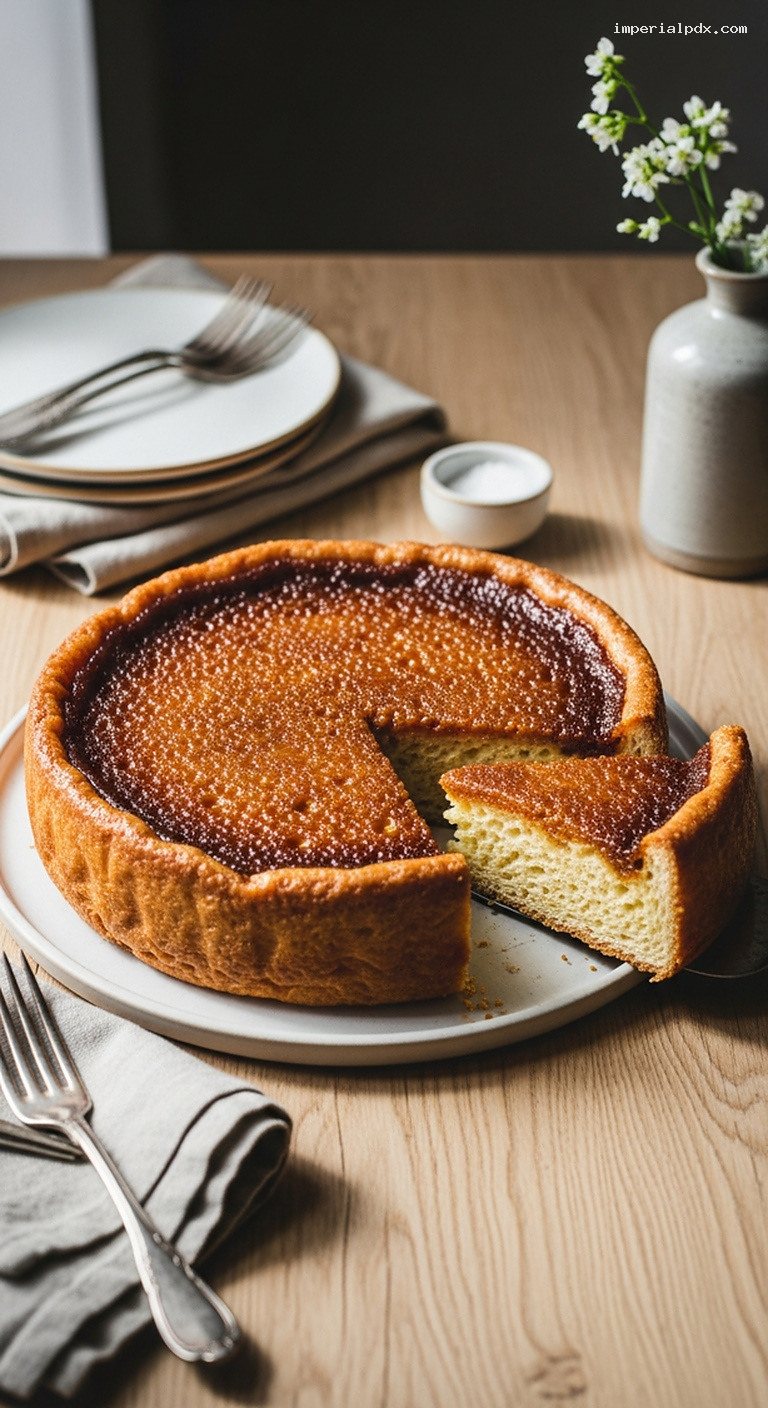
- Classic northern French comfort dessert: a soft, brioche-like base with a caramelized, custardy brown-sugar top.
- Simple, affordable ingredients you likely already have in your pantry and fridge.
- Perfect make-ahead centerpiece for brunch, coffee breaks, or an elegant but unfussy dessert.
- Beginner-friendly introduction to enriched, yeasted doughs with clear, step-by-step guidance.
Grocery List
- Produce: None required.
- Dairy: Whole milk, heavy cream, unsalted butter, eggs.
- Pantry: All-purpose flour, granulated sugar, light brown sugar or cassonade, instant or active dry yeast, vanilla extract, fine salt, optional pearl or coarse sugar.
Full Ingredients
For the yeasted crust
- 250 g all-purpose flour (about 2 cups, spooned and leveled)
- 50 g granulated sugar (¼ cup), plus 1 tsp for blooming active dry yeast
- 7 g instant or active dry yeast (2¼ tsp, one standard packet)
- 120 ml whole milk, lukewarm (½ cup, about 40 °C / 105 °F)
- 1 large egg, at room temperature
- 50 g unsalted butter, very soft but not melted (about 3½ tbsp)
- ½ tsp fine sea salt or table salt
For the brown-sugar topping
- 150 g light brown sugar or cassonade (¾ cup, packed)
- 120 ml heavy cream (½ cup), at room temperature
- 1 large egg yolk
- 25 g unsalted butter, cut into small dice (about 1½–2 tbsp)
- 1 tsp pure vanilla extract
- Pinch of fine salt (about 1⁄8 tsp)
To finish (optional)
- 1–2 tbsp pearl sugar or coarse sugar, for added crunch
- A light sprinkle of flaky sea salt, to finish
Step-by-Step Instructions
Step 1: Prepare the yeast and warm liquids
Gently warm the milk in a small saucepan or microwave until just lukewarm, about 40 °C / 105 °F. It should feel pleasantly warm to the touch, not hot. Measure out 120 ml (½ cup).
If using active dry yeast, stir it into the warm milk with 1 teaspoon of the granulated sugar. Let it stand for 5–10 minutes until the surface looks foamy and slightly expanded. This tells you the yeast is alive. If using instant yeast, you can skip the foaming step and add it directly to the flour; still ensure the milk is lukewarm before adding it to the dough later.
Step 2: Make the soft, enriched dough
In a large mixing bowl (or the bowl of a stand mixer), combine the flour, remaining granulated sugar (about 50 g / ¼ cup), and salt. If using instant yeast, add it now and whisk to distribute evenly.
Add the egg and the warm milk (with dissolved yeast if you used active dry). Stir with a wooden spoon or the dough hook on low speed until a shaggy dough forms. Add the softened butter in small pieces. Continue kneading by hand on a lightly floured surface, or with a stand mixer on medium-low, for 8–10 minutes. The dough should become smooth, slightly tacky but not really sticky, and elastic. It will be softer than bread dough but should hold its shape in a ball.
Step 3: First rise (bulk fermentation)
Lightly grease a clean bowl with a bit of butter or neutral oil. Shape the dough into a ball, place it in the bowl, and turn it once to coat it lightly in fat. Cover the bowl with a clean kitchen towel, plate, or plastic wrap.
Let the dough rise in a warm, draft-free spot until doubled in size, about 1 hour. If your kitchen is cool, this may take up to 1 hour 15 minutes. The dough is ready when it looks puffed and leaves a slight indentation if you gently press it with a fingertip.
Step 4: Shape the tart base and second rise
Butter a 23–25 cm (9–10 inch) tart pan with a removable bottom, or a similar-sized round cake pan. Gently deflate the dough by pressing it down with your hand, then transfer it to the prepared pan.
Using your fingertips, press and stretch the dough evenly to cover the bottom of the pan and slightly up the sides, forming a low edge to help contain the topping. If the dough springs back, let it rest for 5 minutes and try again; the gluten will relax and it will be easier to spread.
Cover the pan loosely and let the shaped dough rise again for 30–40 minutes, until slightly puffed. During this second rise, position a rack in the lower-middle of the oven and preheat to 190 °C / 375 °F.
Step 5: Mix the brown-sugar cream topping
While the dough is in its second rise, prepare the topping. In a medium bowl, whisk together the brown sugar (or cassonade), heavy cream, egg yolk, vanilla extract, and a pinch of salt until smooth and well combined. The mixture will be thick but pourable, like a loose custard.
Cut the remaining 25 g (1½–2 tbsp) butter into small cubes and keep it chilled; you will dot it over the tart just before baking. If you plan to use pearl sugar or coarse sugar, have it ready as well.
Step 6: Assemble and bake the tarte au sucre
When the dough has puffed slightly, uncover the pan. With your fingertips, gently press small dimples all over the surface of the dough, without poking all the way through. These little wells help hold the sugary cream and create that classic, slightly uneven top.
Give the cream-sugar mixture a quick stir, then slowly pour it evenly over the dough, letting it settle into the dimples. Tilt the pan gently if needed to distribute it. Scatter the butter cubes evenly over the surface. If using pearl or coarse sugar, sprinkle it lightly on top for extra crunch.
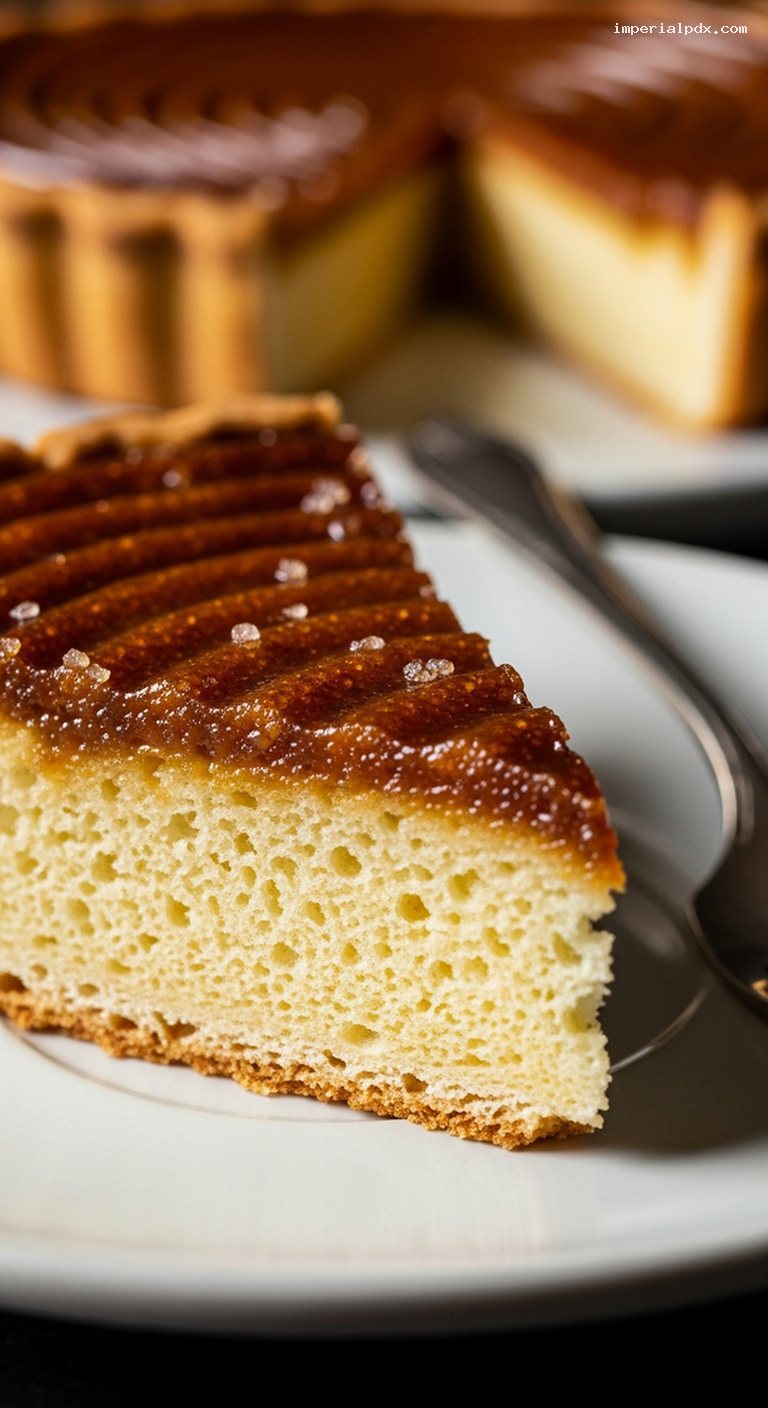
Place the tart on a baking sheet (to catch any potential drips) and bake at 190 °C / 375 °F for 22–25 minutes. The tart is done when the edges of the dough are a deep golden brown, the center is puffed, and the topping is bubbling and caramelized with a soft, slightly wobbly, custard-like look.
Step 7: Cool, slice, and serve
Remove the tart from the oven and place it on a wire rack. The topping will be very hot and fluid at first. Let it cool in the pan for at least 20–30 minutes; as it cools, the brown-sugar cream will thicken into a glossy, custard-like layer that clings to the soft crumb.
Carefully remove the outer ring of the tart pan if using a removable-bottom pan. Slice the tarte au sucre into wedges with a sharp knife. Serve slightly warm or at room temperature, ideally with strong coffee, tea, or a small glass of dessert wine. The contrast of the tender, brioche-like base and the richly caramelized top is at its best on the day it is baked.
Pro Tips
- Watch the milk temperature. If the milk is too hot, it can kill the yeast. Aim for warm bathwater temperature; if it feels hot on your finger, let it cool a bit.
- Soft, not sticky dough. If the dough is very sticky after a few minutes of kneading, add flour 1 tablespoon at a time. If it feels stiff or dry, drizzle in a teaspoon or two of milk.
- Use the oven as a proofing box. For a warm, draft-free rise, place the covered dough in a turned-off oven with just the light on. Check a little early; it may rise faster.
- Protect the bottom. Bake the tart on the lower-middle rack; the bottom needs enough heat to cook through, but too low can over-brown the crust before the topping sets. A preheated baking sheet under the pan can help if your oven tends to bake pale bottoms.
- Do not overbake the custard. Pull the tart when the center still has a gentle wobble. It will firm up as it cools; overbaking makes the topping hard instead of creamy.
Variations
- Vanilla bean and fleur de sel tarte au sucre: Split half a vanilla bean, scrape the seeds into the cream mixture, and finish the baked tart with a light sprinkle of fleur de sel for a subtle sweet-salty contrast.
- Crispy pearl sugar topping: Before baking, scatter 1–2 tablespoons of pearl sugar over the top for a Belgian-style crunch that plays beautifully against the soft custardy layer.
- Maple sugar twist: Replace half of the brown sugar with maple sugar and add a tiny pinch of cinnamon to the topping for a Franco-Canadian flavor profile that is still true to the spirit of tarte au sucre.
Storage & Make-Ahead
Tarte au sucre is best enjoyed the day it is baked, but leftovers keep well. Once completely cool, cover the tart tightly with foil or place slices in an airtight container and store at room temperature for up to 2 days. To refresh, warm individual pieces in a 150 °C / 300 °F oven for 5–8 minutes, or briefly in a low-power microwave, just until gently warmed through.
For a head start, you can make the dough up to 12 hours in advance. After the first rise, gently deflate the dough, cover the bowl tightly, and refrigerate overnight. The next day, bring it to room temperature, shape it in the tart pan, let it rise again until slightly puffy, then proceed with the topping and baking. The finished tart does not freeze well due to the custard-like topping, but the unbaked dough can be tightly wrapped and frozen for up to 1 month; thaw overnight in the refrigerator before shaping.
Nutrition (per serving)
Approximate values for 1 of 8 servings: about 390 calories; 17 g fat; 10 g saturated fat; 52 g carbohydrates; 26 g sugars; 2 g fiber; 6 g protein; 210 mg sodium. These numbers are estimates and will vary based on exact ingredients and serving sizes.