Quick Recipe Version (TL;DR)
Quick Ingredients
- Soft butter, for greasing pan
- 2 tbsp granulated sugar, for dusting pan
- 6 large eggs, at room temperature, separated
- 150 g (3/4 cup) granulated sugar
- 1 tsp vanilla extract
- Finely grated zest of 1 lemon
- Finely grated zest of 1/2 orange (optional but lovely)
- 60 g (1/2 cup) cake flour (or very well-sifted all-purpose)
- 60 g (1/2 cup) cornstarch
- 1/4 tsp fine salt
- Powdered sugar, for generous dusting
Do This
- 1. Preheat oven to 170°C / 340°F (160°C / 320°F fan). Generously butter a tall 23 cm / 9-inch cake or tube pan, then coat with granulated sugar and tap out excess.
- 2. Whisk egg yolks with 100 g (1/2 cup) sugar, vanilla, and citrus zests until thick, pale, and tripled in volume.
- 3. In a clean bowl, whip egg whites with salt to soft peaks, then slowly add remaining 50 g (1/4 cup) sugar and beat to glossy medium-firm peaks.
- 4. Gently fold one-third of the whites into the yolk mixture, then sift flour and cornstarch over the bowl in 2–3 additions, alternating with folding in the remaining whites until just combined.
- 5. Immediately pour batter into the prepared pan, smooth the top, and bake 30–35 minutes until risen, golden, and a skewer comes out clean.
- 6. Cool 10 minutes in the pan, then carefully invert onto a rack and cool completely.
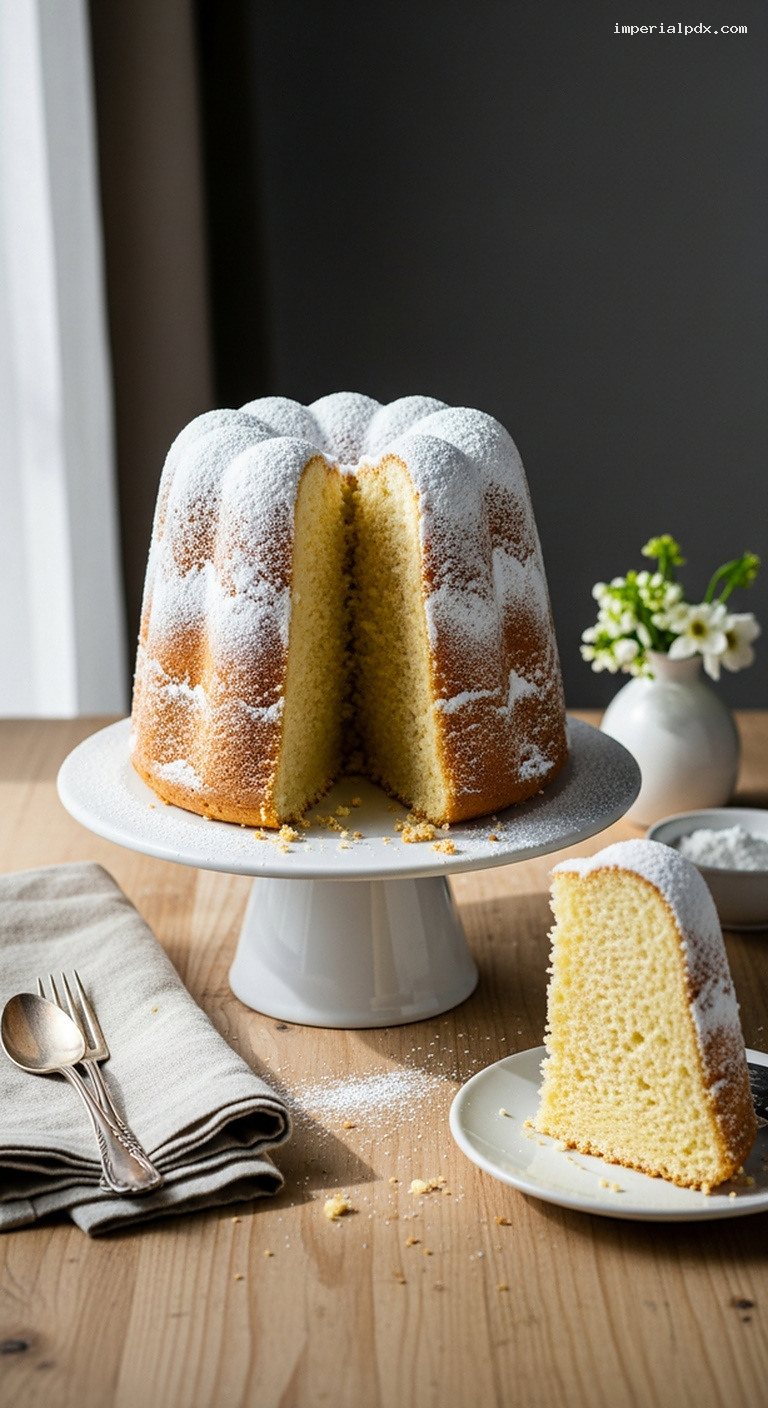
- 7. Just before serving, transfer to a platter and dust thickly with powdered sugar. Slice gently with a serrated knife.
Why You’ll Love This Recipe
- Ultra-light and airy: a classic Alpine sponge that feels almost like eating a sweet cloud.
- Simple ingredient list: eggs, sugar, flour, and citrus zest create surprisingly complex flavor.
- Perfect make-ahead dessert: stays soft for a day or two and is delicious with berries or whipped cream.
- Beautiful yet unfussy: impressive enough for guests, but totally doable in a home kitchen.
Grocery List
- Produce: 1 lemon, 1 small orange (optional but recommended)
- Dairy: 6 large eggs, unsalted butter (a few tablespoons for greasing and optional serving)
- Pantry: Granulated sugar, powdered sugar, cake flour or all-purpose flour, cornstarch, fine salt, vanilla extract
Full Ingredients
For the Gâteau de Savoie
- Soft unsalted butter, for greasing the pan (about 1–2 tbsp)
- 2 tbsp granulated sugar, for dusting the pan
- 6 large eggs, at room temperature, separated
- 150 g granulated sugar (3/4 cup), divided:
- 100 g (1/2 cup) for the yolks
- 50 g (1/4 cup) for the whites
- 1 tsp pure vanilla extract
- Finely grated zest of 1 untreated lemon
- Finely grated zest of 1/2 untreated orange (optional, but traditional and aromatic)
- 60 g cake flour, sifted (1/2 cup, lightly packed)
- If you do not have cake flour, use all-purpose flour but sift it twice.
- 60 g cornstarch (1/2 cup), sifted
- 1/4 tsp fine sea salt
For Finishing
- Powdered (confectioners’) sugar, for generous dusting
- Fresh berries or lightly whipped cream, for serving (optional)
Step-by-Step Instructions
Step 1: Prepare the pan and preheat the oven
Set an oven rack in the lower-middle position. Preheat the oven to 170°C / 340°F (or 160°C / 320°F if using a fan/convection oven). Gâteau de Savoie is very delicate, so a slightly gentler heat helps it rise evenly without drying out.
Choose a tall 23 cm / 9-inch cake pan, preferably with high sides (at least 7.5 cm / 3 inches), or a tube/Bundt-style pan. Avoid non-stick coatings that tend to brown too quickly.
Generously butter the entire inside of the pan: bottom, sides, and any crevices if using a decorative mold. Sprinkle in 2 tablespoons of granulated sugar. Tilt and tap the pan so the sugar coats the butter in an even layer, then tap out any excess. This sugar crust helps the cake climb and gives a very light, crisp exterior.
Step 2: Separate the eggs and set up your bowls
Carefully separate the 6 eggs, placing yolks in one large mixing bowl and whites in another perfectly clean, dry bowl. Even a small amount of yolk fat can prevent your whites from whipping properly, so separate one egg at a time into small bowls if you are worried about accidents, then combine.
Let the egg whites stand at room temperature while you prepare the yolk mixture; they whip more easily when not icy cold. Have your mixer (hand or stand) ready, along with a flexible spatula for folding.
Step 3: Whip the yolks with sugar, vanilla, and citrus
Add 100 g (1/2 cup) of the granulated sugar to the bowl with the egg yolks, along with the vanilla extract, lemon zest, and orange zest (if using). Using a hand mixer or stand mixer fitted with the whisk attachment, beat on medium-high speed for 4–5 minutes.
The mixture should become very thick, pale, and airy, forming a ribbon that slowly folds back on itself when you lift the whisk. This step dissolves the sugar and incorporates air, which is crucial for the cake’s rise since there is no baking powder.
Step 4: Whip the egg whites to glossy peaks
In the clean bowl with egg whites, add the salt. Begin whipping on medium speed until the whites are foamy and opaque. Gradually increase to medium-high and slowly sprinkle in the remaining 50 g (1/4 cup) granulated sugar while mixing.
Continue whipping until the whites form glossy, medium-firm peaks: when you lift the whisk, the peak should stand up but the very tip gently bends over. Avoid beating to very stiff, dry peaks; they are harder to fold and can deflate the batter.
Step 5: Fold whites into yolks and add the dry ingredients
Use a large spatula to fold one-third of the whipped egg whites into the yolk mixture. Work gently but decisively, scooping from the bottom and lifting over the top, rotating the bowl as you go. This lightens the yolk base so it can welcome the rest of the whites.
In a separate bowl, whisk together the sifted cake flour and cornstarch. Sift about half of this flour mixture over the bowl with the yolks and whites. Add another third of the whipped whites on top. Very gently fold just until there are no big streaks of flour or white.
Sift in the remaining flour mixture, add the last third of the egg whites, and fold again with the same careful motion. Stop as soon as the batter looks uniform and airy. Overmixing will deflate the precious air bubbles and make the cake dense.
Step 6: Bake the cake until risen and golden
Immediately pour the light, foamy batter into the prepared pan. Use the spatula to gently smooth the surface, taking care not to knock out too much air. If you notice large air pockets, lightly tap the pan once or twice on the counter, but do not overdo it.
Place the pan into the preheated oven. Bake for 30–35 minutes, without opening the oven door for at least the first 20 minutes. The cake is done when it is well risen, golden on top, and a thin skewer or toothpick inserted in the center comes out clean or with just a few moist crumbs.
If the top is browning too quickly near the end, tent it loosely with a piece of foil. Avoid underbaking, or the delicate sponge may collapse as it cools.
Step 7: Cool, unmold, and finish with powdered sugar
Remove the cake from the oven and place the pan on a wire rack. Let it cool in the pan for about 10 minutes to set the structure. Run a thin knife gently around the edge if needed to loosen it, then carefully invert the pan onto the rack and lift it away. If using a springform, release the ring first, then invert.
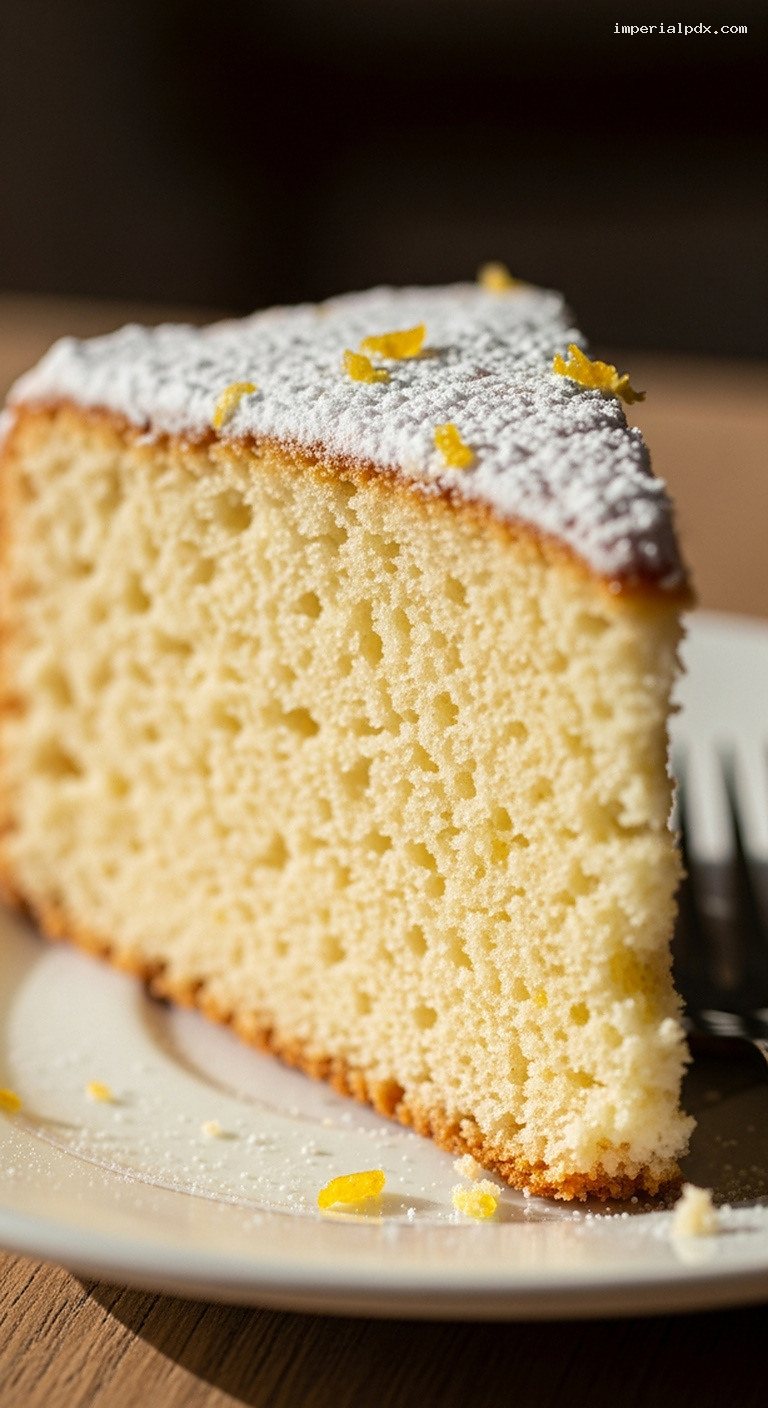
Let the cake cool completely, at least 45 minutes more, so the crumb firms up and slices cleanly. Just before serving, transfer to a serving plate and sift a generous, snowy layer of powdered sugar over the top and sides.
Slice with a sharp serrated knife using a gentle sawing motion. Serve plain, or with a spoonful of lightly sweetened whipped cream and fresh berries for a classic, elegant dessert.
Pro Tips
- Room-temperature eggs matter: Cold whites whip more slowly and cold yolks do not volumize as well. Take eggs out 30 minutes before baking.
- Sift, sift, sift: Sifting the flour and cornstarch (once before measuring, once directly into the batter) keeps the cake ultra-light and prevents lumps.
- Be gentle when folding: Use wide, sweeping motions with a spatula. If the batter suddenly becomes runny and heavy, it was likely overmixed.
- Do not open the oven early: A rush of cool air can cause this delicate sponge to collapse. Check only near the end of the baking time.
- Slice just before serving: The cake dries out quickly if left cut for hours. Keep it whole and covered, then slice as needed.
Variations
- Orange–Vanilla Gâteau de Savoie: Use the zest of 1 whole orange and skip the lemon. Add an extra 1/2 tsp vanilla for a warmer, softer citrus profile.
- Almond-Scented Savoie: Replace 15 g (about 2 tbsp) of the cake flour with very finely ground blanched almonds and add 1/4 tsp almond extract. Fold very gently, as nuts slightly weigh down the batter.
- Rum or liqueur twist: Add 1–2 tbsp of dark rum, orange liqueur, or Chartreuse to the yolk mixture along with the zest. Keep the amount small so you do not deflate the batter.
Storage & Make-Ahead
Once completely cool, store the Gâteau de Savoie at room temperature, well wrapped or in an airtight cake container, for up to 2–3 days. Its texture is best within the first 24 hours but it remains very pleasant after that.
To make ahead, you can bake the cake the day before serving. Wait to dust with powdered sugar until just before bringing it to the table, as the sugar will slowly dissolve into the surface over time.
For longer storage, wrap individual slices tightly in plastic wrap and place in a freezer bag. Freeze for up to 2 months. Thaw at room temperature, still wrapped, then refresh for a few minutes in a low oven (about 150°C / 300°F) to restore some of the delicacy.
Nutrition (per serving)
Approximate values per serving (based on 12 servings, without toppings): about 150 calories; 3 g fat; 25 g carbohydrates; 1 g fiber; 17 g sugars; 4 g protein; 120 mg sodium. Adding whipped cream or fruit will increase calories and sugar accordingly.