Quick Recipe Version (TL;DR)
Quick Ingredients
- 3 cups (450–500 g) sweet cherries or stone fruit/berries, pitted if desired
- 1 Tbsp soft butter + 2 Tbsp granulated sugar (for the dish)
- 3 large eggs
- 2/3 cup (135 g) granulated sugar
- 2/3 cup (80 g) all-purpose flour
- 1 cup (240 ml) whole milk
- 1/2 cup (120 ml) heavy cream
- 2 tsp pure vanilla extract
- 1/2 tsp almond extract
- 1/4 tsp fine salt
- 2 Tbsp (28 g) unsalted butter, melted and cooled
- Powdered sugar, for dusting
Do This
- 1. Heat oven to 350°F (175°C). Generously butter a 9-inch (23 cm) pie dish or 1.5-quart baking dish, then coat with 2 Tbsp sugar.
- 2. Arrange pitted cherries or other fruit in a single, snug layer over the bottom of the dish.
- 3. Whisk eggs and sugar until pale. Whisk in flour and salt, then milk, cream, vanilla, almond extract, and melted butter until smooth.
- 4. Let batter rest 10–15 minutes while the oven finishes preheating, then pour gently over the fruit.
- 5. Bake 35–40 minutes until puffed, set in the center, and golden at the edges; a knife in the middle should come out mostly clean.
- 6. Cool 10–15 minutes. Dust generously with powdered sugar.
- 7. Serve warm or at room temperature, plain or with a spoonful of lightly sweetened whipped cream.
Why You’ll Love This Recipe
- It is wonderfully rustic and forgiving: no crust, no layering, just whisk, pour, and bake.
- The custardy, flan-like interior and juicy fruit feel elegant but use simple pantry ingredients.
- Flexible with the seasons: cherries in early summer, plums and apricots later, or berries whenever you find them.
- Perfect for brunch or dessert, and just as delicious slightly warm as it is at room temperature.
Grocery List
- Produce: Fresh cherries (or other stone fruit like apricots, plums, peaches, or mixed berries)
- Dairy: Whole milk, heavy cream, unsalted butter, eggs
- Pantry: All-purpose flour, granulated sugar, powdered sugar, vanilla extract, almond extract, fine salt
Full Ingredients
For the Fruit Layer
- 3 cups (450–500 g) fresh sweet cherries, stems removed, pitted if desired
- Optional substitute: 3 cups sliced stone fruit (plums, apricots, peaches, nectarines) or mixed berries
For Preparing the Baking Dish
- 1 Tbsp (14 g) unsalted butter, softened (for greasing)
- 2 Tbsp (25 g) granulated sugar (for dusting the dish)
For the Custardy Batter
- 3 large eggs, at room temperature if possible
- 2/3 cup (135 g) granulated sugar
- 2/3 cup (80 g) all-purpose flour, spooned and leveled
- 1/4 tsp fine sea salt or table salt
- 1 cup (240 ml) whole milk
- 1/2 cup (120 ml) heavy cream
- 2 tsp pure vanilla extract
- 1/2 tsp almond extract
- 2 Tbsp (28 g) unsalted butter, melted and cooled slightly
For Serving
- Powdered (confectioners’) sugar, for dusting
- Optional: Lightly sweetened whipped cream, crème fraîche, or vanilla ice cream
Step-by-Step Instructions
Step 1: Preheat the oven and prepare the dish
Place an oven rack in the center of your oven and preheat to 350°F (175°C). Choose a 9-inch (23 cm) deep pie dish, a 9-inch round ceramic baking dish, or a 1.5-quart (about 1.5 L) gratin dish. Generously butter the bottom and sides of the dish with the softened butter, making sure to get all the way to the rim so the clafoutis will not stick.
Sprinkle the 2 tablespoons of granulated sugar evenly over the buttered dish. Tilt and tap the dish so the sugar coats the bottom and sides as much as possible. This sugary coating helps prevent sticking and also creates a delicate, slightly caramelized edge.
Step 2: Prepare and arrange the fruit
If using cherries, remove the stems and rinse well. You can leave the pits in (more traditional, with a slightly almondy aroma) or pit them for easier eating. If using stone fruit such as plums or apricots, slice them into wedges about 1/2 inch (1.25 cm) thick. For berries, remove any stems and pat dry.
Pat the fruit dry with a clean kitchen towel or paper towels so excess water does not thin the custard. Arrange the fruit in a single, snug layer over the bottom of the prepared dish. A little overlap is fine, but try to distribute it evenly so each slice of clafoutis gets plenty of fruit.
Step 3: Whisk the base of the batter
In a medium mixing bowl, whisk the eggs and granulated sugar together for about 1–2 minutes, until the mixture looks pale and slightly thickened. You are not trying to whip it like a sponge cake, just to dissolve the sugar and add a bit of air for lightness.
Sprinkle in the flour and salt and whisk again until no dry patches remain. The mixture will be quite thick at this stage, almost like a smooth paste. Scrape down the sides and bottom of the bowl to make sure all the flour is incorporated.
Step 4: Add the liquids and flavorings
Gradually pour in the milk while whisking, followed by the heavy cream. Whisk until the batter is completely smooth and no lumps of flour remain. Add the vanilla extract and almond extract, then whisk in the melted, slightly cooled butter. The finished batter will be thin and pourable, similar to crêpe batter.
For an extra-silky texture, you can strain the batter through a fine-mesh sieve into a large measuring jug, pressing out any tiny lumps. Let the batter rest for 10–15 minutes while your oven finishes heating; this allows the flour to hydrate and helps the clafoutis bake more evenly.
Step 5: Pour the batter and bake
Place the fruit-filled dish on a baking sheet to catch any drips and make it easier to move. Give the batter a quick stir, then slowly pour it over the fruit. The fruit may float or shift a little; that is normal. Make sure the fruit is fairly evenly distributed.
Carefully transfer the baking sheet with the dish to the center rack of the oven. Bake for 35–40 minutes. The clafoutis is done when it is puffed around the edges, lightly golden on top, and the center is just set. A thin knife or toothpick inserted near the center should come out mostly clean, with maybe a few custardy crumbs but no liquid batter.
Step 6: Cool slightly and finish with powdered sugar
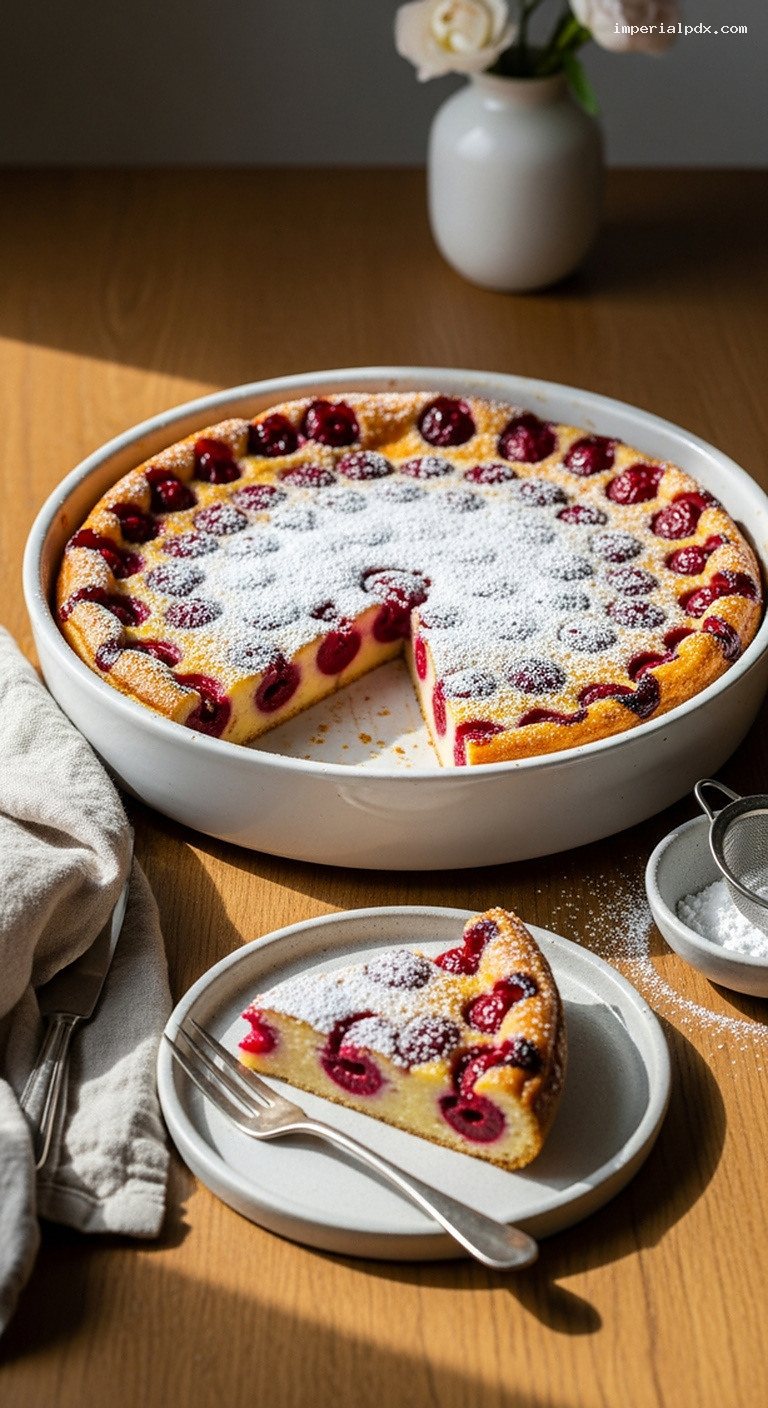
Remove the clafoutis from the oven and place it on a wire rack. It will be quite puffed and may wobble gently in the center; it will deflate as it cools, which is exactly what you want for that classic rustic look. Let it cool for at least 10–15 minutes so the custard can firm up enough to slice cleanly while still being pleasantly warm.
Just before serving, use a fine-mesh sieve to dust the top generously with powdered sugar. The sugar will melt into some of the warm spots and stay powdery on others, creating a pretty, mottled finish.
Step 7: Serve warm and enjoy
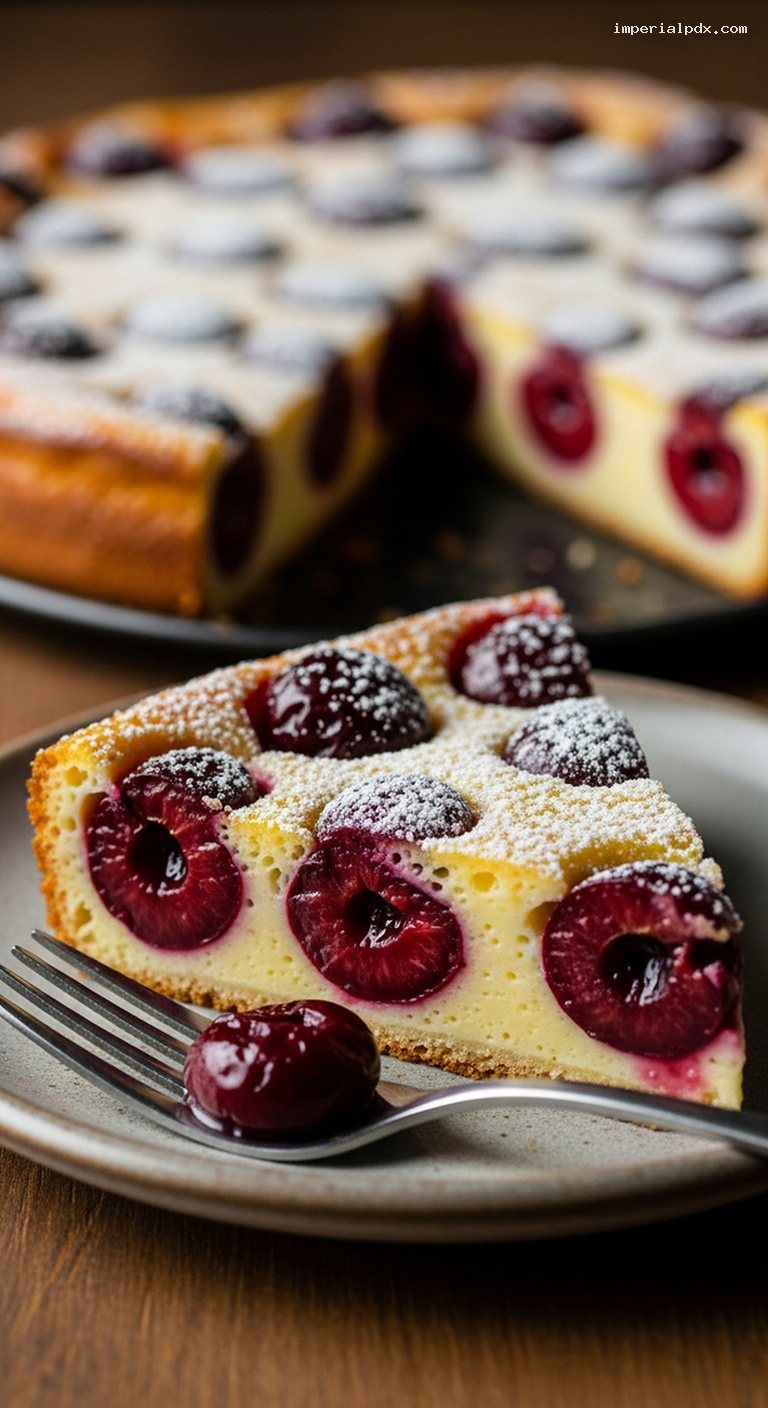
Serve the clafoutis warm or at room temperature, cut into wedges. It is lovely on its own, but you can add a small spoonful of lightly sweetened whipped cream, a dollop of crème fraîche, or a scoop of vanilla ice cream for an extra-indulgent dessert. The custard should be tender and silky, with pockets of juicy fruit and a lightly caramelized edge from the sugared dish.
Clafoutis is best enjoyed the day it is baked, but leftovers are still delicious chilled or gently rewarmed. Expect the texture to become a bit denser as it cools, more like a soft, fruit-studded custard cake.
Pro Tips
- Use ripe but firm fruit: Overly soft fruit can release too much juice and make the custard watery. Choose fruit that is sweet, fragrant, and just tender when pressed.
- Do not overbake: Take the clafoutis out when the center is just set. Overbaking makes the texture rubbery instead of silky.
- Room-temperature eggs help: If your eggs are cold, place them in warm tap water for 5–10 minutes before using for a smoother batter.
- Resting the batter is worth it: Even 10–15 minutes of rest helps the flour hydrate and reduces the chance of a floury taste.
- Serve slightly warm: The flavor and texture are at their best when the clafoutis is just a bit warmer than room temperature.
Variations
- Classic cherry clafoutis with pits: For a traditional French version, leave the cherry pits in. They lightly perfume the custard with a subtle, bitter-almond note. Just be sure to warn your guests.
- Mixed berry clafoutis: Use a combination of blueberries, raspberries, and sliced strawberries. Add a little lemon zest (about 1/2 tsp) to the batter for brightness.
- Stone fruit and almond: Use sliced plums, apricots, or peaches and sprinkle 2–3 Tbsp of sliced almonds over the top before baking for extra texture and almond flavor.
Storage & Make-Ahead
Clafoutis is best the day it is baked, especially within a few hours when the top is still gently crisp at the edges and the center is luxuriously soft. However, leftovers keep well. Allow the clafoutis to cool completely, then cover the dish tightly with plastic wrap or transfer slices to an airtight container. Refrigerate for up to 3 days.
To reheat, warm individual slices in a 300°F (150°C) oven for 10–15 minutes, or microwave very gently in short bursts until just warm. The texture will be a bit firmer than when freshly baked but still very enjoyable. You can also serve leftovers cold, more like a set custard or flan.
For partial make-ahead, you can whisk the batter up to 12 hours in advance, cover, and refrigerate. Give it a good whisk before pouring over the fruit and baking. It is best to cut the fruit shortly before baking so it does not release too much juice while sitting.
Nutrition (per serving)
Approximate values for 1 of 8 servings, made with cherries and without optional toppings:
Calories: ~280 kcal; Protein: ~6 g; Carbohydrates: ~35 g; Fat: ~12 g; Saturated Fat: ~7 g; Fiber: ~2 g; Sugar: ~27 g; Sodium: ~120 mg. These numbers are estimates and will vary based on the exact fruit used, brand of ingredients, and portion size.