Quick Recipe Version (TL;DR)
Quick Ingredients
- Idli batter: 2 cups (360 g) idli rice or parboiled rice, 1 cup (180 g) urad dal (split, skinned), 1/2 tsp fenugreek seeds, 1 1/2 tsp kosher salt, water as needed
- Sambar: 3/4 cup (150 g) toor dal, 1/4 tsp turmeric, 2 cups chopped mixed vegetables, 1 small onion, 1 tomato, 2 tbsp tamarind paste, 2 1/2 tbsp sambar powder, 1 1/2 tsp kosher salt, 1 tbsp jaggery or brown sugar (optional), 2 tbsp oil, mustard seeds, curry leaves, dried chilies
- Coconut chutney: 1 1/2 cups (135 g) grated coconut, 2 tbsp roasted chana dal, 1 small green chile, 1/2 inch (1.25 cm) ginger, 1/2 cup water, 1/2 tsp salt, tempering with oil, mustard seeds, urad dal, curry leaves
Do This
- 1) Soak rice 6 hours; soak urad dal + fenugreek 6 hours.
- 2) Grind urad dal fluffy, then rice slightly gritty; mix, salt, and ferment 10–14 hours (warm spot).
- 3) Pressure cook toor dal with turmeric (10 minutes at high pressure); whisk smooth.
- 4) Simmer vegetables, onion, tomato, tamarind, sambar powder; add dal and adjust thickness.
- 5) Temper sambar with mustard seeds, curry leaves, dried chiles; simmer 5 minutes.
- 6) Blend coconut chutney; temper with mustard, urad dal, curry leaves.
- 7) Steam idlis in a greased mould for 12 minutes; rest 2 minutes, then unmould and serve with hot sambar and chutney.
Why You’ll Love This Recipe
- Classic comfort: Soft, fluffy idlis with tangy, vegetable-packed sambar and creamy coconut chutney.
- Light but filling: Steamed (not fried), protein-rich from lentils, and satisfying without feeling heavy.
- Make-ahead friendly: Batter ferments overnight, and both sambar and chutney can be prepped in advance.
- Flexible: Use whatever vegetables you have and adjust spice and tang to your taste.
Grocery List
- Produce: 1 small onion, 1 tomato, 1 medium carrot, 1 cup green beans, 1 cup pumpkin or zucchini, 1 small green chile, fresh ginger, curry leaves (fresh preferred), cilantro (optional), lemon (optional)
- Dairy: None (optional: a spoonful of yogurt to help fermentation if your kitchen is cool)
- Pantry: Idli rice or parboiled rice, urad dal (split, skinned), toor dal, fenugreek seeds, tamarind paste, sambar powder, roasted chana dal (dalia), mustard seeds, dried red chiles, asafoetida (hing, optional), turmeric, jaggery or brown sugar (optional), neutral oil, kosher salt
Full Ingredients
Idli batter (makes about 16 idlis)
- 2 cups (360 g) idli rice or parboiled rice
- 1 cup (180 g) urad dal (split, skinned)
- 1/2 teaspoon fenugreek seeds
- 1 1/2 teaspoons kosher salt (add after fermentation if you prefer)
- Water for soaking and grinding (about 1 1/4 to 1 3/4 cups total, as needed)
- Neutral oil or ghee, for greasing idli moulds (about 1 teaspoon)
Sambar
- 3/4 cup (150 g) toor dal (pigeon peas), rinsed
- 1/4 teaspoon ground turmeric
- 2 1/2 cups water (for cooking dal) + 1 1/2 cups water (for sambar, more as needed)
- 2 cups mixed vegetables, cut into bite-size pieces (for example: 1/2 cup carrot + 1/2 cup green beans + 1 cup pumpkin or zucchini)
- 1 small onion (about 120 g), sliced
- 1 medium tomato (about 150 g), chopped
- 2 tablespoons tamarind paste
- 2 1/2 tablespoons sambar powder
- 1 1/2 teaspoons kosher salt (plus more to taste)
- 1 tablespoon jaggery or packed light brown sugar (optional, balances tang)
Sambar tempering (tadka)
- 2 tablespoons neutral oil (or ghee)
- 1 teaspoon black mustard seeds
- 2 dried red chiles
- 10–12 fresh curry leaves
- 1/8 teaspoon asafoetida (hing), optional
Coconut chutney
- 1 1/2 cups (135 g) unsweetened grated coconut (fresh or frozen, thawed)
- 2 tablespoons roasted chana dal (dalia)
- 1 small green chile, stem removed (seed for less heat if you like)
- 1/2 inch (1.25 cm) piece fresh ginger, peeled
- 1/2 cup (120 ml) water, plus 1–2 tablespoons as needed
- 1/2 teaspoon kosher salt
- 1 teaspoon fresh lemon juice (optional, for extra brightness)
Chutney tempering (tadka)
- 2 teaspoons neutral oil
- 1/2 teaspoon black mustard seeds
- 1 teaspoon urad dal
- 8–10 fresh curry leaves
- 1 dried red chile (optional)
Step-by-Step Instructions
Step 1: Soak the rice and lentils
Rinse the rice in several changes of cool water until the water looks mostly clear. Place it in a bowl and cover with at least 2 inches of water. Soak for 6 hours at room temperature.
In a separate bowl, rinse the urad dal until the water runs clearer. Add the fenugreek seeds, cover with at least 2 inches of water, and soak for 6 hours at room temperature.
Step 2: Grind a fluffy, well-aerated batter
Drain the urad dal and fenugreek (save a little soaking water). In a blender or wet grinder, grind the urad dal first, adding cold water gradually, 1 tablespoon at a time, until it becomes very smooth and fluffy. Plan on 1/2 to 3/4 cup (120–180 ml) water for the urad dal, depending on your machine.
Drain the rice. Grind it with cold water until the batter is smooth but still has a very slight fine grit (that texture helps idlis steam up tender). Plan on about 3/4 to 1 cup (180–240 ml) water for the rice.
Combine the rice batter and urad batter in a large bowl (leave room for rising). Mix with your hand or a sturdy spoon for 2 minutes to help aerate. The final batter should fall from a spoon in a thick ribbon; add 1–3 tablespoons water only if it seems too thick.
Step 3: Ferment until airy and pleasantly tangy
Cover the bowl loosely (a lid set ajar or a towel). Let the batter ferment in a warm spot for 10–14 hours, until it has increased in volume and smells lightly tangy.
Ideal fermentation temperature is 80–90°F (27–32°C). If your kitchen is cool, place the bowl in an oven with just the light on, or in a microwave with the door closed (power off).
After fermenting, gently stir in 1 1/2 teaspoons kosher salt (if you didn’t add it earlier). Try not to deflate it too much.
Step 4: Cook the toor dal for sambar
Add the rinsed toor dal, 2 1/2 cups (600 ml) water, and 1/4 teaspoon turmeric to a pressure cooker. Cook at high pressure for 10 minutes, then let pressure release naturally for 10 minutes before releasing remaining pressure.
Open and whisk or mash the dal until smooth and creamy. Set aside.
No pressure cooker? Simmer dal in a pot with a lid for 35–45 minutes, stirring occasionally and adding water as needed, until very soft; then whisk smooth.
Step 5: Build the sambar base with vegetables, tamarind, and spice
In a medium pot, combine the chopped vegetables, sliced onion, chopped tomato, tamarind paste, sambar powder, 1 1/2 cups (360 ml) water, 1 1/2 teaspoons kosher salt, and jaggery (if using). Bring to a boil over medium-high heat.
Reduce to a steady simmer and cook uncovered for 15–18 minutes, or until the vegetables are tender but not mushy.
Stir in the cooked dal. Simmer 8 minutes to let flavors meld. If you prefer a thinner sambar for dipping idli, add hot water 1/4 cup at a time until it’s pourable.
Step 6: Temper the sambar (tadka) and finish
In a small pan, heat 2 tablespoons oil over medium heat. Add mustard seeds; when they begin popping (about 30–60 seconds), add dried red chiles, curry leaves, and hing (if using).
Stir for 10–15 seconds (the curry leaves should sizzle), then carefully pour the tempering into the pot of sambar. Stir and simmer 5 minutes. Taste and adjust salt, tang (a touch more tamarind), or sweetness (a pinch more jaggery) as needed.
Step 7: Blend coconut chutney and add tempering
In a blender, combine grated coconut, roasted chana dal, green chile, ginger, 1/2 cup (120 ml) water, and 1/2 teaspoon salt. Blend until creamy, adding 1–2 tablespoons additional water if needed for a spoonable consistency. Stir in lemon juice (if using).
For the tempering, heat 2 teaspoons oil in a small pan over medium heat. Add mustard seeds; when they pop, add urad dal and stir until it turns light golden, about 45–60 seconds. Add curry leaves (and dried red chile, if using) and sizzle 10 seconds. Pour over the chutney and stir.
Step 8: Steam the idlis and serve
Set up an idli steamer or a large pot with a steamer rack. Add enough water so it won’t touch the idli plates (usually 1–2 inches). Bring the water to a strong boil.
Lightly grease the idli moulds with oil or ghee. Gently stir the batter once. Spoon batter into each cavity, filling each about 3/4 full.
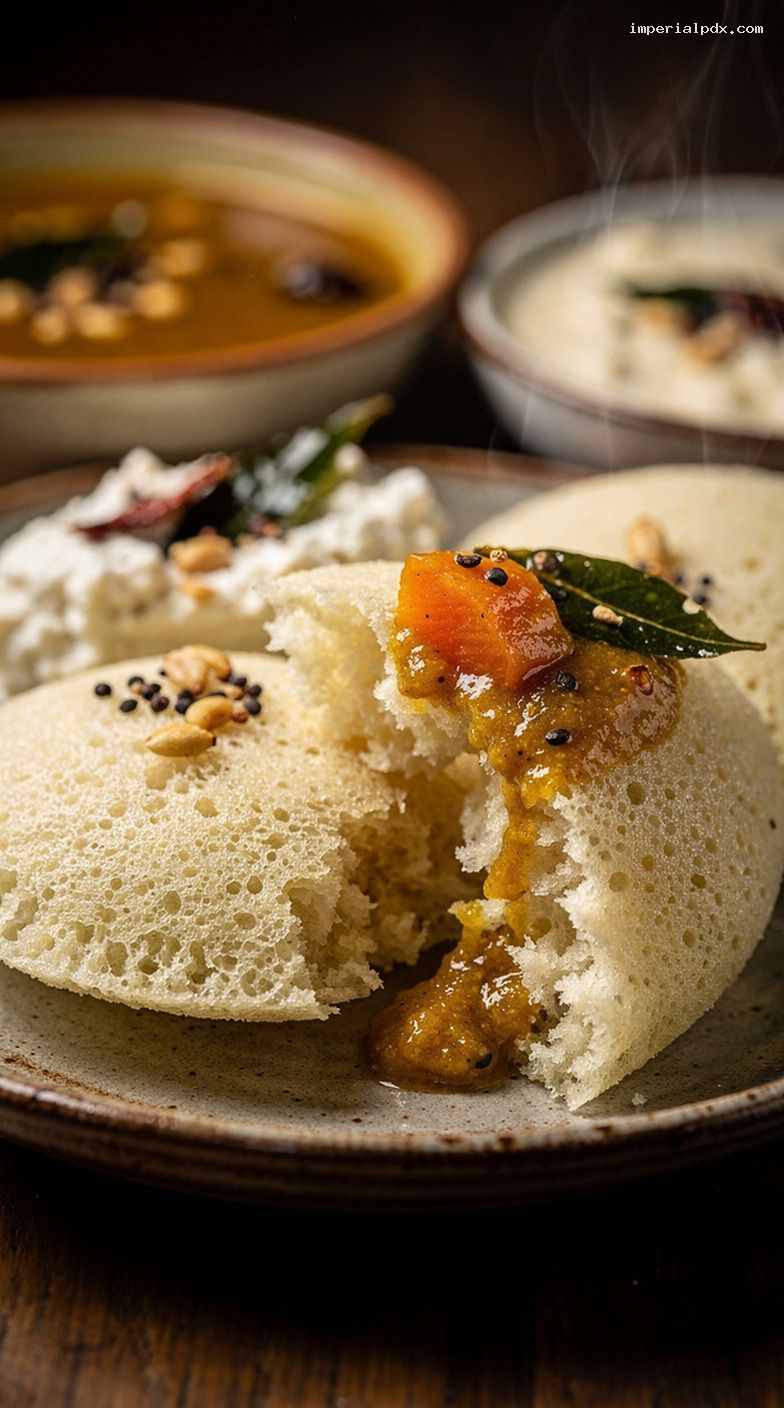
Steam at 212°F (100°C) for 12 minutes (covered). Turn off heat and let rest 2 minutes. Test: a toothpick inserted should come out clean.
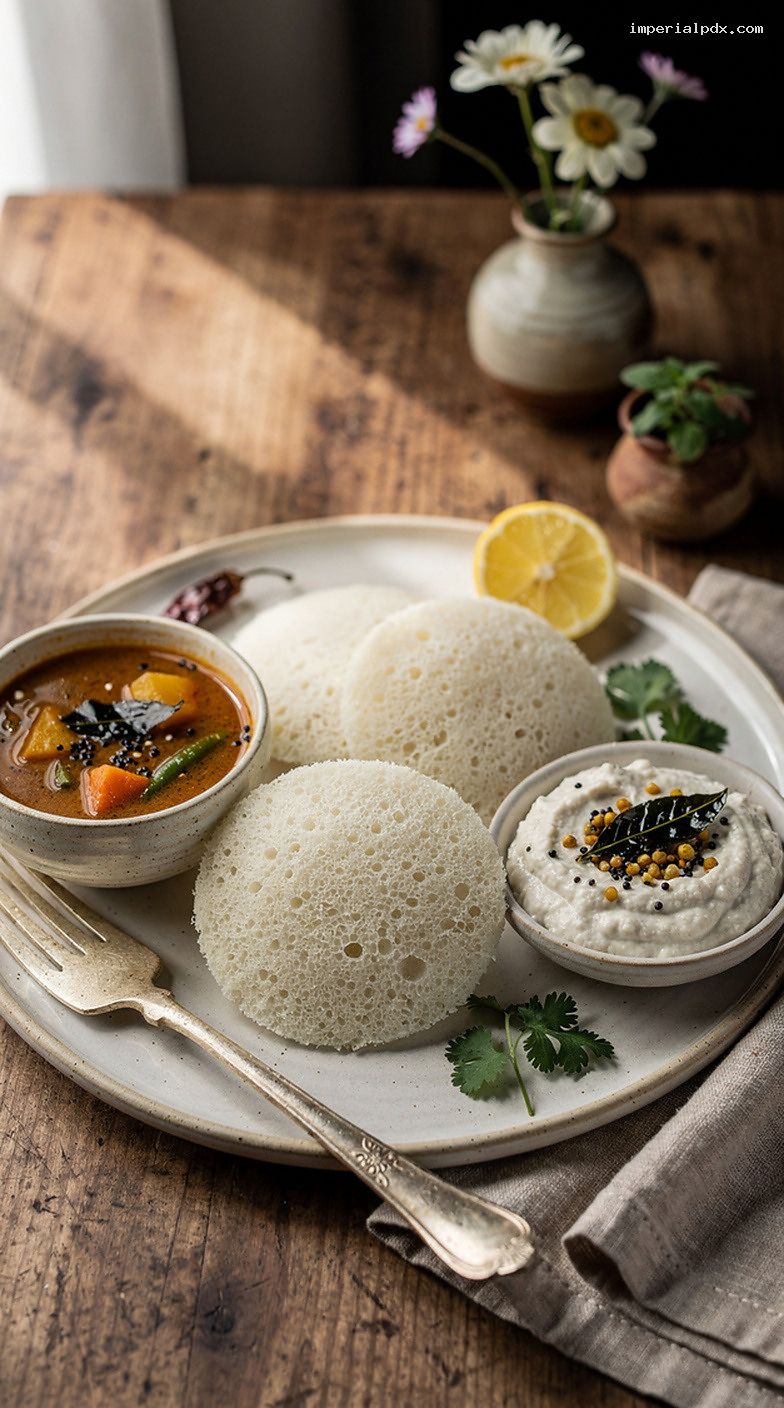
Unmould with a spoon. Serve hot idlis with warm sambar for dipping and coconut chutney on the side.
Pro Tips
- Fermentation is the secret: For consistently fluffy idlis, keep the batter at 80–90°F (27–32°C) for the full 10–14 hours.
- Get the urad batter extra fluffy: Grind urad dal very smooth and aerated; this is what gives idlis their signature soft lift.
- Don’t over-stir after fermenting: Mix in salt gently so you don’t knock out all the air.
- Sambar consistency: For idli, many people prefer sambar slightly thinner than for rice. Add hot water gradually and simmer 2 minutes after each addition.
- Tadka timing: Add tempering to sambar and chutney right after it’s made for the freshest aroma.
Variations
- Vegetable swap for sambar: Use okra, eggplant, drumsticks (moringa pods), potatoes, or spinach. Keep total veg at about 2 cups.
- Spice level: Use 1 dried chile in the sambar tempering and 1/2 green chile in the chutney for mild; add an extra green chile for hotter.
- Shortcut batter: If using store-bought idli batter, you’ll need about 4 cups (950 ml). Steam time stays the same: 12 minutes.
Storage & Make-Ahead
Idli batter: After fermenting, refrigerate in a covered container for up to 4 days. The batter may thicken; stir in 1–2 tablespoons water to loosen before steaming. Idlis are best fresh, but you can refrigerate steamed idlis in an airtight container for up to 2 days; re-steam 3–4 minutes or microwave covered with a damp paper towel for 30–45 seconds.
Sambar: Refrigerate up to 4 days. Reheat to a gentle simmer, adding water as needed. Sambar also freezes well up to 2 months; thaw overnight and reheat.
Coconut chutney: Best the day it’s made. Refrigerate up to 2 days. If it thickens, stir in 1–2 teaspoons water. For longer storage, freeze the blended chutney (without tempering) up to 1 month; thaw and add fresh tempering before serving.
Nutrition (per serving)
Approximate, per serving (4 servings total): Calories: 540; Protein: 18 g; Carbohydrates: 86 g; Fat: 15 g; Fiber: 12 g; Sodium: 1200 mg. Values vary by vegetable mix and exact brands of sambar powder and tamarind.