Quick Recipe Version (TL;DR)
Quick Ingredients
- 24 fresh zucchini (courgette) flowers
- 3/4 cup (150 g) short- or medium-grain rice, rinsed
- 1 large onion, finely diced
- 3 tbsp pine nuts
- 3 tbsp currants
- 1/4 cup (10 g) chopped fresh parsley
- 1/4 cup (10 g) chopped fresh dill
- 2 tbsp chopped fresh mint
- 1/2 tsp ground allspice, 1/4 tsp ground cinnamon
- 1 tsp sugar, 1–1 1/4 tsp fine sea salt, black pepper
- 1/2 cup (120 ml) extra-virgin olive oil, divided
- Juice of 2 lemons, plus wedges to serve
- 1 1/2–2 cups (360–480 ml) hot water or vegetable broth
Do This
- 1. Carefully clean zucchini flowers: remove stamens/pistils, rinse gently, pat dry, and keep covered so they do not dry out.
- 2. Sauté onion and pine nuts in 1/4 cup olive oil until soft and lightly golden.
- 3. Add rice, currants, spices, sugar, salt, and pepper; cook 2–3 minutes, then add 1/2 cup water and cook until mostly absorbed. Off the heat, stir in herbs and let cool.
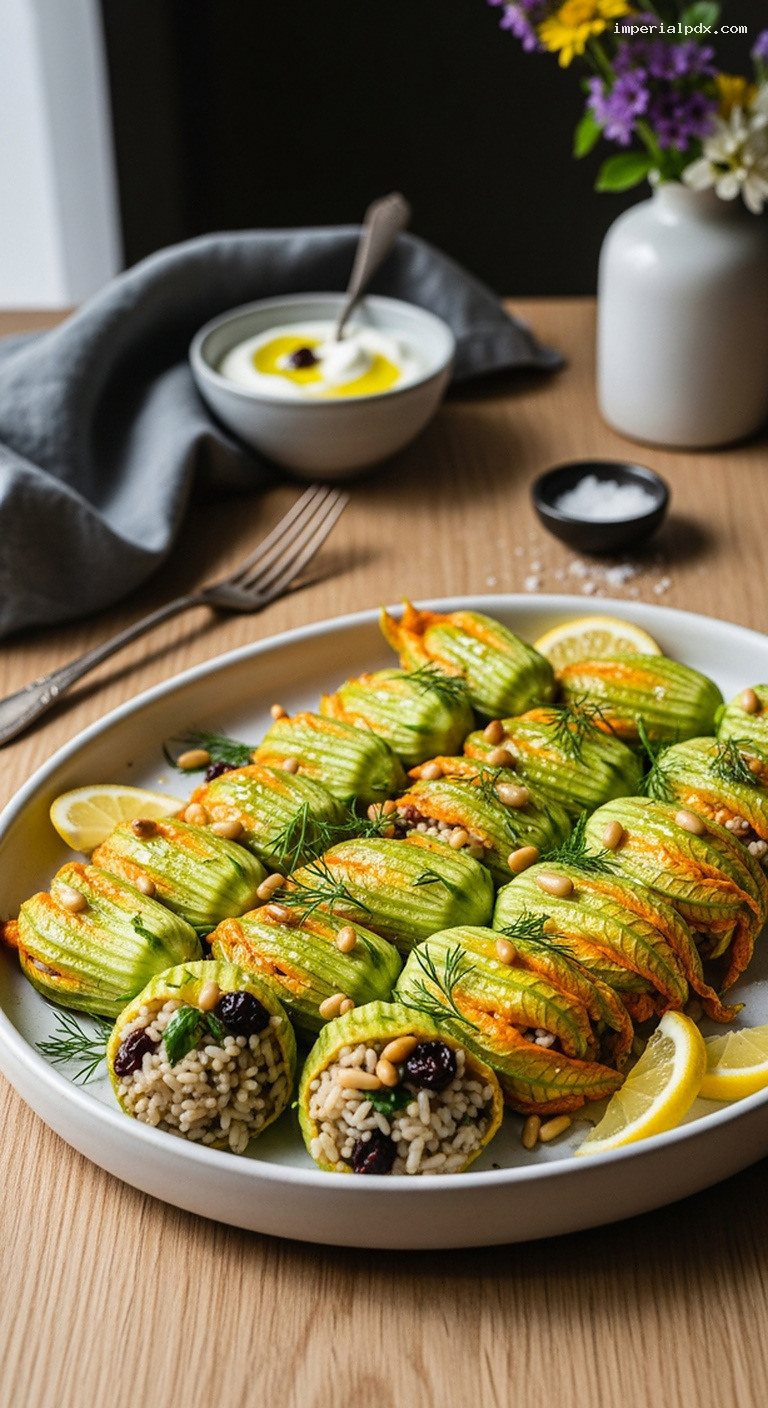
- 4. Stuff each flower with 1–2 teaspoons filling and fold petals over to seal.
- 5. Pack stuffed flowers seam-side down in a wide pan. Drizzle remaining olive oil and lemon juice over, then add hot water/broth to almost cover.
- 6. Place a heatproof plate on top, cover pan, and simmer gently 30–35 minutes. Cool in the pan at least 20 minutes before serving at room temperature with extra lemon.
Why You’ll Love This Recipe
- Delicate, melt-in-your-mouth zucchini blossoms wrapped around fragrant, herbed rice.
- Classic Aegean-style olive oil dish that is naturally dairy-free and can be served at room temperature.
- Perfect for using a garden glut of courgette flowers in an elegant, impressive way.
- Makes a beautiful mezze, starter, or light summer main that can be made ahead.
Grocery List
- Produce: 24 zucchini (courgette) flowers, 1 large onion, fresh parsley, fresh dill, fresh mint, 2–3 lemons
- Dairy: Optional: thick plain yogurt or Greek yogurt for serving
- Pantry: Short- or medium-grain rice, pine nuts, currants, extra-virgin olive oil, fine sea salt, black pepper, sugar, ground allspice, ground cinnamon, vegetable broth (or use water)
Full Ingredients
For the Stuffed Zucchini Flowers
- 24 fresh zucchini (courgette) flowers, ideally similar in size
- 3/4 cup (150 g) short- or medium-grain rice (such as baldo, arborio, or similar), rinsed until water runs clear and drained
- 1 large onion (about 180 g), finely diced
- 3 tbsp (25 g) pine nuts
- 3 tbsp (25 g) currants
- 1/4 cup (10 g) finely chopped fresh flat-leaf parsley
- 1/4 cup (10 g) finely chopped fresh dill
- 2 tbsp (6–8 g) finely chopped fresh mint leaves
- 1/2 tsp ground allspice
- 1/4 tsp ground cinnamon
- 1 tsp sugar (optional but traditional for olive-oil dishes)
- 1–1 1/4 tsp fine sea salt, to taste (divided between filling and cooking liquid)
- 1/4 tsp freshly ground black pepper, or to taste
- 1/2 cup (120 ml) extra-virgin olive oil, divided
For Cooking & Finishing
- Juice of 2 medium lemons (about 6 tbsp / 90 ml), divided
- 1 1/2–2 cups (360–480 ml) hot water or unsalted vegetable broth
- Additional fine sea salt, to taste for the cooking liquid (about 1/2 tsp)
- Optional: extra chopped fresh herbs (parsley, dill, mint) for garnish
- Lemon wedges, to serve
- Optional: thick plain yogurt or Greek yogurt, for serving alongside
Step-by-Step Instructions
Step 1: Prepare the zucchini flowers
Inspect each zucchini flower carefully. Gently open the petals and check for any insects or debris. Using small scissors or your fingers, carefully remove the inner stamens or pistils without tearing the petals. Trim any very long stems, but leave about 1–2 cm attached if possible, as it helps hold the flowers together.
Quickly rinse the flowers under a light stream of cool water, then lay them on a clean kitchen towel or paper towels. Pat very gently to dry. Arrange the flowers in a single layer and cover loosely with a slightly damp towel so they do not dry out while you prepare the filling.
Step 2: Sauté the onion and pine nuts
In a wide sauté pan or medium pot, heat 1/4 cup (60 ml) of the olive oil over medium heat. Add the finely diced onion and pine nuts. Cook, stirring frequently, for 8–10 minutes until the onion is soft and translucent and the pine nuts are lightly golden but not burned. Adjust the heat if necessary so they cook gently without browning too fast.
The onions should be sweet and silky by the end of this step; this forms the flavorful base of the filling.
Step 3: Build the herbed rice filling
Add the rinsed and drained rice to the pan with the onion and pine nuts. Stir continuously for 2–3 minutes to lightly toast the grains in the oil; they should look glossy and well coated. Stir in the currants, ground allspice, ground cinnamon, sugar, 3/4 tsp of the salt, and the black pepper.
Pour in 1/2 cup (120 ml) water and bring to a gentle simmer. Cook, stirring occasionally, until most of the liquid is absorbed and the rice is just beginning to soften but still very undercooked, about 5–6 minutes. Take the pan off the heat. Stir in the chopped parsley, dill, and mint. Taste and adjust seasoning, keeping in mind the rice will continue to cook and absorb flavor. Spread the filling out in a shallow dish or simply leave it in the pan and let it cool to lukewarm; this makes stuffing easier and prevents the flowers from wilting too quickly.
Step 4: Stuff the zucchini flowers
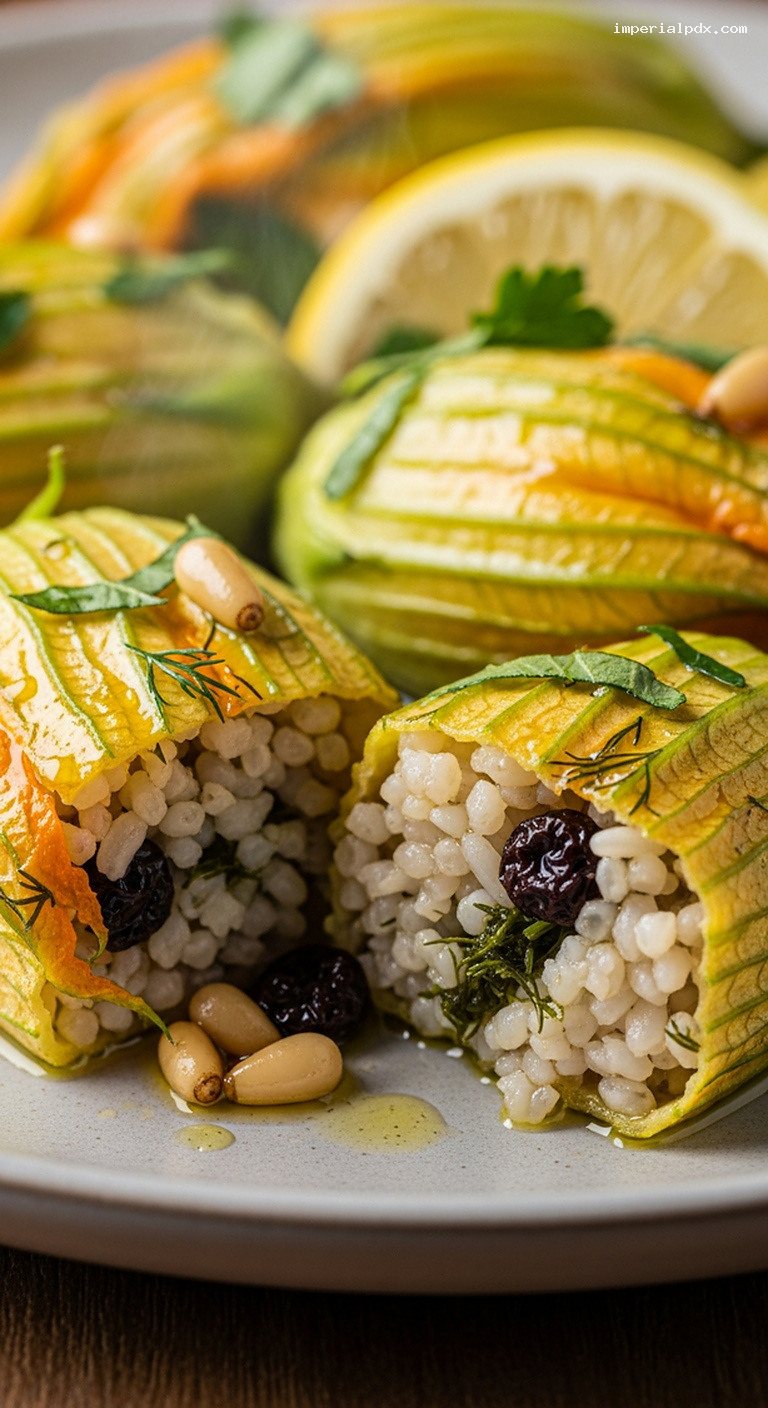
Place a zucchini flower on your work surface and gently open the petals with one hand. Using a small spoon (or clean fingers), add about 1–2 teaspoons of the rice filling into the base of the flower. Do not overfill; the rice expands as it cooks, and overfilled flowers may burst.
Fold the petals back over the filling. You can either twist the tips lightly together or fold them inward in a little packet to help keep the filling in place. Repeat with the remaining flowers, matching the amount of filling to their size as best you can. If you have a bit of filling left over at the end, you can cook it separately in a tiny ramekin or tuck it in gaps between the stuffed flowers in the pot.
Step 5: Arrange stuffed flowers and prepare cooking liquid
Choose a wide, shallow pot or deep sauté pan with a lid that will hold the stuffed flowers snugly in a single layer (a slightly overlapping second layer is fine if needed). Lightly oil the bottom with 1–2 teaspoons of olive oil.
Arrange the stuffed zucchini flowers seam-side down, packing them gently but firmly so they support each other and do not roll around. Drizzle the remaining 1/4 cup (60 ml) olive oil over the top, along with the juice of 1 lemon (about 3 tbsp / 45 ml). Sprinkle with about 1/2 tsp salt.
Carefully pour in enough hot water or vegetable broth down the sides of the pot (not directly on top of the flowers) to almost reach the top of the stuffed flowers but not completely cover them, about 1 1/2–2 cups (360–480 ml) depending on your pot size.
Step 6: Gently simmer until tender
Place a heatproof plate directly on top of the stuffed flowers to weigh them down and keep them from floating or unrolling. Cover the pot with its lid and bring the liquid to a very gentle simmer over medium heat. Once simmering, immediately reduce the heat to low so the liquid just barely bubbles.
Cook for 30–35 minutes, checking once or twice to ensure there is still some liquid in the pot and topping up with a splash of hot water if needed. The rice should be fully cooked and tender, and the flowers very soft but still holding their shape. Remove from the heat.
Step 7: Rest and serve at room temperature
Remove the lid and let the stuffed zucchini flowers cool in their cooking liquid for at least 20–30 minutes. This resting time allows the rice to fully absorb the flavors and helps the flowers firm up slightly, making them easier to handle.
Before serving, drizzle over the remaining lemon juice (from the second lemon) to taste and, if you like, a thread more olive oil. Gently transfer the flowers to a serving platter with a spatula or spoon, trying to keep them intact. Spoon a little of the flavorful cooking liquid over the top and garnish with extra chopped herbs.
Serve at cool room temperature with lemon wedges on the side. A little bowl of thick plain yogurt is a lovely, optional accompaniment.
Pro Tips
- Handle the flowers like lace. Zucchini blossoms are extremely delicate. Work slowly, do not over-rinse, and keep them covered with a damp towel so they do not wilt or tear.
- Do not overfill. It is tempting to pack in extra rice, but leave space for the grains to expand. Slightly underfilling gives prettier, intact dolma.
- Low and slow wins. Keep the simmer very gentle. Vigorous boiling can cause the flowers to burst and the filling to escape.
- Taste the filling. Adjust salt, spice, and herbs before stuffing. The filling should taste slightly more seasoned than you think you need, as the rice will mellow during cooking.
- Best served warm or room temperature. Like many olive-oil-based Aegean dishes, çiçek dolma tastes even better after resting and is wonderful served the next day.
Variations
- With a touch of tomato: Add 1 small grated tomato (or 2 tbsp tomato puree) to the rice filling along with the water in Step 3 for a slightly richer, more savory version.
- With ground meat: For a more substantial dish, mix 150–200 g (about 5–7 oz) finely ground lamb or beef into the rice filling, and omit the sugar. Increase cooking time by 5–10 minutes to ensure the meat is fully cooked.
- Different nuts and fruit: Replace pine nuts with finely chopped blanched almonds and currants with finely chopped raisins or dried apricots for a slightly different sweetness and texture.
Storage & Make-Ahead
Çiçek dolma is an excellent make-ahead dish. Once cooled completely in its cooking liquid, transfer the stuffed flowers and a little of the liquid to an airtight container. Refrigerate for up to 3 days. The flavors actually deepen after a day in the fridge. To serve, bring to room temperature for about 30–45 minutes. If you prefer them slightly warm, place them in a covered dish and warm very gently over low heat or in a low oven (about 120°C / 250°F) until just lukewarm; avoid overheating or they may dry out. Leftovers should not be frozen, as the delicate flowers tend to become mushy and lose their texture when thawed.
Nutrition (per serving)
Approximate values for 1 of 6 servings: 230 calories; 15 g fat (2 g saturated); 24 g carbohydrates; 2 g fiber; 4 g protein; 310 mg sodium (will vary with added salt and broth). These estimates assume all of the cooking liquid is consumed and no yogurt is added.