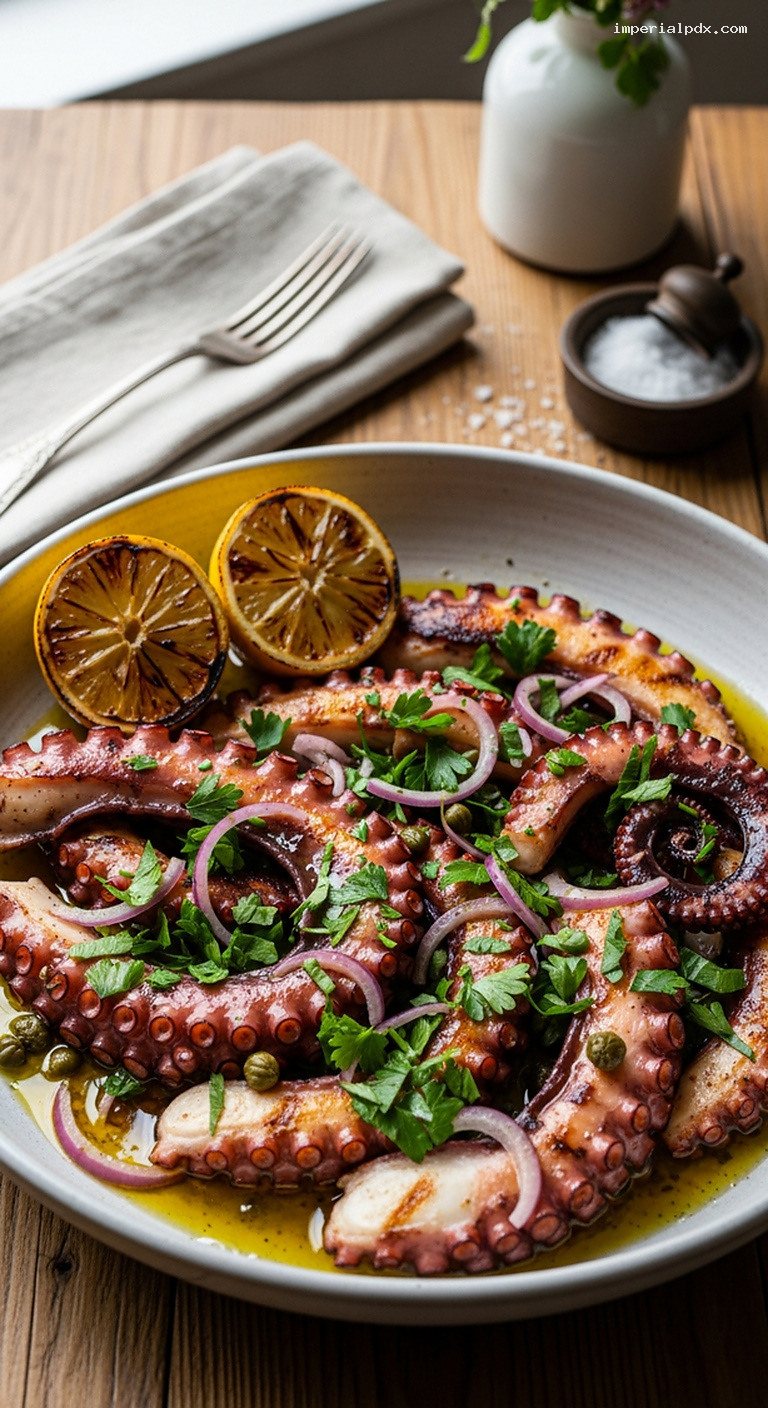
Quick Recipe Version (TL;DR)
Quick Ingredients
- 1–1.2 kg (2.2–2.6 lb) whole octopus, cleaned (fresh or thawed)
- 1 small onion, halved
- 2 bay leaves
- 6–8 black peppercorns
- 2 tbsp white wine vinegar or lemon juice (for poaching liquid)
- 6 tbsp extra-virgin olive oil, divided
- 3 tbsp freshly squeezed lemon juice
- 1 small red onion, very thinly sliced
- 2 tbsp capers, rinsed and drained
- 1 small bunch flat-leaf parsley, finely chopped (about 1/2 cup)
- 1 tsp fine sea salt (plus more to taste)
- 1/2 tsp freshly ground black pepper
- Optional: lemon wedges, flaky sea salt, chili flakes for serving
Do This
- 1. Rinse and clean the octopus if needed, removing beak and any remaining innards.
- 2. Place octopus, halved onion, bay leaves, peppercorns, vinegar, and enough water to cover in a pot; bring to a gentle simmer.
- 3. Simmer, partially covered, for 40–50 minutes until tentacles are very tender when pierced with a knife; let cool in the liquid for 10 minutes.
- 4. Heat a grill or grill pan to medium-high (about 230–245°C / 450–475°F). Pat octopus dry, toss with 2 tbsp olive oil, and grill 2–3 minutes per side until lightly charred.
- 5. Chop grilled octopus into bite-size pieces; place in a bowl with sliced red onion, capers, and parsley.
- 6. Whisk remaining 4 tbsp olive oil, 3 tbsp lemon juice, salt, and black pepper; pour over salad and toss well.
- 7. Taste and adjust seasoning; serve at room temperature or lightly chilled with extra lemon and flaky salt.
Why You’ll Love This Recipe
- Classic Aegean flavors: bright lemon, fruity olive oil, briny capers, and fresh herbs wrapped around tender grilled octopus.
- Restaurant-quality but home-cook friendly, with clear steps for perfectly tender octopus every time.
- Light, fresh, and naturally high in protein, ideal as a meze, appetizer, or part of a seafood spread.
- Can be made ahead and served cool or at room temperature, making it perfect for entertaining.
Grocery List
- Produce: 1 small onion, 1 small red onion, 1 bunch flat-leaf parsley, 3–4 lemons (for juice and wedges)
- Dairy: None
- Pantry: 1–1.2 kg octopus, extra-virgin olive oil, capers, bay leaves, black peppercorns, white wine vinegar (or extra lemon juice), fine sea salt, black pepper, optional chili flakes, flaky sea salt
Full Ingredients
For Cooking the Octopus
- 1–1.2 kg (2.2–2.6 lb) whole octopus, cleaned (fresh or thawed if frozen)
- 1 small yellow or white onion, peeled and halved
- 2 bay leaves
- 6–8 whole black peppercorns
- 2 tbsp white wine vinegar or freshly squeezed lemon juice
- Cold water, enough to just cover the octopus
For Grilling & The Salad
- 6 tbsp extra-virgin olive oil, divided
- 3 tbsp freshly squeezed lemon juice (from about 1–2 lemons)
- 1 small red onion, very thinly sliced (about 1/2 cup packed)
- 2 tbsp capers, rinsed and drained
- 1 small bunch flat-leaf parsley, leaves and tender stems finely chopped (about 1/2 cup lightly packed)
- 1 tsp fine sea salt, plus more to taste
- 1/2 tsp freshly ground black pepper, plus more to taste
To Serve (Optional, But Recommended)
- Lemon wedges
- Flaky sea salt
- Pinch of red pepper flakes or Aleppo pepper for gentle heat
- Crusty bread, toasted or grilled
Step-by-Step Instructions
Step 1: Clean and Prepare the Octopus
If your fishmonger has not already cleaned the octopus, start by rinsing it well under cold running water. Turn the head (mantle) inside out and remove any innards, then rinse again. Locate the beak where the tentacles meet; push it out with your fingers or cut it out with a small sharp knife. Rinse once more, then drain well.
Pat the octopus dry with paper towels. Do not worry about the skin or suction cups; they will soften and curl beautifully during cooking and grilling.
Step 2: Gently Simmer Until Tender
Place the cleaned octopus into a large, heavy pot. Add the halved onion, bay leaves, black peppercorns, and vinegar or lemon juice. Pour in enough cold water to just cover the octopus.
Set the pot over medium heat and bring it up to a gentle simmer. As it heats, the octopus will release some of its own juices and change color to a pinkish purple. Reduce the heat to low so the liquid barely bubbles. Partially cover the pot and simmer for 40–50 minutes, or until the thickest part of a tentacle is very tender when pierced with the tip of a knife.
Turn off the heat and let the octopus cool in the hot liquid for about 10 minutes. This helps it stay juicy.
Step 3: Drain and Prep for Grilling
Using tongs, lift the octopus out of the cooking liquid and transfer it to a cutting board. (You can discard the poaching liquid, or strain and chill it to use as a light seafood stock.)
Pat the octopus very dry with paper towels; this is important for good grill marks. If the head pouch seems large, you can cut it in half or into wide strips for easier grilling later. Leave the tentacles attached or separate them, depending on the size of your grill or grill pan.
Drizzle the octopus with 2 tbsp of the olive oil and gently rub it all over so it is lightly coated.
Step 4: Grill for Smoky Char and Flavor
Preheat a gas or charcoal grill, or a ridged grill pan, to medium-high heat (about 230–245°C / 450–475°F). Lightly oil the grates or pan to prevent sticking.
Place the octopus on the hot grill. Grill for 2–3 minutes per side, turning with tongs, until you see light char marks and some crispy edges, especially on the suction cups. You are not cooking it through at this stage (that already happened in the pot); you are just adding smoky flavor and texture.
If you like, place a couple of halved lemons cut side down on the grill during the last minute or two, until lightly charred. These make a beautiful and flavorful garnish.
Step 5: Slice the Octopus
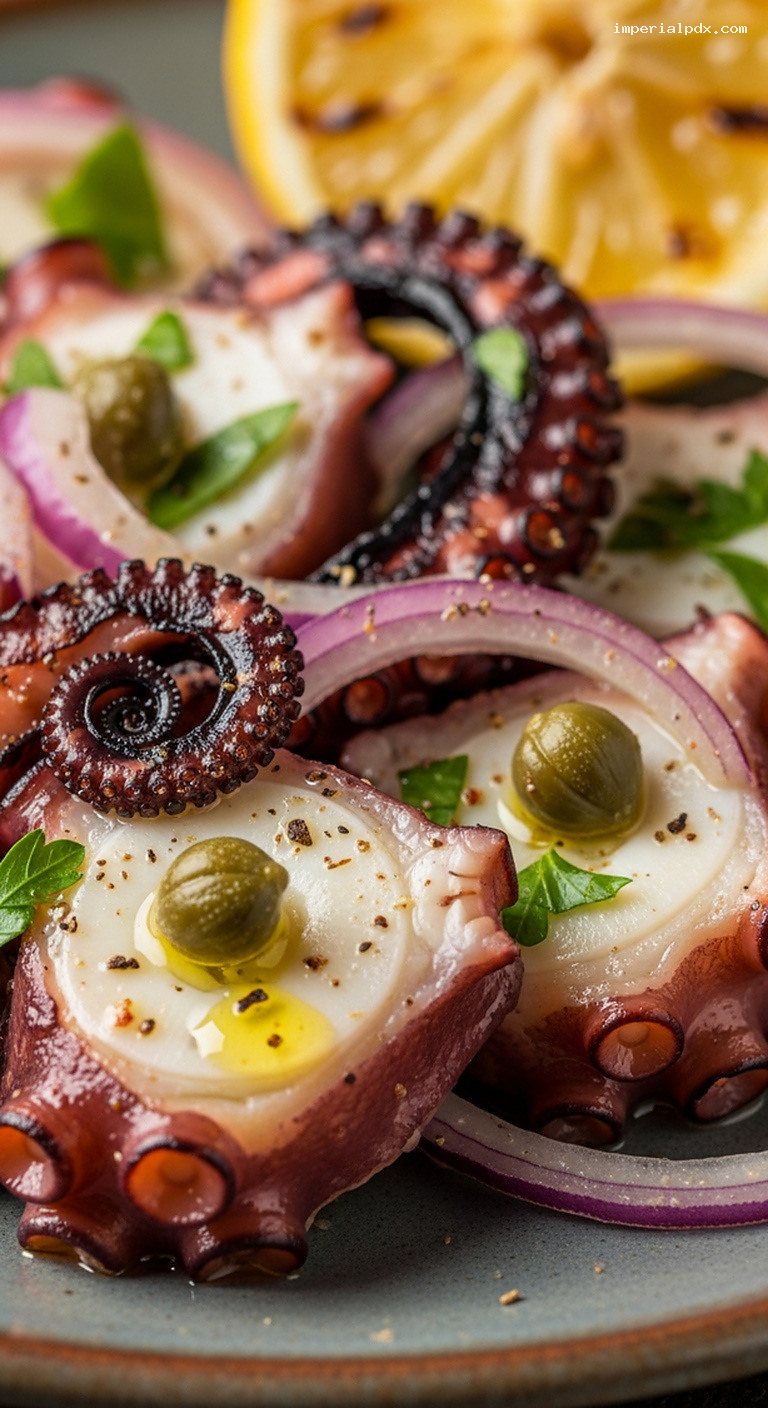
Transfer the grilled octopus back to the cutting board and let it sit for 5 minutes until cool enough to handle. Using a sharp knife, cut the tentacles into bite-size pieces, about 1–2 cm (1/2–3/4 inch) thick. Slice the head and any larger pieces into similar-sized strips or chunks.
Place all the chopped octopus into a medium serving bowl.
Step 6: Prepare the Bright Aegean Dressing
In a small bowl or measuring jug, combine the remaining 4 tbsp olive oil, 3 tbsp lemon juice, 1 tsp fine sea salt, and 1/2 tsp freshly ground black pepper. Whisk until the mixture looks slightly thickened and emulsified.
Taste the dressing; it should taste boldly lemony and well seasoned. Adjust with a pinch more salt or lemon if desired, keeping in mind that the capers will add extra saltiness later.
Step 7: Assemble the Salad
Add the very thinly sliced red onion, rinsed capers, and chopped parsley to the bowl with the chopped octopus. Pour the dressing over the top.
Gently toss everything together until the octopus pieces and onions are evenly coated in the glossy lemon-olive oil dressing and flecked with parsley. Taste and adjust seasoning with more salt, pepper, or lemon juice as needed. If you enjoy a little heat, sprinkle in a pinch of red pepper flakes or Aleppo pepper.
Step 8: Rest, Garnish, and Serve
For the best flavor, let the salad rest for at least 10–15 minutes at room temperature so the octopus can absorb the dressing. Alternatively, cover and refrigerate for up to a few hours, then bring back to cool room temperature before serving.
Transfer the salad to a shallow serving dish. Drizzle with a little extra olive oil, sprinkle with flaky sea salt, and finish with a few extra parsley leaves. Add grilled or fresh lemon wedges around the edges for squeezing at the table. Serve as an Aegean-style meze with crusty bread and other small plates.
Pro Tips
- Use frozen octopus for extra tenderness. Previously frozen octopus often cooks up more tender than very fresh, as freezing helps break down some of the tougher fibers.
- Keep the simmer gentle. A rolling boil can toughen the flesh. Aim for a low, lazy simmer with only occasional bubbles breaking the surface.
- Dry thoroughly before grilling. Moisture is the enemy of good caramelization. Pat the octopus very dry so it chars instead of steams.
- Slice the onion ultra-thin. Paper-thin red onion integrates into the salad without overpowering it. Soak slices briefly in cold water if you prefer a milder bite.
- Season just before serving. Taste and adjust salt and lemon at the end, after the salad has rested, since the flavors will develop as it sits.
Variations
- Tomato and cucumber version: Add 1 cup diced ripe tomatoes and 1 cup diced cucumber for a more salad-like dish, perfect for warm days.
- Garlic and oregano twist: Add 1–2 finely grated garlic cloves and 1 tsp dried oregano (or 1 tbsp fresh) to the dressing for a more intensely Mediterranean flavor.
- Spicy chili oil finish: Drizzle the plated salad with a teaspoon or two of good-quality chili oil instead of red pepper flakes for a gentle, warm heat.
Storage & Make-Ahead
Octopus salad keeps very well and often tastes even better after a short rest. Store leftovers in an airtight container in the refrigerator for up to 2 days. The olive oil may firm up when chilled; simply let the salad sit at room temperature for 15–20 minutes and give it a gentle toss before serving. For make-ahead entertaining, you can cook and grill the octopus up to 1 day in advance, then slice and store it separately in the fridge. Assemble with the onions, capers, parsley, and dressing 1–3 hours before serving, and keep refrigerated. Avoid freezing the finished salad, as the texture of the octopus and onions will suffer.
Nutrition (per serving)
Approximate values for 1 of 4 servings: about 280–320 calories; 25–30 g protein; 17–20 g fat; 4–7 g carbohydrates; 1–2 g fiber; 650–800 mg sodium (will vary based on salt, capers, and exact octopus size). This salad is naturally dairy-free, gluten-free (if served without bread), and high in lean protein and minerals like iron and selenium.