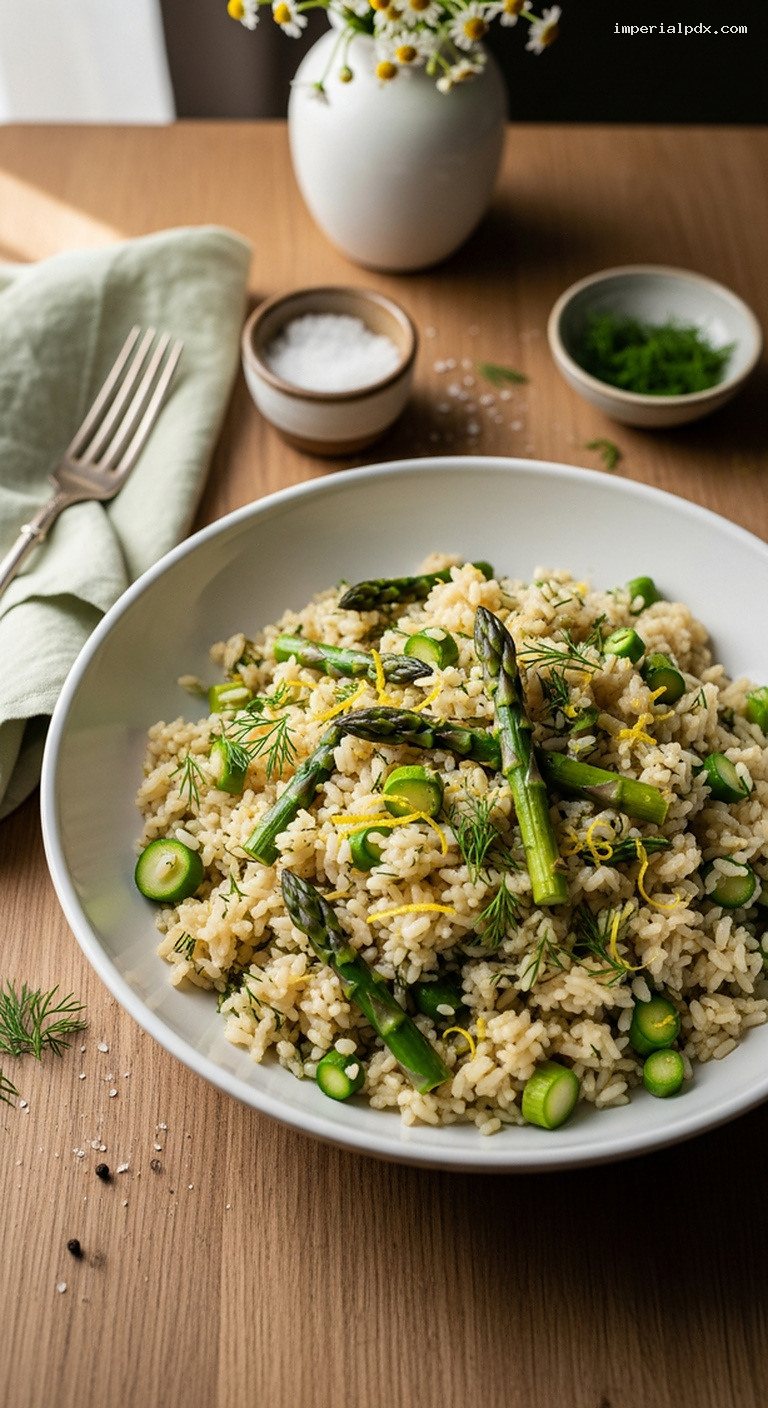
Quick Recipe Version (TL;DR)
Quick Ingredients
- 1 cup (200 g) baldo or other medium-grain rice, rinsed and drained
- 1 small bunch asparagus (about 250 g), trimmed and cut
- 2 tbsp unsalted butter
- 1 tbsp olive oil
- 1 small onion, finely chopped
- 2 garlic cloves, minced
- 1 1/2 cups (360 ml) hot vegetable or chicken stock
- 1 tsp fine sea salt, plus more to taste
- 1/4 tsp freshly ground black pepper
- Zest of 1 small lemon + 1 tbsp lemon juice
- 3 tbsp finely chopped fresh dill
- Optional: 1/2 cup peas, toasted nuts, crumbled feta
Do This
- 1) Rinse rice under cold water until it runs clear; drain well. Prep asparagus by snapping off woody ends and cutting stems into small pieces, keeping tips separate.
- 2) Blanch asparagus stems 2 minutes and tips 1 minute in salted boiling water, then drain and cool under cold water; set aside.
- 3) In a medium pan, melt butter with olive oil over medium heat. Soften onion 4–5 minutes, then add garlic for 30 seconds.
- 4) Stir in drained rice and cook 3–4 minutes, until coated and slightly translucent.
- 5) Add hot stock, salt, pepper, lemon zest, peas (if using), and blanched asparagus stems. Bring to a gentle boil, then cover and cook on low 12–15 minutes, until liquid is absorbed.
- 6) Remove from heat, cover with a clean towel under the lid, and rest 10 minutes. Add asparagus tips, dill, and lemon juice.
- 7) Fluff gently with a fork, adjust seasoning, garnish with extra dill, nuts, or feta, and serve warm.
Why You’ll Love This Recipe
- A light, springy twist on classic Turkish pilaf that makes asparagus the star.
- Fluffy, separate grains of rice with bright lemon and fresh dill for an aromatic side.
- Simple pantry ingredients, one main pan, and beginner-friendly techniques.
- Versatile: serve alongside fish, chicken, grilled vegetables, or enjoy as a light main.
Grocery List
- Produce: 1 bunch asparagus, 1 small onion, 2 garlic cloves, 1 lemon, fresh dill, optional fresh mint, optional lemon wedges.
- Dairy: Unsalted butter, optional feta cheese.
- Pantry: Baldo or medium-grain rice, olive oil, vegetable or chicken stock (or bouillon), fine sea salt, black pepper, optional peas, optional nuts (slivered almonds or pine nuts).
Full Ingredients
For the Pilaf Base
- 1 cup (200 g) baldo rice or other medium-grain rice, thoroughly rinsed and well drained
- 2 tbsp unsalted butter
- 1 tbsp olive oil
- 1 small onion, finely chopped (about 80 g)
- 2 garlic cloves, minced
- 1 1/2 cups (360 ml) hot vegetable or chicken stock (or water with bouillon)
- 1 tsp fine sea salt (reduce if your stock is salty)
- 1/4 tsp freshly ground black pepper
For the Asparagus & Seasoning
- 1 small bunch asparagus (about 250 g), woody ends snapped off
- Zest of 1 small lemon (about 1 tsp packed)
- 1 tbsp fresh lemon juice (or to taste)
- 3 tbsp finely chopped fresh dill, plus extra fronds for garnish
Optional Add-Ins & Garnishes
- 1/2 cup (70 g) fresh or frozen peas (no need to thaw)
- 2 tbsp toasted slivered almonds or pine nuts
- 2–3 tbsp crumbled feta cheese
- Lemon wedges, for serving
Step-by-Step Instructions
Step 1: Rinse the rice for fluffy grains
Place the rice in a fine-mesh sieve or a bowl. Rinse under cold running water, swishing the rice with your fingers, until the water runs mostly clear. This removes excess surface starch and helps the pilaf cook up fluffy instead of sticky.
Drain very well and leave the rice in the sieve to dry for a few minutes while you prepare the vegetables. If you have time, you can soak the rinsed rice in cold water for 10–15 minutes, then drain thoroughly. Soaking gives even more tender, separate grains, but it is optional.
Step 2: Prep and blanch the asparagus
Snap off the woody ends of the asparagus; they will naturally break where the tender part begins. Discard the tough ends or save them for stock. Cut the remaining stalks into 1 cm (about 1/2 inch) pieces, keeping the tips about 4 cm (1 1/2 inches) long. Separate the tips from the chopped stems.
Bring a small pot of salted water to a boil. Add the asparagus stems and cook for 2 minutes. Add the tips and cook 1 more minute. Drain immediately and rinse briefly under cold water to stop the cooking and keep the color bright green. Drain well and set aside.
Step 3: Soften the aromatics in butter and olive oil
In a medium, heavy-bottomed saucepan or shallow wide pan with a lid, heat the butter and olive oil over medium heat until the butter is melted and foamy. Add the chopped onion and a pinch of salt. Cook, stirring often, for 4–5 minutes, until the onion is soft and translucent but not browned.
Stir in the minced garlic and cook for about 30 seconds, just until fragrant. Keep the heat moderate; you want the onion and garlic to gently soften and sweeten, not crisp or brown, which could give the pilaf a slightly bitter taste.
Step 4: Toast the rice
Add the well-drained rice to the pan with the onions and garlic. Stir to coat every grain with the butter and oil. Cook, stirring frequently, for 3–4 minutes. The rice should look glossy and slightly translucent around the edges, and you may hear a gentle crackling sound.
This toasting step is classic in Turkish pilaf-making and helps the grains stay separate and develop a deeper, nutty flavor. Take care not to brown the rice; if it starts to color or stick, reduce the heat slightly.
Step 5: Add liquid, asparagus stems, and simmer
Pour in the hot stock, then add the salt, black pepper, lemon zest, and peas if you are using them. Stir once to distribute the seasonings and level the rice into an even layer. Gently fold in the blanched asparagus stems (set the tips aside for now).
Increase the heat to bring the mixture just to a gentle boil. As soon as it starts bubbling, reduce the heat to low, cover the pan with a tight-fitting lid, and let it simmer without lifting the lid for 12–15 minutes. The liquid should be fully absorbed and the surface of the rice should look set with small steam holes appearing. Try not to stir while it cooks, as that can break the grains and make the pilaf gummy.
Step 6: Rest the pilaf, then add dill, lemon, and asparagus tips
Once the liquid is absorbed, remove the pan from the heat. Place a clean kitchen towel or a double layer of paper towels over the pot, then replace the lid. Let the pilaf rest, undisturbed, for 10 minutes. This steaming step allows the grains to finish cooking gently and firm up, giving you that classic fluffy texture.
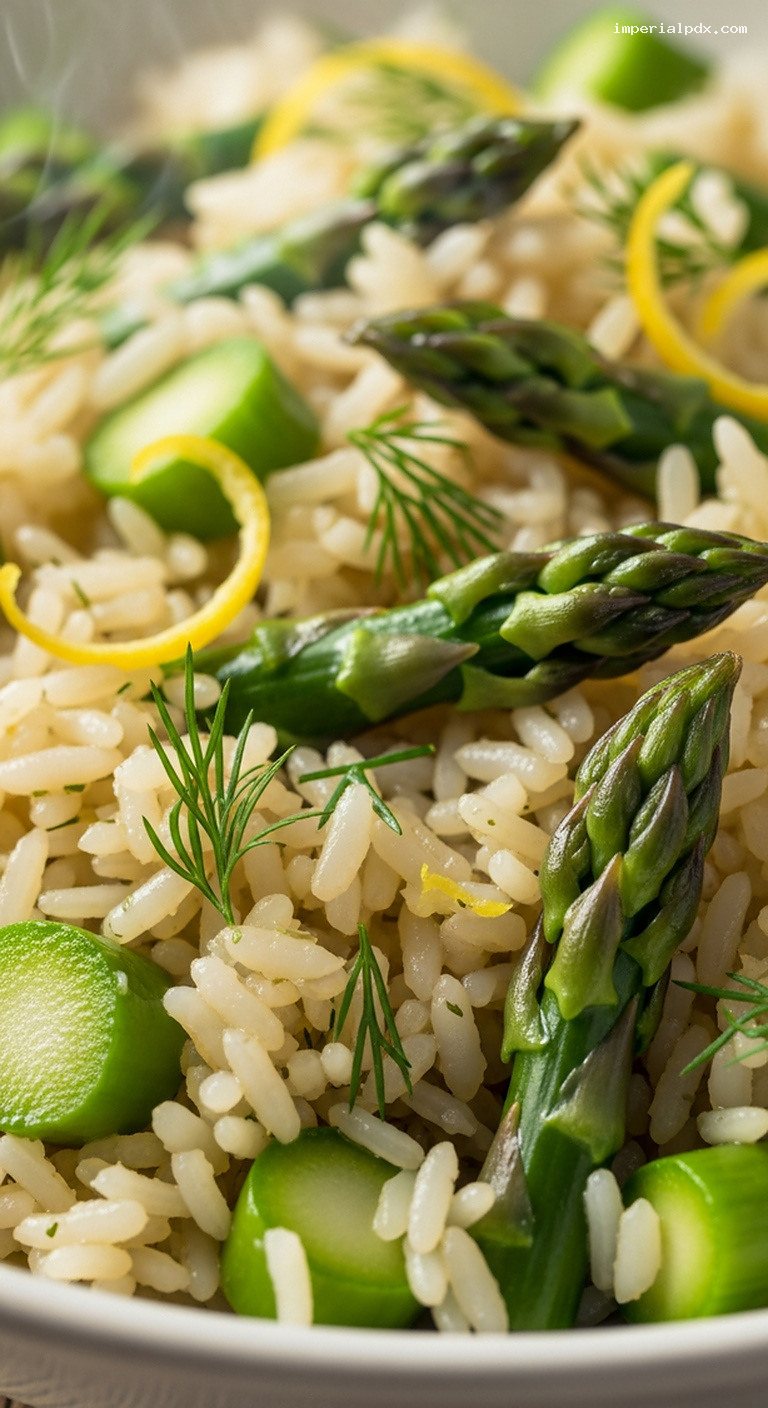
After resting, remove the lid and towel. Add the blanched asparagus tips, chopped fresh dill, and lemon juice. Using a fork or a wooden spoon, gently fluff the rice from the edges toward the center, loosening the grains and distributing the asparagus tips and herbs without mashing them. Taste and adjust seasoning with more salt, pepper, or lemon juice as needed.
Step 7: Garnish and serve
Transfer the Kuşkonmazlı pilav to a warm serving dish or bring the pan straight to the table. If you like, sprinkle toasted slivered almonds or pine nuts and crumbled feta over the top for extra texture and richness. Finish with a few extra dill fronds and an extra grating of lemon zest for a fresh aroma.
Serve the pilaf warm as a side dish with grilled fish, roasted chicken, lamb, or a spread of meze. It also makes a lovely light main alongside a crisp green salad and thick yogurt.
Pro Tips
- Rinse thoroughly: Keep rinsing the rice until the water runs mostly clear. This is the single biggest key to light, fluffy pilaf.
- Use hot stock: Warm or hot stock helps the rice start cooking evenly and keeps the temperature steady when you add it to the pan.
- Do not peek: Avoid lifting the lid while the pilaf simmers. Escaping steam can lead to unevenly cooked, underdone rice.
- Adjust liquid if needed: If, after 15 minutes, the rice is still a bit firm and there is no visible liquid, sprinkle on 1–2 tbsp hot water, cover, and cook 2–3 minutes more.
- Cook asparagus just to tender-crisp: Overcooked asparagus turns mushy and dull. Blanch only briefly to keep it bright and slightly crisp.
Variations
- One-pan version (no blanching): Skip blanching the asparagus. After toasting the rice, add the chopped raw asparagus stems with the stock and simmer as directed. Stir in the raw tips with the dill at the end; cover and let the residual heat soften them for a few minutes.
- Herby spring mix: Use a mix of fresh dill and mint (about half and half) for a more complex, garden-fresh flavor. Add a handful of finely sliced green onions along with the herbs.
- Creamy & cheesy: Stir 2–3 tbsp crumbled feta and 1–2 tbsp finely grated Parmesan into the pilaf just after fluffing. The heat will soften the cheese slightly and give a creamier, more indulgent pilaf.
Storage & Make-Ahead
Cool leftover pilaf quickly by spreading it in a thin layer on a tray, then transfer to an airtight container. Refrigerate for up to 3 days. To reheat, sprinkle the pilaf with 1–2 tbsp water, cover, and warm gently in a lidded pan over low heat for 5–8 minutes, fluffing occasionally. You can also reheat in the microwave, covered, in 30-second bursts, fluffing between each burst. For the best asparagus texture, this dish is not ideal for freezing, but if needed, you can freeze it in a sealed container for up to 1 month and reheat from frozen with a splash of water.
Nutrition (per serving)
Approximate values per serving (1/4 of the recipe, without optional toppings): about 280 calories; 6 g protein; 40 g carbohydrates; 11 g fat; 4 g fiber; 550 mg sodium (will vary depending on stock and added salt). Adding nuts and feta will increase the fat, protein, and overall calories.