Quick Recipe Version (TL;DR)
Quick Ingredients
- 1 jar (16 oz / 450 g) brined grape leaves (use 35–40 leaves, plus a few extra torn ones)
- 1 cup (200 g) long‑grain rice, rinsed and soaked 20 minutes
- 1 large onion, finely diced
- 2/3 cup (160 ml) extra‑virgin olive oil, divided
- 3 tbsp pine nuts (optional)
- 3 tbsp currants or finely chopped raisins
- About 1 cup mixed fresh herbs (parsley, dill, mint), finely chopped
- 2–3 lemons (zest and juice)
- Spices: 1½ tsp salt + more for pot, 1 tsp sugar, 1 tsp ground allspice, ½ tsp cinnamon, ½ tsp black pepper
- 2 cups (480 ml) hot water or light vegetable/chicken broth
- Optional meat version: 9 oz (250 g) ground lamb or beef, reduce rice to ¾ cup (150 g), omit sugar if you like
Do This
- 1. Rinse grape leaves to remove brine, then blanch in simmering water 2–3 minutes until pliable; drain and cool.
- 2. For the filling, sauté onion (and pine nuts) in 1/3 cup olive oil, then add rice, spices, currants, ½ cup water; cook 5 minutes. Stir in herbs and cool. For meat version, brown meat with onion first, then add remaining filling ingredients.
- 3. Trim stems from leaves. Place each leaf vein‑side up, add 1–1½ tbsp filling near the stem end, fold sides over, and roll into tight little cigars.
- 4. Line a wide pot with torn leaves or tomato slices. Pack rolls snugly, seam‑side down, in concentric circles; add a second layer if needed. Top with lemon slices and drizzle 3 tbsp olive oil.
- 5. Mix 2 cups hot water/broth with juice of 1 lemon and 1 tsp salt. Pour into pot to reach about ¾ of the way up the rolls. Place a heatproof plate on top.
- 6. Bring to a bare simmer, then cover and cook on low 45–60 minutes, until rice is tender and leaves are silky. Rest 15 minutes, then cool to warm or room temperature.
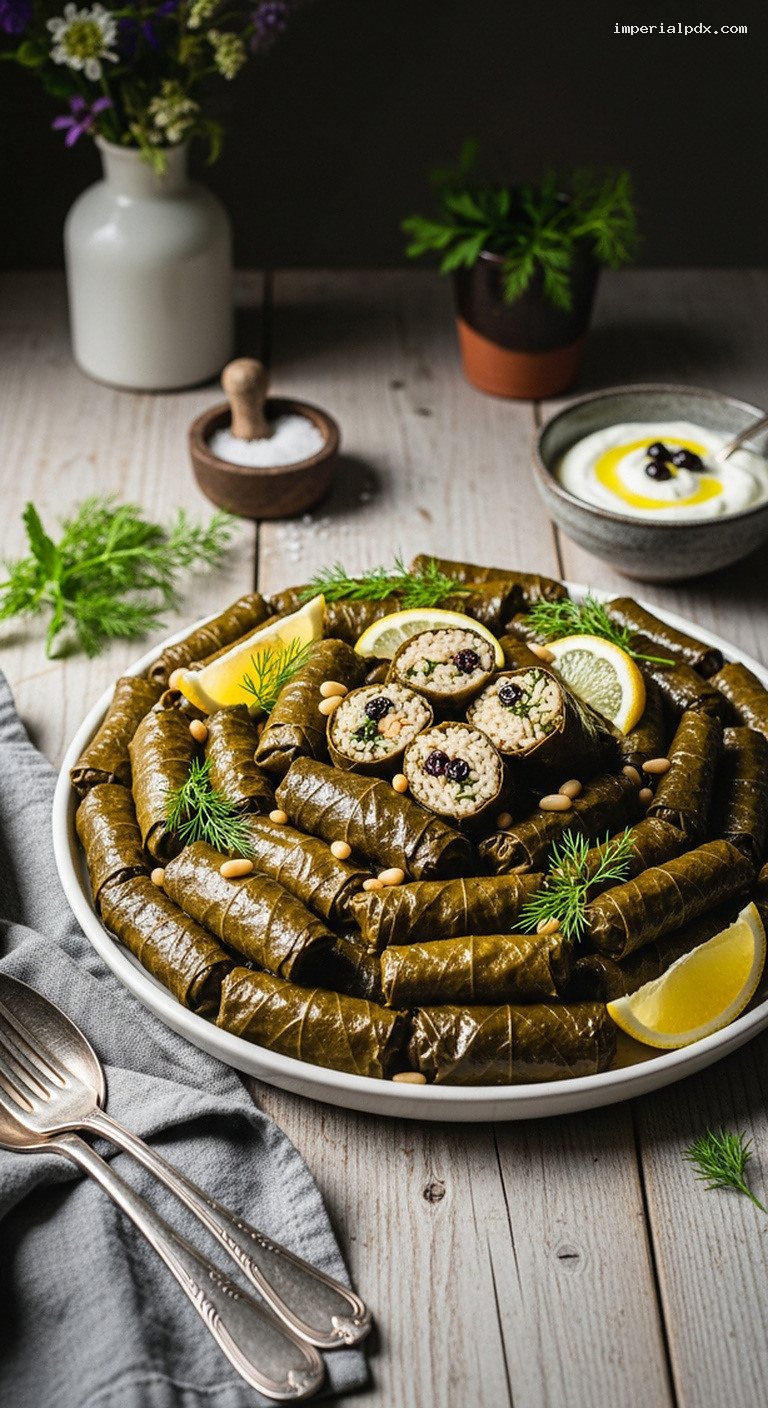
- 7. Drizzle with remaining olive oil, garnish with fresh herbs and lemon wedges, and serve (with yogurt if you like).
Why You’ll Love This Recipe
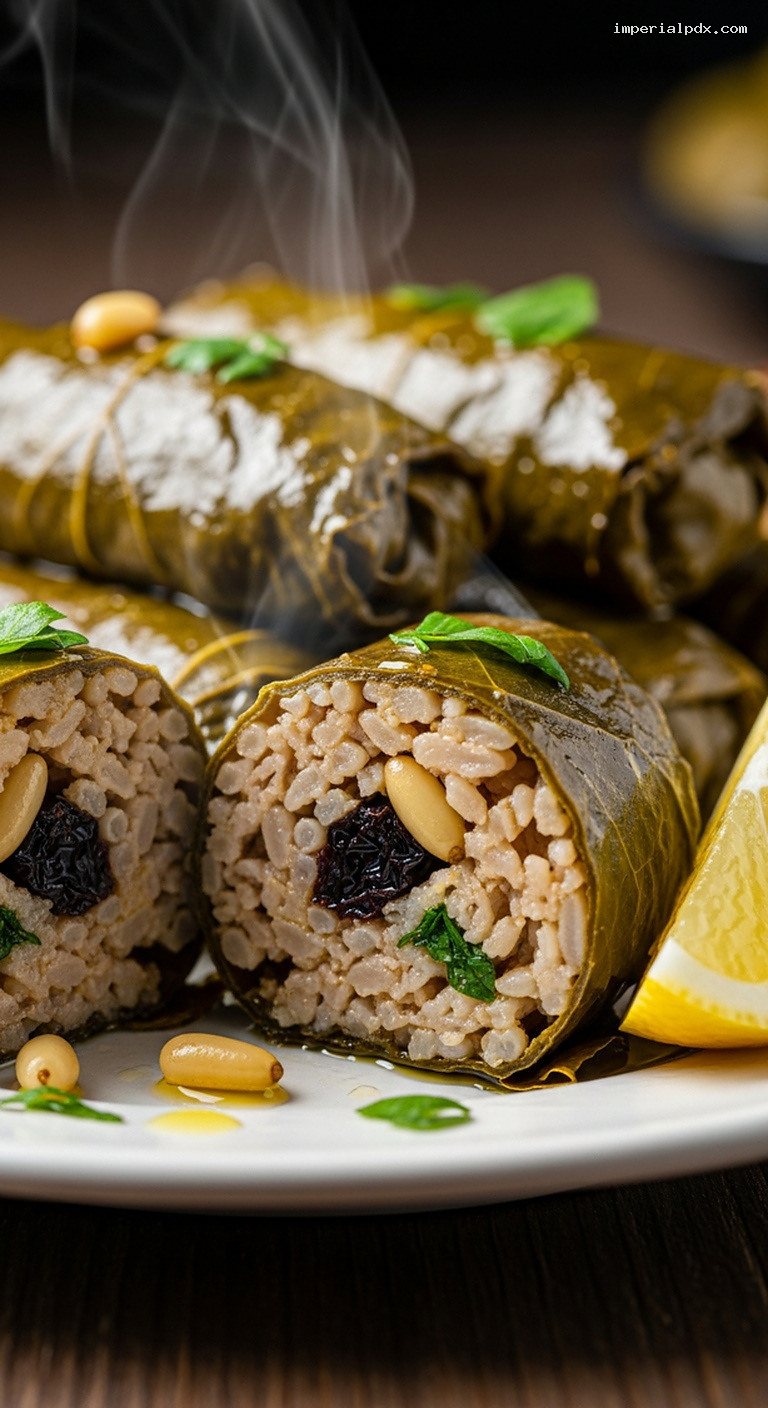
- Classic yaprak sarma flavor: tender grape leaves wrapped around a fragrant, lemony rice filling with herbs and currants.
- Flexible: make it fully vegetarian or add ground lamb/beef for a heartier version.
- Perfect for entertaining: can be made ahead, served warm or at room temperature, and looks beautiful on a mezze spread.
- Step‑by‑step method demystifies rolling and simmering so even first‑timers can succeed.
Grocery List
- Produce: 1 large onion, 2–3 lemons, fresh flat‑leaf parsley, fresh dill, fresh mint, optional tomatoes (for lining the pot).
- Dairy: Plain Greek yogurt or thick strained yogurt for serving (optional).
- Pantry: 1 jar brined grape leaves, long‑grain rice, extra‑virgin olive oil, pine nuts (optional), currants or raisins, salt, sugar, ground allspice, ground cinnamon, black pepper, vegetable or chicken broth (or use water), optional ground lamb or beef.
Full Ingredients
For the Grape Leaves and Pot
- 1 jar (16 oz / 450 g) brined grape leaves (you will use about 35–40 intact leaves for rolling, plus 5–6 torn or small leaves for lining the pot)
- 1–2 medium tomatoes, sliced (optional, for lining the pot bottom)
- 2–3 lemons:
- 1 lemon, thinly sliced into rounds
- 1 lemon, juiced (about 3 tbsp / 45 ml) for the cooking liquid
- 1 lemon, cut into wedges for serving (optional)
- 1/4 cup (60 ml) extra‑virgin olive oil for the pot (drizzling and finishing)
- 2 cups (480 ml) hot water or light vegetable/chicken broth
- 1 tsp fine sea salt (for the cooking liquid), plus more to taste
For the Vegetarian Rice, Herb, and Currant Filling
- 1 cup (200 g) long‑grain rice (such as Turkish baldo, basmati, or other long‑grain), rinsed until water runs mostly clear and soaked in cool water 20 minutes, then drained
- 1 large onion (about 7 oz / 200 g), very finely diced
- 1/3 cup (80 ml) extra‑virgin olive oil
- 3 tbsp (about 25 g) pine nuts (optional but traditional and delicious)
- 3 tbsp (about 25 g) currants or very finely chopped raisins
- 1½ tsp fine sea salt
- 1 tsp granulated sugar
- 1 tsp ground allspice
- 1/2 tsp ground cinnamon
- 1/2 tsp freshly ground black pepper
- 1/2 cup (120 ml) water (to pre‑cook the filling)
- 1/3 cup (loosely packed, about 8 g) finely chopped fresh flat‑leaf parsley
- 1/3 cup (loosely packed, about 8 g) finely chopped fresh dill
- 1/4 cup (loosely packed, about 5 g) finely chopped fresh mint
- Finely grated zest of 1 lemon (optional but bright and lovely)
Optional Meat Filling Variation (Use Instead of the Above Filling)
- 9 oz (250 g) ground lamb or ground beef (or a 50/50 mix)
- 3/4 cup (150 g) long‑grain rice, rinsed and well drained (no soaking needed)
- 1 large onion (about 7 oz / 200 g), very finely diced
- 3 tbsp (45 ml) extra‑virgin olive oil
- 1½ tsp fine sea salt (plus more to taste)
- 1 tsp ground allspice
- 1/2 tsp ground cinnamon
- 1/2 tsp freshly ground black pepper
- 1/4 cup (60 ml) water
- 1/3 cup (loosely packed, about 8 g) finely chopped fresh flat‑leaf parsley
- 2 tbsp (loosely packed, about 4 g) finely chopped fresh mint or dill (or a mix)
- Optional: 2 tbsp currants or finely chopped raisins if you enjoy a touch of sweetness
To Serve
- Extra‑virgin olive oil, for drizzling
- Fresh parsley or dill, finely chopped, for garnish
- Lemon wedges
- Plain Greek yogurt or thick strained yogurt (optional but highly recommended)
Step-by-Step Instructions
Step 1: Prepare and Blanch the Grape Leaves
Open the jar of brined grape leaves and gently remove the leaves, trying not to tear them. Unroll any bundles. Place the leaves in a large bowl and cover with plenty of cold water. Let them soak for 10–15 minutes to remove excess salt from the brine.
Meanwhile, bring a large pot of water to a gentle boil. Drain the leaves from the soaking water. Working in batches, slide the leaves into the simmering water and blanch for 2–3 minutes, just until they soften and turn a slightly duller green. Use tongs or a slotted spoon to transfer the blanched leaves to a colander. Rinse briefly under cool water to stop the cooking and make them easier to handle. Let them drain well.
Pick out 35–40 of the best, most intact leaves for rolling. Set them in a stack on a plate, vein‑side up, ready for later. Reserve any torn or very small leaves (5–6 pieces) separately; you will use them to line the bottom of the pot.
Step 2: Make the Vegetarian Rice, Herb, and Currant Filling (Base Version)
Rinse the rice in several changes of water until the water is mostly clear, then soak it in cool water for 20 minutes. Drain well.
In a wide saucepan or deep skillet, heat 1/3 cup (80 ml) olive oil over medium heat. Add the finely diced onion and pine nuts (if using). Cook, stirring frequently, for 6–8 minutes, until the onion is soft and translucent and the pine nuts are lightly golden.
Stir in the drained rice and cook for 2–3 minutes, coating the grains in the oil. Add salt, sugar, allspice, cinnamon, black pepper, and the currants. Cook another 1–2 minutes until very fragrant. Pour in 1/2 cup (120 ml) water, stir, bring to a gentle simmer, then reduce heat to low and cook, uncovered, for about 5 minutes. The rice will start to swell but should still be undercooked and a bit firm in the center.
Remove the pan from the heat. Stir in the chopped parsley, dill, mint, and lemon zest (if using). Taste and adjust seasoning (it should taste slightly more salty and spiced than you want in the final dish, since the rice will absorb more liquid later). Let the filling cool to just warm or room temperature before rolling; this makes it easier to shape and kinder to the grape leaves.
If using the meat variation: Instead of the above, follow the same steps with the “Optional Meat Filling” ingredients: brown the ground lamb or beef in the olive oil with the onion until no pink remains, then add spices, rice, currants (if using), water, and herbs. Cook just 3–4 minutes after adding the water; the rice and meat will finish cooking inside the rolls.
Step 3: Set Up Your Rolling Station
Clear a large work surface (a clean countertop or big cutting board). Place in front of you:
- The stack of blanched grape leaves, vein‑side up
- The bowl or pan of cooled filling
- A small sharp knife or scissors (to trim stems)
- A large plate or tray to hold the rolled sarma
Trim any tough stems from the grape leaves with the knife or scissors, cutting as close to the base of the leaf as possible without making holes. If some leaves are very large, you can later use slightly more filling; if very small, use less filling or overlap two small leaves.
Step 4: Roll the Yaprak Sarma
Place one grape leaf on the work surface, shiny side down and vein‑side up, with the stem end closest to you and the tip pointing away. Add about 1–1½ tablespoons of filling (for meat version, 1 tablespoon is usually enough) in a small log shape just above where the stem was attached, leaving about 1/2 inch (1 cm) space on each side.
Fold the bottom of the leaf up over the filling. Next, fold the left and right sides in snugly, like folding a burrito. Then roll the leaf away from you, tightly but gently, into a small cigar shape about the thickness of your thumb. Do not pack it so tightly that it might burst, but tight enough that it holds its shape. Set the roll seam‑side down on the tray.
Repeat with the remaining leaves and filling. If you run short on large leaves, you can overlap two smaller leaves to create a larger one. Aim for 24–30 rolls, depending on leaf size.
Step 5: Line and Pack the Pot
Choose a wide, heavy‑bottomed pot with a lid (a 3–4 quart / 3–4 liter pot works well). Line the bottom with your reserved torn or small grape leaves. If using, add a layer of sliced tomatoes. This protective layer prevents the bottom rolls from sticking or scorching and adds flavor.
Arrange the rolls seam‑side down in a circular pattern around the edge of the pot, then make concentric circles toward the center, packing them snugly together so they support each other. If you have more rolls than can fit in one layer, start a second layer on top, arranging them in the opposite direction to help them nestle more tightly.
Once all the rolls are in, top them with lemon slices in a single layer, then drizzle about 2 tablespoons of olive oil over the top.
Step 6: Add Cooking Liquid and Simmer Gently
In a measuring jug, combine 2 cups (480 ml) hot water or broth with the juice of 1 lemon (about 3 tbsp / 45 ml) and 1 tsp fine sea salt. Stir to dissolve the salt. Pour this mixture gently over the rolls. The liquid should come up to about 2/3–3/4 of the height of the rolls; add a bit more hot water if needed, but do not fully submerge them.
Place a heatproof plate (slightly smaller than the pot) directly on top of the rolls to keep them from floating and unrolling as they cook. Cover the pot with its lid.
Bring the pot to a gentle simmer over medium heat. As soon as it starts to bubble, reduce the heat to low so it barely simmers. Cook for 45–60 minutes, depending on the size of your rolls and whether you are using meat. For vegetarian rice filling, 45–50 minutes is usually enough; for meat filling, lean toward 55–60 minutes.
To check doneness, carefully remove the lid and plate and test one sarma from the top layer: the rice should be tender (no chalky center), the leaf soft and silky, and little liquid should remain in the pot.
Step 7: Rest, Cool, and Serve
Turn off the heat and let the pot sit, covered, for 15–20 minutes. This resting time allows the flavors to meld and the rolls to firm up slightly, making them easier to lift out without tearing.
For the classic olive‑oil version, you can serve the sarma warm or at room temperature. Carefully transfer the rolls to a serving platter, using tongs or a spoon, and try to keep them intact. Drizzle with the remaining 2 tbsp olive oil, squeeze over a little extra lemon juice if you like things bright, and garnish with finely chopped parsley or dill. Serve with lemon wedges on the side.
For the meat version, they are especially nice served warm, with a generous spoonful of thick plain yogurt on the side and perhaps a sprinkle of sumac or extra black pepper. Either way, arrange them in overlapping rows or circles for a beautiful presentation.
Pro Tips
- Do not overfill the leaves. The rice expands as it cooks; using 1–1½ tablespoons of filling per leaf (less for small leaves) prevents bursting and keeps the rolls neat.
- Gentle heat is essential. A rolling boil can cause the grape leaves to tear and the rolls to unravel. Keep the simmer very low and slow.
- Season the filling a bit boldly. The rice will absorb lemony cooking liquid, so slightly more salt and spices in the filling translate to perfect seasoning in the final rolls.
- Pack the pot tightly. Snug packing and a plate weight keep the rolls from floating and unrolling, and help them cook evenly.
- Make them ahead if you can. The flavor of yaprak sarma improves after a few hours or overnight in the fridge; they are fantastic the next day.
Variations
- Meat Yaprak Sarma: Use the meat filling variation with ground lamb or beef. Everything else (rolling, packing, simmering) stays the same; just cook on the longer side of the time range to ensure the meat is fully done.
- Extra‑nutty version: Increase pine nuts to 1/4 cup (30 g), toasting them lightly before adding the onion for deeper flavor. You can also sprinkle a few toasted pine nuts on top for serving.
- Herb‑heavy and lemony: Add more fresh herbs (especially dill and mint) and finish the cooked rolls with an extra squeeze of lemon juice and lemon zest for a bright, fresh profile.
Storage & Make-Ahead
Yaprak sarma keep very well and are ideal for making ahead. Let them cool completely in the pot, then transfer to an airtight container, layering them carefully and drizzling a little of the cooking juices or olive oil between layers to prevent sticking. Refrigerate for up to 4 days. They can be eaten cold, at room temperature, or gently rewarmed in a covered dish in a low oven (300°F / 150°C) with a splash of water or broth.
For longer storage, you can freeze them: place cooled rolls in a single layer on a tray to freeze, then transfer to freezer bags or containers. Freeze for up to 2 months. Thaw overnight in the refrigerator and warm gently in a covered dish with a few tablespoons of water or broth. Note that the texture of the grape leaves will be slightly softer after freezing but still very enjoyable.
Nutrition (per serving)
Approximate values for the vegetarian version, assuming 6 servings (about 4 rolls each): 220 calories; 10 g total fat; 1.5 g saturated fat; 30 g carbohydrates; 2 g fiber; 4 g protein; 350 mg sodium. The meat version will be higher in protein and calories (add roughly 60–80 calories and 5–6 g protein per serving, depending on the meat used). These are estimates and will vary with exact ingredients and portion sizes.