Quick Recipe Version (TL;DR)
Quick Ingredients
- 2 mackerel fillets (about 150 g each), skin-on
- 3/4 tsp kosher or sea salt (about 1.5% of fish weight)
- Neutral oil, for greasing pan or rack
- 1 cup Japanese short-grain rice (uncooked)
- 1 1/4 cups water (for rice)
- 1 cup grated daikon radish (about 4–5 in / 10–12 cm piece)
- 2–4 tsp soy sauce, plus more to taste
- Lemon or lime wedges, to serve (optional)
Do This
- 1) Rinse rice until water runs mostly clear, drain, add 1 1/4 cups water, and cook according to rice cooker or stovetop directions. Keep warm.
- 2) Pat mackerel very dry. Lightly score the skin. Sprinkle both sides evenly with salt and let rest 10–15 minutes at room temperature.
- 3) While fish rests, peel and finely grate daikon. Gently squeeze out excess water and form into 2 small mounds. Set aside.
- 4) Preheat oven broiler on high (about 230–250°C / 450–475°F). Line a tray with foil and lightly oil the foil or a wire rack.
- 5) Pat moisture off the fish again. Place fillets skin-side up on the tray or rack.
- 6) Broil 6–8 minutes until the skin is blistered and browned, then flip and broil 3–4 minutes more, just until cooked through and flaky.
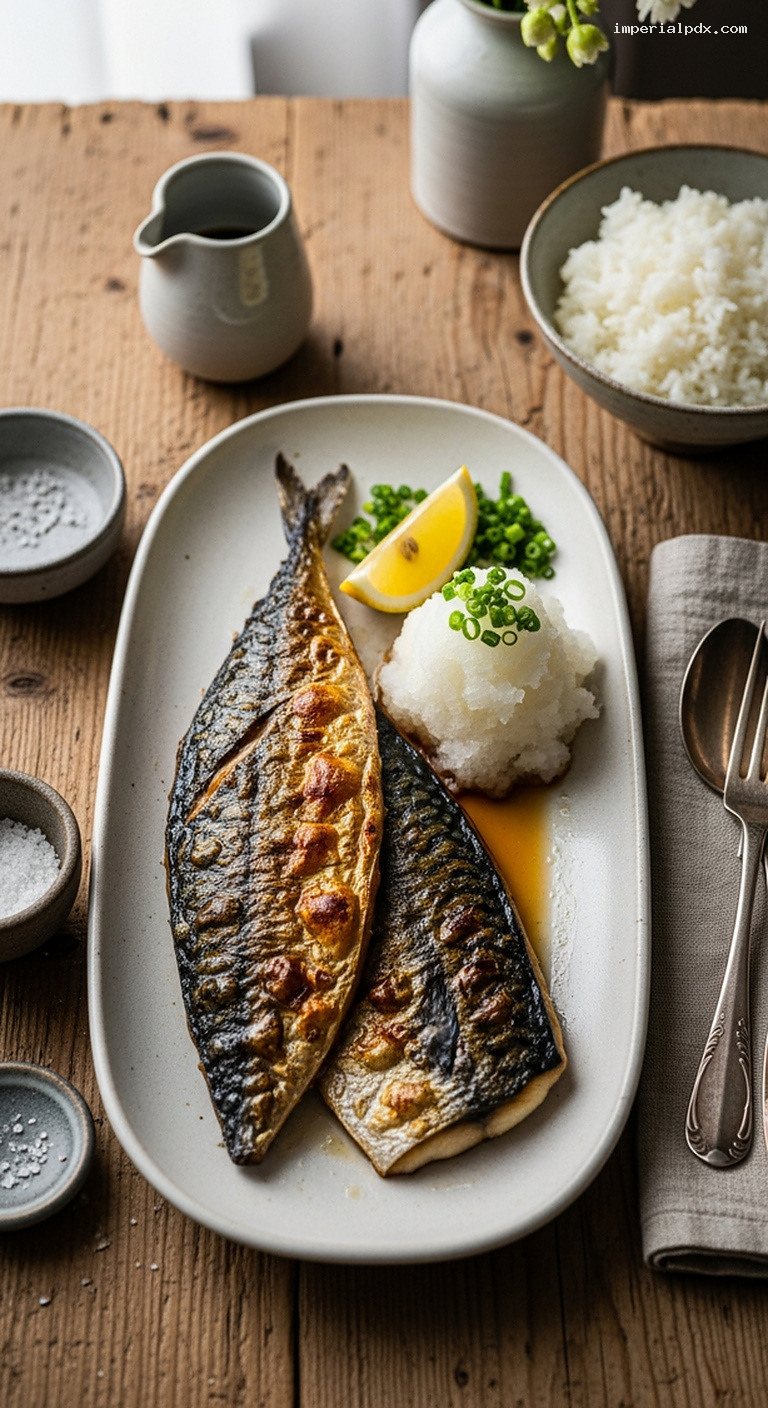
- 7) Serve immediately with steamed rice, grated daikon on the side, soy sauce for drizzling, and lemon wedges if using.
Why You’ll Love This Recipe
- Classic Japanese home-cooking: minimal ingredients, clean flavors, and deeply satisfying.
- Crispy, lightly blistered skin with rich, moist mackerel inside and very little hands-on time.
- Balanced plate in one go: grilled fish, fluffy rice, and refreshing grated daikon with soy.
- Simple technique you can reuse for other fish like salmon, sea bream, or sardines.
Grocery List
- Produce: Daikon radish, lemon or lime (optional), green onion (optional).
- Dairy: None.
- Pantry: Whole or filleted mackerel (fresh or previously frozen), Japanese short-grain rice, kosher or sea salt, soy sauce, neutral oil (canola, grapeseed, or rice bran).
Full Ingredients
For the Salt-Grilled Mackerel (Saba Shioyaki)
- 2 mackerel fillets (about 150 g each), skin-on, pin bones removed
- Or 1 small whole mackerel (about 400–500 g), cleaned and butterflied.
- 3/4 teaspoon kosher salt or fine sea salt (about 1.5% of fish weight)
- Neutral oil (about 1 teaspoon), for greasing the pan or rack
For the Grated Daikon and Garnishes
- 1 piece daikon radish (about 10–12 cm / 4–5 in; yields about 1 cup grated)
- 2–4 teaspoons soy sauce, plus extra at the table
- 2 lemon or lime wedges (optional, for squeezing over the fish)
- 1 green onion, finely sliced (optional, for color and freshness)
For the Steamed Rice
- 1 cup Japanese short-grain rice (about 190 g)
- 1 1/4 cups water (300 ml), or as recommended by your rice brand or cooker
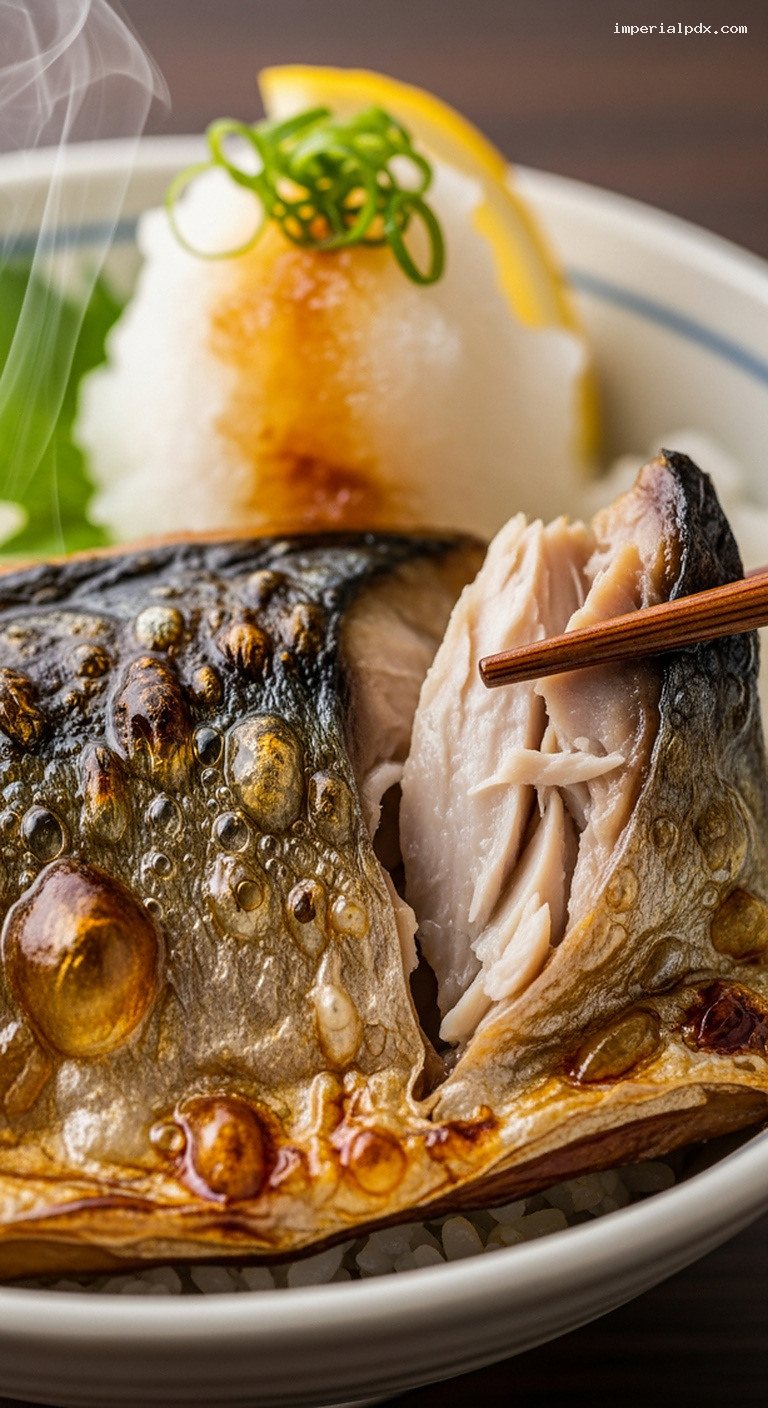
Step-by-Step Instructions
Step 1: Rinse and Cook the Rice
Place the rice in a bowl and cover with plenty of cold water. Swirl with your hand, then drain off the cloudy water. Repeat this rinsing 3–4 times until the water is mostly clear. Drain well in a fine-mesh sieve for 5–10 minutes if you have time; this helps the grains cook more evenly.
Combine the rinsed rice and 1 1/4 cups (300 ml) water in a rice cooker and cook according to the manufacturer’s instructions. If cooking on the stovetop, bring to a gentle boil over medium heat, then cover, reduce to low, and simmer for 12 minutes. Turn off the heat and let the rice rest, still covered, for another 10 minutes. Fluff with a rice paddle or fork and keep warm.
Step 2: Prepare and Salt the Mackerel
Pat the mackerel very dry with paper towels. If using a whole butterflied fish, open it out so it lies flat, skin-side up. Use a sharp knife to make shallow diagonal slashes across the skin side, about 1–2 cm (1/2 in) apart. Do not cut too deeply; you just want to pierce the skin and a little of the flesh. This helps the heat penetrate evenly and keeps the fillet from curling.
Sprinkle the salt evenly over both sides of the fish. For best results, use approximately 1.5% salt by weight of the fish (for a 300 g fish, that is about 4.5 g, or just under 1 teaspoon). Place the fish on a plate, skin-side up, and let it rest at room temperature for 10–15 minutes. The salt will season the flesh and draw out surface moisture, which you will remove in the next step to encourage crisp skin.
Step 3: Preheat the Broiler and Prepare the Pan
While the fish is resting, preheat your oven’s broiler on high. Aim for a temperature around 230–250°C (450–475°F). If your oven has rack positions, place one rack about 10–15 cm (4–6 in) from the broiler element.
Line a baking tray with aluminum foil for easy cleanup. Lightly oil the foil, or place a lightly oiled wire rack over the tray (this allows hot air to circulate and helps the skin crisp). A very thin layer of neutral oil on the foil or rack will help prevent the skin from sticking and tearing.
Step 4: Blot the Fish and Prepare the Daikon
After 10–15 minutes of salting, you will see beads of moisture on the fish surface. Pat the fillets or butterflied fish thoroughly dry again with fresh paper towels, especially the skin. Removing this moisture is key to crisp, blistered skin rather than steaming.
Peel the daikon radish. Using the fine side of a grater or a Japanese oroshigane if you have one, grate the daikon into a small bowl. Gently squeeze the grated daikon in your hand to remove some excess liquid, but do not wring it completely dry—you want it juicy but not watery. Shape into two small mounds and place on a serving plate or in small side dishes. Set aside.
Step 5: Broil the Mackerel Until the Skin is Crisp
Place the fish on the prepared tray or rack, skin-side up. Slide under the hot broiler. Broil for 6–8 minutes, watching closely after the first 5 minutes. The skin should bubble and blister, turning a deep golden-brown in spots, and you may see a little rendered fat sizzling around the fish.
Carefully flip the fish using a thin spatula or fish turner. Broil the flesh side for an additional 3–4 minutes, just until the thickest part of the fillet flakes easily with a fork and is opaque all the way through. Avoid overcooking; mackerel is rich and delicious when still moist inside.
Step 6: Plate with Daikon, Rice, and Soy
Transfer the grilled mackerel to individual plates or a shared platter. Traditionally, saba shioyaki is served with the skin side facing up to showcase the crisp, browned surface.
Add a mound of grated daikon on the side of each plate and tuck a lemon or lime wedge next to the fish if using. Spoon steamed rice into bowls and garnish with a few slices of green onion on the fish or daikon, if you like. Pour a little soy sauce (1–2 teaspoons) over each mound of grated daikon or serve soy sauce in a small dish at the table for diners to add to taste.
Step 7: Serve and Eat Japanese-Style
Serve the mackerel immediately while the skin is still crisp and the flesh is hot. To eat in a Japanese style, take a small piece of fish, a bit of grated daikon seasoned with soy, and some rice in alternating bites. If using citrus, squeeze it lightly over the fish just before eating; a little acidity brightens the rich, oily mackerel.
As you eat, gently pull the meat away from the center bone line (if using a whole butterflied fish) and watch for any remaining small bones. This dish is best enjoyed fresh from the broiler, with the contrast of hot, crispy fish and cool, refreshing daikon.
Pro Tips
- Use good-quality mackerel: Look for firm flesh with a fresh, clean smell. Frozen mackerel is fine; thaw it overnight in the fridge and pat dry very well.
- Do not skip the second pat-dry: After salting, blotting off the drawn-out moisture is essential for blistery, crisp skin instead of soggy fish.
- Adjust broiler distance: If the skin is browning too fast before the fish is cooked, lower the rack by one notch. If nothing is happening, move it a little closer.
- Grated daikon moisture level: Lightly squeezing the daikon keeps it juicy but prevents it from watering down the soy sauce and flavors on the plate.
- Pan or grill alternative: If you do not have a broiler, you can cook the fish skin-side down in a lightly oiled nonstick or cast-iron pan over medium-high heat, then finish briefly on the flesh side.
Variations
- Miso-marinated mackerel (Saba no miso-zuke): Instead of salting only, marinate the fish for 2–4 hours in a mixture of white miso, mirin, and a little sugar, then grill. Wipe off excess marinade before broiling to prevent burning.
- Other fish shioyaki: Use the same salting and grilling method for salmon fillets, sea bream, or sardines. Adjust cooking time according to thickness.
- Vegetable sides: Round out the meal with a small bowl of miso soup and a simple cucumber salad or blanched green beans dressed with sesame.
Storage & Make-Ahead
Saba shioyaki is at its best right after cooking, when the skin is still crisp. If you need to work ahead, you can clean, portion, and salt the fish up to 2 hours in advance; keep it covered in the refrigerator and pat dry again just before broiling. Leftover cooked mackerel can be cooled, covered, and refrigerated for up to 2 days. Reheat gently under a low broiler or in a toaster oven until just warmed through; the skin will not be as crisp, but the fish is still delicious flaked over rice or turned into onigiri (rice balls). Grated daikon is best freshly prepared, but you can grate it a few hours ahead and store it in an airtight container in the fridge; drain off any excess liquid and fluff with a fork before serving.
Nutrition (per serving)
Approximate values for 1 serving (half the recipe), including 1 mackerel fillet, 1/2 cup uncooked rice (about 1 1/2 cups cooked), grated daikon, and soy sauce: about 580–620 calories; 32–38 g protein; 30–35 g fat (mostly from mackerel’s heart-healthy omega-3s); 40–45 g carbohydrates; 1–3 g fiber; 800–1,000 mg sodium (will vary based on your salt and soy sauce). These numbers are estimates and can vary depending on the exact size of the fish and how much soy sauce you use.