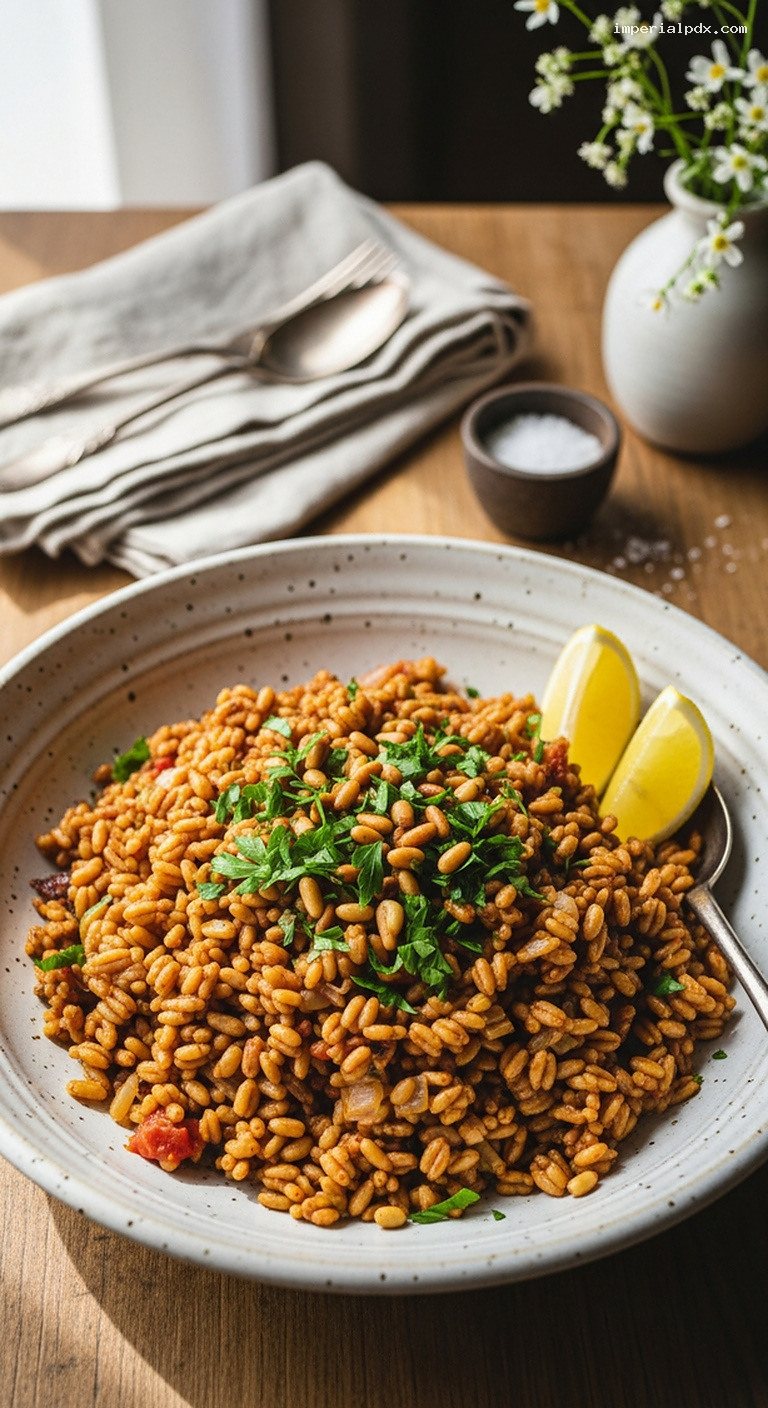
Quick Recipe Version (TL;DR)
Quick Ingredients
- 1 1/2 cups cracked firik (smoked green wheat), rinsed
- 2 tbsp olive oil
- 1 tbsp unsalted butter (or more olive oil)
- 1 medium onion, finely chopped
- 2 cloves garlic, minced
- 1 small tomato, finely diced (or 1/2 cup canned diced tomatoes, drained)
- 1 tbsp tomato paste
- 1 tsp ground cumin
- 1/2 tsp ground allspice
- 1/2 tsp Aleppo pepper or mild chili flakes (optional)
- 1 1/4 tsp fine sea salt, plus more to taste
- 1/4 tsp black pepper
- 2 1/2 cups low-sodium chicken or vegetable broth
- 1/2 cup water
- 1 bay leaf
- Fresh parsley, toasted nuts, and lemon wedges for serving (optional)
Do This
- 1. Rinse firik under cold water until the water runs mostly clear; drain well.
- 2. In a medium pot, heat olive oil and butter over medium heat. Sauté onion with a pinch of salt for 5–7 minutes until soft and lightly golden.
- 3. Stir in garlic, tomato, and tomato paste; cook 2–3 minutes, then add cumin, allspice, Aleppo pepper, salt, and black pepper.
- 4. Add drained firik and toast 2–3 minutes, stirring, until coated in the tomato-onion mixture and fragrant.
- 5. Pour in broth and water, add bay leaf, bring to a boil, then cover and simmer on low for 18–22 minutes, until liquid is absorbed and firik is tender with a slight chew.
- 6. Remove from heat and rest, covered, for 10 minutes. Fluff with a fork, adjust seasoning, and garnish with parsley, toasted nuts, and lemon before serving.
Why You’ll Love This Recipe
- Deep, natural smokiness from firik makes this pilaf taste complex with very little effort.
- Uses simple pantry ingredients but feels special enough for guests.
- Works as a hearty side dish or a light main when topped with yogurt or grilled vegetables.
- Flexible: easy to make vegetarian or vegan by swapping the broth and fat.
Grocery List
- Produce: 1 medium onion, 2 cloves garlic, 1 small tomato (or canned diced tomatoes), 1 small bunch flat-leaf parsley, 1 lemon (for serving, optional).
- Dairy: Unsalted butter (or use more olive oil), plain yogurt or labneh for serving (optional).
- Pantry: Cracked firik (smoked green wheat), olive oil, tomato paste, low-sodium chicken or vegetable broth, fine sea salt, black pepper, ground cumin, ground allspice, Aleppo pepper or mild chili flakes, bay leaf, pine nuts or slivered almonds (optional).
Full Ingredients
For the Firik Pilav
- 1 1/2 cups cracked firik (smoked green wheat), picked over and rinsed
- 2 tablespoons olive oil
- 1 tablespoon unsalted butter (or substitute 1 more tablespoon olive oil for a dairy-free version)
- 1 medium yellow onion, finely chopped (about 1 cup)
- 2 cloves garlic, minced
- 1 small ripe tomato, finely diced (about 1/2 cup), or 1/2 cup canned diced tomatoes, well drained
- 1 tablespoon tomato paste
- 1 teaspoon ground cumin
- 1/2 teaspoon ground allspice
- 1/2 teaspoon Aleppo pepper or mild red pepper flakes (optional, for gentle heat and color)
- 1/4 teaspoon ground cinnamon (optional, for a warm background note)
- 1 1/4 teaspoons fine sea salt, plus more to taste
- 1/4 teaspoon freshly ground black pepper
- 2 1/2 cups low-sodium chicken or vegetable broth
- 1/2 cup water (or more broth)
- 1 bay leaf
Optional Garnishes & To Serve
- 2–3 tablespoons finely chopped fresh flat-leaf parsley
- 2 tablespoons toasted pine nuts or slivered almonds
- Lemon wedges, for squeezing over at the table
- Plain yogurt or labneh, for serving alongside
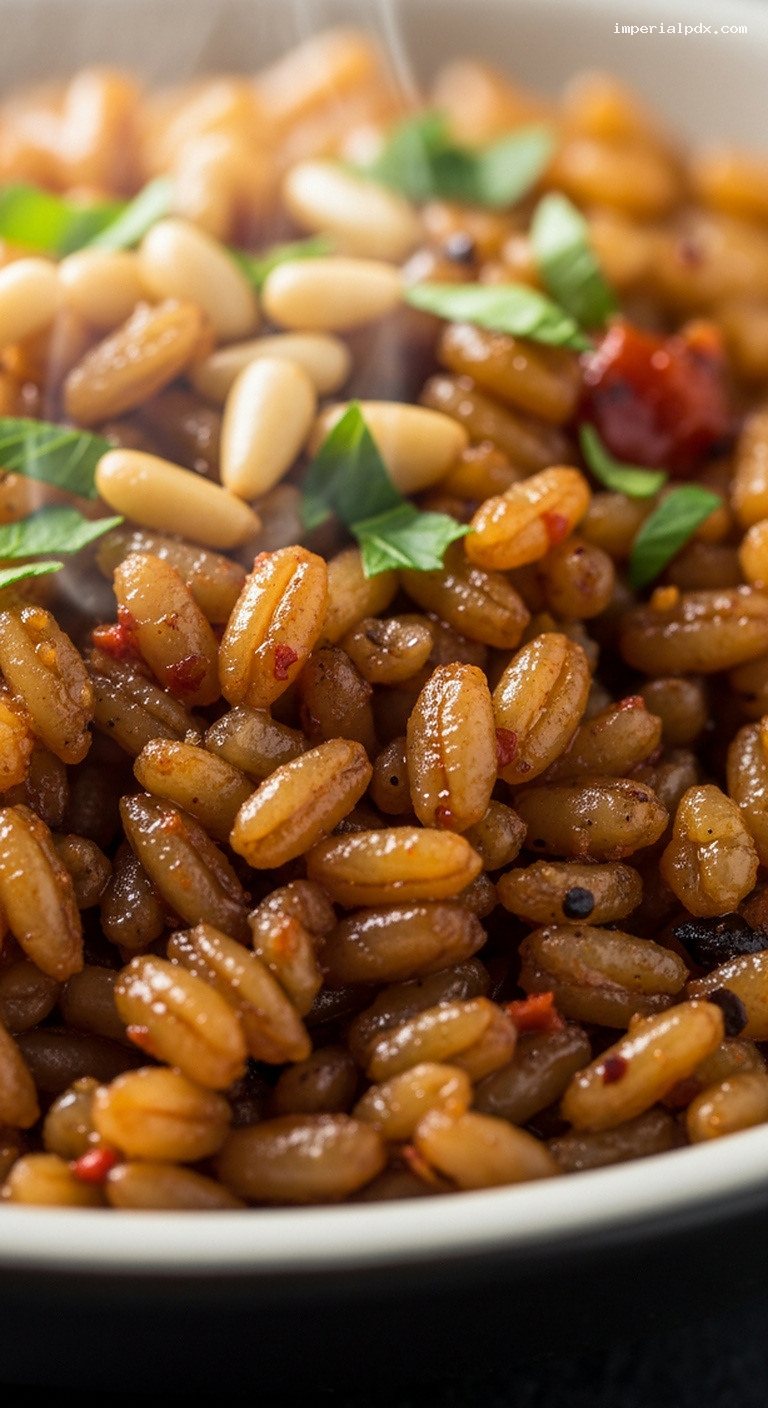
Step-by-Step Instructions
Step 1: Rinse and Prep the Firik
Place the cracked firik in a fine-mesh sieve and pick through it quickly, removing any small stones or debris. Rinse thoroughly under cold running water, stirring it around with your fingers, until the water runs mostly clear. Let it drain very well while you prepare the aromatics; excess water can make the pilaf mushy.
Meanwhile, finely chop the onion, mince the garlic, and dice the tomato (if using fresh). Measure out your spices, broth, and water so everything is ready to go once you start cooking.
Step 2: Sauté the Onion and Garlic
In a medium, heavy-bottomed saucepan or Dutch oven with a tight-fitting lid, heat the olive oil and butter over medium heat until the butter is melted and foamy. Add the chopped onion and a small pinch of salt. Cook, stirring occasionally, for 5–7 minutes, until the onion is soft, translucent, and just beginning to turn light golden around the edges.
Add the minced garlic and cook for 30–60 seconds more, stirring constantly, until fragrant. Do not let the garlic brown; if it starts to color too quickly, lower the heat.
Step 3: Build the Tomato Base and Bloom the Spices
Stir in the diced tomato and tomato paste. Cook for 2–3 minutes, stirring often, until the tomato softens and the tomato paste darkens slightly in color and smells sweet rather than raw. This step builds a deeper, rounder flavor into the pilaf.
Sprinkle in the cumin, allspice, Aleppo pepper (if using), cinnamon (if using), the 1 1/4 teaspoons of salt, and the black pepper. Stir well and cook for another 30–60 seconds to let the spices bloom in the hot fat. You should smell their aroma becoming more pronounced.
Step 4: Toast the Firik
Add the well-drained firik to the pot. Stir to coat every grain in the tomato-onion mixture. Toast the firik over medium heat for 2–3 minutes, stirring frequently. You will start to smell its natural smokiness more clearly, and some grains may sound a bit dry or squeaky as you stir. Toasting helps keep the grains separate and enhances their flavor.
Step 5: Add Liquid and Simmer Gently
Pour in the broth and water, then add the bay leaf. Stir once to combine and scrape up any bits stuck to the bottom of the pan. Increase the heat to medium-high and bring the mixture up to a gentle boil.
As soon as it reaches a boil, give it one final stir, reduce the heat to low, and cover the pot tightly with a lid. Simmer very gently for 18–22 minutes without lifting the lid, until most or all of the liquid is absorbed and the firik is tender but still pleasantly chewy. If your stove tends to run hot, check around the 15-minute mark to ensure it is not boiling too hard; you want a soft, quiet simmer.
Step 6: Rest, Steam, and Fluff
Once the liquid is absorbed and the firik is cooked, remove the pot from the heat. Keep it covered and let it sit undisturbed for 10 minutes. This resting time allows the grains to finish steaming and firm up so the pilaf stays fluffy rather than sticky.
After 10 minutes, remove the lid and discard the bay leaf. Use a fork to gently fluff and separate the grains, lifting from the bottom rather than stirring vigorously. Taste and adjust seasoning with more salt or pepper if needed. If you prefer a looser pilaf, you can drizzle in 1–2 teaspoons of olive oil while fluffing.
Step 7: Garnish and Serve
Transfer the firik pilav to a serving dish or bring the pot straight to the table. Sprinkle the top with chopped fresh parsley and toasted pine nuts or slivered almonds for texture and color. Serve warm, with lemon wedges on the side for squeezing over each portion. A spoonful of plain yogurt or labneh next to the pilaf is a classic and delicious way to turn this into a more substantial meal.
Enjoy it as a side dish with grilled meats, roasted vegetables, or stews, or serve it as a hearty, smoky, plant-forward main topped with extra herbs and a generous dollop of yogurt.
Pro Tips
- Rinse but do not soak: Rinsing removes excess starch and dust, but soaking firik can make the texture too soft for pilaf.
- Keep the lid closed: Avoid lifting the lid while it simmers; escaping steam can lead to undercooked grains and uneven texture.
- Adjust liquid if needed: Different brands of firik vary. If, after 20 minutes, the grains are still too firm and the liquid is gone, add 2–4 tablespoons of hot water, cover, and cook a few minutes more.
- Use low-sodium broth: Since the pilaf reduces, low-sodium broth helps you avoid an overly salty finished dish and gives you more control over seasoning.
- Toast the nuts: Lightly toasting pine nuts or almonds in a dry skillet until fragrant dramatically boosts their flavor and brings the whole dish to life.
Variations
- Vegetable-packed firik pilav: Add 1 small diced carrot and 1/2 diced red bell pepper along with the onion, and stir in 1/2 cup frozen peas during the last 5 minutes of cooking.
- Spiced chickpea version: Stir in 1 cup cooked chickpeas (drained and rinsed if canned) with the firik in Step 4 for a more protein-rich, vegetarian-friendly main dish.
- Fully vegan: Replace the butter with extra olive oil and use vegetable broth. Finish with an extra drizzle of good olive oil and a squeeze of lemon instead of yogurt.
Storage & Make-Ahead
Let the firik pilav cool to room temperature, then transfer it to an airtight container. Refrigerate for up to 4 days. To reheat, sprinkle with a tablespoon or two of water, cover, and warm gently on the stovetop over low heat or in the microwave until heated through, fluffing with a fork halfway. If it seems dry, add a drizzle of olive oil and another small splash of water.
For meal prep, you can cook the pilaf a day or two in advance, then reheat and add the fresh parsley, toasted nuts, and lemon just before serving so the colors stay bright and the nuts retain their crunch. This dish also freezes fairly well: portion into freezer-safe containers, cool completely, and freeze for up to 2 months. Thaw in the refrigerator overnight before reheating.
Nutrition (per serving)
Approximate values for 1 of 4 servings, without garnishes or yogurt: about 310 calories; 9 g fat; 48 g carbohydrates; 9 g protein; 6 g fiber; 650 mg sodium (will vary based on broth and added salt). Adding nuts and yogurt will increase the protein, healthy fats, and overall calories.
