Quick Recipe Version (TL;DR)
Quick Ingredients
- 2 (15-ounce) cans chickpeas, drained and rinsed
- 1/2 teaspoon baking soda (for ultra-creamy hummus, optional)
- 1/2 cup tahini
- 1/4 cup fresh lemon juice
- 1 to 2 garlic cloves
- 1/3 cup cold water (plus more as needed)
- 5 tablespoons extra-virgin olive oil, divided
- 1 pint cherry or grape tomatoes, halved
- 1/2 cup pitted Kalamata olives, halved
- 3 ounces feta cheese, crumbled
- 1 teaspoon dried oregano (or mixed Italian herbs)
- Fresh parsley and dill or mint, chopped
- 4 large pita breads, cut into wedges
- Salt, black pepper, ground cumin, smoked paprika or sumac (optional)
Do This
- 1. Preheat oven to 400°F (200°C). Line a baking sheet.
- 2. Toss halved tomatoes with 2 tablespoons olive oil, oregano, salt, pepper, and optional sliced garlic; roast 18 to 22 minutes until blistered.
- 3. For ultra-creamy hummus, simmer chickpeas 10 minutes with baking soda, then drain well (or use straight from the can if you prefer).
- 4. Blend chickpeas, tahini, lemon juice, garlic, 3/4 teaspoon salt, a pinch of cumin, and 1/3 cup cold water. Add 3 tablespoons olive oil and process until very smooth, adding more water as needed.
- 5. Brush pita wedges lightly with olive oil, sprinkle with salt, and warm in the oven for 4 to 6 minutes.
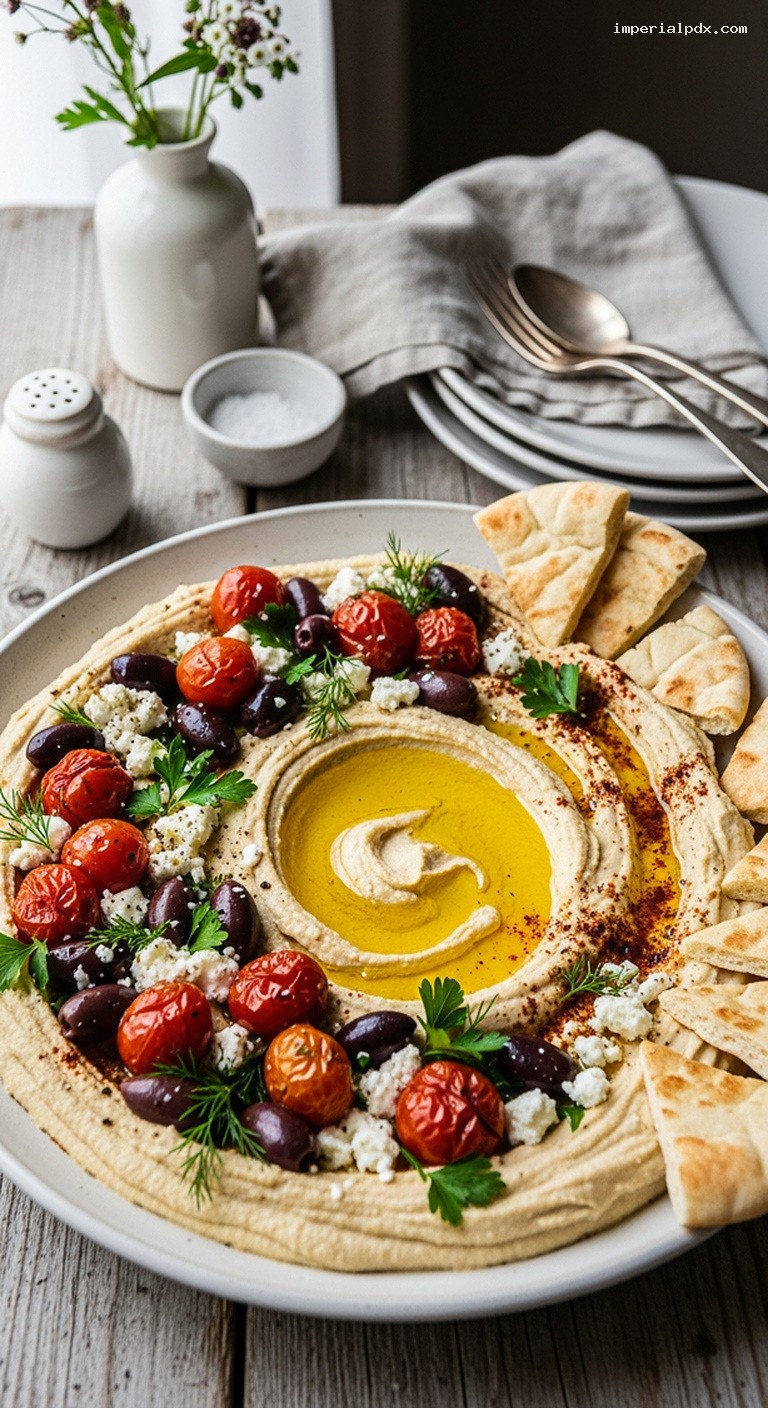
- 6. Spread hummus in a wide, shallow bowl. Top with roasted tomatoes (and their juices), olives, crumbled feta, and chopped herbs.
- 7. Finish with a drizzle of olive oil and a sprinkle of smoked paprika or sumac; serve immediately with warm pita wedges.
Why You’ll Love This Recipe
- Creamy, ultra-smooth hummus topped with juicy roasted tomatoes, briny olives, and salty feta for big Mediterranean flavor in every bite.
- Easy but impressive: perfect for parties, date nights, or a cozy appetizer dinner with minimal fuss.
- Make-ahead friendly: hummus and toppings can be prepped in advance, then assembled just before serving.
- Flexible and customizable: adapt the herbs, spice level, and toppings to suit your taste or what you have on hand.
Grocery List
- Produce: Cherry or grape tomatoes, garlic, lemons, flat-leaf parsley, fresh dill or mint (optional), lemon (for zest, optional)
- Dairy: Feta cheese
- Pantry: Canned chickpeas, tahini, extra-virgin olive oil, pitted Kalamata olives, pita bread, baking soda, dried oregano (or Italian herb blend), ground cumin, smoked paprika or sumac (optional), pine nuts (optional), salt, black pepper
Full Ingredients
For the Creamy Hummus Base
- 2 (15-ounce / 425 g) cans chickpeas, drained and rinsed
- 1/2 teaspoon baking soda (for simmering the chickpeas; optional but recommended for extra creaminess)
- 1/2 cup (120 ml) well-stirred tahini
- 1/4 cup (60 ml) freshly squeezed lemon juice (about 1 large lemon)
- 1 large or 2 small garlic cloves, roughly chopped
- 1/3 cup (80 ml) very cold water, plus more as needed
- 3 tablespoons extra-virgin olive oil
- 3/4 teaspoon fine sea salt or kosher salt, plus more to taste
- 1/4 teaspoon ground cumin (optional, but lovely in hummus)
- Pinch of cayenne pepper (optional, for a gentle warmth)
For the Roasted Tomato Topping
- 1 pint (10 to 12 ounces / 280 to 340 g) cherry or grape tomatoes, halved
- 2 tablespoons extra-virgin olive oil
- 2 small garlic cloves, thinly sliced (optional, for roasting with the tomatoes)
- 1 teaspoon dried oregano (or 1/2 teaspoon dried oregano + 1/2 teaspoon dried thyme or Italian herb blend)
- 1/2 teaspoon kosher salt
- Freshly ground black pepper, to taste
For Topping and Serving
- 1/2 cup pitted Kalamata olives, drained and halved lengthwise
- 3 ounces (85 g) feta cheese, crumbled
- 1/4 cup packed fresh flat-leaf parsley leaves, chopped
- 2 tablespoons chopped fresh dill or mint (or a mix)
- 1 teaspoon finely grated lemon zest (optional, for brightness)
- 2 tablespoons toasted pine nuts (optional, for crunch)
- 1 to 2 tablespoons extra-virgin olive oil, for drizzling
- Smoked paprika or ground sumac, for sprinkling (optional, but highly recommended)
For the Warm Pita Wedges
- 4 large pita breads (or 6 smaller ones)
- 1 to 2 tablespoons extra-virgin olive oil, for brushing
- Pinch of kosher salt
Step-by-Step Instructions
Step 1: Preheat the oven and prepare the tomatoes
Set a rack in the middle of your oven and preheat it to 400°F (200°C). Line a large baking sheet with parchment paper for easy cleanup.
Add the halved cherry or grape tomatoes to the sheet pan. Drizzle with 2 tablespoons olive oil, then sprinkle with the dried oregano, 1/2 teaspoon salt, and a few grinds of black pepper. If you are using the sliced garlic, scatter it over the tomatoes. Toss everything gently with your hands or a spatula until the tomatoes are evenly coated, then arrange them cut side up in a single layer so they roast rather than steam.
Step 2: Roast the tomatoes until juicy and caramelized
Roast the tomatoes at 400°F (200°C) for 18 to 22 minutes, until they are softened, blistered, and starting to caramelize around the edges. The pan should have some flavorful, tomatoey juices mixed with olive oil. Remove from the oven and set aside to cool slightly while you finish the hummus and pita. Keep the oven on for warming the pita later.
Step 3: Soften the chickpeas for ultra-creamy hummus (optional but worth it)
This step is optional, but it makes a noticeably smoother hummus. In a medium saucepan, combine the drained chickpeas with enough water to cover them by about 1 inch. Add the 1/2 teaspoon baking soda. Bring to a gentle boil over medium-high heat, then reduce to a simmer and cook for about 10 minutes, stirring occasionally, until the chickpeas are very soft and the skins are loosening. Do not worry if some skins float off; that is a good sign.
Drain the chickpeas well in a colander, then rinse quickly under cool water. Let them sit in the colander for a minute or two to steam-dry. If you are short on time, you can skip this simmering step and use the chickpeas straight from the can; your hummus will still be delicious, just slightly less silky.
Step 4: Blend the creamy hummus base
Add the warm chickpeas to a food processor. Process them alone for about 1 minute, scraping down the sides once or twice, until they start to form a thick, slightly grainy paste. This helps break them down before adding other ingredients.
Add the tahini, lemon juice, chopped garlic, 3/4 teaspoon salt, ground cumin (if using), and a pinch of cayenne (if using). Process for 30 to 45 seconds, then, with the motor running, slowly drizzle in the 1/3 cup cold water, followed by 3 tablespoons olive oil. Continue processing for 1 to 2 more minutes, stopping once or twice to scrape the sides and bottom of the bowl, until the hummus is very smooth, light, and creamy. If it looks too thick or stiff, blend in 1 to 3 additional tablespoons of cold water, a little at a time, until you reach a soft, spoonable consistency. Taste and adjust with more salt or lemon juice if needed.
Step 5: Warm and season the pita wedges
While the hummus is blending, cut the pita breads into wedges (6 to 8 wedges per large pita). Arrange them on a baking sheet in a single layer. Brush lightly on both sides with 1 to 2 tablespoons olive oil and sprinkle with a pinch of kosher salt.
Place the tray of pita wedges in the still-hot 400°F (200°C) oven and warm for 4 to 6 minutes, just until they are soft, warm, and lightly crisped at the edges. Keep an eye on them so they do not dry out or become too crunchy. Remove from the oven and transfer to a clean kitchen towel to keep warm.
Step 6: Assemble your Mediterranean hummus platter
Transfer the warm, creamy hummus to a wide, shallow serving bowl or a large round platter with a slight rim. Use the back of a spoon to spread it out and create swoops and swirls, leaving a shallow well in the center to catch the toppings and olive oil.
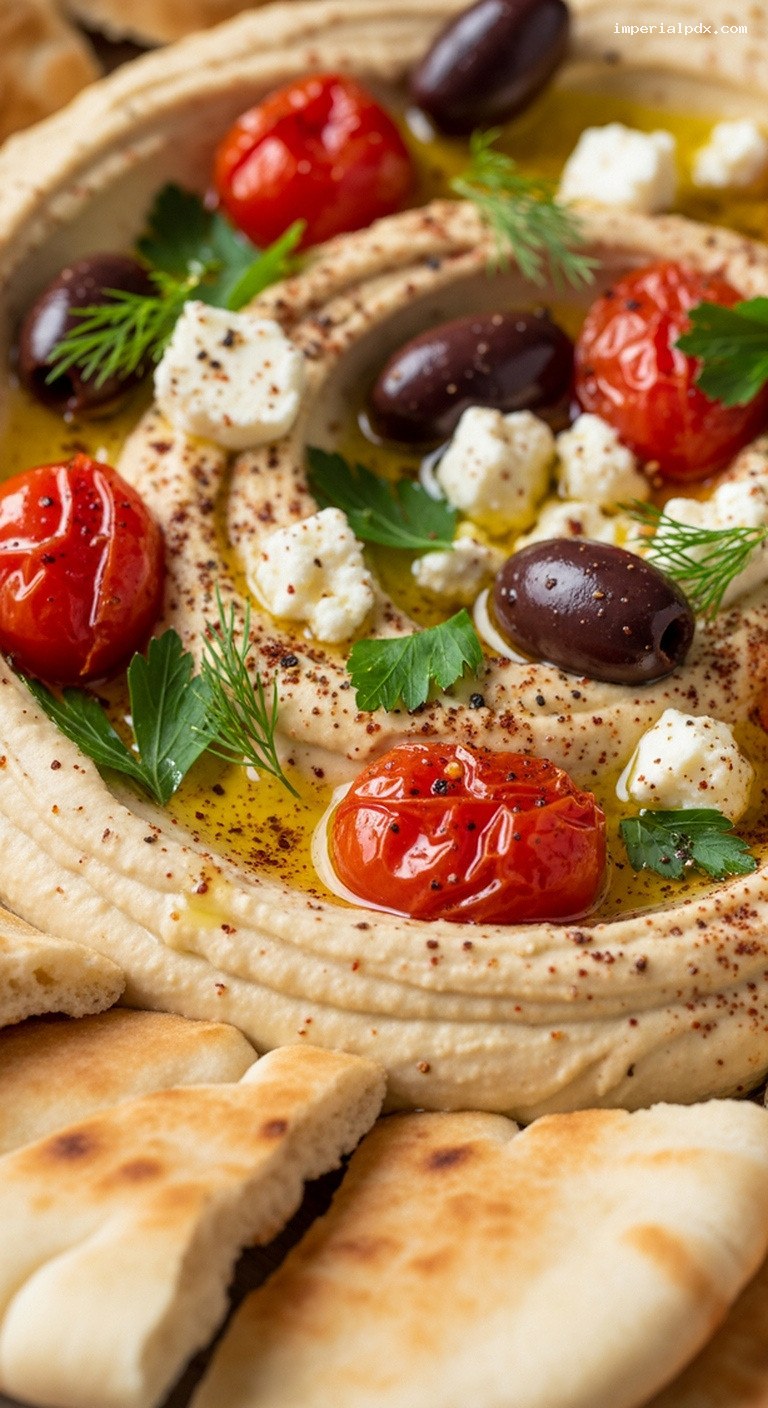
Spoon the roasted tomatoes and all their pan juices over the center of the hummus. Scatter the halved Kalamata olives and crumbled feta evenly over the top. Sprinkle with chopped parsley and dill or mint, and add the lemon zest if using. If you like crunch, sprinkle on the toasted pine nuts as well.
Finish with a generous drizzle of extra-virgin olive oil over everything, and a light dusting of smoked paprika or sumac for color and flavor. Arrange the warm pita wedges around the platter or in a basket on the side. Serve right away while the pita is still warm.
Step 7: Taste, adjust, and serve
Just before serving, taste a bite of hummus with the toppings and pita. If the overall flavor needs a lift, drizzle on a bit more lemon juice or sprinkle a pinch more salt over the tomatoes and olives. You can also add an extra dash of olive oil or a bit more smoked paprika or sumac for color and brightness.
Set the platter in the center of the table and let everyone scoop generously. This dish is meant to be shared and enjoyed family-style, with plenty of dipping, scooping, and mixing of textures in every bite.
Pro Tips
- Use very cold water for the hummus. Cold water helps whip the tahini and chickpeas into a lighter, creamier texture. If you have time, chill the water with an ice cube or two before adding.
- Do not skimp on processing time. Let the food processor run longer than you think, scraping occasionally. A full 2 to 3 minutes of blending can transform a slightly grainy hummus into one that is restaurant-level silky.
- Roast the tomatoes until they caramelize. Slightly browned, blistered edges and concentrated juices add incredible depth of flavor to the topping. Underdone tomatoes will taste more watery and mild.
- Taste as you go. Adjust the salt, lemon, and garlic in the hummus to your personal preference. Tahini brands vary in bitterness and thickness, so a quick taste and adjustment at the end makes a big difference.
- Serve in a shallow bowl or platter. A wide, shallow vessel gives you more surface area for toppings and makes the dish look especially abundant and inviting.
Variations
- Spicy harissa hummus platter: Blend 1 to 2 tablespoons harissa paste or a spoonful of your favorite chili paste into the hummus. Top with extra chili flakes or a swirl of chili oil along with the roasted tomatoes and olives.
- Vegan version: Omit the feta and add extra olives, roasted chickpeas, or more toasted pine nuts for salty richness and crunch. You can also drizzle with a tangy tahini-lemon sauce instead of cheese.
- Loaded mezze board: Expand the platter by adding sliced cucumbers, bell pepper strips, radishes, carrot sticks, and crisp romaine leaves around the hummus. Offer both pita wedges and fresh veggies for dipping.
Storage & Make-Ahead
The hummus base can be prepared up to 4 to 5 days in advance. Store it in an airtight container in the refrigerator, with a thin layer of olive oil on top to help prevent drying out. Let it sit at room temperature for 20 to 30 minutes and stir well before serving; add a splash of water or lemon juice if it has thickened.
The roasted tomatoes can be made 1 to 2 days ahead. Store them (with their juices) in an airtight container in the fridge. Rewarm gently in a small pan over low heat or in the microwave before spooning over the hummus.
Olives and crumbled feta keep well in the fridge for several days; chop herbs the day you plan to serve for the freshest flavor. Pita is best warmed just before serving, but leftover wedges can be stored in a sealed bag at room temperature for 1 day and reheated briefly in the oven.
If you would like to freeze, freeze the hummus alone (without toppings) for up to 3 months in an airtight container, leaving some headroom for expansion. Thaw in the refrigerator overnight, then stir vigorously and adjust with water, lemon, and salt as needed.
Nutrition (per serving)
Approximate values per serving (1 of 6, including hummus, toppings, and pita): about 540 to 570 calories, 15 to 17 g protein, 50 to 55 g carbohydrates, 28 to 32 g fat, 9 to 11 g fiber, and 900 to 1,000 mg sodium. Actual numbers will vary based on the brands of tahini, feta, and olives you use, how much oil you drizzle on top, and your exact portion of pita. For a lighter option, serve smaller portions of pita and add more fresh vegetables for dipping.