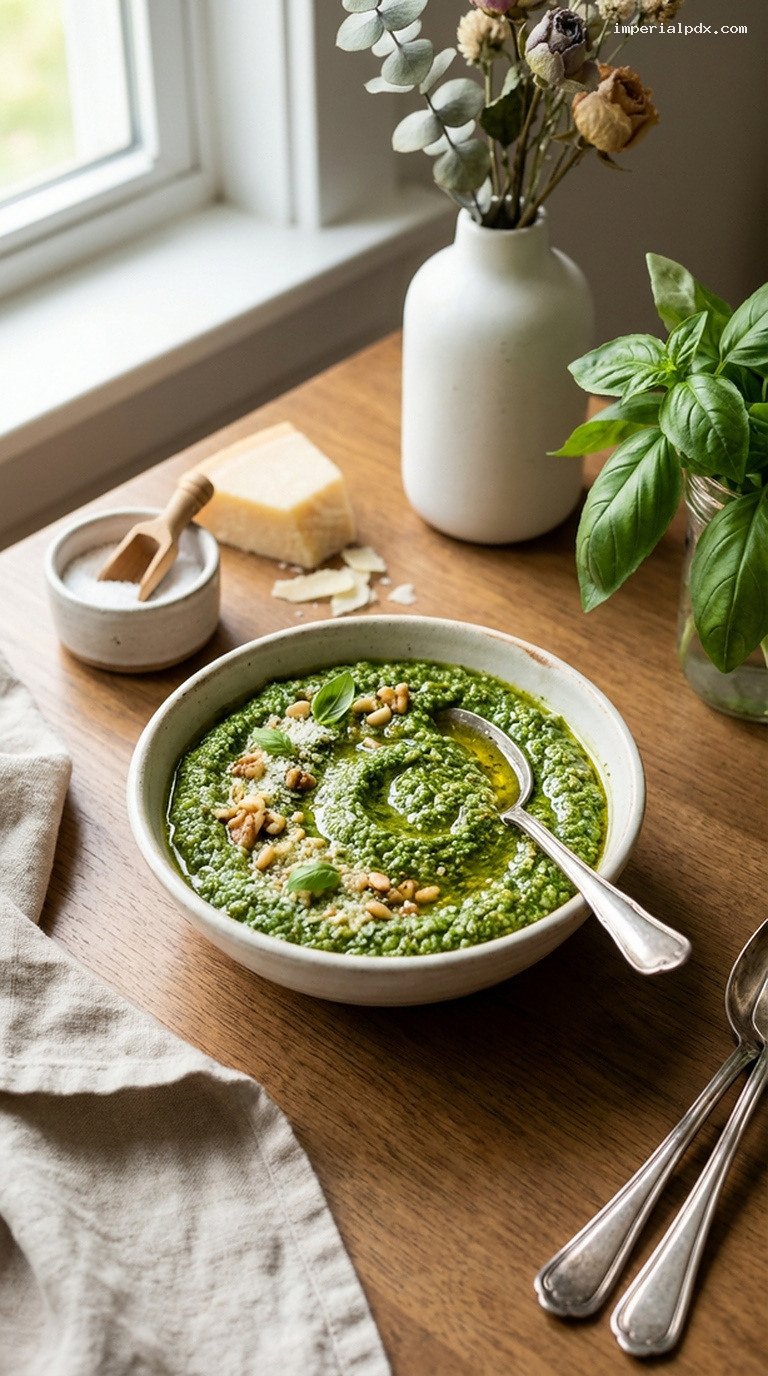
Quick Recipe Version (TL;DR)
Quick Ingredients
- 2 cups packed fresh basil leaves
- 1/3 cup walnuts or pine nuts
- 2–3 garlic cloves, peeled
- 1/2 cup finely grated Parmesan cheese
- 1/2 cup extra-virgin olive oil
- 1/2–3/4 teaspoon fine sea salt, to taste
- 2–3 teaspoons fresh lemon juice (optional)
- Freshly ground black pepper, to taste
Do This
- 1. Toast nuts in a dry skillet over medium heat for 3–5 minutes, stirring, until fragrant and lightly golden; cool slightly.
- 2. Add toasted nuts and garlic to a food processor; pulse until finely chopped.
- 3. Add basil, Parmesan, salt, and (if using) lemon juice; pulse until leafy but evenly combined.
- 4. With the motor running, slowly drizzle in olive oil until a thick, spoonable paste forms.
- 5. Scrape down the bowl and blend again briefly for a smooth yet textured pesto.
- 6. Taste and adjust with more salt, pepper, or lemon juice; use immediately or store in an airtight container with a thin oil layer on top.
Why You’ll Love This Recipe
- Bright, fresh basil flavor balanced with nutty richness and salty Parmesan.
- Ready in about 15 minutes with just a handful of everyday ingredients.
- Versatile: toss with hot pasta, spread on sandwiches, or drizzle over roasted vegetables.
- Make-ahead friendly and freezer-friendly for quick weeknight meals.
Grocery List
- Produce: Fresh basil (2 large bunches), garlic, lemon (optional).
- Dairy: Parmesan cheese (block or pre-grated, ideally Parmigiano Reggiano).
- Pantry: Walnuts or pine nuts, extra-virgin olive oil, fine sea salt, black pepper.
Full Ingredients
Classic Basil Pesto
- 2 cups packed fresh basil leaves, rinsed and patted very dry (about 50–60 g)
- 1/3 cup walnuts or pine nuts, lightly heaped (about 35–40 g)
- 2–3 medium garlic cloves, peeled (start with 2 if you prefer milder garlic flavor)
- 1/2 cup finely grated Parmesan cheese (about 45–50 g)
- 1/2 cup extra-virgin olive oil (120 ml), plus more as needed for desired consistency
- 1/2 teaspoon fine sea salt to start, plus more to taste
- 2–3 teaspoons freshly squeezed lemon juice (optional but recommended for brightness)
- Freshly ground black pepper, to taste
Optional For Serving
- 12–16 oz (340–450 g) cooked pasta of your choice, reserving some pasta cooking water
- Crusty bread or baguette slices, toasted, for spreading
- Roasted vegetables (such as potatoes, carrots, zucchini, or broccoli)
- Extra grated Parmesan and fresh basil leaves for garnish
Step-by-Step Instructions
Step 1: Toast the nuts for deeper flavor
Place the walnuts or pine nuts in a dry skillet (no oil) over medium heat. Cook, stirring frequently, for 3–5 minutes until they smell fragrant and look lightly golden in spots. Watch them closely, as nuts can go from perfectly toasted to burned very quickly.
Once toasted, immediately transfer the nuts to a plate or bowl to stop the cooking and let them cool for a couple of minutes. This helps preserve their flavor and prevents bitterness.
Step 2: Prep the basil and other ingredients
Rinse the basil leaves under cool water to remove any grit. Gently pat them completely dry with a clean kitchen towel or paper towels. Excess water can make the pesto watery and dull the flavor, so try to get them as dry as possible.
Peel the garlic cloves and roughly chop any very large ones. Finely grate the Parmesan if you are starting from a block. Have your lemon, olive oil, salt, and pepper nearby so you can build the pesto quickly once you start blending.
Step 3: Blitz the nuts and garlic
Add the cooled toasted nuts and garlic cloves to the bowl of a food processor. Pulse in short bursts 6–8 times until everything is finely chopped and resembles coarse crumbs. Scrape down the sides of the bowl with a spatula as needed.
This step breaks down the hardest ingredients first so you end up with a smoother, more even pesto later.
Step 4: Add basil, Parmesan, and seasoning
Add the basil leaves, grated Parmesan, 1/2 teaspoon salt, and 2 teaspoons lemon juice (if using) to the food processor. Pulse in short bursts, stopping to scrape down the sides, until the basil is finely chopped and the mixture looks thick and leafy but uniform.
Taste a tiny bit at this stage. The mixture will still be thick and not yet saucy, but you can already sense the balance of garlic, basil, and cheese. If it tastes flat, you will adjust with more salt and lemon later.
Step 5: Stream in the olive oil to form a paste
With the food processor running on low, slowly drizzle in the olive oil through the feed tube. Aim to pour in a steady, thin stream rather than all at once. This helps create a creamy emulsion and a cohesive pesto.
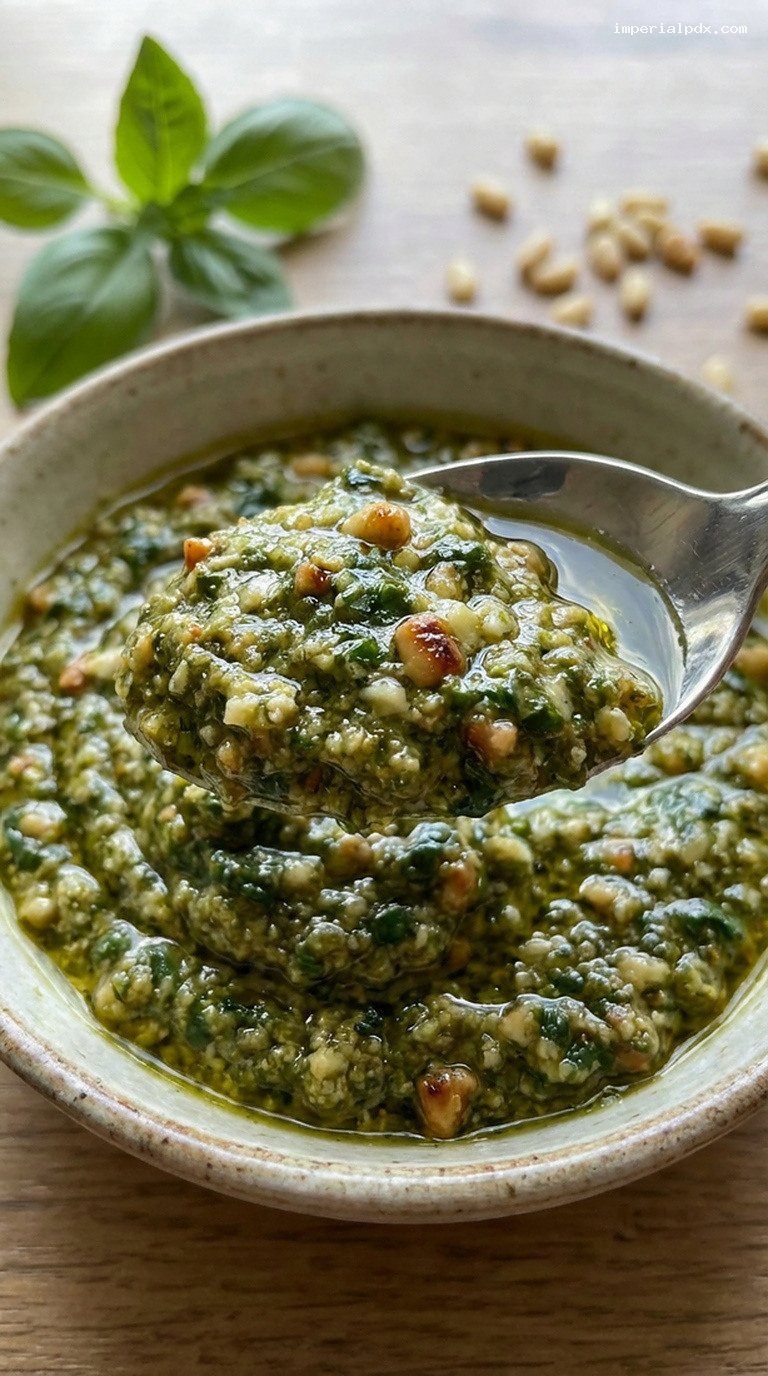
Blend just until the oil is incorporated and you have a thick but spoonable paste. Avoid over-processing to the point where the basil gets hot, as this can darken the color and change the flavor. If the pesto looks too thick for your liking, add 1–2 more tablespoons of olive oil and briefly pulse.
Step 6: Taste and fine-tune the seasoning
Turn off the processor and taste the pesto. Adjust the seasoning: add more salt (a pinch at a time), an extra teaspoon of lemon juice if you want more brightness, and several grinds of black pepper. Pulse briefly to combine after each addition and taste again.
Remember that if you are tossing this pesto with salty pasta water, Parmesan, or other seasoned foods, it will taste slightly saltier in the final dish. Aim for a boldly flavored pesto that is not harshly salty on its own.
Step 7: Serve or store the pesto
Use the pesto right away or transfer it to a clean jar or airtight container. To help keep the vibrant green color, smooth the top and pour a very thin layer of olive oil over the surface before sealing.
For pasta, toss 2–3 tablespoons of pesto per serving of hot, just-drained pasta, loosening with a splash of reserved pasta cooking water until silky and glossy. For sandwiches, spread pesto directly on bread, or swirl into mayonnaise or yogurt. Drizzle over roasted vegetables just before serving for a fresh, herbal finish.
Pro Tips
- Dry your basil well: Water is pesto’s enemy. Well-dried leaves give you brighter flavor and better texture.
- Adjust garlic to taste: Two cloves give a gentle garlic presence; three cloves create a more assertive, punchy pesto.
- Use good olive oil: A fruity, mild extra-virgin olive oil works best. Very peppery oils can overpower the basil.
- Do not overblend: Pesto should have a slight texture. Stop processing as soon as everything looks evenly combined and creamy.
- Protect the color: A squeeze of lemon juice and a thin layer of oil on top of stored pesto help keep it bright green.
Variations
- All-basil pine nut pesto: Use pine nuts instead of walnuts for a more classic, subtly sweet pesto with a luxurious mouthfeel.
- Walnut-basil pesto: Use walnuts for a slightly earthier, more robust flavor. This is wonderful on roasted vegetables and grilled chicken.
- Vegan pesto: Replace Parmesan with 3 tablespoons nutritional yeast plus an extra pinch of salt, or use your favorite dairy-free hard cheese alternative.
Storage & Make-Ahead
Store leftover pesto in an airtight container in the refrigerator for 4–5 days. Smooth the surface and cover with a thin layer of olive oil before sealing to help prevent browning. For longer storage, freeze pesto in small portions (ice cube trays or small jars work well). Once frozen, transfer cubes to a freezer bag. Frozen pesto keeps its flavor for about 2–3 months. Thaw overnight in the refrigerator or at room temperature for 30–45 minutes, then stir before using. If the pesto looks very thick after storage, loosen it with a teaspoon or two of olive oil or a splash of warm water.
Nutrition (per serving)
Approximate values per serving (about 2 tablespoons pesto), not including pasta or other accompaniments: 180 calories; 18 g fat (3 g saturated); 3 g protein; 2 g carbohydrates; 0.5 g fiber; 0.5 g sugar; 220 mg sodium. Actual values will vary based on exact ingredients and brands used.