Quick Recipe Version (TL;DR)
Quick Ingredients
- 2 large turkey legs (thigh + drumstick), about 3–3.5 lb total
- 4 cups low-sodium chicken or turkey stock, plus water to cover
- 1 small onion, 1 small carrot, 1 celery stalk, 4 garlic cloves
- Bay leaf, thyme sprigs, parsley stems, black peppercorns, kosher salt
- 1/4 cup dry white wine (optional but recommended)
- 6 Tbsp unsalted butter, divided, plus 2 Tbsp olive oil or skimmed turkey fat
- Fresh herbs (parsley, chives or thyme), Dijon mustard, black and/or white pepper
- 1 medium red onion, apple cider vinegar, sugar, salt, water (for quick pickled onions)
Do This
- 1. Nestle turkey legs, vegetables, herbs and spices in a pot; cover with stock and water. Bring to a bare simmer.
- 2. Poach gently 2–2½ hours, skimming as needed, until turkey is very tender and pulls apart easily.
- 3. Strain and reserve broth; measure 1 cup and reduce with white wine to about 1/2 cup. Let cool slightly.
- 4. While warm, discard skin and bones; finely shred turkey meat with forks or fingers.
- 5. In a bowl, combine shredded turkey with 4 Tbsp softened butter, olive oil or turkey fat, reduced broth, herbs, mustard and pepper. Mix until spreadable, adjusting salt and texture.
- 6. Pack into small jars or ramekins; smooth tops and, if desired, seal with remaining 2 Tbsp melted butter. Chill at least 4 hours.
- 7. Quick-pickle red onions in hot vinegar, water, sugar and salt; cool. Serve turkey rillettes chilled or at cool room temperature with toast and pickled onions.
Why You’ll Love This Recipe
- Transforms humble turkey legs into a luxurious, silky spread that feels restaurant-worthy but is very home-cook friendly.
- Slow-poaching and reducing the broth pack in deep, savory flavor without fussy techniques.
- Perfect make-ahead appetizer for holidays, brunch boards, or casual snacks with bread and wine.
- Pairs beautifully with quick pickled red onions for a bright, tangy contrast to the rich turkey.
Grocery List
- Produce: 1 small yellow or white onion, 1 small carrot, 1 celery stalk, 4 garlic cloves, 1 medium red onion, fresh thyme, fresh flat-leaf parsley, fresh chives (optional)
- Dairy: Unsalted butter
- Pantry: Turkey legs (thigh + drumstick), low-sodium chicken or turkey stock, dry white wine, olive oil (or use turkey fat), Dijon mustard, bay leaf, whole black peppercorns, kosher salt, ground black or white pepper, apple cider vinegar, granulated sugar, water
Full Ingredients
Turkey and Poaching Broth
- 2 large turkey legs (thigh + drumstick), about 3–3.5 lb (1.4–1.6 kg) total
- 1 small yellow or white onion, quartered
- 1 small carrot, cut into large chunks
- 1 celery stalk, cut into large chunks
- 4 garlic cloves, lightly smashed
- 1 bay leaf
- 4–5 fresh thyme sprigs
- 4 parsley stems (or a small handful of leaves)
- 1 teaspoon whole black peppercorns
- 1½ teaspoons kosher salt (plus more to taste; reduce to 3/4 teaspoon if using table salt)
- 4 cups (960 ml) low-sodium chicken or turkey stock
- Water, as needed, to just cover the turkey
For the Rillettes Mixture
- 4 tablespoons (56 g) unsalted butter, very soft (room temperature)
- 2 tablespoons (28 g) unsalted butter, melted (for sealing the tops; optional but traditional)
- 2 tablespoons (30 ml) olive oil or 2 tablespoons skimmed turkey fat from the broth
- 1/4 cup (60 ml) dry white wine (such as Sauvignon Blanc or Pinot Grigio)
- 1 cup (240 ml) reserved turkey cooking broth (to reduce; you will use about 1/2 cup once reduced)
- 2 tablespoons finely chopped fresh herbs (for example: 1 tablespoon flat-leaf parsley + 1 tablespoon chives or thyme leaves)
- 1 teaspoon Dijon mustard
- 1/4 teaspoon ground white pepper (or use fine black pepper)
- 1/4 teaspoon freshly ground black pepper, plus more to taste
- Optional: 1/4 teaspoon smoked paprika, for gentle smokiness and color
Quick Pickled Red Onions (Optional but Highly Recommended)
- 1 medium red onion, very thinly sliced (about 1/8 inch / 3 mm)
- 1/2 cup (120 ml) apple cider vinegar
- 1/2 cup (120 ml) water
- 1½ tablespoons (18 g) granulated sugar
- 1 teaspoon kosher salt
- Optional flavor extras: 4–5 black peppercorns, 1 small thyme sprig, or a strip of lemon zest
To Serve
- Crusty baguette slices, toasted or lightly grilled
- Crackers or rustic bread, as desired
- Flaky sea salt, for finishing
- Extra chopped fresh herbs, for garnish
Step-by-Step Instructions
Step 1: Build the Poaching Pot
Place the turkey legs in a large, heavy pot or Dutch oven in a single snug layer. Add the quartered onion, carrot chunks, celery, smashed garlic, bay leaf, thyme sprigs, parsley stems, whole peppercorns and 1½ teaspoons kosher salt.
Pour in the 4 cups of stock, then add enough cold water to just cover the turkey legs. You want the meat fully submerged but not swimming in an excess of liquid; this keeps the broth flavorful. Set the pot over medium heat.
Step 2: Slow-Poach the Turkey Legs
As the liquid heats, watch closely. When small bubbles start rising to the surface, reduce the heat to low. You are aiming for a bare simmer: a few lazy bubbles here and there, around 180°F / 82°C if you have a thermometer, not a rolling boil. Skim off any foam that rises to the top with a spoon.
Partially cover the pot with a lid, leaving it slightly ajar, and let the turkey slow-poach for 2 to 2½ hours. Check occasionally to ensure it stays at a gentle simmer and that the turkey remains submerged; add a splash of hot water if needed.
The turkey is done when it is very tender and pulls away from the bone easily. The internal temperature will be well above 165°F / 74°C, closer to 185°F / 85°C, which is ideal for shredding.
Step 3: Strain and Reduce the Broth
Using tongs, carefully transfer the turkey legs to a large bowl or tray to cool slightly. Pour the poaching liquid through a fine-mesh strainer into another pot or large bowl, discarding the solids. Skim off and reserve any flavorful fat from the surface if you plan to use it in place of olive oil.
Measure 1 cup (240 ml) of the strained broth into a small saucepan. Add the 1/4 cup (60 ml) dry white wine. Bring to a gentle boil over medium heat and cook until reduced to about 1/2 cup (120 ml), 10–15 minutes. This concentrated broth will be the flavorful, gelatin-rich base that helps bind the rillettes.
Remove the reduced broth from the heat and let it cool until warm but not piping hot; it should be fluid but not boiling when you mix it into the turkey.
Step 4: Shred the Turkey Meat
When the turkey legs are cool enough to handle but still warm, remove and discard the skin. Pull the meat from the bones, discarding any gristle or large pockets of fat. Warm meat is much easier to shred and absorbs flavors better, so do this sooner rather than later.
Using your fingers or two forks, finely shred the turkey. Aim for small, thin shreds rather than large chunks; this helps create a smooth, spreadable texture. Place the shredded meat in a large mixing bowl. You should have roughly 4–5 cups of meat.
Step 5: Mix the Rillettes to a Spreadable Texture
Add the 4 tablespoons of very soft butter and the 2 tablespoons of olive oil or reserved turkey fat to the warm shredded meat. Sprinkle over the chopped fresh herbs, Dijon mustard, ground white pepper, black pepper and smoked paprika (if using).
Pour in about half of the warm reduced broth and start mixing with a sturdy spoon or spatula, then switch to your hands if you like; it is easier to feel the texture that way. You are looking for a cohesive, spreadable mixture that still has visible shreds, not a paste.
Add more reduced broth a tablespoon at a time until the rillettes feel moist and light but not wet or soupy. You may not need all the liquid, or you may prefer to use slightly more if you like a looser, creamier spread.
Taste and adjust seasoning with more salt and pepper as needed. Flavors should be well-rounded: savory, lightly herby, and gently rich from the butter.
Step 6: Pack, Seal, and Chill
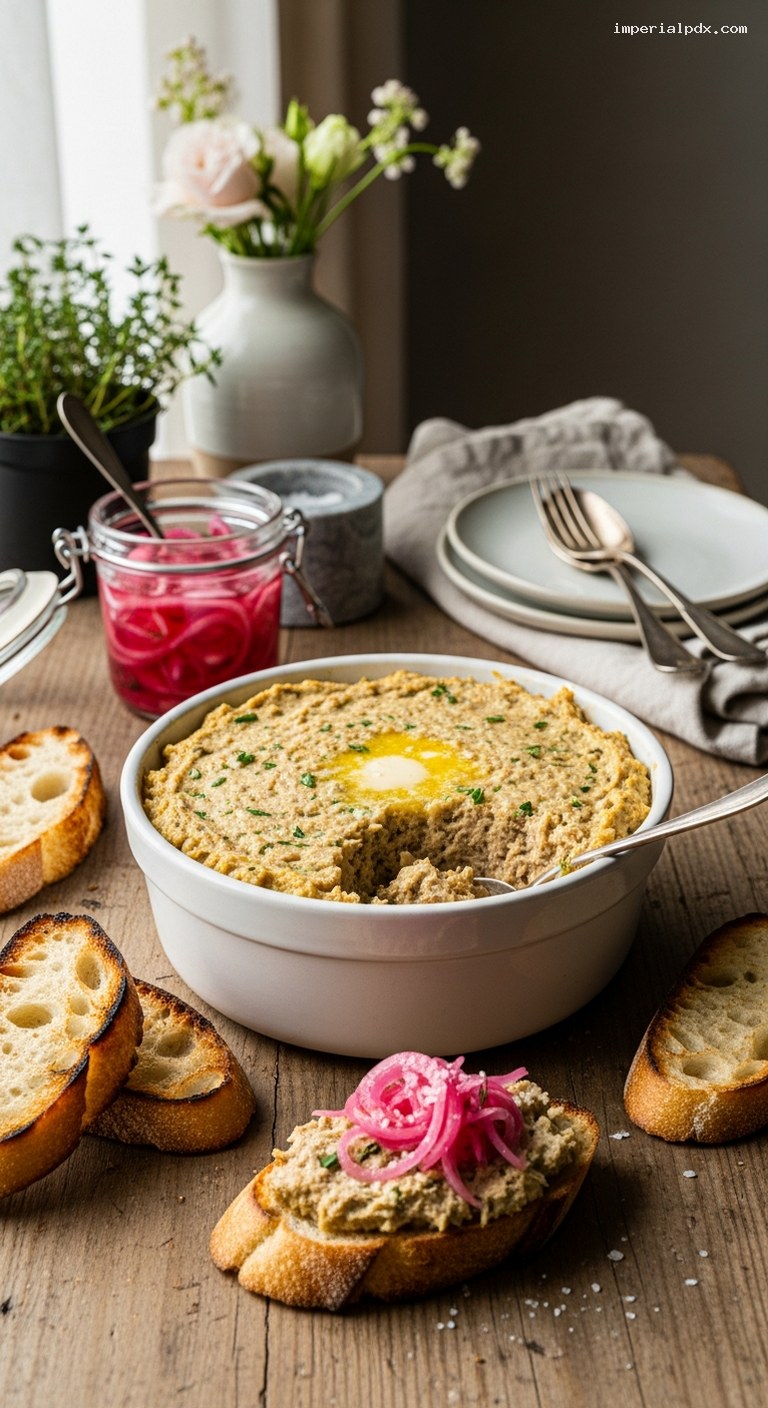
Pack the turkey rillettes into small jars, ramekins, or a shallow ceramic dish. Press down gently with the back of a spoon to eliminate air pockets and create a smooth surface.
If you would like a traditional preserved look and slightly longer storage, pour the 2 tablespoons of melted butter over the tops to create a thin, even seal. Swirl the dishes gently so the butter coats the surface completely.
Cover with lids or wrap tightly with plastic wrap. Refrigerate for at least 4 hours, and preferably overnight, to allow the flavors to meld and the texture to firm up. The chilled butter and reduced broth will set into a luscious, spreadable consistency.
Step 7: Make the Quick Pickled Onions and Serve
While the rillettes chill (or up to several days in advance), make the pickled onions. Pack the thinly sliced red onion into a heatproof jar. In a small saucepan, combine the apple cider vinegar, water, sugar, kosher salt and any optional flavor extras (peppercorns, thyme, lemon zest).
Bring the mixture just to a boil, stirring to dissolve the sugar and salt. Carefully pour the hot liquid over the onions, pressing them under the brine with a spoon. Let cool to room temperature, then cover and refrigerate for at least 30 minutes (they get even better after a few hours).
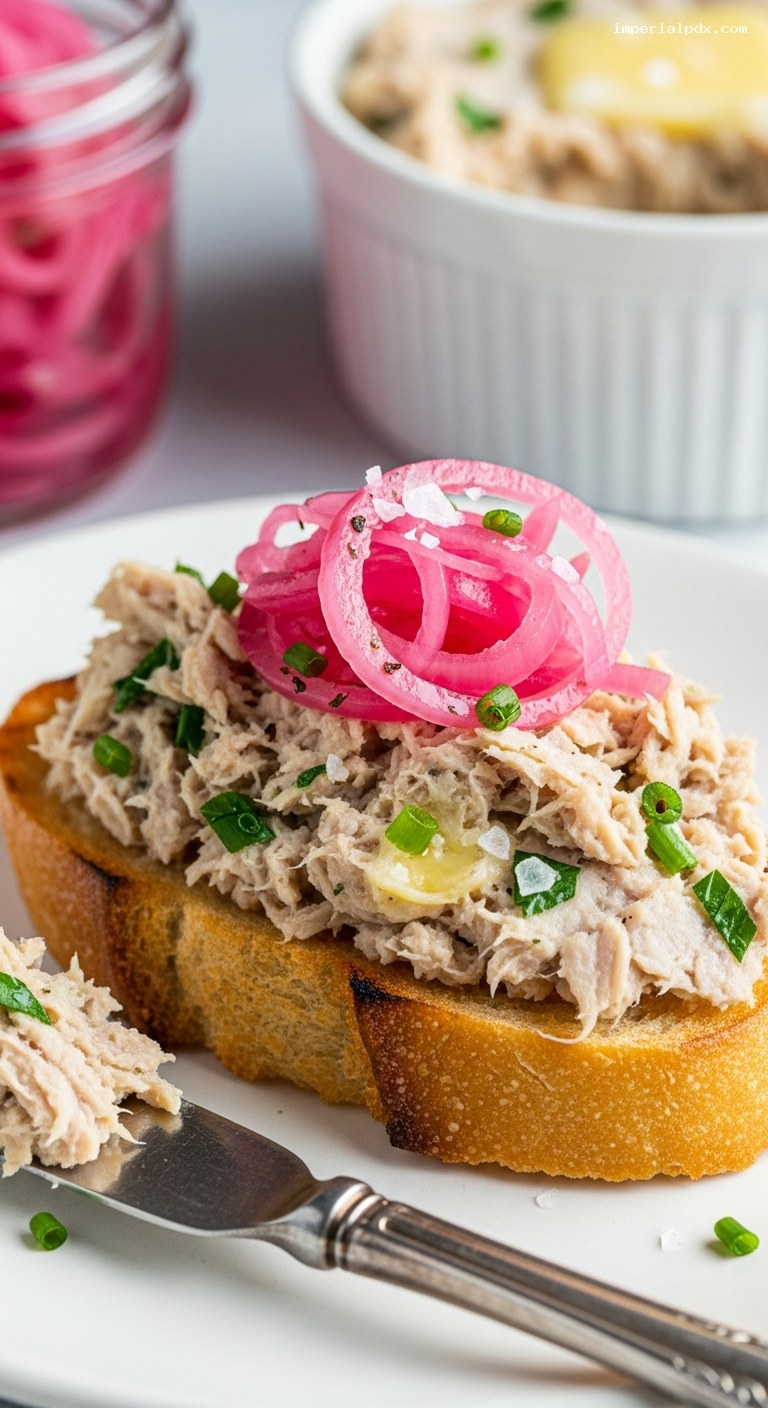
To serve, let the turkey rillettes sit at cool room temperature for 15–20 minutes to soften slightly. Spoon onto toasted baguette slices or crackers, top with a tangle of pickled red onions, and finish with a pinch of flaky sea salt and a sprinkle of fresh herbs.
Pro Tips
- Keep the poach gentle: A bare simmer keeps the meat tender and the broth clear. A rapid boil can toughen the turkey and make the broth cloudy.
- Shred while warm: Warm turkey shreds easily and absorbs the butter and reduced broth more evenly, giving a better final texture.
- Adjust texture with broth and butter: Too dry? Add a spoonful of reduced broth or a dab of soft butter. Too loose? Fold in a bit more shredded turkey if you have it, or chill briefly and stir again.
- Season at the end: The reduction concentrates both salt and flavor. Always taste and adjust with salt and pepper after mixing everything together.
- Let it rest: Overnight chilling gives the flavors time to blend and the texture time to settle into that classic, silky rillettes feel.
Variations
- Herby lemon twist: Add the finely grated zest of 1/2 lemon and extra chopped parsley and chives to the mixture for a brighter, fresher flavor profile.
- Smoky paprika and garlic: Increase smoked paprika to 1/2 teaspoon and add 1 extra finely minced garlic clove when mixing the rillettes for a deeper, more rustic character.
- Mixed poultry rillettes: Replace one of the turkey legs with bone-in, skin-on chicken thighs, and poach them together for a slightly lighter, mixed-poultry spread.
Storage & Make-Ahead
Turkey rillettes are ideal for making in advance. Once packed and covered (and optionally sealed with butter), they will keep in the refrigerator for up to 5–7 days. For slightly longer storage, ensure the surface is completely sealed by a thin layer of fat and keep them well chilled; under those conditions, they can last up to about 10 days.
You can also freeze rillettes for up to 2 months. Press plastic wrap directly onto the surface, then wrap well or store in an airtight container. Thaw overnight in the refrigerator and stir gently before serving; the texture may be just slightly less silky but still very good.
The quick pickled onions will keep in their brine in the refrigerator for up to 2 weeks. Always use a clean utensil when serving to help them stay crisp and bright.
Nutrition (per serving)
Approximate values for 1 of 8 appetizer-sized servings (rillettes only, not including bread or pickled onions): about 270 calories; 18 g fat; 6 g saturated fat; 0 g trans fat; 90 mg cholesterol; 360 mg sodium (will vary with salt used); 2 g carbohydrates; 0 g fiber; 1 g sugar; 24 g protein. These numbers are estimates and will vary based on the exact turkey yield, trimming, and ingredients you use.