Quick Recipe Version (TL;DR)
Quick Ingredients
- 8 oz sushi-grade tuna, finely diced
- 1 ripe but firm avocado, diced (about 1 cup)
- 2 tbsp low-sodium soy sauce
- 1 tbsp fresh lime juice
- 1 tsp rice vinegar
- 1 tsp toasted sesame oil
- 1 tsp finely grated fresh ginger
- 1 small garlic clove, very finely minced
- 1 tsp honey (or sugar)
- 1–2 tsp sriracha or chili sauce (optional)
- 2 tbsp finely sliced scallions or chives
- 2 tsp toasted sesame seeds, plus extra for garnish
- 8–10 square wonton wrappers, cut into triangles
- 1–1½ cups neutral oil for frying (or 1 tbsp for baking)
- Kosher salt and freshly ground black pepper
- Lime wedges, microgreens, extra scallions for serving (optional)
Do This
- 1. Chill a mixing bowl and knife in the fridge; keep tuna very cold.
- 2. Whisk soy sauce, lime juice, rice vinegar, sesame oil, ginger, garlic, honey, and sriracha into a smooth dressing.
- 3. Finely dice tuna; gently toss with half the dressing, scallions, and sesame seeds. Chill 5–10 minutes.
- 4. Dice avocado and season lightly with salt, pepper, and a squeeze of lime.
- 5. Fold avocado into tuna with just enough extra dressing to coat without turning mushy.
- 6. Fry or bake wonton triangles until crisp and golden; sprinkle lightly with salt.
- 7. Mound tuna tartare in a shallow bowl or ring mold, garnish, and serve immediately with warm wonton chips.
Why You’ll Love This Recipe
- Fresh, bright flavors: rich tuna and creamy avocado balanced by citrus, soy, and sesame.
- Restaurant-worthy but truly doable in a home kitchen with simple tools.
- Great make-ahead components: prep the dressing and wonton chips in advance for effortless entertaining.
- Customizable heat level and toppings so everyone can build their perfect bite.
Grocery List
- Produce: Avocado, lime, fresh ginger, garlic, scallions or chives, optional radishes, microgreens, fresh herbs (cilantro or chives).
- Dairy: None.
- Pantry: Sushi-grade tuna, soy sauce, rice vinegar, toasted sesame oil, honey or sugar, sriracha or chili sauce, wonton wrappers, neutral frying oil, sesame seeds, kosher salt, black pepper.
Full Ingredients
For the Tuna Tartare
- 8 oz sushi-grade tuna (such as ahi/yellowfin), very cold, finely diced
- 1 ripe but firm avocado, diced into 1/4-inch cubes (about 1 cup)
- 2 tbsp low-sodium soy sauce
- 1 tbsp fresh lime juice (about 1 medium lime), plus extra to taste
- 1 tsp unseasoned rice vinegar
- 1 tsp toasted sesame oil
- 1 tsp honey or granulated sugar (to balance acidity)
- 1 tsp finely grated fresh ginger (use a microplane if possible)
- 1 small garlic clove, very finely minced or grated
- 1–2 tsp sriracha or other chili sauce, to taste (optional for heat)
- 2 tbsp finely sliced scallions (green parts only) or finely chopped chives
- 2 tsp toasted sesame seeds (black, white, or a mix), plus extra for garnish
- Kosher salt and freshly ground black pepper, to taste
For the Crisp Wonton Chips
- 8–10 square wonton wrappers (3 x 3 inch), cut in half diagonally to make 16–20 triangles
- 1–1½ cups neutral oil for frying (canola, vegetable, or peanut) or 1 tbsp neutral oil for baking
- Kosher salt, to taste
For Serving & Garnish (Optional but Lovely)
- Lime wedges
- Extra sliced scallions or chives
- Extra toasted sesame seeds
- Very thinly sliced radishes
- Microgreens or small cilantro leaves
Step-by-Step Instructions
Step 1: Chill Your Tools and Prep Ingredients
For the best texture and food safety, you want everything cold. Place a sharp chef’s knife and a medium mixing bowl in the refrigerator or freezer for 5–10 minutes while you gather your ingredients. Rinse and pat the tuna completely dry with paper towels, then keep it in the fridge until the moment you dice it. Wash and dry the scallions, lime, radishes (if using), and any herbs. Have your avocado ready but do not cut it yet; it will brown if it sits too long. If you are using whole sesame seeds, lightly toast them in a dry skillet over medium heat for 2–3 minutes until fragrant, then let them cool.
Step 2: Make the Soy–Sesame–Citrus Dressing
In a small bowl, whisk together 2 tbsp soy sauce, 1 tbsp fresh lime juice, 1 tsp rice vinegar, 1 tsp toasted sesame oil, 1 tsp honey, 1 tsp finely grated ginger, 1 small minced garlic clove, and 1–2 tsp sriracha (if using). Taste and adjust: add a bit more lime for brightness, soy for salt, or honey for balance. You should have a punchy, flavorful dressing that tastes slightly stronger than you want the final tartare to be, because it will be mellowed by the tuna and avocado.
Step 3: Dice and Season the Tuna
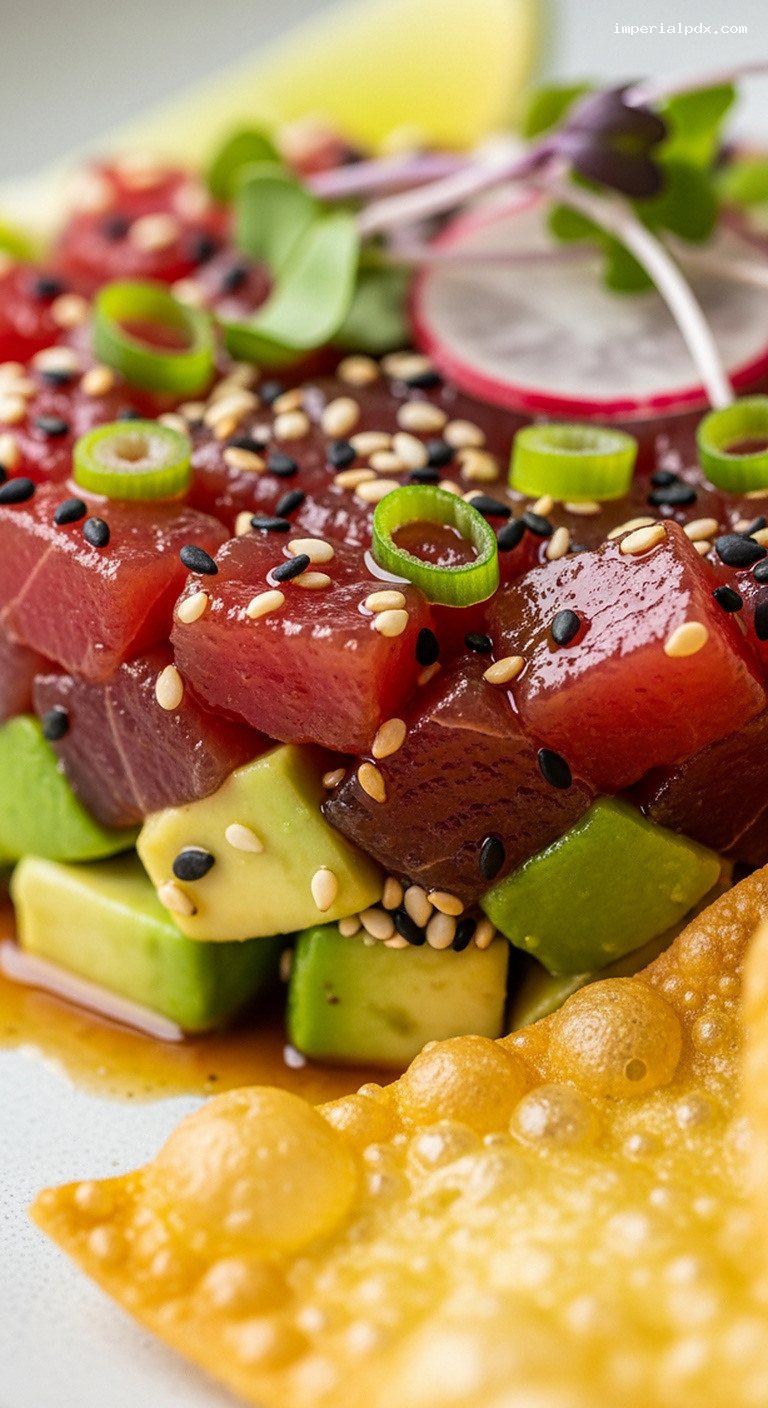
On a very clean cutting board, use your chilled knife to finely dice the cold tuna into roughly 1/4-inch cubes. Try to keep the pieces uniform so they marinate evenly and feel silky rather than chunky. Transfer the tuna immediately into your chilled mixing bowl. Add about half of the dressing, 2 tbsp sliced scallions, and 2 tsp toasted sesame seeds. Gently fold with a spatula or spoon just until coated; do not mash. Taste a small piece and add a pinch of salt or a few extra drops of soy or lime if needed. Cover and place the bowl in the refrigerator for 5–10 minutes while you make the wonton chips. This brief chill lets the flavors mingle while keeping the fish very fresh.
Step 4: Make the Crisp Wonton Chips
To fry: Pour 1–1½ cups neutral oil into a small, heavy pot so the oil is about 1–1½ inches deep. Heat over medium heat to 350–360°F (use a thermometer if you have one). Fry 3–4 wonton triangles at a time for 30–45 seconds per side, turning once, until puffed and golden brown. They darken quickly, so watch closely. Transfer to a paper towel–lined plate and sprinkle lightly with kosher salt while still hot. Repeat with remaining wontons, letting the oil return to temperature between batches. To bake (lighter option): Heat oven to 375°F. Arrange wonton triangles on a parchment-lined baking sheet, brush or mist lightly with oil, and bake for 5–8 minutes, turning once, until crisp and golden. Sprinkle with salt as soon as they come out of the oven. Let the chips cool slightly; they will crisp further as they cool.
Step 5: Dice and Season the Avocado
Just before serving, cut the avocado in half, remove the pit, and peel. Dice the flesh into 1/4-inch cubes, similar in size to the tuna. Place the avocado in a small bowl and gently toss with a small pinch of salt, a grind or two of black pepper, and about 1–2 tsp fresh lime juice. This light seasoning keeps the avocado vibrant, prevents browning, and ensures it is flavorful in every bite without turning to mush when combined with the tuna.
Step 6: Fold the Tartare Together
Remove the chilled tuna mixture from the fridge. Add the seasoned avocado to the bowl. Spoon in a little more of the remaining dressing (start with 1–2 tsp) and very gently fold everything together with a spatula until the avocado pieces are just coated and evenly distributed. You want the mixture to look glossy and lightly sauced, not soupy. Taste and adjust one last time: more lime for brightness, soy for salt, or a touch of sesame oil for richness. If you like additional heat, you can add a few extra drops of sriracha and fold again lightly.
Step 7: Plate, Garnish, and Serve
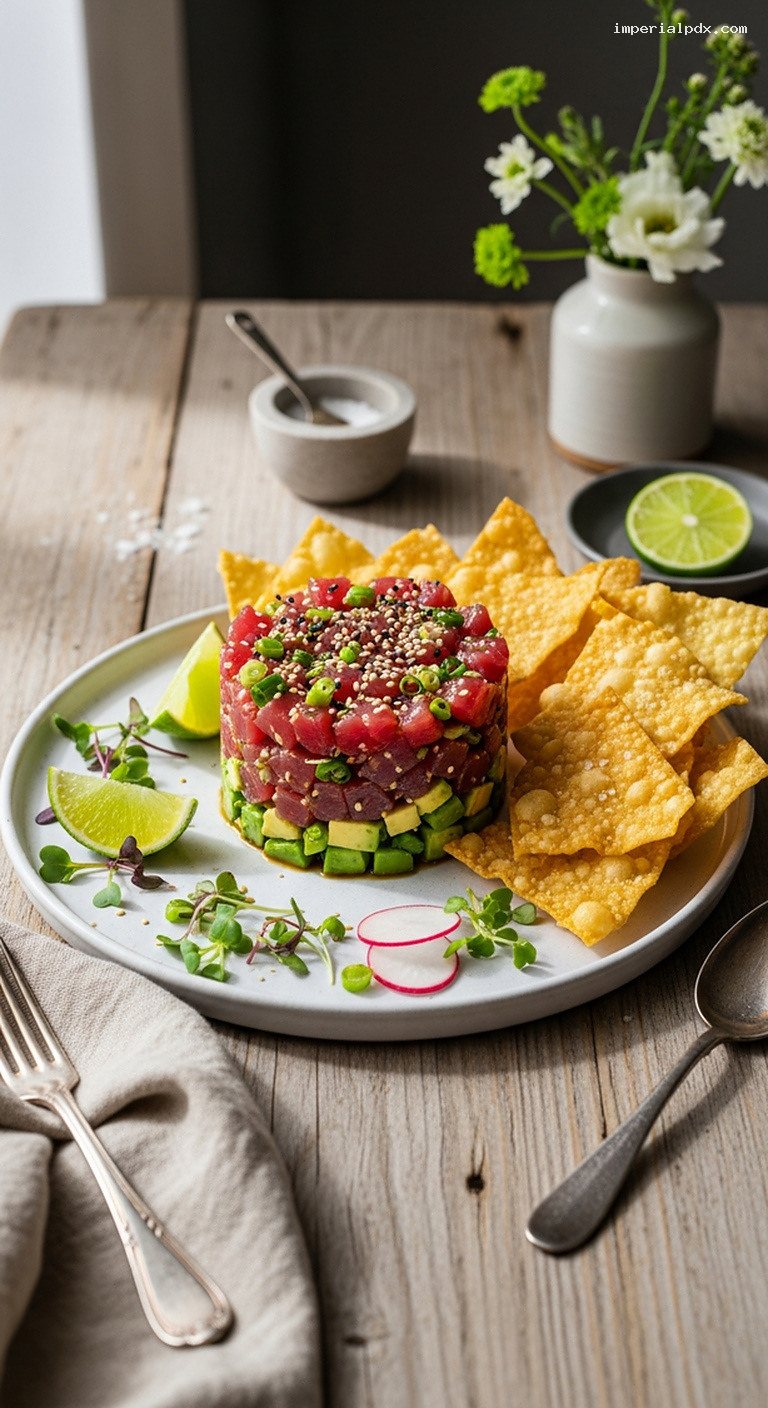
To create a restaurant-style presentation, place a round 3-inch ring mold or a clean, wide metal biscuit cutter in the center of each chilled plate. Spoon the tartare into the mold, pressing down gently with a spoon to pack it without crushing the avocado, then lift the mold straight up. Alternatively, simply mound the tartare in a neat pile in a shallow serving bowl or on a platter. Garnish the top with extra toasted sesame seeds, a few slices of scallion or chive, and microgreens or tiny cilantro leaves. Tuck thinly sliced radishes and lime wedges around the tartare. Arrange the warm, crisp wonton chips alongside or around the tartare for scooping. Serve immediately while everything is cold and the chips are still perfectly crunchy.
Pro Tips
- Use truly sushi-grade tuna: Buy from a trusted fishmonger, ask specifically for sashimi or sushi-grade, and use it the same day for the best flavor and safety.
- Keep it cold: Cold fish is easier to dice cleanly and stays fresher; chill the knife, bowl, and even the plates for the nicest texture.
- Do not over-marinate: The dressing should kiss the tuna, not cook it. A short 5–10 minute chill is plenty; longer can dull the color and texture.
- Gentle folding is key: Stirring too vigorously will mash the avocado and break down the tuna. Use a light hand to keep the cubes distinct and glossy.
- Fry a test chip: Cook one wonton triangle first to check oil temperature and browning time before committing the whole batch.
Variations
- Tropical twist: Fold in 2–3 tbsp finely diced mango or pineapple along with the avocado for sweetness that plays beautifully with lime and chili.
- Spicy sesame crunch: Add 1–2 tbsp finely diced cucumber and a spoonful of chili crisp or toasted chili oil in place of some of the sriracha.
- Light and low-carb: Skip the wonton chips and serve the tartare in endive leaves or on cucumber rounds for a fresh, bite-sized presentation.
Storage & Make-Ahead
Because this recipe uses raw fish, it is best enjoyed immediately after assembling. You can, however, prepare components in advance. Make the dressing up to 2 days ahead and store it in an airtight container in the refrigerator; whisk before using. Fry or bake the wonton chips up to 1–2 days ahead and keep them in an airtight container at room temperature; if they soften slightly, you can re-crisp them in a 350°F oven for 3–4 minutes. Dice the tuna and fold with the dressing no more than 1–2 hours before serving, keeping it well covered and refrigerated. Do not cut the avocado until just before serving, as it browns and softens quickly. Leftover assembled tartare is not recommended for storage; for food safety and quality, discard any that has been at room temperature for more than 2 hours or refrigerated for more than about 24 hours.
Nutrition (per serving)
Approximate values for 1 of 4 appetizer servings (including fried wonton chips): about 290–320 calories; 18–20 g protein; 18–20 g fat; 14–18 g carbohydrates; 2–3 g fiber; 3–5 g sugar; 550–650 mg sodium. Actual values will vary based on the exact tuna cut, amount of oil absorbed by the wontons, and specific brands of ingredients you use.