Quick Recipe Version (TL;DR)
Quick Ingredients
- 1 cup short-grain sushi rice, rinsed
- 1 1/4 cups water
- 2 tbsp rice vinegar, 1 tbsp sugar, 1/2 tsp fine salt
- 8 oz sushi-grade ahi tuna, cut into 1/2-inch cubes
- 2 tbsp soy sauce, 1 tsp toasted sesame oil, 1 tsp rice vinegar
- 1 tsp honey (or sugar), 1 tsp grated ginger, 1 small garlic clove
- 2 tbsp sliced scallions, 1 tsp toasted sesame seeds
- 1 small avocado, sliced
- 1/2 cup seaweed salad
- 1/4 cup pickled ginger
- 1/2 cup sliced cucumber and/or radishes
- 2 tbsp furikake (Japanese rice seasoning)
Do This
- 1. Rinse rice until water runs mostly clear. Combine with 1 1/4 cups water in a small pot, bring to a boil, then cover, reduce heat to low, and cook 15 minutes. Rest 10 minutes off heat.
- 2. In a small bowl, mix 2 tbsp rice vinegar, 1 tbsp sugar, and 1/2 tsp salt. Gently fold into warm rice. Cool while you prep toppings.
- 3. In a medium bowl, whisk soy sauce, sesame oil, 1 tsp rice vinegar, honey, ginger, and garlic.
- 4. Add tuna cubes, scallions, and sesame seeds to the sauce. Toss gently to coat. Chill 10–15 minutes while prepping toppings.
- 5. Slice avocado, cucumber, and radishes. Set out seaweed salad, pickled ginger, and furikake.
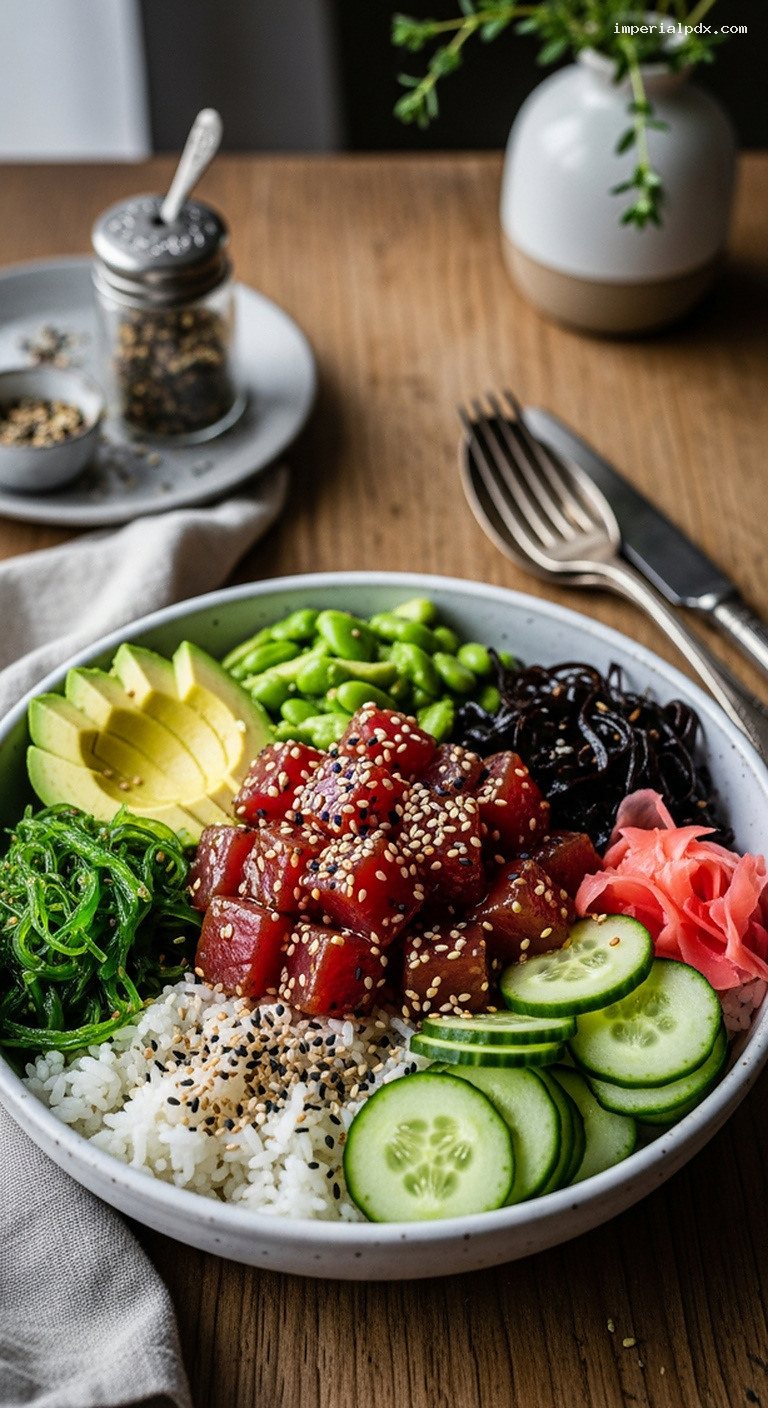
- 6. Divide rice between 2 bowls. Spoon tuna poke on top, then arrange avocado, seaweed salad, cucumber, radishes, and pickled ginger around it.
- 7. Sprinkle with furikake (and extra scallions or sesame seeds if you like). Serve immediately.
Why You’ll Love This Recipe
- Fresh, clean flavors: silky ahi tuna, creamy avocado, tangy ginger, and toasty sesame all in one bowl.
- Easy weeknight-friendly: cook some rice, stir together a quick sauce, and build beautiful bowls in under 40 minutes.
- Customizable: adjust spice level, swap toppings, or change the base to brown rice, quinoa, or greens.
- Takeout favorite at home: restaurant-style poke with simple ingredients and clear, step-by-step instructions.
Grocery List
- Produce: 1 small avocado, 2–3 scallions, 1 small piece fresh ginger, 1 small head of cucumber (or 1 mini cucumber), 4–6 radishes (optional), 1 lime (optional for serving), 1 small garlic clove.
- Dairy: None.
- Pantry: Short-grain sushi rice, soy sauce (or tamari), rice vinegar, toasted sesame oil, sugar or honey, fine sea salt, toasted sesame seeds, furikake, pickled ginger, seaweed salad (often in deli/seafood or refrigerated Asian section), sriracha or chili flakes (optional).
Full Ingredients
For the Sushi Rice
- 1 cup short-grain sushi rice, uncooked
- 1 1/4 cups water
- 2 tbsp rice vinegar
- 1 tbsp granulated sugar (or 2 tsp if you prefer it less sweet)
- 1/2 tsp fine sea salt
For the Tuna Poke
- 8 oz sushi-grade ahi tuna, well-chilled, cut into 1/2-inch cubes
- 2 tbsp soy sauce (or tamari for gluten-free)
- 1 tsp toasted sesame oil
- 1 tsp rice vinegar
- 1 tsp honey or granulated sugar
- 1 tsp finely grated fresh ginger
- 1 small garlic clove, very finely minced or grated
- 2 tbsp thinly sliced scallions (green parts)
- 1 tsp toasted sesame seeds (plus more for garnish, if desired)
- 1–2 tsp sriracha or 1/2 tsp red pepper flakes (optional, for heat)
For the Bowls & Toppings
- Prepared sushi rice (from above)
- 1 small avocado, sliced or cubed
- 1/2 cup seaweed salad (wakame), well-drained
- 1/4 cup pickled ginger (gari)
- 1/2 cup thinly sliced cucumber (half-moons or matchsticks)
- 1/2 cup very thinly sliced radishes (optional, for crunch and color)
- 2 tbsp furikake (Japanese rice seasoning)
- Additional sliced scallions and toasted sesame seeds for garnish (optional)
- Lime wedges, for serving (optional)
Optional Extras
- 1 sheet nori, cut into thin strips, for extra seaweed flavor
- Spicy mayo: 2 tbsp mayonnaise mixed with 1–2 tsp sriracha, for drizzling
- Edamame, shelled (about 1/2 cup), for extra protein and color
Step-by-Step Instructions
Step 1: Rinse and Cook the Rice
Place the 1 cup of sushi rice in a fine-mesh strainer or a bowl. Rinse under cold running water, swishing the grains with your hand, until the water runs mostly clear (this usually takes 4–5 rinses). This step removes excess starch and helps the rice cook up fluffy and not gummy.
Transfer the rinsed rice to a small saucepan. Add 1 1/4 cups water. Let it sit for 10–15 minutes if you have time; this brief soak helps the grains hydrate evenly. Cover the pot with a tight-fitting lid and bring to a gentle boil over medium-high heat. As soon as it boils, reduce the heat to low and simmer, covered, for 15 minutes without lifting the lid.
After 15 minutes, turn off the heat and let the rice sit, still covered, for another 10 minutes to steam and finish cooking.
Step 2: Season the Sushi Rice
While the rice steams, in a small bowl mix together 2 tbsp rice vinegar, 1 tbsp sugar, and 1/2 tsp fine sea salt. Stir until the sugar and salt are completely dissolved.
Transfer the hot, cooked rice to a wide bowl (a shallow bowl or baking dish helps it cool faster). Gently drizzle the vinegar mixture over the rice. Using a rice paddle or a spatula, fold the rice with light cutting and lifting motions rather than stirring vigorously; this helps keep the grains intact and fluffy.
Spread the rice out slightly to help it cool. Let it come to warm or room temperature while you prepare the tuna and toppings. If it seems to be drying out, you can cover the bowl loosely with a clean kitchen towel.
Step 3: Prep the Tuna
Make sure your ahi tuna is very cold. For food safety, use only fish that is labeled “sushi-grade” or “sashimi-grade” and purchase it from a reputable fishmonger. Pat the tuna dry with paper towels.
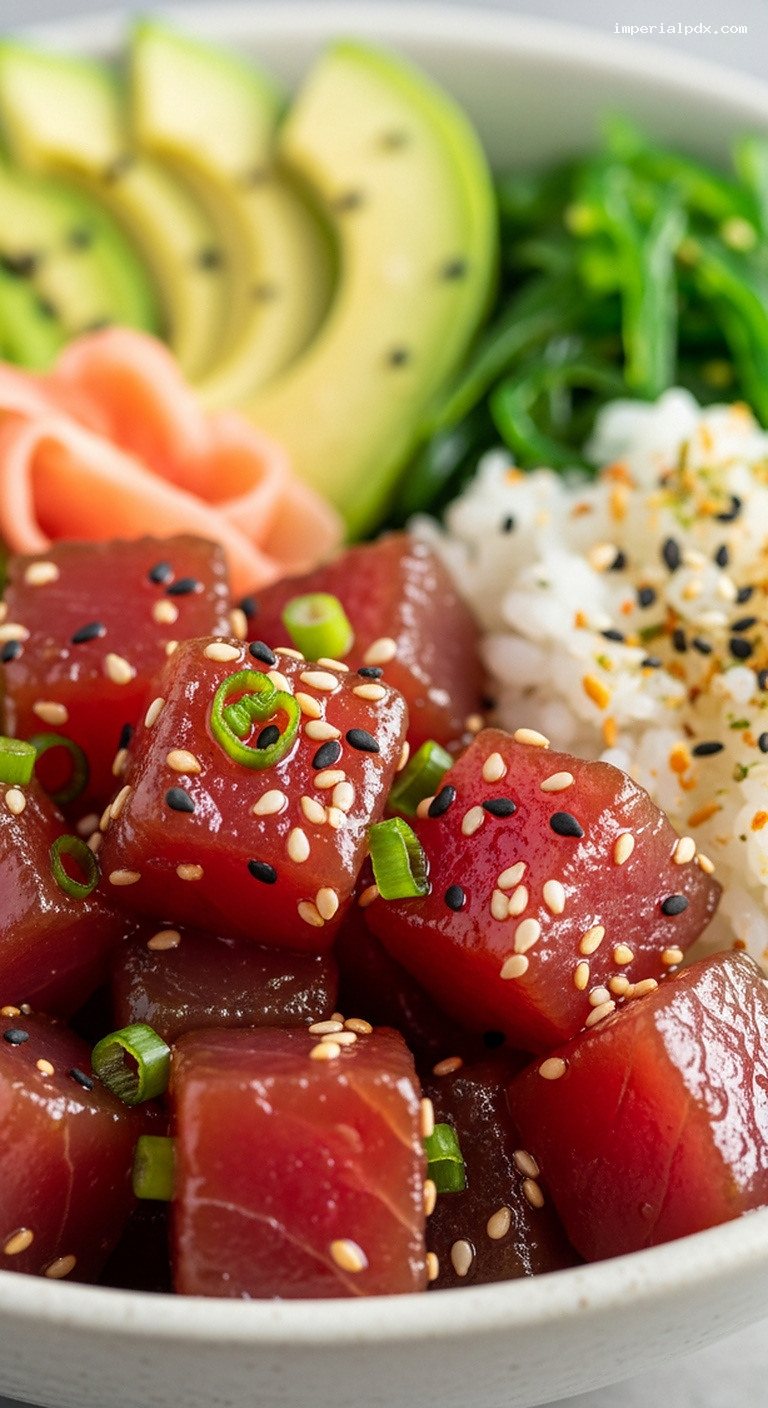
Place the tuna on a clean cutting board. With a sharp knife, cut it into approximately 1/2-inch strips, then rotate and cut into 1/2-inch cubes. Try to keep the pieces similar in size so they marinate and eat evenly. Transfer the cubes to a clean bowl, then return them to the refrigerator while you mix the marinade.
Step 4: Mix the Marinade and Toss the Poke
In a medium bowl, whisk together 2 tbsp soy sauce, 1 tsp toasted sesame oil, 1 tsp rice vinegar, 1 tsp honey, 1 tsp grated ginger, and the finely minced garlic. If you like a little heat, whisk in 1–2 tsp sriracha or 1/2 tsp red pepper flakes.
Add the chilled tuna cubes to the bowl along with 2 tbsp sliced scallions and 1 tsp toasted sesame seeds. Using a spoon or spatula, gently toss to coat all the tuna pieces in the marinade, being careful not to mash or tear the fish.
Cover and refrigerate for 10–15 minutes. This gives the flavors time to meld while keeping the tuna fresh and silky. Avoid marinating for more than about 30 minutes; the texture of the fish can start to change if it sits in acid and salt too long.
Step 5: Prep the Toppings
While the tuna marinates, prepare your toppings. Slice the avocado in half, remove the pit, and carefully peel. Slice or cube the flesh. Toss lightly with a squeeze of lime juice if you want to help prevent browning.
Thinly slice the cucumber into half-moons or matchsticks. Thinly slice the radishes, if using. Drain the seaweed salad well so it does not water down the bowl. Have the pickled ginger, furikake, any extra scallions, and sesame seeds ready nearby so assembling the bowls is quick and easy.
If you are using optional toppings like nori strips, edamame, or spicy mayo, prepare those now as well.
Step 6: Build the Bowls
Fluff the seasoned sushi rice gently with a fork or rice paddle. Divide the rice evenly between 2 serving bowls, mounding it slightly in the center. If you like, you can sprinkle a pinch of furikake directly onto the rice at this stage for extra flavor.
Give the tuna poke a final gentle toss. Spoon it over one area of each bowl, piling it attractively rather than spreading it out too thin. Arrange the avocado slices, seaweed salad, cucumber, radishes, and pickled ginger around the tuna in separate sections so the colors and textures are visible and vibrant.
Step 7: Garnish and Serve
Sprinkle each bowl with about 1 tbsp furikake, plus any extra toasted sesame seeds and sliced scallions you like. Drizzle with spicy mayo or a tiny extra splash of soy sauce or sesame oil if desired.
Serve the ahi poke bowls immediately while the rice is still slightly warm and the tuna is nicely chilled. Offer lime wedges at the table for squeezing over the top. Enjoy as-is, or serve alongside miso soup or a simple green salad for a complete meal.
Pro Tips
- Choose the right tuna: Ask specifically for sushi-grade or sashimi-grade ahi and use it the same day you buy it. Keep it very cold and handle it with clean utensils and surfaces.
- Do not over-marinate: Tuna should sit in the marinade just long enough to absorb flavor (about 10–15 minutes). Too long and the texture can become slightly firm or “cooked.”
- Rice texture matters: Short-grain sushi rice gives you the classic sticky yet tender base. Rinsing thoroughly and not lifting the lid while cooking are key to perfect grains.
- Balance the bowl: Think in terms of contrasts: soft tuna with crunchy vegetables, rich avocado with bright, tangy ginger and vinegar-seasoned rice.
- Chill and serve immediately: Keep toppings and tuna chilled until right before serving, then assemble and eat promptly for the best flavor and food safety.
Variations
- Spicy Ahi Poke Bowl: Increase the sriracha in the marinade and add a drizzle of spicy mayo (mayonnaise mixed with sriracha) over the finished bowl.
- Salmon Poke Bowl: Substitute sushi-grade salmon for the tuna and prepare the same way for a rich, buttery variation.
- Lighter Base Options: Swap sushi rice for warm brown rice, chilled quinoa, or a bed of mixed greens for a lighter, grain-free bowl.
Storage & Make-Ahead
Poke bowls are best eaten fresh, right after assembling. For make-ahead prep, you can cook and season the rice up to 1 day in advance; store it covered in the refrigerator, then warm gently or bring to room temperature before serving.
You can also pre-slice the vegetables (cucumber, radish, scallions) and store them in airtight containers in the refrigerator for up to 1 day. Keep avocado uncut until just before serving to avoid browning.
For the tuna, it is safest and tastiest to cut and marinate it within a few hours of when you plan to eat. Once mixed with the marinade, keep it covered in the refrigerator and use within 24 hours, though the texture is best within the first 4–6 hours. Do not leave raw fish at room temperature for more than 2 hours.
Nutrition (per serving)
Approximate values per bowl (1 of 2): about 600–650 calories; 35–40 g protein; 18–22 g fat (mostly from tuna and avocado); 70–80 g carbohydrates; 4–6 g fiber; 7–10 g sugar (mostly from rice seasoning and pickled ginger). Sodium will be relatively high due to soy sauce and pickled items; to reduce it, use low-sodium soy sauce and smaller amounts of furikake and pickled ginger. These values are estimates and will vary based on exact ingredients and portion sizes.