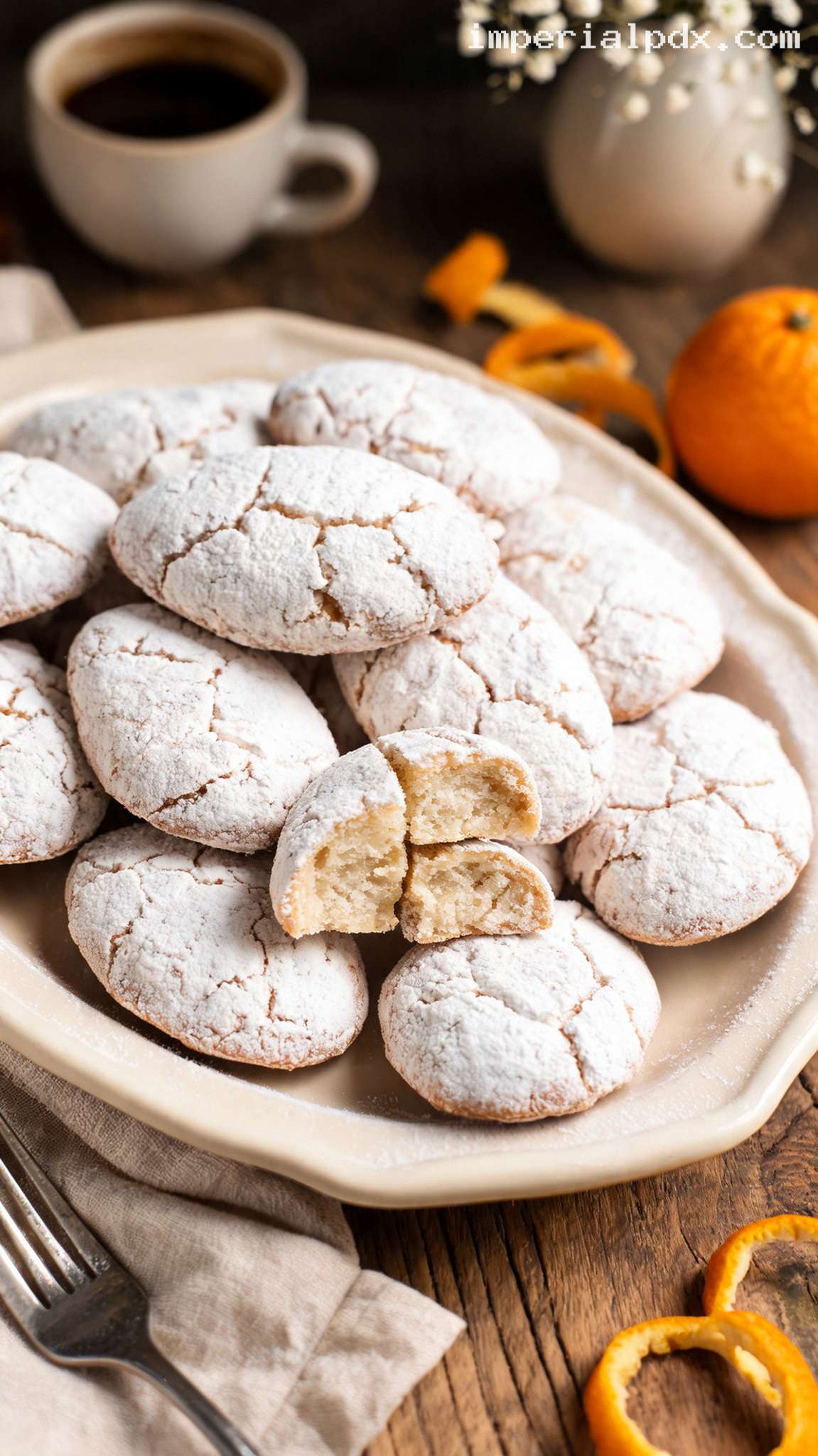
Quick Recipe Version (TL;DR)
Quick Ingredients
- 250 g finely ground blanched almond flour, approximately 2 1/2 cups
- 200 g powdered sugar, approximately 1 2/3 cups, sifted
- 60 g egg whites, from approximately 2 large eggs
- 2 teaspoons finely grated orange zest
- 1 teaspoon pure vanilla extract
- 1/8 teaspoon fine salt
- 80 g powdered sugar, approximately 2/3 cup, for shaping and coating
Do This
- 1. Mix the almond flour, 200 g powdered sugar, and salt. Rub in the orange zest.
- 2. Whisk the egg whites until foamy, stir in the vanilla, then fold into the almond mixture to make a thick, sticky dough.
- 3. Cover tightly and refrigerate for 12 hours.
- 4. Heat the oven to 300°F (150°C), conventional setting. Line two baking sheets with parchment paper.
- 5. Divide into 24 portions, shape into thick, tapered ovals, and coat generously with the remaining 80 g powdered sugar.
- 6. Bake for 20 minutes, rotating and swapping the trays after 10 minutes. Look for cracked tops, barely golden bottoms, and soft centers.
- 7. Cool on the baking sheets for 15 minutes, then transfer carefully to a rack for another 15 minutes.
Why You’ll Love This Recipe
- A classic Tuscan Christmas treat: These Siena-style almond cookies have snowy tops, delicate cracks, and a lovely orange-vanilla fragrance.
- A wonderful contrast of textures: The thin outer crust gives way to a soft, chewy, marzipan-like center.
- Simple ingredients, no complicated equipment: You need two bowls, a whisk, and a spatula—no food processor or stand mixer required.
- Perfect for making ahead: The overnight rest develops the flavor, and the finished cookies keep beautifully for holiday gifting.
Grocery List
- Produce: 1 medium orange, preferably unwaxed, for 2 teaspoons finely grated zest.
- Dairy: 2 large eggs, using the whites only; no butter or milk is needed.
- Pantry: 250 g finely ground blanched almond flour, 280 g powdered sugar total, pure vanilla extract, and fine salt. You will also need parchment paper.
Full Ingredients
For the Almond Cookie Dough
- 250 g finely ground blanched almond flour (approximately 2 1/2 cups), made from peeled almonds; use regular almond flour, not defatted almond flour.
- 200 g powdered sugar (approximately 1 2/3 cups), sifted to remove lumps.
- 60 g egg whites (approximately 2 large egg whites), weighed for the most consistent results.
- 2 teaspoons finely grated orange zest, from approximately 1 medium orange; grate only the orange-colored peel.
- 1 teaspoon pure vanilla extract.
- 1/8 teaspoon fine salt.
For Shaping and Coating
- 80 g powdered sugar (approximately 2/3 cup), divided between dusting your hands or work surface and generously coating the cookies.
Measurement note: Gram measurements are recommended, especially for the almond flour, powdered sugar, and egg whites. Cup measurements are approximate because finely ground ingredients vary in density.
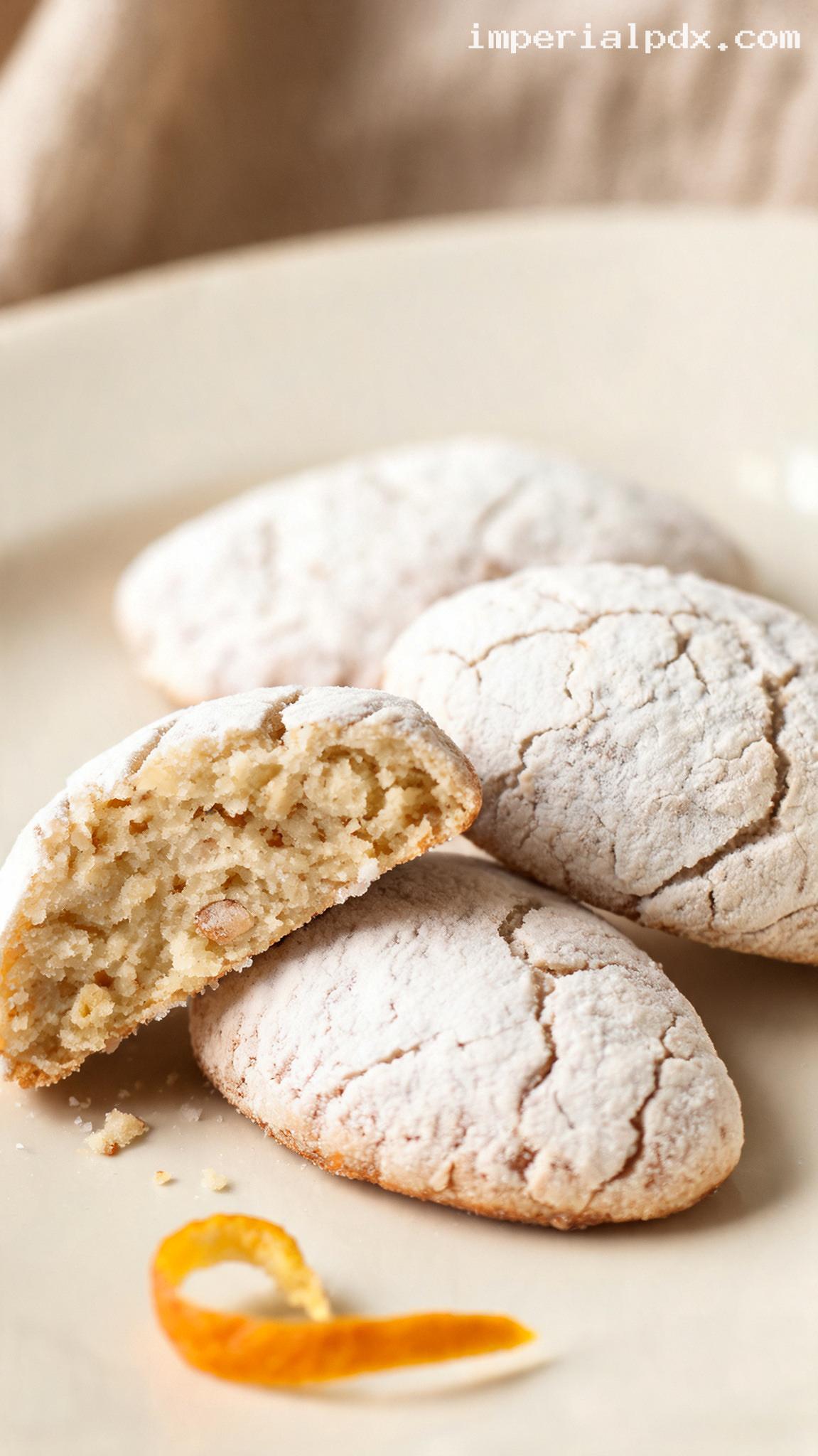
Step-by-Step Instructions
Step 1: Combine the almond mixture
Place the almond flour, 200 g sifted powdered sugar, and salt in a large bowl. Whisk thoroughly, breaking up any small clumps with your fingers. Add the orange zest and rub it through the mixture with your fingertips until evenly distributed and fragrant.
The mixture should look fine and uniform. If your almond flour has a few stubborn lumps, press them through a sieve rather than processing it extensively, which can release the almonds’ oils.
Step 2: Mix a soft, sticky dough
In a separate clean bowl, whisk the 60 g egg whites by hand for 30–60 seconds, until loose and foamy with small bubbles across the surface. They should remain fluid; do not whip them into stiff peaks. Stir in the vanilla extract.
Add the egg-white mixture to the dry ingredients. Fold and press with a sturdy spatula until no dry pockets remain and a thick, sticky almond dough forms. It may look crumbly at first, but continue pressing it together before considering any additional liquid.
Step 3: Rest the dough overnight
Press a piece of food-safe wrap directly against the dough’s surface, then cover the bowl tightly. Refrigerate for 12 hours. This rest allows the almond flour to hydrate and the orange and vanilla flavors to develop.
The chilled dough should feel firmer and easier to portion, although it will still be slightly tacky. Keep it covered during refrigeration so it does not develop a hard, dry skin.
Step 4: Prepare the oven and baking sheets
Heat the oven to 300°F (150°C), conventional setting. Position racks in the upper and lower thirds of the oven. Line two baking sheets with parchment paper; do not grease them.
Place the 80 g coating sugar in a shallow bowl. Reserve a small amount from that bowl for dusting your hands and, if needed, your work surface.
Step 5: Shape and generously coat the cookies
Divide the dough into 24 equal portions, approximately 22 g each. With lightly sugar-dusted hands, shape each portion into a plump oval about 2 inches (5 cm) long and 1/2 inch (1.3 cm) thick. Gently pinch the ends to create the traditional tapered, almond-like shape.
Turn each cookie in the powdered sugar, coating the top and sides generously. Arrange 12 cookies on each prepared baking sheet, leaving at least 1 inch (2.5 cm) between them. If shaping has left any thin spots in the coating, spoon a little more sugar over the tops. Do not flatten the cookies thinly; their thickness helps preserve the chewy centers.
Step 6: Bake gently until delicately cracked
Bake for 20 minutes, rotating each baking sheet front to back and swapping the upper and lower sheets after 10 minutes. The cookies should develop fine cracks through their snowy coating and look set around the edges.
Check a cookie carefully with a thin spatula: its underside should be only barely golden. The tops should remain pale, and the centers should still feel soft when touched very gently. Avoid baking until firm throughout; ricciarelli set as they cool, and excessive baking makes them dry rather than chewy.
Step 7: Cool completely before serving
Leave the cookies on their baking sheets for 15 minutes. They are fragile straight from the oven, so resist moving them immediately. Once they are firm enough to lift, use a thin spatula to transfer them to a cooling rack for another 15 minutes.
Serve at room temperature with espresso, tea, or a small glass of Vin Santo. Their almond flavor and soft interior are especially lovely the following day.
Pro Tips
- Choose fine, blanched almond flour: Coarse almond meal with skins produces darker, more rustic cookies rather than the delicate texture associated with ricciarelli.
- Weigh the egg whites: Egg sizes vary. Too much white can make the dough spread, while too little can leave it crumbly.
- Keep the powdered sugar coating thick: A generous, dry coating creates the distinctive snowy finish and makes the cracks stand out.
- Trust the cooling process: A soft center at the end of baking is intentional. Judge doneness by the set edges and barely colored undersides.
- Check labels when baking gluten-free: These cookies contain no wheat flour, but almond flour, powdered sugar, and other ingredients should be verified gluten-free when needed.
Variations
- A stronger almond note: Add 1/4 teaspoon pure almond extract along with the vanilla. A small amount is enough; the natural almond flavor should remain the focus.
- Lemon ricciarelli: Replace the 2 teaspoons orange zest with 2 teaspoons finely grated lemon zest for a brighter citrus variation.
- Chocolate-dipped holiday cookies: Melt 100 g dark chocolate and dip one end of each completely cooled cookie. Let the chocolate set on parchment before storing. This is a festive variation rather than the traditional finish.
Storage & Make-Ahead
Room temperature: Store completely cooled cookies in an airtight container for up to 7 days, placing parchment between layers. Keep them in a cool, dry spot away from direct sunlight. Their outer crust will gradually soften, while the centers stay pleasantly chewy.
Make-ahead dough: Refrigerate the tightly covered dough for 12–48 hours before shaping and baking. If it feels too firm to portion, let it stand at room temperature for 10 minutes.
Freezing: Freeze fully cooled cookies in an airtight container, separated with parchment, for up to 2 months. Thaw in the closed container at room temperature for approximately 1 hour before opening; this helps limit condensation on the sugar coating.
Gift packing: Pack only fully cooled cookies. Use a snug tin or sturdy box with parchment between layers to protect their delicate edges and powdered finish.
Nutrition (per serving)
Calories: 108 kcal | Carbs: 14.0g | Protein: 2.5g | Fat: 5.2g | Saturated Fat: 0.4g | Fiber: 1.3g | Sugar: 12.1g | Sodium: 17mg | Cholesterol: 0mg
Estimated per cookie, based on 24 cookies and including all 80 g of coating sugar. Actual values vary by ingredient brand and how much coating sugar adheres. Variations are not included.


