Quick Recipe Version (TL;DR)
Quick Ingredients
- 190 g (1 1/2 cups) all-purpose flour
- 50 g (1/3 cup) powdered sugar
- 1/4 tsp fine salt
- 115 g (1/2 cup) cold unsalted butter, in cubes
- 1 large egg yolk + 2–3 tbsp ice water
- 500 g (about 1 lb) rhubarb stalks
- 200 g (1 cup) granulated sugar, divided
- 1 tsp vanilla extract
- 1 tsp finely grated lemon zest (optional)
- 3 large eggs
- 180 ml (3/4 cup) heavy cream
- 120 ml (1/2 cup) whole milk
- 1 tbsp cornstarch
- Pinch of salt, coarse sugar + powdered sugar for topping
Do This
- 1. Make a sweet shortcrust: rub or pulse flour, powdered sugar, salt, and cold butter, then add egg yolk and ice water just until it comes together. Chill 45–60 minutes.
- 2. Roll dough to about 3 mm (1/8 inch) thick, line a 23 cm (9-inch) tart pan, trim edges, and chill again 20 minutes.
- 3. Blind-bake at 190°C / 375°F: line with parchment and weights, bake 15 minutes; remove weights and bake 5–8 minutes more until lightly golden.
- 4. Toss chopped rhubarb with part of the sugar, vanilla, and lemon zest; let sit 15 minutes, then drain off excess juices.
- 5. Whisk eggs, remaining sugar, cream, milk, cornstarch, and salt into a smooth custard.
- 6. Arrange rhubarb in the crust (in pieces or a decorative pattern), pour custard around it, sprinkle with coarse sugar, and bake at 180°C / 350°F for 30–35 minutes until just set.
- 7. Cool at least 1 hour, dust with powdered sugar, slice, and serve slightly warm or at room temperature.
Why You’ll Love This Recipe
- Classic French-style tart with a buttery, crisp crust and a silky custard base.
- Showcases rhubarb’s bright, tangy flavor while keeping it balanced and gently sweet.
- Simple ingredients, clear steps, and make-ahead options for stress-free entertaining.
- Easily adapted: arrange the rhubarb in a rustic scatter, elegant pattern, or striking lattice.
Grocery List
- Produce: Rhubarb stalks, lemon (optional, for zest).
- Dairy: Unsalted butter, heavy cream, whole milk, eggs.
- Pantry: All-purpose flour, powdered (icing) sugar, granulated sugar, cornstarch, vanilla extract, fine salt, coarse or Demerara sugar.
Full Ingredients
For the sweet tart crust (pâte sucrée)
- 190 g all-purpose flour (1 1/2 cups, spooned and leveled)
- 50 g powdered (icing) sugar (about 1/3 cup)
- 1/4 tsp fine sea salt
- 115 g cold unsalted butter, cut into small cubes (1/2 cup or 1 stick)
- 1 large egg yolk
- 2–3 tbsp ice-cold water, as needed
For the rhubarb
- 500 g rhubarb stalks, trimmed (about 1 lb)
- 80 g granulated sugar (about 1/3 cup + 1 tbsp)
- 1 tsp pure vanilla extract
- 1 tsp finely grated lemon zest, or 1 tbsp lemon juice (optional, brightens flavor)
For the custard filling
- 3 large eggs, at room temperature if possible
- 120 g granulated sugar (1/2 cup + 1 tbsp)
- 180 ml heavy cream (3/4 cup)
- 120 ml whole milk (1/2 cup)
- 1 tbsp cornstarch (about 8–10 g), for gentle thickening
- Pinch of fine sea salt
To finish
- 1–2 tbsp coarse sugar (Demerara or turbinado) for sprinkling on top
- Powdered sugar, for dusting just before serving
Step-by-Step Instructions
Step 1: Make the sweet tart dough
In a medium bowl, whisk together the flour, powdered sugar, and salt. Add the cold butter cubes. Using your fingertips or a pastry cutter, rub or cut the butter into the flour until the mixture looks like coarse crumbs with a few pea-sized pieces of butter remaining. You can also do this in a food processor with a few short pulses.
In a small bowl, lightly whisk the egg yolk with 2 tablespoons of ice-cold water. Drizzle this over the flour mixture. Using a fork or your hands, gently mix just until the dough starts to clump together. If it seems very dry and crumbly, add up to 1 more tablespoon of ice water, a teaspoon at a time, until it holds when pressed.
Turn the dough out onto a clean surface and gently press it together into a disk. Avoid kneading; you want to keep it tender. Wrap tightly in plastic wrap or place in a covered container and refrigerate for 45–60 minutes, until firm but rollable.
Step 2: Roll out and line the tart pan
Lightly flour your work surface and rolling pin. Roll the chilled dough into a circle about 30 cm / 12 inches in diameter and about 3 mm / 1/8 inch thick. Rotate the dough often and add a dusting of flour underneath if it starts to stick.
Carefully roll the dough up around the rolling pin and unroll it over a 23 cm / 9-inch tart pan with a removable bottom. Gently ease the dough into the corners and up the sides without stretching it. Press lightly to adhere, then trim any excess by rolling the pin over the rim or cutting with a sharp knife.
Use any scraps to patch thin spots. Prick the base lightly with a fork (this helps prevent bubbling). Place the lined tart pan in the refrigerator for at least 20 minutes or in the freezer for 10–15 minutes while you preheat the oven. This helps the crust keep its shape.
Step 3: Blind-bake the crust
Preheat your oven to 190°C / 375°F, with a rack in the middle. Cut a piece of baking parchment slightly larger than the tart and press it into the chilled crust. Fill the shell with baking weights, dried beans, or uncooked rice, making sure they reach the edges.
Bake for 15 minutes. Remove the tart from the oven and carefully lift out the parchment and weights (they will be hot). Return the crust to the oven and bake for another 5–8 minutes, until the base looks dry and just lightly golden around the edges.
If you notice any small cracks, you can gently press them closed with the back of a spoon while the crust is still warm, or brush with a tiny bit of beaten egg white to seal. Set the crust aside to cool slightly while you prepare the filling. Reduce the oven temperature to 180°C / 350°F.
Step 4: Prepare the rhubarb
Rinse the rhubarb stalks and pat them dry. Trim off and discard any leaves (they are not edible) and any tough ends. For a classic look with small pieces, cut the stalks into 1.5–2 cm (about 1/2–3/4 inch) chunks. For a more decorative or lattice effect, cut some stalks lengthwise into long strips that can be arranged in patterns on top of the custard.
Place the rhubarb in a bowl. Add the 80 g (1/3 cup + 1 tbsp) of sugar, vanilla extract, and lemon zest or juice if using. Toss gently to coat. Let the rhubarb sit for about 15 minutes; it will start to release some juices. After this maceration time, pour off and discard most of the excess liquid so the crust does not become soggy later.
Step 5: Mix the custard filling
In a medium bowl, whisk the eggs until well combined. Add the 120 g (1/2 cup + 1 tbsp) sugar and whisk until the mixture looks slightly thickened and lightened in color. Sprinkle the cornstarch and salt over the top and whisk again until there are no lumps.
Gradually whisk in the heavy cream and milk until you have a smooth, pourable custard. If you see any stubborn lumps, you can strain the mixture through a fine-mesh sieve into a jug for pouring. Set aside; it will be quite thin, which is normal.
Step 6: Assemble and bake the tart
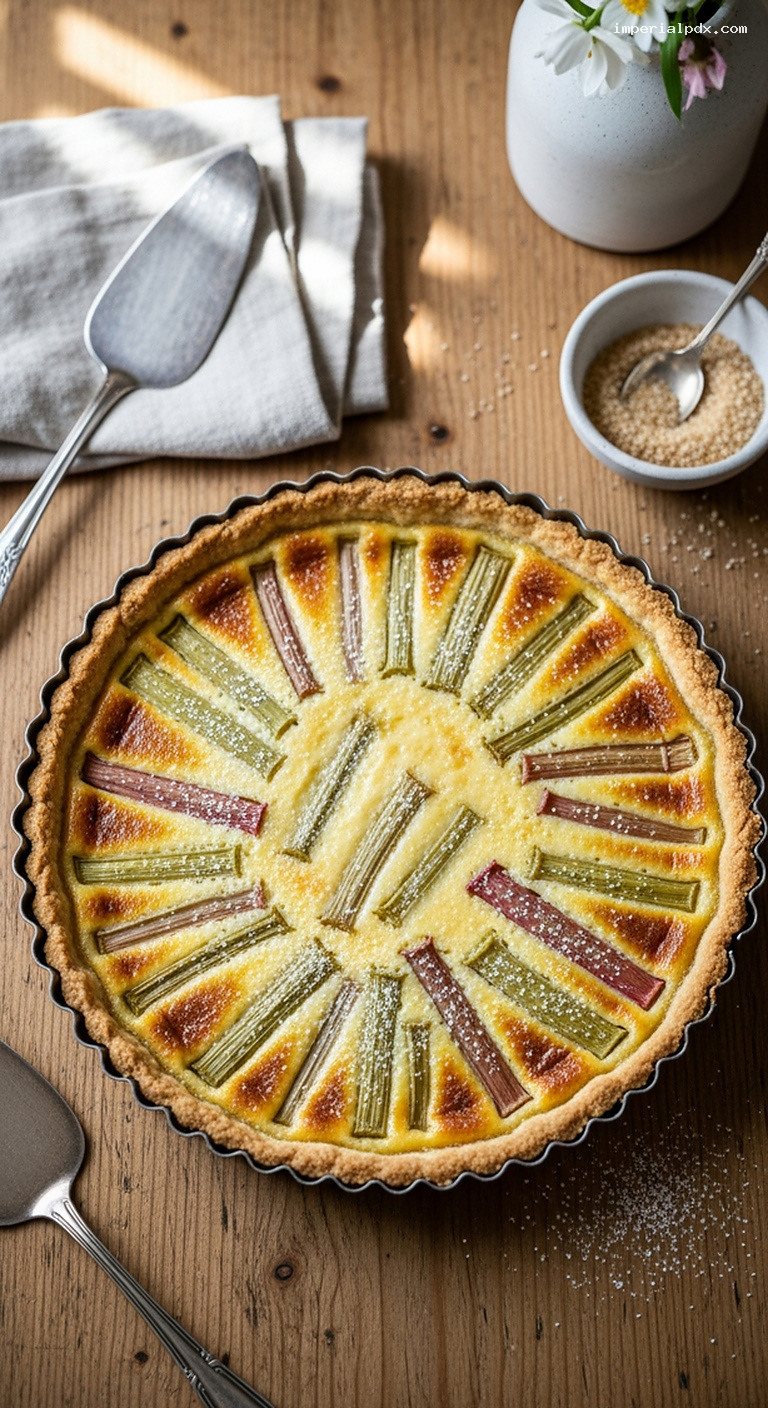
Place the pre-baked crust on a baking sheet (this makes it easier to move in and out of the oven). Spread the rhubarb pieces evenly over the bottom of the crust. If you are using long strips for a pattern or lattice, you can first pour in a thin layer of custard, arrange the strips in a crisscross or chevron design, then pour in the rest of the custard carefully around them.
Slowly pour the custard into the tart shell, around and over the rhubarb, stopping when it is just below the rim of the crust. Sprinkle the top lightly with coarse sugar for a subtle crunch and shine.
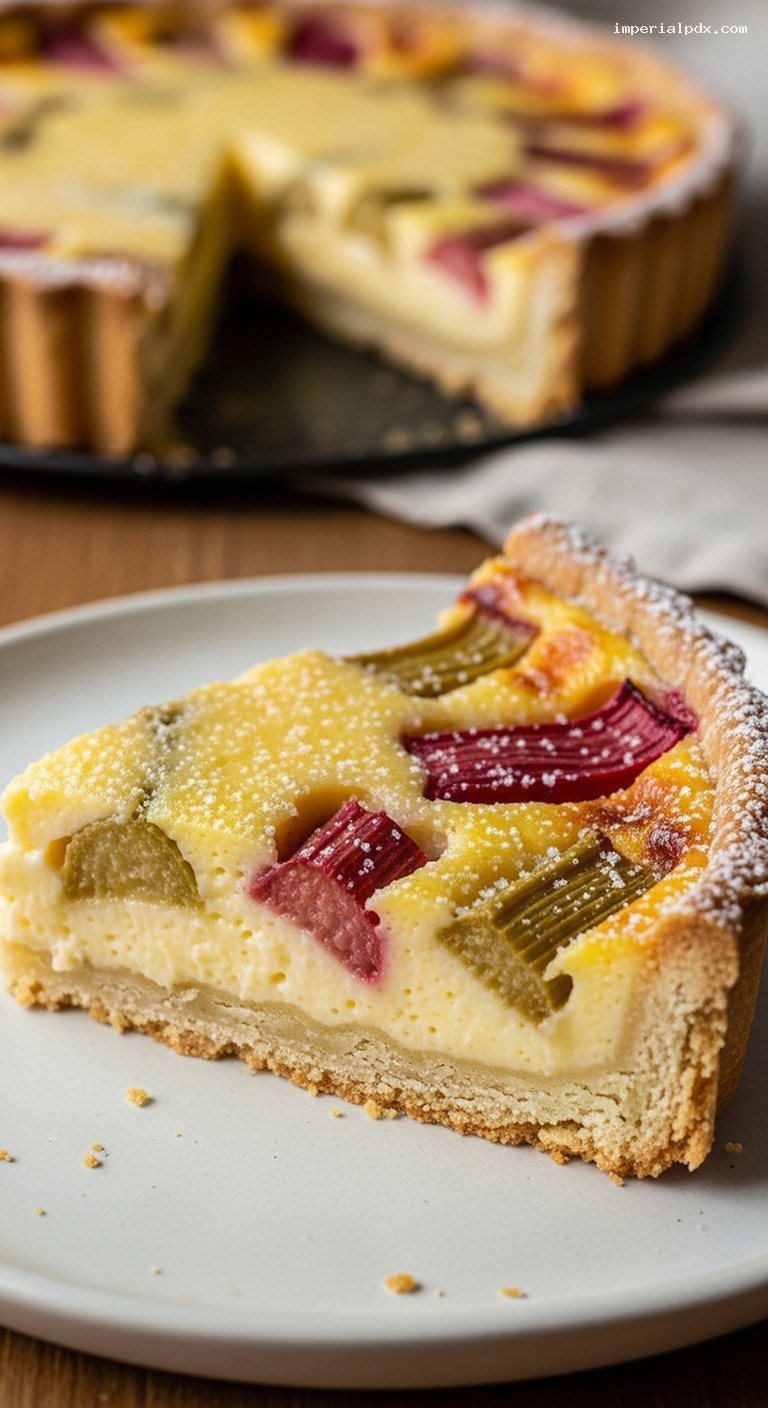
Bake at 180°C / 350°F for 30–35 minutes, or until the custard is set around the edges but still has a slight jiggle in the center when you gently shake the pan. The rhubarb should be tender, and the top may have a few golden spots. If the crust edges brown too quickly, cover them loosely with strips of foil during baking.
Step 7: Cool, garnish, and serve
Remove the tart from the oven and place it on a wire rack. Allow it to cool in the pan for at least 1 hour so the custard can finish setting. For the cleanest slices, allow the tart to come almost to room temperature or chill lightly for 1–2 hours.
When ready to serve, carefully remove the outer ring of the tart pan. Dust the top lightly with powdered sugar. Slice with a sharp knife, wiping the blade between cuts for neat pieces. Serve slightly warm, at room temperature, or gently chilled. The tart is lovely on its own, or you can add a spoonful of softly whipped cream or a small scoop of vanilla ice cream alongside.
Pro Tips
- Keep everything cold for a tender crust. Cold butter and well-chilled dough give you a crisp, melt-in-the-mouth pâte sucrée.
- Macerate the rhubarb. Tossing rhubarb with sugar and draining the juices keeps the filling flavorful without flooding the crust.
- Do not overbake the custard. Take the tart out while the center still has a soft wobble; it will firm up as it cools, staying silky instead of rubbery.
- Use a removable-bottom tart pan. This makes unmolding much easier and keeps the crust edges beautiful.
- For a striking finish, play with patterns. Alternate pink and green rhubarb strips in chevrons, diagonals, or a lattice for a pâtisserie-style look.
Variations
- Lattice-style rhubarb tart (less custard). Use longer rhubarb strips arranged in a woven lattice on top of a thinner layer of custard, or omit the custard entirely and simply sprinkle the rhubarb generously with sugar before baking.
- Almond-rhubarb custard tart. Spread 3–4 tbsp of almond meal mixed with 1 tbsp sugar over the base of the pre-baked crust before adding the rhubarb. This adds a subtle frangipane note and helps absorb juices.
- Strawberry–rhubarb version. Replace about one-third of the rhubarb with chopped fresh strawberries. Reduce the sugar in the custard by 1–2 tbsp if your berries are very sweet.
Storage & Make-Ahead
Once completely cooled, cover the tart and store it in the refrigerator for up to 3 days. The crust will be at its crispest on day 1 but still very enjoyable after that. For serving, let chilled slices sit at room temperature for 15–20 minutes to soften the custard and bring out the flavors.
You can make the tart dough up to 2 days ahead and keep it wrapped in the fridge, or freeze it (rolled out in the pan or as a disk) for up to 1 month. The blind-baked crust can also be baked earlier in the day; just cool completely before filling. The custard should be mixed just before baking for best texture, but the rhubarb can be trimmed and cut a few hours in advance and kept refrigerated.
Nutrition (per serving)
Approximate values per slice (1 of 8): about 420 calories; 25 g fat (15 g saturated); 43 g carbohydrates; 2 g fiber; 19 g sugars; 7 g protein; 220 mg sodium. These numbers are estimates and will vary based on exact ingredients and portion sizes.