Quick Recipe Version (TL;DR)
Quick Ingredients
- 1 whole packer beef brisket, 12–14 lb
- 1/2 cup (72 g) kosher salt (Diamond Crystal)
- 1/2 cup (50 g) coarse black pepper (16-mesh preferred)
- Optional: 1 tbsp garlic powder
- Optional: 1 tbsp smoked paprika
- Optional binder: 2 tbsp yellow mustard or hot sauce
- Post oak wood (about 4–6 medium chunks or 2–3 splits, depending on smoker)
- Wrap: 2 sheets pink butcher paper (18 in wide, each about 5 ft long) or heavy-duty foil
- Serving: dill pickle chips, thin-sliced white onion, soft white sandwich bread
- Optional mop: apple cider vinegar, water, Worcestershire, hot sauce
- Optional au jus: low-sodium beef broth + brisket drippings
Do This
- 1. Trim brisket to a 1/4-inch fat cap; remove hard fat and silver skin.
- 2. Season all over with a 1:1 salt + coarse pepper rub (optional garlic/paprika). Rest 45 minutes (or dry brine 8–24 hours).
- 3. Heat smoker to 250°F and smoke over post oak, fat side up, until bark is dark and internal temp is 165°F (about 6 hours).
- 4. Wrap tightly in butcher paper (or foil). Return to smoker at 250°F.
- 5. Cook until internal temp is 200–203°F and a probe slides in with little resistance (about 6 hours more).
- 6. Rest wrapped brisket 3 hours (hold at 150°F in an oven or a towel-lined cooler).
- 7. Slice against the grain (flat: 3/8-inch thick). Serve with pickles, onions, white bread, and a tangy vinegar mop or thin au jus.
Why You’ll Love This Recipe
- Classic Central Texas flavor: beef-forward, peppery bark, and clean smoke from post oak.
- Home-cook friendly method with clear targets (temps, wrap timing, and tenderness cues).
- Juicy slices plus two serving options: a tangy vinegar mop or a simple brisket au jus.
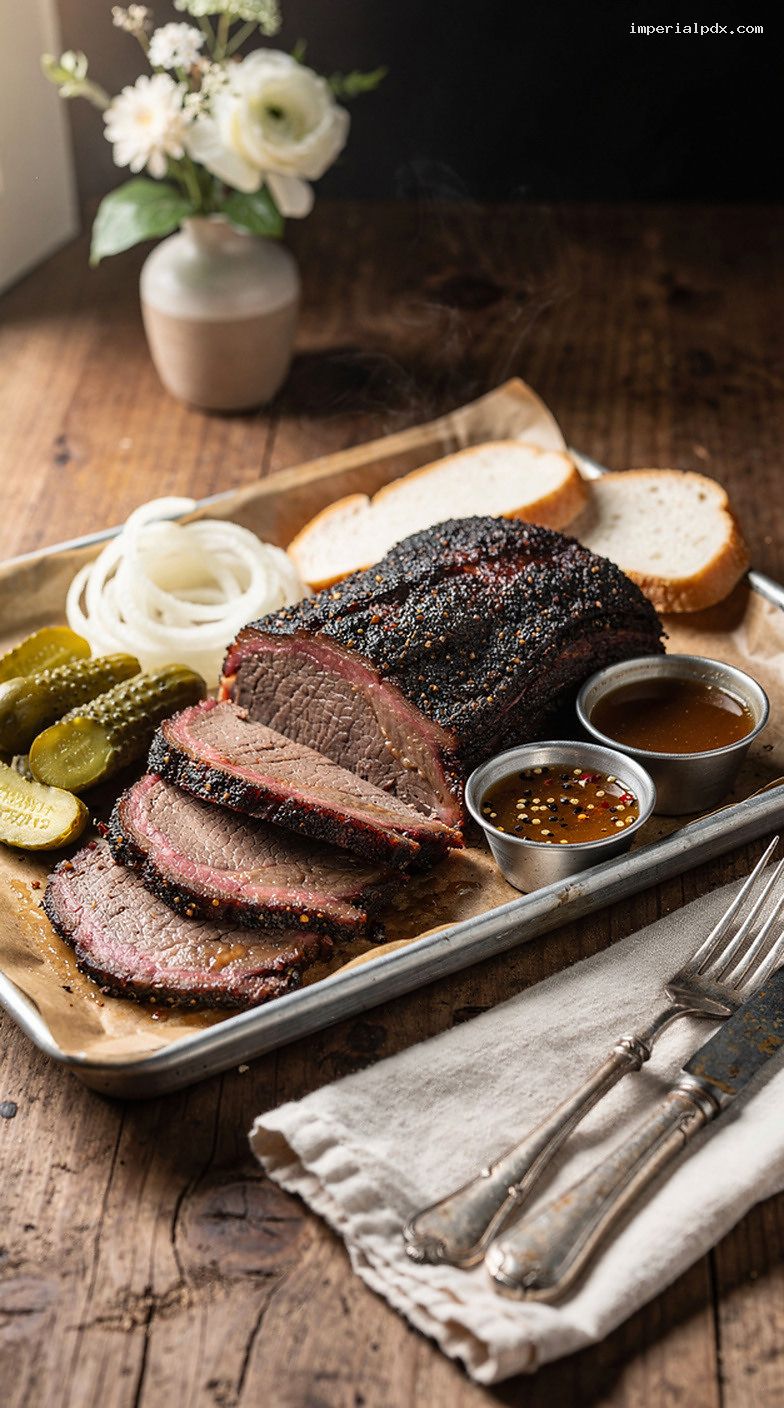
- Perfect “bbq tray” vibe with pickles, onions, and soft white bread.
Grocery List
- Produce: 1 large white onion; dill pickles (chips or spears); optional lemon (for brightening au jus); optional jalapeño (for extra kick with the mop)
- Dairy: None (optional: 2 tbsp unsalted butter to enrich au jus)
- Pantry: 1 whole packer brisket (12–14 lb); kosher salt; coarse black pepper; optional garlic powder; optional smoked paprika; apple cider vinegar; Worcestershire sauce; hot sauce; low-sodium beef broth; soft white sandwich bread; pink butcher paper or heavy-duty foil; post oak wood chunks/splits
Full Ingredients
Brisket
- 1 whole packer beef brisket, 12–14 lb (choice or prime)
Texas-Style Rub (1:1 “Dalmatian” base)
- 1/2 cup (72 g) kosher salt (Diamond Crystal)
- 1/2 cup (50 g) coarse black pepper (16-mesh preferred)
- Optional (still Texas-friendly): 1 tbsp garlic powder
- Optional (adds color and mild sweetness): 1 tbsp smoked paprika
Optional Binder (helps rub adhere)
- 2 tbsp yellow mustard or 2 tbsp hot sauce
Wood & Wrapping
- Post oak wood, about 4–6 medium chunks (or 2–3 splits, depending on smoker style)
- Pink butcher paper: 2 sheets, each about 18 inches wide x 5 feet long (or heavy-duty aluminum foil)
Tangy Vinegar Mop (for serving and/or light basting)
- 1 cup (240 ml) apple cider vinegar
- 1/2 cup (120 ml) water
- 2 tbsp (30 ml) Worcestershire sauce
- 1 tbsp (15 ml) hot sauce
- 1 tsp coarse black pepper
- 1/2 tsp kosher salt
Simple Brisket Au Jus (thin dipping jus)
- 1 cup (240 ml) brisket drippings (from the wrap), skimmed
- 1 cup (240 ml) low-sodium beef broth
- 1 tsp Worcestershire sauce
- 1/4 tsp black pepper (or to taste)
- Optional: 1 tsp apple cider vinegar (to brighten)
For Serving
- 12–24 slices soft white sandwich bread
- 1 large white onion, thinly sliced into rings or half-moons
- 2 cups dill pickle chips (or spears)
Step-by-Step Instructions
Step 1: Trim the brisket for even cooking
Unwrap the brisket and pat it dry with paper towels. Place it on a large cutting board.
Trim the fat cap to a fairly even 1/4-inch thickness. Remove any hard, waxy fat (especially the dense “knob” between the point and flat) because it won’t fully render.
Flip and trim away any loose flaps, thin edges that will burn, and visible silver skin. Aim for a streamlined shape so smoke and heat flow smoothly around it.
Step 2: Season with a simple Texas rub
In a bowl, mix 1/2 cup kosher salt and 1/2 cup coarse black pepper. If using, stir in 1 tbsp garlic powder and 1 tbsp smoked paprika.
If you want a binder, lightly coat the brisket with 2 tbsp mustard or hot sauce (you should barely see it). Season generously on all sides, pressing the rub in so it adheres. Use all the rub.
Let the seasoned brisket rest at room temperature for 45 minutes while you preheat the smoker. For deeper seasoning, refrigerate uncovered for 8–24 hours (dry brine), then take it out while the smoker heats.
Step 3: Preheat the smoker to 250°F and set up for clean smoke
Preheat your smoker to 250°F. Add post oak wood so you get a steady, clean-burning smoke (thin and light, not billowy white).
If your smoker runs dry or hot, place a water pan in the cook chamber for temperature stability. Keep a reliable probe thermometer ready for both pit temperature and brisket internal temperature.
Step 4: Smoke unwrapped until a deep bark forms (target 165°F internal)
Place the brisket on the smoker with the fat side up (a good default for most backyard smokers). Insert a thermometer probe into the thickest part of the flat.
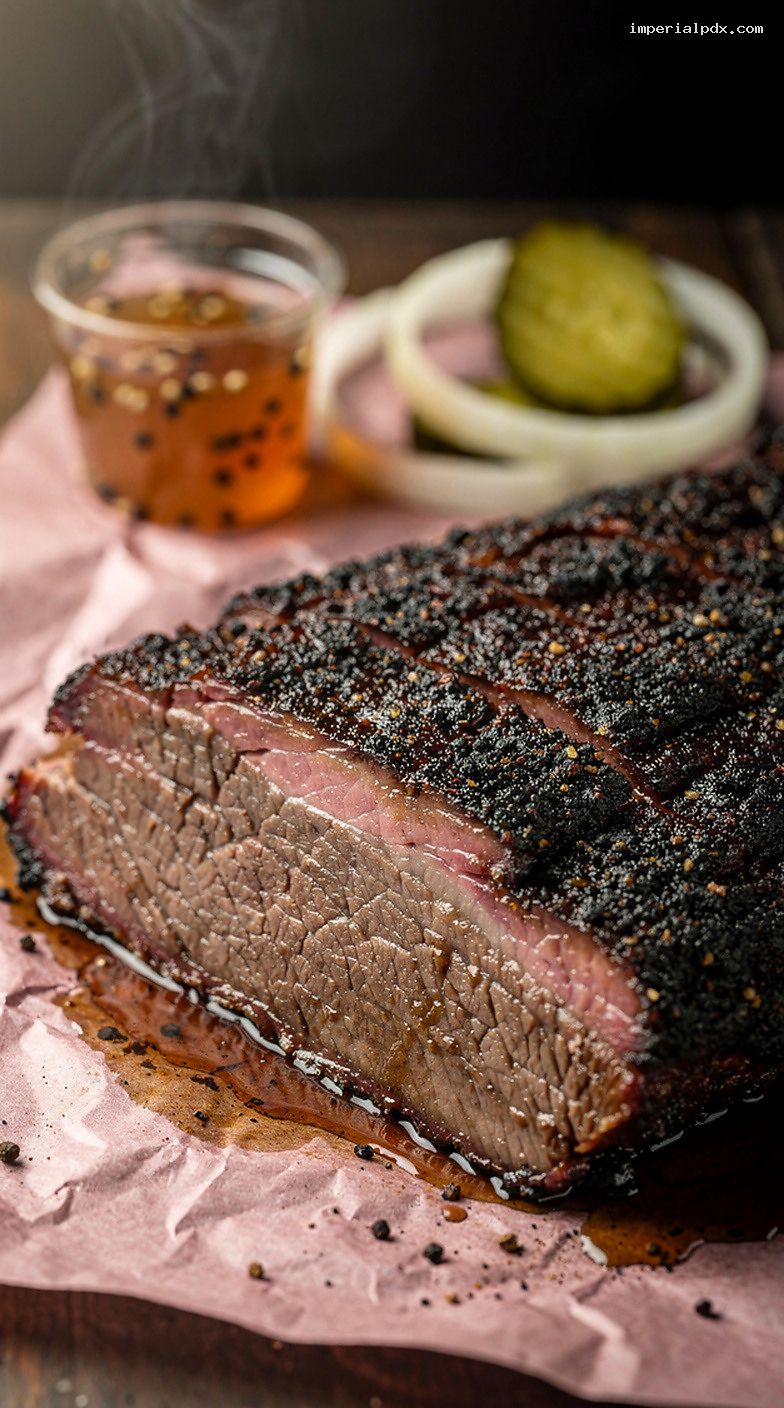
Smoke at 250°F until the bark is dark, set, and peppery, and the internal temperature reaches 165°F, about 6 hours. Avoid constantly opening the lid; temperature stability matters.
If you like, you can lightly mop after the first 3 hours: brush or spritz a thin layer of the vinegar mop and repeat once every 60 minutes. Keep it light so you don’t wash off the rub.
Step 5: Wrap to push through the stall and protect moisture
When the bark looks right and the brisket hits about 165°F, wrap it tightly in pink butcher paper (preferred for maintaining bark) or heavy-duty foil (faster and very moist).
To wrap in butcher paper: lay out two overlapping sheets (each about 5 feet long). Place brisket in the center and fold snugly, keeping seams on top so juices stay in. Return to the smoker with the seam side down.
Step 6: Cook until probe-tender (target 200–203°F internal)
Continue cooking at 250°F until the brisket reaches 200–203°F and, more importantly, a probe or skewer slides into the flat and point with very little resistance (like softened butter). This usually takes about 6 hours after wrapping, for a total cook time near 12 hours.
If it hits 203°F but still feels tight or “grabby,” keep going in 20–30 minute increments. Tenderness is the finish line.
Step 7: Rest (don’t skip) for juicy, sliceable brisket
Keep the brisket wrapped and rest it for 3 hours. The easiest holding method is a 150°F oven (many ovens can be set to 170°F; if so, crack the door slightly and monitor with an oven thermometer to stay close to 150°F).
Alternatively, place the wrapped brisket in a towel-lined cooler and rest for 3 hours. Resting lets juices redistribute and collagen finish relaxing, which makes slicing cleaner and the meat noticeably juicier.
Step 8: Slice thick, make a quick mop or au jus, and serve Texas-style
Make the mop: Whisk together 1 cup apple cider vinegar, 1/2 cup water, 2 tbsp Worcestershire, 1 tbsp hot sauce, 1 tsp black pepper, and 1/2 tsp salt. Serve at room temperature for spooning over slices or for dipping.
Make the au jus: Carefully open the wrap and pour collected juices into a measuring cup. Let sit 5 minutes, then skim off most of the fat. Measure 1 cup drippings and combine with 1 cup low-sodium beef broth and 1 tsp Worcestershire. Warm gently (do not boil) and season with 1/4 tsp black pepper and optional 1 tsp cider vinegar.
Slice: Separate the point from the flat by following the natural seam of fat between them. Slice the flat against the grain into 3/8-inch-thick slices (Texas-style “thick but not chunky”). For the point, rotate it as needed and slice against the grain, or chop for sandwiches.
Serve: Pile brisket on a tray with soft white bread, dill pickles, and sliced white onion. Offer the vinegar mop and/or warm au jus on the side for dipping.
Pro Tips
- Chase tenderness, not just temperature: Start checking feel around 198°F. “Probe-tender” is the most reliable indicator.
- Use coarse pepper for the right bark: Fine pepper can turn muddy; coarse pepper helps create that classic, craggy Texas crust.
- Wrap when the bark is set: If you wrap too early, you’ll soften the bark. Look for a deep mahogany color and a dry-to-the-touch surface.
- Rest hot and long: A 3-hour rest at about 150°F makes slicing cleaner and improves juiciness.
- Slice with the grain map in mind: The flat and point run in different directions. Separate them first for best slices.
Variations
- Pure Central Texas: Use only salt + pepper (skip garlic and paprika) and serve with pickles, onions, and bread only.
- Foil boat method (bark-forward): Instead of fully wrapping, set the brisket into a foil “boat” once bark is set (around 170°F) and cook to tenderness. This keeps the top bark drier and crunchier.
- Pellet grill adaptation: Run at 225°F for the first 3 hours for extra smoke, then raise to 250°F. Use a smoke tube if you want a stronger oak profile.
Storage & Make-Ahead
Refrigerate leftover brisket within 2 hours of serving. Store sliced or unsliced brisket in an airtight container with a splash of au jus (or a few tablespoons of drippings) for up to 4 days.
For longer storage, freeze tightly wrapped portions for up to 3 months. Thaw overnight in the refrigerator.
To reheat without drying out: place brisket in a covered pan or wrap in foil with 2–4 tbsp au jus per pound. Warm in a 250°F oven until the thickest part reaches 165°F, about 45–75 minutes depending on thickness.
Nutrition (per serving)
Approximate, per 1/12 of recipe (about 6–7 oz cooked brisket) plus 2 slices white bread; excludes optional mop/au jus: Calories: 580; Protein: 34 g; Fat: 40 g; Carbohydrates: 18 g; Fiber: 1 g; Sugars: 3 g; Sodium: 1200 mg.