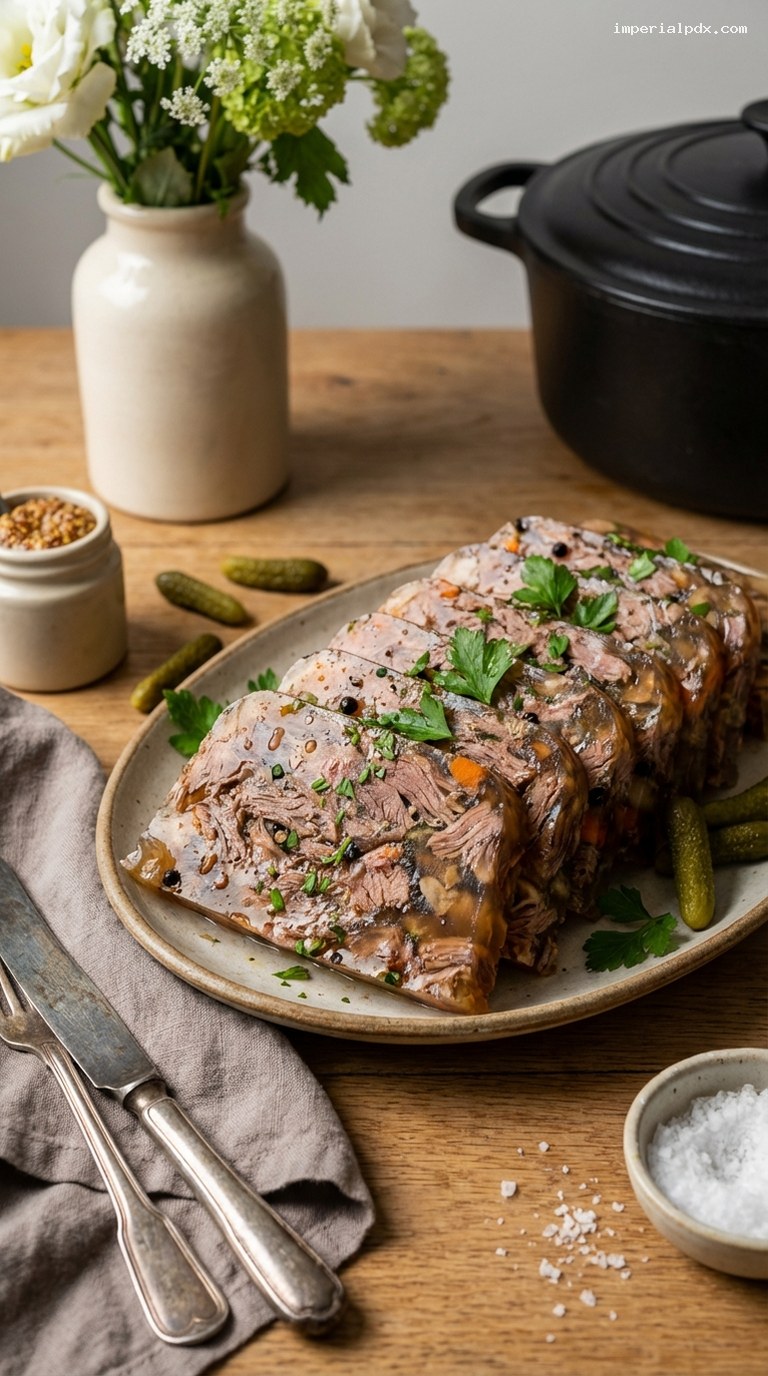
Quick Recipe Version (TL;DR)
Quick Ingredients
- 1.8 kg bone-in beef shank, cross-cut (about 4 lb)
- 500 g beef marrow or knuckle bones (optional, for extra gelatin)
- 1 tbsp neutral oil
- 1 large onion, 2 carrots, 2 celery stalks, 6 garlic cloves
- Bay leaves, thyme, parsley, whole black peppercorns
- 8 cups (2 L) cold water
- 2 tsp fine sea salt, plus more to taste
- 1 tsp ground allspice, 1/2 tsp cinnamon, 1/4 tsp cloves
- 1/2 tsp smoked paprika (optional), black pepper
- 1 tsp Dijon or whole-grain mustard
- 2 tbsp red wine or sherry vinegar
- 2–3 tbsp chopped fresh herbs (parsley, chives)
- Cornichons, whole-grain mustard, crusty bread, flaky salt (to serve)
Do This
- 1. Heat oven to 150°C / 300°F. Pat beef shank dry and season lightly with salt.
- 2. Brown shank in oil in a heavy pot. Add onion, carrot, celery, garlic, herbs, peppercorns, optional bones, and water to cover. Bring to a simmer.
- 3. Cover and braise in the oven 3–3½ hours, until beef is very tender and pulls apart with a fork.
- 4. Lift beef out to a tray to cool slightly. Strain broth, chill briefly, and skim fat. Shred beef, discarding large bones and gristle.
- 5. Boil strained broth to reduce by about half until very flavorful and slightly syrupy. Stir in spices, mustard, vinegar, and herbs; adjust salt.
- 6. Pack shredded beef into a greased loaf pan or terrine mold. Pour hot spiced broth over to just cover, pressing gently to remove air pockets.
- 7. Cool to room temperature, then chill at least 8 hours until firmly set. Slice thickly and serve with cornichons, mustard, and bread.
Why You’ll Love This Recipe
- Deep, comforting flavor from slow-braised beef shank and aromatic broth.
- All-natural set: the terrine firms up from real beef gelatin, no powdered gelatin needed.
- Make-ahead friendly: perfect for dinner parties, picnics, or leisurely weekend lunches.
- Surprisingly simple: mostly hands-off cooking, with a very forgiving technique.
Grocery List
- Produce: Yellow onion, carrots, celery, garlic, optional leek, fresh parsley, fresh thyme, fresh chives (optional), lemons (optional, for serving)
- Dairy: None required (just a little butter or oil to grease the mold)
- Pantry: Bone-in beef shank, optional beef marrow/knuckle bones, neutral oil, bay leaves, whole black peppercorns, fine sea salt, ground allspice, ground cinnamon, ground cloves, smoked paprika (optional), black pepper, Dijon or whole-grain mustard, red wine or sherry vinegar, cornichons, crusty bread, flaky sea salt
Full Ingredients
Beef and Aromatic Broth
- 1.8 kg bone-in beef shank, cross-cut into 4–6 thick pieces (about 4 lb)
- 500 g beef marrow or knuckle bones (optional but recommended for extra natural gelatin)
- 1 tbsp neutral oil (such as sunflower, canola, or grapeseed)
- 1 large yellow onion, peeled and halved
- 2 medium carrots, cut into 2–3 cm chunks
- 2 celery stalks, cut into 2–3 cm chunks
- 1 small leek, white and light green part only, rinsed well and sliced into chunks (optional)
- 6 garlic cloves, lightly crushed with the side of a knife
- 2 bay leaves
- 6 sprigs fresh thyme (or 1 tsp dried thyme)
- 6 sprigs fresh parsley, plus more for later
- 1 tsp whole black peppercorns
- 8 cups (2 L) cold water, or enough to just cover the meat and bones
- 2 tsp fine sea salt, plus more to taste
Warm Spice Blend and Terrine Seasoning
- 1 tsp ground allspice
- 1/2 tsp ground cinnamon
- 1/4 tsp ground cloves
- 1/2 tsp smoked paprika (optional, for a gentle smoky note)
- 1/2 tsp freshly ground black pepper (plus more to taste)
- 1 tsp Dijon or whole-grain mustard
- 2 tbsp red wine vinegar or sherry vinegar
- 1 tbsp finely chopped fresh parsley
- 1 tbsp finely chopped fresh chives (optional)
- Additional fine sea salt, to taste (likely 1–2 tsp more, depending on reduction)
- 2 tbsp finely chopped cornichons or other tangy pickles (optional, folded into the meat)
- Neutral oil or softened butter, for greasing the mold
To Serve (Optional but Recommended)
- Cornichons or small pickles
- Whole-grain or Dijon mustard
- Crusty bread, baguette slices, or toasted country loaf
- Extra chopped fresh parsley or chives, for garnish
- Flaky sea salt and freshly ground black pepper, for finishing
- Lemon wedges, for a bright squeeze at the table (optional)
Step-by-Step Instructions
Step 1: Prep the Beef and Vegetables
Pat the beef shank pieces very dry with paper towels. This helps them brown nicely. Lightly season them all over with about 1 teaspoon of the fine sea salt. Set aside while you prepare the vegetables.
Peel and halve the onion. Cut the carrots and celery into large chunks (about 2–3 cm). If using the leek, slice it into similar-size chunks and rinse thoroughly to remove any grit. Lightly crush the garlic cloves. Gather your bay leaves, thyme sprigs, parsley sprigs, and peppercorns so everything is ready to go.
Step 2: Brown the Beef for Extra Flavor
Preheat your oven to 150°C / 300°F. Place a large, heavy, oven-safe pot or Dutch oven (at least 5 L capacity) over medium-high heat. Add the neutral oil. When the oil is hot and shimmering, add the beef shank pieces in a single layer, without crowding. Brown them well on both sides, about 4–5 minutes per side. Work in batches if needed, transferring browned pieces to a plate.
Once the meat is browned, pour off most of the fat if there is a lot, leaving about 1 tablespoon in the pot. Add the onion, carrots, celery, leek (if using), and garlic. Cook for 3–4 minutes, stirring occasionally, until the vegetables start to take on a little color. This browning builds depth in the final terrine.
Step 3: Build the Aromatic Broth and Braise
Return the browned beef shank (and any accumulated juices) to the pot, nestling the pieces in among the vegetables. Add the optional marrow or knuckle bones if using. Drop in the bay leaves, thyme, parsley sprigs, and whole black peppercorns. Pour in enough cold water to just cover the meat and bones (about 8 cups / 2 L).
Bring the pot to a gentle simmer over medium heat. Use a spoon to skim off any gray foam that rises to the surface in the first 10–15 minutes; this helps keep the broth clear and clean-tasting. Once simmering, cover the pot with a lid and transfer it to the preheated oven.
Braise for 3–3½ hours, or until the beef is completely tender and easily pulls apart with a fork. If your pieces are very thick, you may need closer to 3½ hours. Check once halfway through to ensure the liquid is still gently simmering, not boiling violently.
Step 4: Strain the Broth and Shred the Beef
Carefully remove the pot from the oven. Using tongs or a slotted spoon, gently lift the beef shank pieces onto a large tray or baking sheet to cool slightly. Discard the bay leaves, thyme stems, parsley stems, and any large vegetable pieces you do not want in the terrine. You can reserve some of the very soft carrot pieces if you like small flecks of carrot in the final terrine; chop them finely and set aside.
Pour the cooking liquid through a fine-mesh strainer into a large bowl or clean pot. If you have time, place the broth in the refrigerator or freezer for 20–30 minutes to help the fat rise and firm up on the surface. Skim off as much fat as you can with a spoon.
Meanwhile, when the beef is cool enough to handle, remove and discard the bones, large chunks of fat, and any tough connective tissue that has not melted. Shred the meat into bite-size strands using your fingers or two forks. Aim for rustic pieces rather than very fine shreds; this gives the terrine a nice, hearty texture. Place the shredded beef in a large mixing bowl and add the finely chopped reserved carrots (if using) and the optional chopped cornichons.
Step 5: Reduce and Season the Spiced Broth
Pour the skimmed broth into a clean pot and bring it to a boil over medium-high heat. Reduce the heat to maintain a lively simmer and cook, uncovered, until the liquid is reduced by about half and tastes rich and slightly intense, 25–35 minutes. The exact time will depend on your pot and heat; you should end up with roughly 4 cups (1 L) of reduced broth.
Stir in the ground allspice, cinnamon, cloves, smoked paprika (if using), and freshly ground black pepper. Simmer for 2–3 minutes to bloom the spices. Add the Dijon or whole-grain mustard and the red wine or sherry vinegar, plus the chopped parsley and chives. Taste the broth carefully: it should be well-seasoned and slightly saltier than you would normally sip, because it will be distributed through the meat. Add additional salt as needed, a pinch at a time.
To check for natural gelatin strength, place a small spoonful of the reduced broth on a chilled saucer and refrigerate it for 5–10 minutes. It should firm up into a soft gel. If it is still very liquid, continue simmering to reduce a bit more; the more you concentrate it, the better it will set the terrine.
Step 6: Assemble the Terrine
Lightly grease a loaf pan or terrine mold (about 23 × 13 cm / 9 × 5 inches) with neutral oil or softened butter. Line it with a strip of baking parchment or plastic wrap, leaving overhang on the long sides to help with unmolding later.
Taste the shredded beef mixture and season lightly with salt and pepper if needed. Spoon the meat into the prepared mold in layers, pressing down firmly as you go to eliminate air pockets. Pack it quite tightly; this will help the terrine slice cleanly. You can create subtle layers by alternating meat with a few of the reserved carrots or herbs if you like.
While the spiced broth is still hot, ladle it slowly over the packed meat. Use the back of a spoon or a small spatula to press the meat gently so the liquid seeps down into all the gaps. Add just enough broth to come right to the top of the meat, or to cover it by a few millimeters. You may not need every last drop of broth; save any extra as a cook’s treat or to serve alongside.
Tap the mold gently on the counter to release any trapped air bubbles. Smooth the surface, cover tightly with plastic wrap or a lid, and let it cool to room temperature before chilling.
Step 7: Chill, Unmold, and Serve
Refrigerate the terrine for at least 8 hours, preferably overnight, until completely cold and firmly set. The longer rest allows the flavors to meld and the natural gelatin to do its work.
To unmold, run a thin knife around the inside edges of the pan. Use the parchment or plastic wrap overhang to gently lift the terrine out, or briefly dip the base of the mold in warm water for 5–10 seconds to loosen it, then invert onto a cutting board or platter.
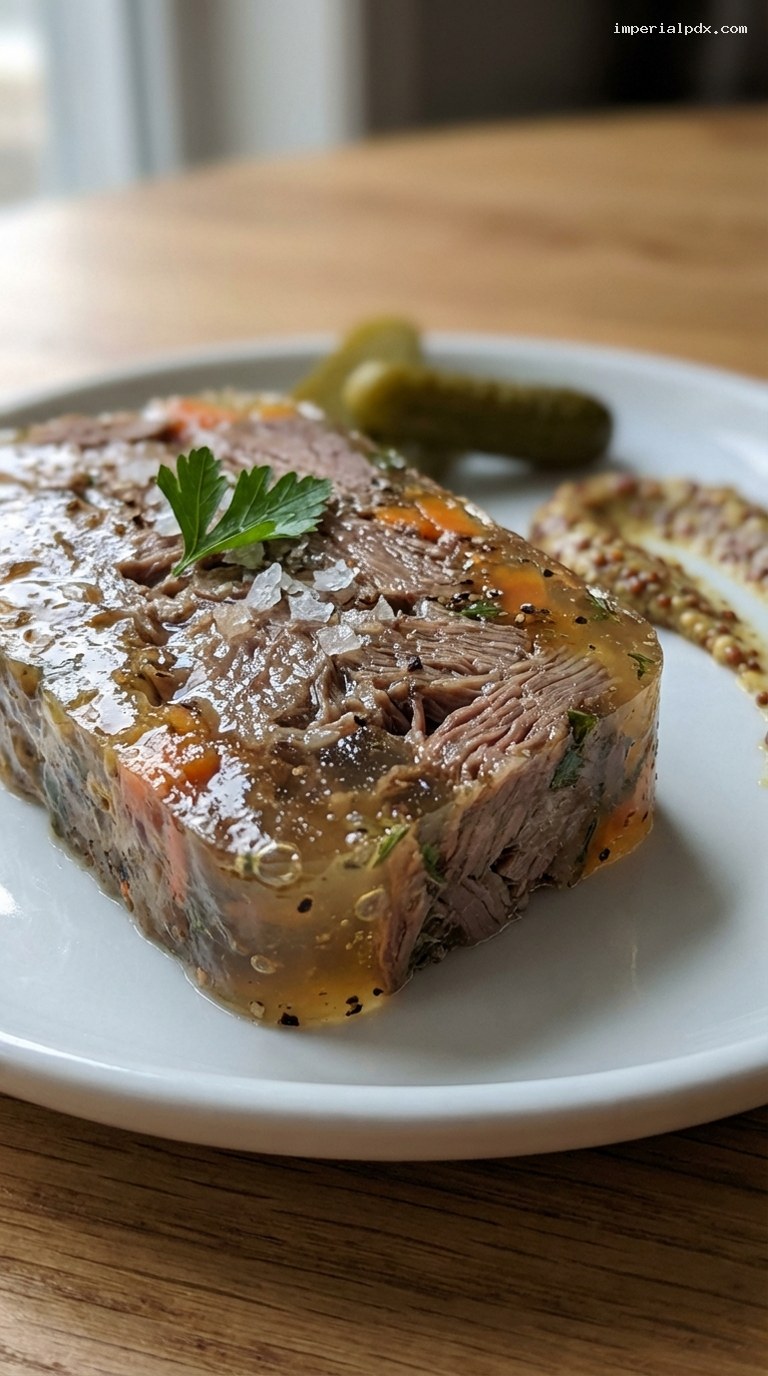
Use a long, sharp knife to cut thick, neat slices (about 1.5–2 cm / ½–¾ inch). Wiping the knife with a warm, damp cloth between cuts helps keep the slices clean. Serve the spiced beef shank terrine slightly chilled or just below room temperature with cornichons, mustard, crusty bread, and a sprinkle of flaky sea salt and fresh herbs. Enjoy the contrast of tender beef and softly set, aromatic jelly in every bite.
Pro Tips
- Choose the right cut: Bone-in shank with lots of connective tissue is key. The sinew and cartilage melt into natural gelatin that sets the terrine without added gelatin powder.
- Skim and degrease: Taking time to skim foam early on and remove excess fat later gives you a clearer, cleaner-tasting jelly and a lighter feel on the palate.
- Season boldly: The flavors are muted when cold, so let the broth taste slightly more intense and salty than you think you need before pouring it over the meat.
- Pack tightly: Pressing the shredded beef quite firmly into the mold prevents gaps and crumbling slices. Do not be shy about tamping it down.
- Give it time: Overnight chilling is not optional. The texture and flavor improve dramatically after a long rest in the fridge.
Variations
- Herb-forward version: Reduce the warm spices to just a pinch of allspice, and increase the fresh herbs (parsley, chives, and a little tarragon) for a brighter, springlike flavor.
- Red wine braise: Replace 1 cup (240 ml) of the water with red wine during the braise. This adds a deeper color and a subtle wine note to both the meat and the jelly.
- Spicier terrine: Add 1/4–1/2 tsp mild chili flakes and extra smoked paprika to the broth reduction for a gentle heat and a smoky edge.
Storage & Make-Ahead
This spiced beef shank terrine is ideal for making ahead. Once fully chilled and set, keep it covered in the refrigerator for up to 5 days. For the best texture, slice only what you plan to serve and keep the remainder tightly wrapped to avoid drying out. If you want to prepare even further in advance, you can freeze the whole terrine (well-wrapped in plastic and then foil) for up to 2 months; thaw overnight in the refrigerator before serving. Note that the jelly may weep slightly after freezing and thawing, but the flavor will still be delicious. Leftover slices make excellent open-faced sandwiches or can be gently warmed and served over polenta or mashed potatoes, though the jelly will melt when heated.
Nutrition (per serving)
Approximate values per serving (1 of 8): 340 calories; 26 g protein; 23 g fat; 4 g saturated fat; 4 g carbohydrates; 0 g fiber; 1 g sugar; 760 mg sodium. Actual values will vary based on the specific cut of beef, trimming, and how much fat is skimmed from the broth.