Quick Recipe Version (TL;DR)
Quick Ingredients
- 2 heads garlic + 2 tsp olive oil, pinch of salt
- 2 lb (900 g) pork shoulder, cubed and very cold
- 8 oz (225 g) pork back fat, cubed and very cold
- 3 tsp (18 g) kosher salt, 1½ tsp white pepper, ¼ tsp nutmeg
- ½ cup (120 ml) whole milk, ½ cup (120 ml) heavy cream, ice-cold
- 2 large egg whites
- 1 cup (70 g) soft white bread crumbs
- ¼ cup (60 ml) dry white wine, chilled
- 1 small onion, finely chopped
- 10–12 ft (3–3.5 m) natural hog casings
- 10 cups (2.5 L) water, 1 cup (240 ml) milk, bay leaves, peppercorns for poaching
Do This
- 1. Roast garlic at 400°F (200°C) for 35–40 minutes until soft; squeeze out cloves and chill.
- 2. Chill pork, fat, and equipment; soak and rinse casings in cool water.
- 3. Sweat onion gently; make a panade by blending milk, cream, egg whites, bread crumbs, roasted garlic, and seasonings until smooth and cold.
- 4. Coarsely grind pork and fat once; keep the mixture very cold.
- 5. Emulsify ground meat with panade and wine in a food processor or stand mixer over ice until pale and sticky.
- 6. Stuff into casings, twisting links about 5–6 inches (12–15 cm) long; prick any air bubbles.
- 7. Poach at 165–175°F (74–80°C) in water/milk with aromatics for 15–20 minutes, shock in ice water, then chill completely before serving.
Why You’ll Love This Recipe
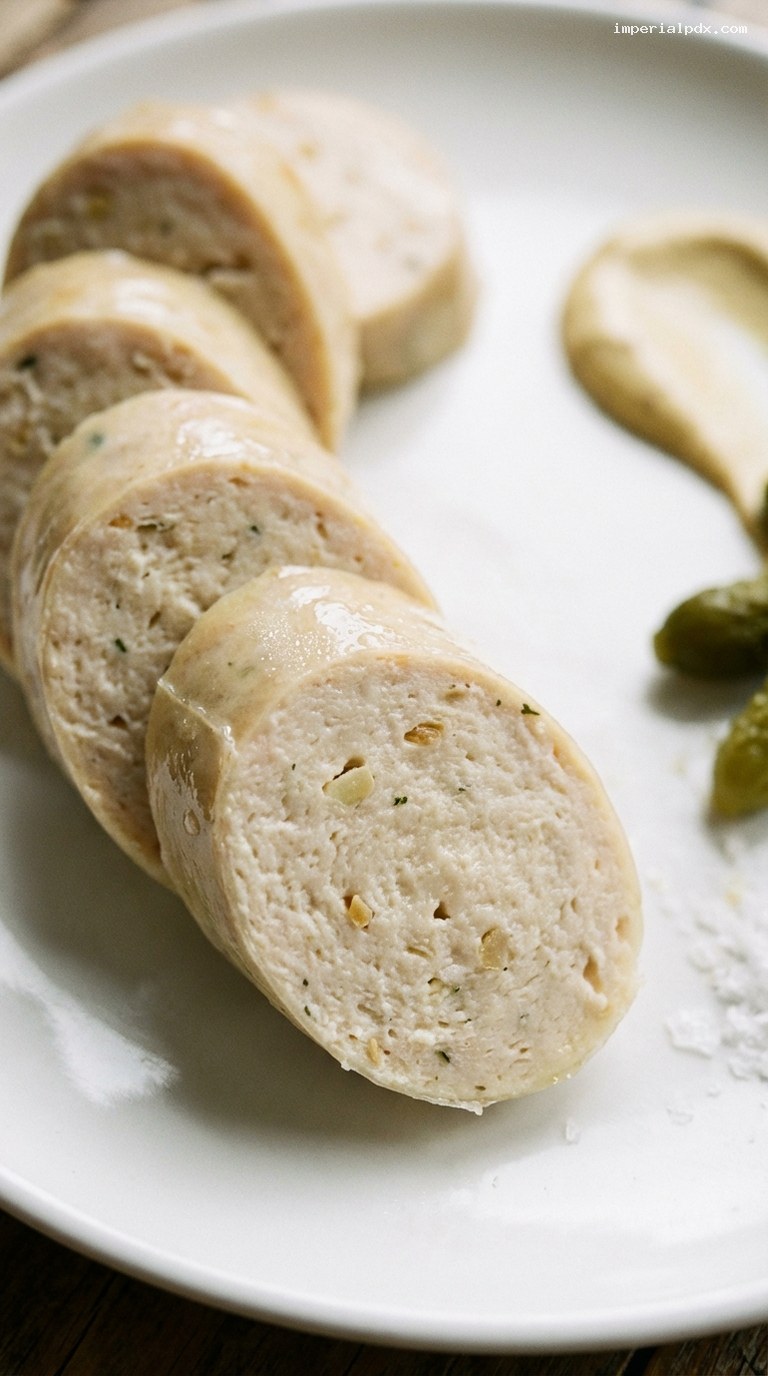
- Silky, almost mousse-like sausages with a delicate, pale interior and gentle roasted garlic flavor.
- Surprisingly approachable at home if you follow the temperature and step-by-step guidance.
- Perfect make-ahead centerpiece for charcuterie boards, elegant appetizers, or light mains.
- Versatile: serve chilled in slices, or lightly sear for a crisp exterior and creamy center.
Grocery List
- Produce: 2 heads garlic, 1 small onion, optional fresh herbs (chives, parsley), bay leaves
- Dairy: Whole milk, heavy cream, unsalted butter (for sweating onion), additional milk for poaching
- Pantry: Pork shoulder, pork back fat (or fatty salt pork), natural hog casings, olive oil, kosher salt, white pepper, nutmeg, white wine, white bread, sugar (optional), whole spices for poaching (peppercorns, cloves, optional)
Full Ingredients
For the Roasted Garlic
- 2 medium heads garlic
- 2 teaspoons olive oil
- Pinch of kosher salt
For the Boudin Blanc Mixture
- 2 lb (900 g) boneless pork shoulder, well-trimmed, cut into 1-inch (2.5 cm) cubes, very cold
- 8 oz (225 g) pork back fat or very fatty pork, cut into 1/2-inch (1.25 cm) cubes, very cold
- 3 teaspoons (18 g) kosher salt
- 1½ teaspoons finely ground white pepper
- ¼ teaspoon freshly grated nutmeg
- ½ teaspoon sugar (optional, rounds flavor)
- ½ cup (120 ml) whole milk, ice-cold
- ½ cup (120 ml) heavy cream, ice-cold
- 2 large egg whites, chilled
- 1 cup (about 70 g) soft white bread crumbs (from crustless sandwich bread)
- Roasted garlic cloves from the 2 heads (above), cooled
- ¼ cup (60 ml) dry white wine (such as Sauvignon Blanc), very cold
- 1 small onion, very finely chopped (about ½ cup / 75 g)
- 1 tablespoon unsalted butter (for sweating the onion)
- 1–2 tablespoons finely chopped fresh chives or parsley (optional, for a subtle fleck of color)
For the Casings
- 10–12 ft (3–3.5 m) natural hog casings (28–32 mm diameter), rinsed and soaked in cool water
For the Poaching Liquid
- 10 cups (2.5 L) water
- 1 cup (240 ml) whole milk (helps keep the sausages pale and tender)
- 2 bay leaves
- 8–10 whole black or white peppercorns
- ½ onion, peeled (you can stud it with 2 whole cloves if you like)
- 1 teaspoon kosher salt
To Serve (Optional but Recommended)
- Cornichons or small pickles
- Mild Dijon or whole-grain mustard
- Fresh herbs (chives, parsley) for garnish
- Crusty bread or toasted baguette slices
Step-by-Step Instructions
Step 1: Roast the Garlic and Chill Everything
Preheat your oven to 400°F (200°C). Slice the top 1/4 inch (0.5 cm) off each head of garlic to expose the cloves. Place each head on a small piece of foil, drizzle with 1 teaspoon olive oil, and sprinkle with a pinch of salt. Wrap tightly and place on a baking sheet.
Roast for 35–40 minutes, until the cloves are very soft and golden at the tips but not deeply browned. Let cool until you can handle them, then squeeze the roasted garlic out of the skins into a small bowl. Cover and chill in the refrigerator; you want it cold when it goes into the sausage mixture.
Meanwhile, make sure your pork, pork fat, and even the mixing bowl and grinder parts are in the refrigerator (or briefly in the freezer) so everything is well-chilled. Cold ingredients are absolutely key to a smooth, emulsified boudin blanc.
Step 2: Prep the Onion and Casings
In a small skillet over low heat, melt 1 tablespoon unsalted butter. Add the finely chopped onion and a pinch of salt. Cook very gently for 5–7 minutes, stirring often, until the onion is completely soft and translucent but not browned at all. Browning would darken the sausage; keep the heat low. Transfer to a plate and refrigerate until cold.
Prepare the casings according to the package directions: usually this means rinsing the salt off under cool running water, then soaking them in a bowl of lukewarm water for at least 30 minutes. Run water through each length to check for holes and remove any excess salt. Keep the casings submerged in fresh cool water until ready to stuff.
Step 3: Make the Panade (Milk-Bread Base)
In a blender or food processor, combine the cold roasted garlic cloves, ½ cup (120 ml) cold milk, ½ cup (120 ml) cold heavy cream, 2 chilled egg whites, 1 cup (70 g) soft white bread crumbs, 3 teaspoons (18 g) kosher salt, 1½ teaspoons white pepper, ¼ teaspoon nutmeg, and ½ teaspoon sugar (if using). Blend until completely smooth and thick, scraping down the sides as needed. The mixture should be the texture of a loose paste and very pale.
Transfer this panade to a bowl, fold in the chilled cooked onion and chopped herbs (if using), and set the bowl into a larger bowl filled with ice. Keep it cold while you prepare the meat. The colder this base stays, the more stable your final emulsion will be.
Step 4: Grind the Pork and Fat
Spread the chilled pork shoulder and pork fat cubes on a tray in a single layer. If they feel at all soft, place them in the freezer for 15–20 minutes until very firm but not frozen solid. You want them around 32–35°F (0–2°C) if possible.
Using a meat grinder fitted with a medium plate (about 4.5 mm), grind the pork and fat together into a chilled bowl set over ice. If you do not have a grinder, you can ask your butcher to coarsely grind the meat and fat for sausage, then keep it very cold until you are ready to mix.
Once ground, use your hands or a spatula to gently toss the meat to evenly distribute the fat. Return the bowl to the refrigerator or keep it nested in ice so the mixture stays very cold.
Step 5: Emulsify the Sausage Mixture
Working in 2–3 batches to avoid overheating, transfer a portion of the ground meat and fat to a food processor. Add about an equal weight of the cold panade and a splash of the chilled white wine. Process in short bursts for 20–30 seconds at a time, scraping down the sides, until the mixture looks very smooth, pale, and sticky. It should resemble a thick mousse.
Check the temperature of the mixture if you can; it should stay below 55°F (13°C). If it begins to warm, stop and chill it again before continuing. Repeat with the remaining meat, panade, and wine, combining all batches in a large chilled bowl and stirring gently to make sure everything is evenly mixed.
For a seasoning check, fry a teaspoon of the mixture in a little butter in a small pan until just cooked through. Taste and adjust salt, white pepper, or nutmeg if needed, mixing gently after any adjustments.
Step 6: Stuff and Form the Sausages
Fit your sausage stuffer or the sausage-stuffing attachment of a stand mixer with a medium tube and slide a length of soaked casing onto it, leaving a 4–6 inch (10–15 cm) tail free. Tie a knot in the end of the casing or secure with kitchen twine.
Fill the hopper with the boudin blanc mixture, working slowly to avoid introducing air. Start cranking to push the mixture into the casing, supporting the casing with your free hand so it fills firmly but not overly tight; you do not want it to burst. Continue stuffing until you reach the end of the casing, leaving another short tail, then tie off.
To form links about 5–6 inches (12–15 cm) long, pinch the sausage where you want the first link to end, twist several times in one direction, then move down for the next link and twist in the opposite direction. Continue along the length. Use a clean pin or sterilized needle to prick any visible air bubbles, which helps prevent bursting during poaching. Place the linked sausages on a tray, cover, and refrigerate while you heat the poaching liquid.
Step 7: Gently Poach the Boudin Blanc
In a wide pot large enough to hold the sausages in a single layer, combine 10 cups (2.5 L) water, 1 cup (240 ml) milk, 2 bay leaves, peppercorns, the half onion, and 1 teaspoon salt. Bring just to a simmer, then lower the heat. You want the liquid to stay between 165–175°F (74–80°C); it should tremble with a few tiny bubbles, never a full simmer or boil.
Carefully lower the sausages into the hot liquid. Poach gently for 15–20 minutes, turning once or twice, until the internal temperature reaches 155–160°F (68–71°C). The sausages will look pale and slightly plump but should not split. If the liquid ever threatens to boil, add a splash of cold water and lower the heat.
Step 8: Chill and Serve
Prepare a large bowl of ice water while the sausages poach. As soon as they are cooked, lift them out of the poaching liquid with a slotted spoon and transfer them immediately to the ice bath. Cool completely, about 15 minutes, then drain and pat dry.
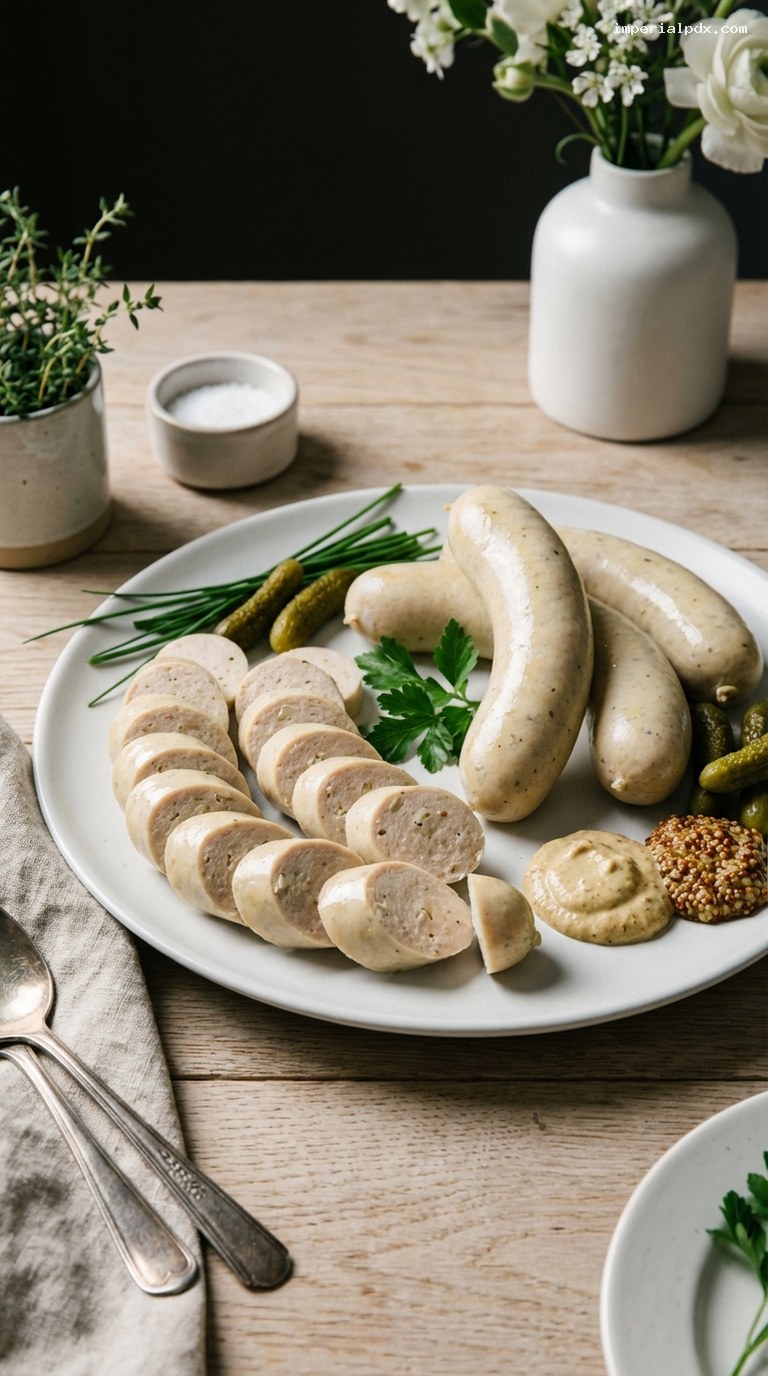
For the best texture and flavor, refrigerate the poached sausages for at least 3 hours, or up to overnight, before serving. Serve them chilled: slice on a slight diagonal and arrange on a platter with cornichons, mustard, fresh herbs, and crusty bread. If you prefer them warm, you can lightly brown the chilled sausages in a bit of butter over medium-low heat just until heated through and golden on the outside, then serve right away.
Pro Tips
- Keep it cold. The single most important rule: every component (meat, fat, panade, tools) should stay as cold as possible. This keeps the fat from melting and gives you that smooth, emulsified, almost mousse-like texture.
- Do a test patty. Always cook a teaspoon or tablespoon of the mixture in a pan and taste before stuffing. Adjust salt and white pepper then, not after.
- Do not let the poaching liquid boil. Boiling will cause the sausages to burst and the emulsion to split, giving a grainy texture. Gentle heat only.
- Use fresh, mild seasonings. White pepper and nutmeg are traditional and subtle. Too much or too many dark spices will discolor the boudin blanc.
- Work in small batches when emulsifying. Processing too much at once can overheat the mixture. Multiple quick batches give better control and a finer texture.
Variations
- Chicken or veal boudin blanc: Replace half or all of the pork shoulder with boneless, skinless chicken thighs or veal shoulder. Keep the pork fat for richness and the same panade and seasonings.
- Pan-seared serving style: After poaching and chilling, brown the sausages gently in butter over medium-low heat until lightly golden. Serve warm over creamy mashed potatoes or a simple celery root purée.
- Caseless quenelles: If you do not have casings or a stuffer, form oval spoonfuls (quenelles) of the emulsified mixture and poach them gently in the same milk-and-water broth until cooked through. Chill and serve as delicate dumplings.
Storage & Make-Ahead
These sausages are ideal for making ahead. Once poached, shocked in ice water, and thoroughly chilled, they can be stored in an airtight container in the refrigerator for up to 3 days. For longer storage, wrap each sausage tightly in plastic wrap, then in foil, and freeze for up to 2 months. Thaw overnight in the refrigerator before serving chilled or gently reheating. Avoid boiling or aggressive reheating, which can cause the emulsion to break. Leftover sliced boudin blanc makes an excellent addition to sandwiches, salads, or charcuterie boards.
Nutrition (per serving)
Approximate values per serving (1/6 of recipe): about 430 calories; 33 g protein; 32 g fat; 5 g saturated fat; 4–6 g carbohydrates; 0–1 g fiber; 2 g sugar; 880 mg sodium. Values will vary based on exact ingredients, casings, and serving size.