Quick Recipe Version (TL;DR)
Quick Ingredients
- 2 tbsp extra-virgin olive oil
- 4 anchovy fillets in oil, finely chopped
- 6 garlic cloves, thinly sliced
- 1/2–1 tsp crushed red pepper flakes
- 1 (28-oz) can crushed tomatoes
- 1/2 cup pitted kalamata olives, halved
- 3 tbsp capers, rinsed
- 1/2 tsp dried oregano
- Salt, black pepper, and a pinch of sugar (optional)
- 12 oz dried spaghetti or 1 lb large shrimp, peeled and deveined
- 2–3 tbsp chopped fresh parsley
- Freshly grated Parmesan, for serving (optional)
Do This
- 1. Warm olive oil in a large skillet over medium heat. Add anchovies and cook, stirring, until they melt into the oil, 1–2 minutes.
- 2. Add garlic and red pepper flakes; cook until fragrant and just turning golden at the edges, about 1 minute.
- 3. Stir in crushed tomatoes, olives, capers, oregano, a pinch of salt, and black pepper. Simmer gently, uncovered, for 15–20 minutes, stirring occasionally.
- 4. Meanwhile, boil spaghetti in well-salted water until al dente, reserving 1/2 cup pasta water, or season shrimp with salt and pepper.
- 5. If using shrimp, sauté in a separate pan with 1 tbsp olive oil over medium-high heat until pink and opaque, 2–3 minutes per side.
- 6. Toss drained spaghetti with enough sauce and a splash of pasta water to coat; or spoon sauce generously over sautéed shrimp.
- 7. Top with parsley and optional Parmesan; serve hot.
Why You’ll Love This Recipe
- Big, bold flavor from humble pantry staples like olives, capers, anchovies, and canned tomatoes.
- Flexible: serve it as a comforting bowl of spaghetti or a lighter plate of sautéed shrimp with sauce.
- Weeknight-friendly: ready in about 40 minutes with very little chopping.
- Makes fantastic leftovers and the sauce tastes even better the next day.
Grocery List
- Produce: Garlic, flat-leaf parsley, lemon (optional, for serving with shrimp).
- Dairy: Parmesan or Pecorino Romano cheese (optional, for serving).
- Pantry: Extra-virgin olive oil, canned crushed tomatoes (28 oz), anchovy fillets in oil, pitted kalamata olives, capers, dried oregano, crushed red pepper flakes, kosher salt, black pepper, granulated sugar (optional), dried spaghetti, plus 1 lb large shrimp if making the shrimp version.
Full Ingredients
For the Rustic Puttanesca Sauce
- 2 tbsp extra-virgin olive oil
- 4 anchovy fillets packed in oil, drained and finely chopped (about 2 tsp)
- 6 medium garlic cloves, thinly sliced
- 1/2–1 tsp crushed red pepper flakes, to taste
- 1 (28-oz / 794 g) can crushed tomatoes
- 1/2 cup (about 80 g) pitted kalamata olives, halved lengthwise
- 3 tbsp capers, drained and rinsed
- 1/2 tsp dried oregano
- 1/4 tsp granulated sugar, optional (only if tomatoes are very sharp or acidic)
- Salt, to taste (start with 1/8 tsp; olives, capers, and anchovies are salty)
- Freshly ground black pepper, to taste
For the Spaghetti (Serving Option 1)
- 12 oz (340 g) dried spaghetti
- 1 1/2 tbsp kosher salt (for the pasta water)
- 1 tbsp extra-virgin olive oil, optional, for finishing the pasta
For the Sautéed Shrimp (Serving Option 2)
- 1 lb (450 g) large shrimp (16–20 count), peeled and deveined, tails on or off
- 1 tbsp extra-virgin olive oil
- 1/4 tsp kosher salt
- 1/8 tsp freshly ground black pepper
To Finish and Garnish
- 2–3 tbsp chopped fresh flat-leaf parsley
- Freshly grated Parmesan or Pecorino Romano cheese, for serving (optional)
- Lemon wedges, for serving with shrimp version (optional but delicious)
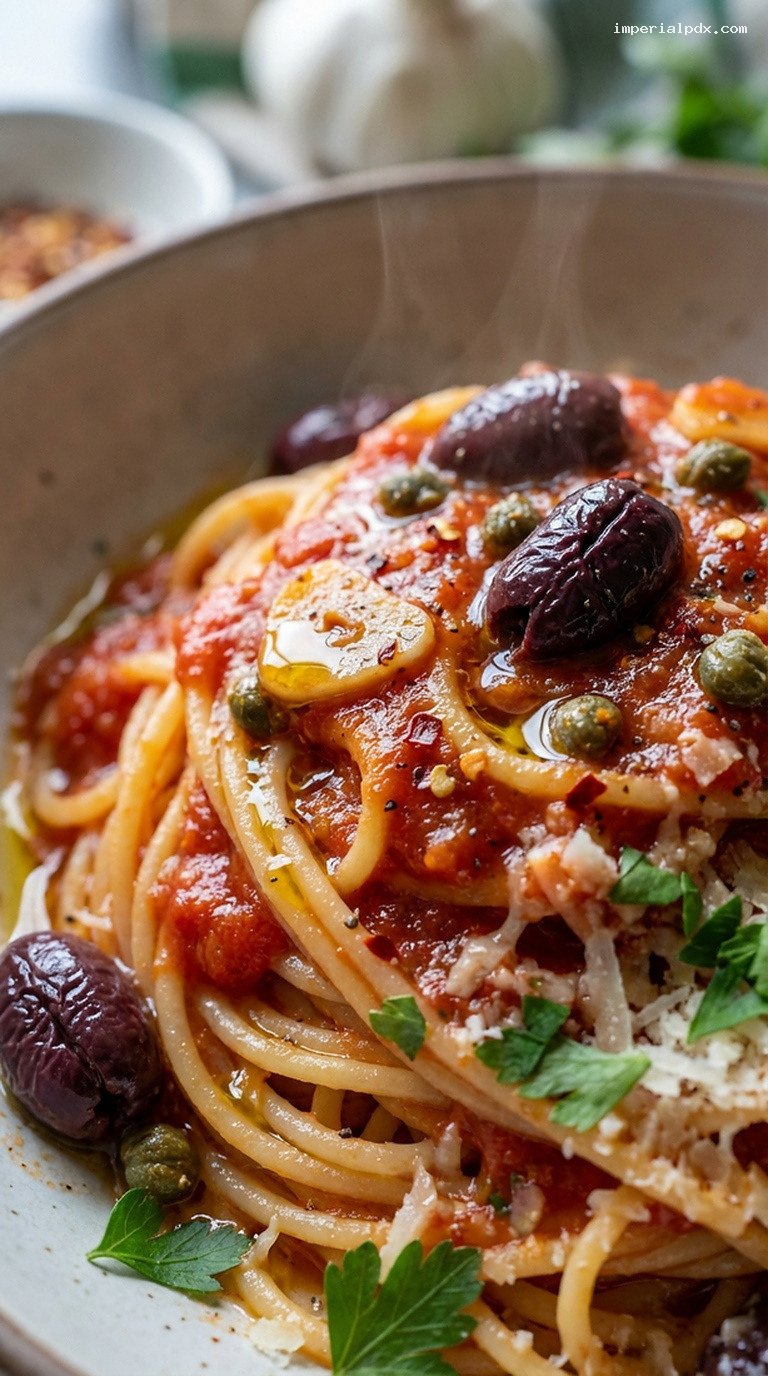
Step-by-Step Instructions
Step 1: Prep your ingredients
Begin by getting all your ingredients ready so cooking is smooth and relaxed. Finely chop the anchovy fillets. Thinly slice the garlic cloves. Halve the pitted kalamata olives lengthwise. Rinse the capers under cool water and drain them well to remove excess brine; this helps you control the saltiness. Roughly chop the parsley and set it aside for finishing. If you are making the shrimp version, pat the shrimp dry with paper towels and season with 1/4 teaspoon kosher salt and 1/8 teaspoon black pepper. Keep everything near the stove, as this sauce comes together quickly at first.
Step 2: Build the savory base with anchovies, garlic, and chili
In a large, wide skillet or sauté pan (10–12 inches), heat 2 tablespoons olive oil over medium heat. Add the chopped anchovies and cook, stirring and gently mashing with a wooden spoon, until they mostly dissolve into the oil, 1–2 minutes. This step infuses the oil with deep, savory flavor rather than a fishy taste. Add the sliced garlic and crushed red pepper flakes. Cook, stirring frequently, until the garlic is fragrant and just starting to turn light golden at the edges, about 1 minute. Do not let the garlic brown deeply, or it will taste bitter.
Step 3: Add tomatoes, olives, and capers, then simmer
Pour in the can of crushed tomatoes, scraping the bottom of the pan to release any flavorful browned bits. Stir in the halved olives, rinsed capers, dried oregano, and, if your tomatoes are very tart, the optional 1/4 teaspoon sugar. Add a small pinch of salt (about 1/8 teaspoon) and several grinds of black pepper, keeping in mind that the sauce will get saltier as it reduces. Bring the mixture to a gentle simmer, then reduce the heat to medium-low or low to maintain a steady but gentle bubble. Simmer uncovered for 15–20 minutes, stirring occasionally, until slightly thickened and glossy and the flavors have melded. Taste and adjust seasoning at the end with more salt, pepper, or red pepper flakes as desired.
Step 4: Cook the spaghetti (if using)
While the sauce simmers, bring a large pot of water (about 4–5 quarts) to a rolling boil. Add 1 1/2 tablespoons kosher salt so that the water is well seasoned. Add the spaghetti and cook according to package directions until al dente, usually 8–10 minutes. Before draining, scoop out about 1/2 cup of the starchy pasta cooking water and set it aside. Drain the spaghetti well. If the sauce is not quite ready, toss the drained pasta with 1 tablespoon olive oil to prevent sticking. When ready to serve, add the hot pasta directly to the skillet of simmering puttanesca sauce and toss over low heat, adding a splash or two of reserved pasta water as needed to help the sauce cling silkily to the strands.
Step 5: Sauté the shrimp (if using instead of pasta)
If you are serving the sauce over shrimp, cook the shrimp while the sauce finishes simmering. Heat 1 tablespoon olive oil in a large nonstick or stainless-steel skillet over medium-high heat until shimmering. Add the seasoned shrimp in a single layer without crowding. Cook for 2–3 minutes on the first side, until the underside is opaque and lightly golden in spots. Flip and cook for another 1–2 minutes, just until the shrimp are pink, curled, and opaque all the way through. Do not overcook or they will become rubbery. Transfer the shrimp to a warm plate and tent loosely with foil while you finish the sauce, if needed.
Step 6: Finish the dish and serve
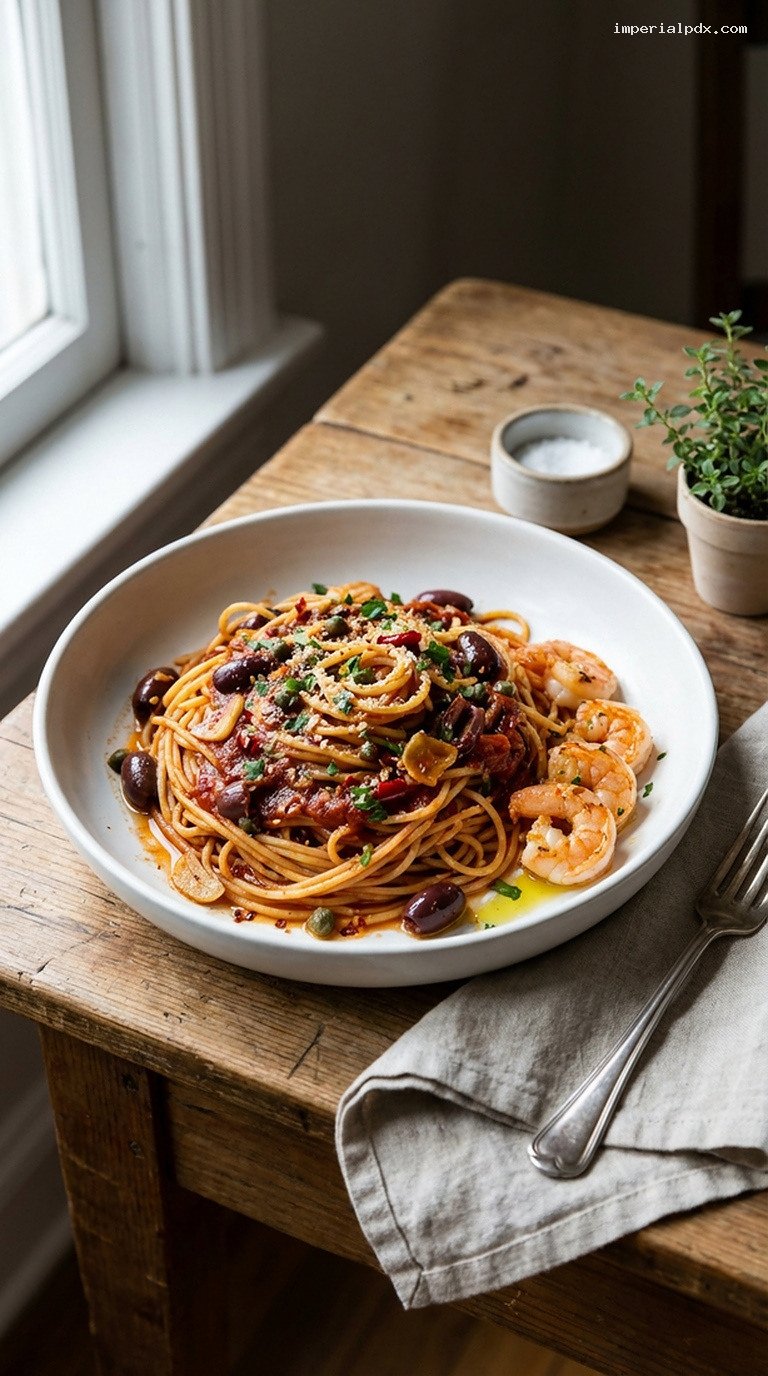
Once the sauce has thickened and tastes rich and balanced, stir in 2–3 tablespoons chopped fresh parsley. For the spaghetti version, toss the pasta directly in the skillet with enough sauce to generously coat each strand, adding a spoonful or two of pasta water to create a silky, glossy finish. For the shrimp version, arrange the sautéed shrimp in shallow bowls or on plates and spoon a generous amount of hot puttanesca sauce over and around them. Taste once more and adjust seasoning with salt, pepper, or red pepper flakes. Serve immediately, sprinkled with extra parsley and, if you like, freshly grated Parmesan or Pecorino. For shrimp, add lemon wedges on the side for squeezing over just before eating.
Pro Tips
- Do not fear the anchovies. They dissolve into the oil and add depth, not fishiness. If you are nervous, start with 2 fillets and increase next time.
- Salt at the end. Olives, capers, and anchovies are all salty. Let the sauce simmer and reduce before doing your final seasoning so it does not become overly salty.
- Control the heat level. Start with 1/2 teaspoon red pepper flakes. You can always add more near the end of simmering, but you cannot take it out.
- Use good canned tomatoes. High-quality crushed tomatoes make a big difference here since they are the backbone of the sauce.
- Finish with pasta water. For the spaghetti version, a small splash of starchy cooking water helps the sauce emulsify and cling beautifully to the noodles.
Variations
- Vegetarian or vegan puttanesca: Omit the anchovies and add an extra tablespoon of capers plus 1–2 teaspoons of minced sun-dried tomatoes or a splash of soy sauce for extra umami.
- Chunky tomato version: Swap half of the crushed tomatoes for a can of diced tomatoes or add 1 cup halved cherry tomatoes during the last 5 minutes of simmering for a fresher, chunkier texture.
- Different bases: Serve the sauce over other pasta shapes (rigatoni, bucatini, penne), creamy polenta, or simple pan-seared white fish instead of shrimp.
Storage & Make-Ahead
The puttanesca sauce stores very well and actually tastes better after resting. Let the sauce cool to room temperature, then transfer to an airtight container. Refrigerate for up to 4 days. Reheat gently on the stovetop over low heat, adding a splash of water if it has thickened too much. For longer storage, freeze the sauce (without pasta or shrimp) in a freezer-safe container for up to 3 months; thaw overnight in the refrigerator before reheating. Cooked spaghetti is best enjoyed fresh, but leftovers can be stored in the fridge for up to 2 days and reheated with a splash of water or extra sauce. Cooked shrimp are best eaten the day they are made; if needed, refrigerate up to 1 day and reheat very briefly over low heat or enjoy chilled with the sauce at room temperature.
Nutrition (per serving)
Approximate values for 1 of 4 servings with spaghetti and a moderate sprinkle of Parmesan: 520 calories; 17 g fat; 8 g saturated fat; 70 g carbohydrates; 5 g fiber; 10 g sugar; 21 g protein; 1,350 mg sodium. The shrimp version (without pasta, served with a side of vegetables) will be lower in carbohydrates and total calories and higher in protein. These numbers are estimates and will vary with exact ingredients and portion sizes.