Quick Recipe Version (TL;DR)
Quick Ingredients
- Sweet tart crust: 1 1/4 cups (160 g) all-purpose flour, 1/3 cup (40 g) powdered sugar, 1/4 tsp fine salt, 1/2 cup (115 g) cold unsalted butter (diced), 1 large egg yolk, 1–2 tbsp ice water
- Almond cream: 1/2 cup (55 g) almond flour, 1/4 cup (50 g) granulated sugar, 3 tbsp (40 g) soft unsalted butter, 1 large egg, 1 tbsp (8 g) all-purpose flour, 1/2 tsp vanilla extract, 1/4 tsp almond extract (optional), pinch salt, 2 tsp dark rum or brandy (optional)
- Apricot topping: 1 3/4 lb (800 g) fresh apricots (about 14–16 small), 2–3 tbsp granulated sugar, 1 tsp fresh lemon juice, 1 tbsp melted unsalted butter
- Glaze (optional but classic): 2 tbsp apricot jam, 1 tsp water
Do This
- 1. Make crust: rub or cut cold butter into flour, powdered sugar, and salt; add egg yolk and just enough ice water to form a soft dough. Shape into a disk, wrap, and chill 30 minutes.
- 2. Roll dough to about 1/8 inch (3 mm), line a 9-inch (23 cm) tart pan, trim edges, and chill 15 minutes. Heat oven to 375°F (190°C).
- 3. Blind-bake shell: line with parchment, fill with pie weights, bake 15 minutes; remove weights and bake 5–8 minutes more until just set but still pale.
- 4. Beat almond cream ingredients until smooth. Spread evenly into warm tart shell.
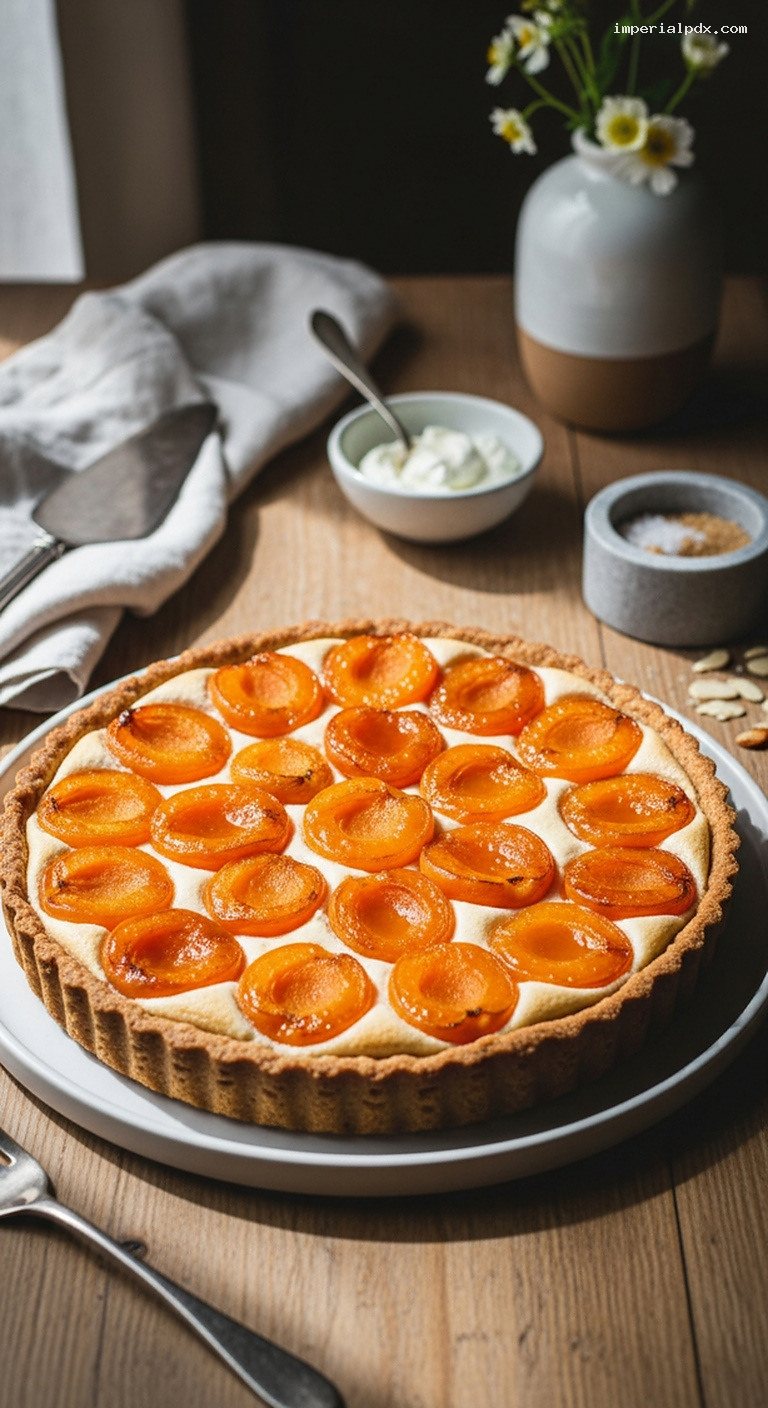
- 5. Halve and pit apricots; toss with lemon juice and 2–3 tbsp sugar. Arrange halves cut-side up over almond cream, nestling them closely. Brush with melted butter and sprinkle with a little extra sugar.
- 6. Bake 30–35 minutes until almond cream is puffed and apricots are soft and lightly caramelized. Warm apricot jam with water and brush over fruit. Cool until just warm, then slice and serve.
Why You’ll Love This Recipe
- Classic French bakery flavors at home: buttery crust, fragrant almond cream, and sunshiny apricots.
- The apricots stay slightly tangy, balancing the sweetness so every bite tastes bright, not heavy.
- Works with both peak-season apricots and slightly underripe fruit, which bake up beautifully.
- Includes a fancier almond-cream version and an easy rustic sugar-and-butter variation.
Grocery List
- Produce: Fresh apricots (about 14–16 small, 1 3/4 lb / 800 g), 1 lemon
- Dairy: Unsalted butter, 2 large eggs, optional crème fraîche or vanilla ice cream for serving
- Pantry: All-purpose flour, almond flour (ground almonds), powdered (confectioners’) sugar, granulated sugar, fine salt, apricot jam, vanilla extract, almond extract (optional), dark rum or brandy (optional)
Full Ingredients
Sweet Tart Crust (Pâte Sucrée)
- 1 1/4 cups (160 g) all-purpose flour
- 1/3 cup (40 g) powdered (confectioners’) sugar
- 1/4 tsp fine sea salt
- 1/2 cup (115 g) cold unsalted butter, cut into small cubes
- 1 large egg yolk
- 1–2 tbsp ice-cold water, as needed
Almond Cream (Frangipane)
- 1/2 cup (55 g) almond flour (very finely ground blanched almonds)
- 1/4 cup (50 g) granulated sugar
- 3 tbsp (40 g) unsalted butter, very soft but not melted
- 1 large egg, at room temperature
- 1 tbsp (8 g) all-purpose flour
- 1/2 tsp pure vanilla extract
- 1/4 tsp almond extract (optional, for extra almond aroma)
- Pinch fine sea salt
- 2 tsp dark rum or brandy (optional but delicious)
Apricot Topping
- 1 3/4 lb (800 g) fresh apricots (about 14–16 small), ripe but still slightly firm
- 2–3 tbsp granulated sugar, to taste (more for tart fruit)
- 1 tsp fresh lemon juice
- 1 tbsp unsalted butter, melted, for brushing
Glaze (Classic Bakery Finish, Optional but Recommended)
- 2 tbsp apricot jam
- 1 tsp water
Optional Simple Butter-and-Sugar Version (No Almond Cream)
- Increase melted butter for topping to 3 tbsp (42 g)
- Use 3–4 tbsp granulated sugar for sprinkling over the apricots
- Optional: 1 tsp vanilla sugar or 1/2 tsp vanilla extract mixed into the melted butter
Step-by-Step Instructions
Step 1: Make the sweet tart dough
In a medium bowl, whisk together the flour, powdered sugar, and salt. Add the cold diced butter and toss to coat it in the flour mixture. Using your fingertips or a pastry cutter, rub or cut the butter into the flour until it resembles coarse crumbs with some pea-sized pieces of butter remaining. Work quickly so the butter stays cold.
In a small bowl, lightly beat the egg yolk with 1 tablespoon of ice water. Drizzle over the flour mixture and gently mix with a fork until the dough starts to clump. If it seems very dry and floury, add up to 1 more tablespoon of ice water, a teaspoon at a time, just until the dough holds together when pressed. Gather it into a disk, wrap tightly in plastic or parchment, and chill for at least 30 minutes (and up to 2 days).
Step 2: Roll out and line the tart pan
Lightly flour your work surface and rolling pin. Let the chilled dough sit at room temperature for 5 minutes so it is just pliable, then roll it into a circle about 11 inches (28 cm) in diameter and roughly 1/8 inch (3 mm) thick. Rotate the dough often and dust with a little flour as needed to prevent sticking.
Carefully roll the dough up around the rolling pin and unroll it over a 9-inch (23 cm) tart pan with a removable bottom. Gently ease it into the corners without stretching, pressing the dough against the sides of the pan. Trim excess by rolling the pin over the rim or cutting with a knife. If there are any cracks, patch them with trimmings. Prick the base lightly with a fork. Place the lined pan in the fridge or freezer for 15 minutes while you heat the oven to 375°F (190°C).
Step 3: Blind-bake the tart shell
Cut a piece of parchment paper large enough to cover the chilled tart shell and overhang the sides slightly. Press it gently onto the dough and fill the shell with pie weights, dried beans, or rice, spreading them evenly. This prevents the crust from puffing and shrinking.
Bake the tart shell at 375°F (190°C) for about 15 minutes. Carefully lift out the parchment and weights (they will be hot). Return the crust to the oven and bake for another 5–8 minutes, until the base looks dry and set but is still pale in color. If it has puffed in places, gently press it down with the back of a spoon. Set the par-baked shell aside on a baking sheet to cool slightly while you prepare the filling. Keep the oven at 375°F (190°C).
Step 4: Mix the almond cream filling
While the crust is baking, make the almond cream. In a medium bowl, beat the soft butter and sugar together with a spatula, wooden spoon, or hand mixer until creamy and slightly lightened in color, about 1–2 minutes. Add the egg and beat until fully incorporated; the mixture may look a little curdled at this stage, which is fine.
Add the almond flour, all-purpose flour, vanilla extract, almond extract (if using), salt, and rum or brandy (if using). Beat or stir until the mixture is smooth and spreadable with no dry spots. Set aside; it can rest at room temperature for up to 30 minutes. If you like, you can make this up to 3 days ahead and store it in the refrigerator, then bring to room temperature before using.
Step 5: Prepare the apricots
Rinse and gently dry the apricots. Cut each one in half along the natural seam and twist to separate the halves, then pop out the pits. If your apricots are quite large, you can cut the halves into quarters so they fit more snugly in the tart.
Place the apricot halves in a bowl and toss with the lemon juice and 2 tablespoons of sugar. Taste a small piece; if the fruit is quite tart, add the remaining 1 tablespoon of sugar. Set aside while you assemble the tart. The sugar will draw out a little juice, which helps keep the fruit moist as it bakes.
Step 6: Assemble and bake the tart
Spread the almond cream evenly into the still-warm tart shell, smoothing the top with an offset spatula or the back of a spoon. It should come about halfway up the sides of the crust; it will puff as it bakes.
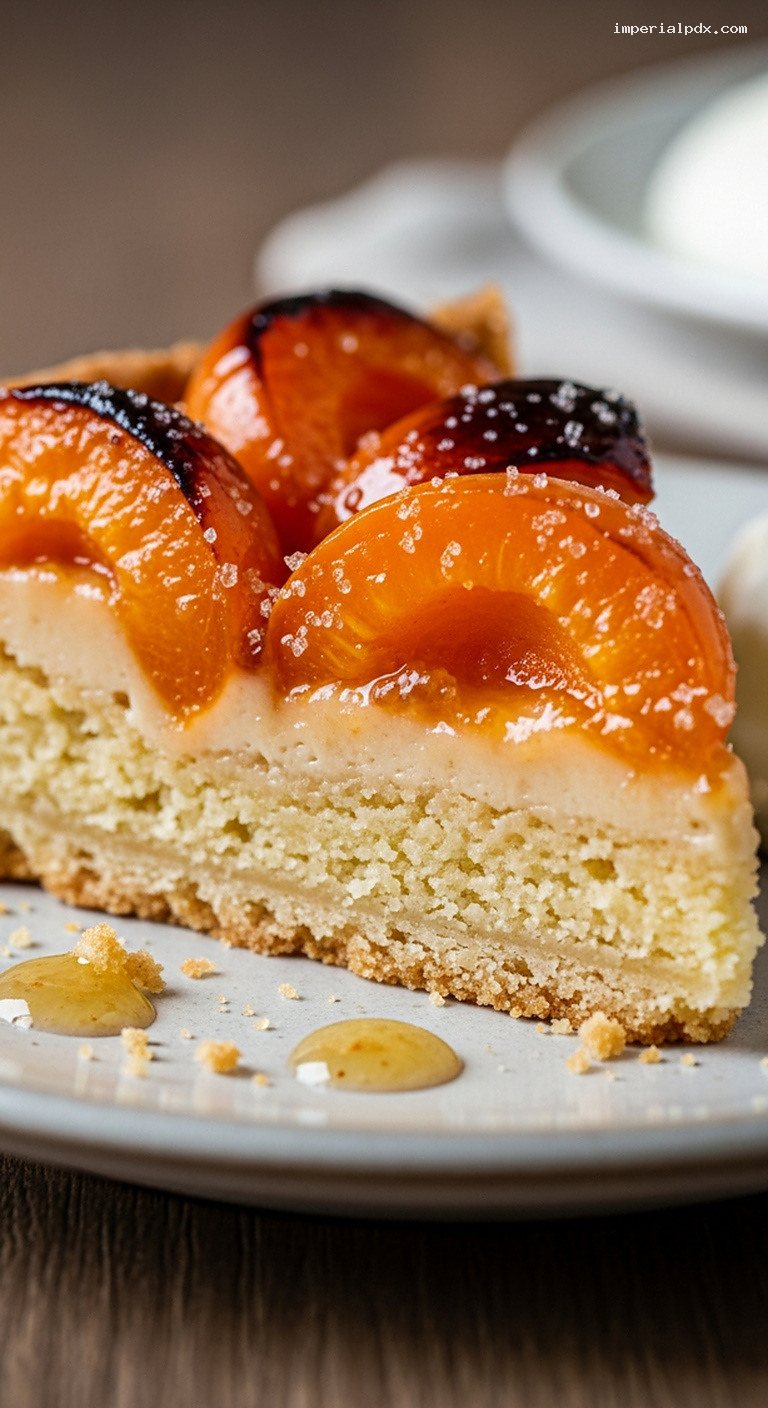
Arrange the apricots cut-side up on top of the almond cream, packing them closely in concentric circles or rows. Nestling them together looks especially pretty once baked. Drizzle or brush the melted butter over the apricots and sprinkle lightly with an extra teaspoon or two of sugar, which will help them caramelize at the edges.
Place the tart (still on its baking sheet) back into the 375°F (190°C) oven and bake for 30–35 minutes. The almond cream should be puffed and lightly golden, the crust a deeper golden brown, and the apricots soft, juicy, and just beginning to take on some color at the tips. If the crust edge is browning too quickly, cover it loosely with strips of foil for the last 10 minutes.
Step 7: Glaze, cool, and serve
Transfer the baked tart to a cooling rack and let it cool for about 10 minutes. While it cools slightly, place the apricot jam and water in a small saucepan or heatproof bowl. Warm gently over low heat or in the microwave until melted and fluid, then stir until smooth.
Using a pastry brush, gently brush the warm glaze over the surface of the apricots to give them a beautiful shine and to lock in their juices. Let the tart cool until just warm or at room temperature before removing the outer ring of the pan. Slice with a sharp knife, wiping the blade between cuts. Serve plain or with softly whipped cream, crème fraîche, or a small scoop of vanilla ice cream.
For the simple butter-and-sugar version: Omit the almond cream. After blind-baking the crust, arrange sugared apricot halves directly in the shell, drizzle with 3 tbsp melted butter, and sprinkle generously with 3–4 tbsp sugar. Bake 25–30 minutes, until the fruit is tender and lightly caramelized. Glaze and cool as above.
Pro Tips
- Choose the right apricots: Look for fragrant fruit that yields just slightly to gentle pressure. Overripe apricots can turn mushy; very hard ones will stay tart and firm.
- Keep the dough cool: Warm dough shrinks more in the oven. Chill after mixing and again after lining the pan for neat, bakery-style edges.
- Do not overbake the almond cream: Pull the tart when the almond layer is puffed and lightly golden. Overbaking can make it dry instead of soft and moist.
- Tight fruit arrangement: Pack the apricots snugly; they shrink as they bake. A full, slightly overlapping pattern looks generous and prevents bare patches.
- Shiny glaze, gentle brush: Use a soft pastry brush and dab the jam glaze on rather than scrubbing it, so you do not disturb the fruit.
Variations
- Rustic sugar-and-butter apricot tart: Skip the almond cream for a lighter, simpler dessert. Blind-bake the crust, fill it with apricot halves tossed with lemon and sugar, drizzle with 3 tbsp melted butter, sprinkle generously with sugar, and bake until the fruit is tender and caramelized.
- Stone fruit medley: Combine apricots with sliced peaches, nectarines, or plums for a colorful summer tart. Keep the total fruit weight roughly the same and arrange in alternating rings.
- Almond crunch topping: Before baking, scatter 2–3 tbsp sliced almonds over the apricots. They toast in the oven and emphasize the almond flavor of the frangipane.
Storage & Make-Ahead
The tart is best on the day it is baked, when the pastry is crisp and the apricots are at their juiciest. However, leftovers keep well:
Store cooled tart, tightly covered, at room temperature for up to 1 day or in the refrigerator for up to 3 days. The crust will soften slightly but still tastes wonderful. To refresh, warm slices in a 300°F (150°C) oven for 5–10 minutes.
You can make components ahead: the dough can be refrigerated for up to 2 days or frozen (well wrapped) for up to 2 months. The almond cream can be made up to 3 days in advance and kept chilled; bring to room temperature before spreading. The blind-baked tart shell can be kept, well wrapped, at room temperature for 1 day before filling and baking.
Nutrition (per serving)
Approximate values for 1 of 8 slices (almond-cream version): about 410 calories; 24 g fat (11 g saturated); 46 g carbohydrates; 3 g fiber; 25 g sugars; 7 g protein; 115 mg sodium. These numbers are estimates and will vary based on specific ingredients and serving sizes.