Quick Recipe Version (TL;DR)
Quick Ingredients
- 600 g bread flour (about 4 3/4 cups), plus extra for dusting
- 100 g granulated sugar (1/2 cup), divided
- 2 1/4 tsp instant yeast (7 g) or 2 1/2 tsp active dry yeast (8 g)
- 240 ml whole milk (1 cup), warmed to 105–110°F (40–43°C)
- 3 large eggs, room temperature
- 2 tsp pure vanilla extract
- 1 tbsp finely grated orange zest + 1 tsp lemon zest
- 1 1/2 tsp fine sea salt (9 g)
- 85 g unsalted butter (6 tbsp), very soft
- 1 large egg + 1 tsp milk (egg wash)
- Neutral oil or softened butter for greasing
Do This
- 1) Warm milk; whisk in yeast and 1 tsp of the sugar. Let stand 5–10 minutes until foamy (if using instant yeast, skip proofing and add with flour).
- 2) In a mixer bowl, whisk remaining sugar, eggs, vanilla, and zests. Add milk/yeast. Add flour and salt; mix to a shaggy dough.
- 3) Knead 3 minutes, then add soft butter in pieces. Knead 8–10 minutes until smooth, elastic, and slightly tacky.
- 4) First rise: Place in a greased bowl, cover, and let rise warm until doubled, 60–90 minutes.
- 5) Shape: For loaves, divide in 2 and shape tight rounds; for slider buns, portion 60 g each. Arrange in greased pans.
- 6) Proof 45–75 minutes until puffy. Brush with egg wash. Bake at 350°F (175°C): loaves 25–30 minutes, buns 15–18 minutes, to 190–195°F internal. Cool 30 minutes before slicing.
Why You’ll Love This Recipe
- Pillowy, shreddable crumb with a gentle sweetness that never overwhelms.
- Beautiful vanilla aroma and a sunny hint of orange and lemon zest.
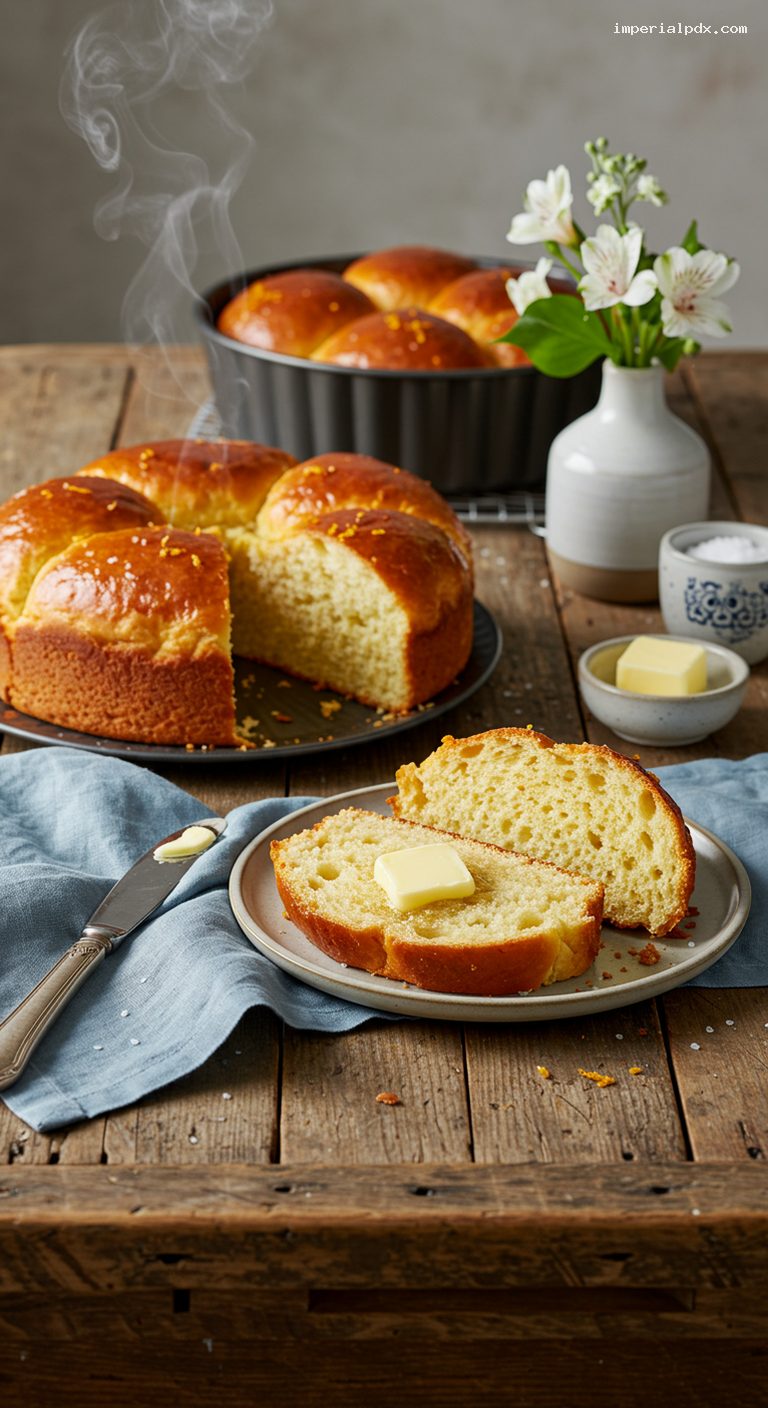
- Versatile: bake as two golden round loaves or the softest slider buns.
- Clear, flexible instructions for stand mixer or by-hand kneading.
Grocery List
- Produce: 1 orange, 1 lemon
- Dairy: Whole milk, unsalted butter, eggs
- Pantry: Bread flour, granulated sugar, instant or active dry yeast, vanilla extract, fine sea salt, neutral oil (or extra butter)
Full Ingredients
For the Dough
- 240 ml whole milk (1 cup), warmed to 105–110°F (40–43°C)
- 100 g granulated sugar (1/2 cup), divided
- 2 1/4 tsp instant yeast (7 g) or 2 1/2 tsp active dry yeast (8 g)
- 3 large eggs, at room temperature
- 2 tsp pure vanilla extract
- 1 tbsp finely grated orange zest
- 1 tsp finely grated lemon zest
- 600 g bread flour (about 4 3/4 cups), spooned and leveled
- 1 1/2 tsp fine sea salt (9 g)
- 85 g unsalted butter (6 tbsp), very soft
For Egg Wash and Pans
- 1 large egg beaten with 1 tsp milk or water
- Neutral oil or softened butter for greasing bowls and pans
Optional Finishing
- 1 tbsp melted butter for brushing the hot loaves
Step-by-Step Instructions
Step 1: Warm the milk and proof yeast
Warm the milk to 105–110°F (40–43°C). In a small bowl, whisk the warm milk with the yeast and 1 teaspoon of the measured sugar. Let stand 5–10 minutes until foamy. If using instant yeast, you can skip this step and add the yeast directly with the flour in Step 2; still warm the milk.
Step 2: Mix the base dough
In the bowl of a stand mixer (or a large mixing bowl), whisk together the remaining sugar, eggs, vanilla, orange zest, and lemon zest. Add the milk/yeast mixture (or warm milk if using instant yeast). Add the flour and salt. Using a dough hook on low speed (or a sturdy spoon by hand), mix until a shaggy dough forms and no dry flour remains, 1–2 minutes. Let the dough rest 5 minutes to hydrate.
Step 3: Knead and add butter for a silky dough
Knead on medium-low speed for 3 minutes. With the mixer running, add the softened butter a piece at a time, letting each piece incorporate before adding the next. Continue kneading 8–10 minutes (12–15 minutes by hand) until the dough is smooth, elastic, and slightly tacky but not sticky. It should stretch thin without tearing (windowpane test). Avoid adding extra flour unless the dough is very sticky; a light dusting is enough.
Step 4: First rise (bulk fermentation)
Lightly oil a medium bowl. Shape the dough into a ball and place it seam-side down in the bowl. Cover tightly and let rise in a warm, draft-free spot until doubled in size, 60–90 minutes. Ideal dough temperature during bulk rise is 75–80°F (24–27°C).
Step 5: Prepare pans and shape loaves or slider buns
Grease two 8-inch round cake pans for loaves or line a sheet pan with parchment for buns. Turn the risen dough onto a lightly floured surface and gently deflate. For two round loaves, divide the dough in half (about 520–540 g each). Tuck edges under to form tight rounds, creating surface tension. For slider buns, portion into 60 g pieces (about golf-ball size), then cup your hand and roll each piece on the counter to create smooth, taut balls.
Step 6: Pan and proof until puffy
Place the rounds in the greased cake pans. For slider buns, arrange balls on the parchment-lined sheet pan, spacing about 2 inches apart or nestle them in a 9×13-inch pan for pull-apart buns. Cover loosely and let rise until noticeably puffy and about 1 1/2 times original size, 45–75 minutes. The dough should slowly spring back when gently poked.
Step 7: Egg wash and bake to golden perfection
Preheat the oven to 350°F (175°C) with a rack in the center. Brush loaves or buns gently with egg wash. Bake until deep golden brown and the internal temperature reads 190–195°F (88–91°C): round loaves take 25–30 minutes; slider buns 15–18 minutes. If tops brown too quickly, tent loosely with foil for the last 5–10 minutes.
Step 8: Cool, finish, and serve
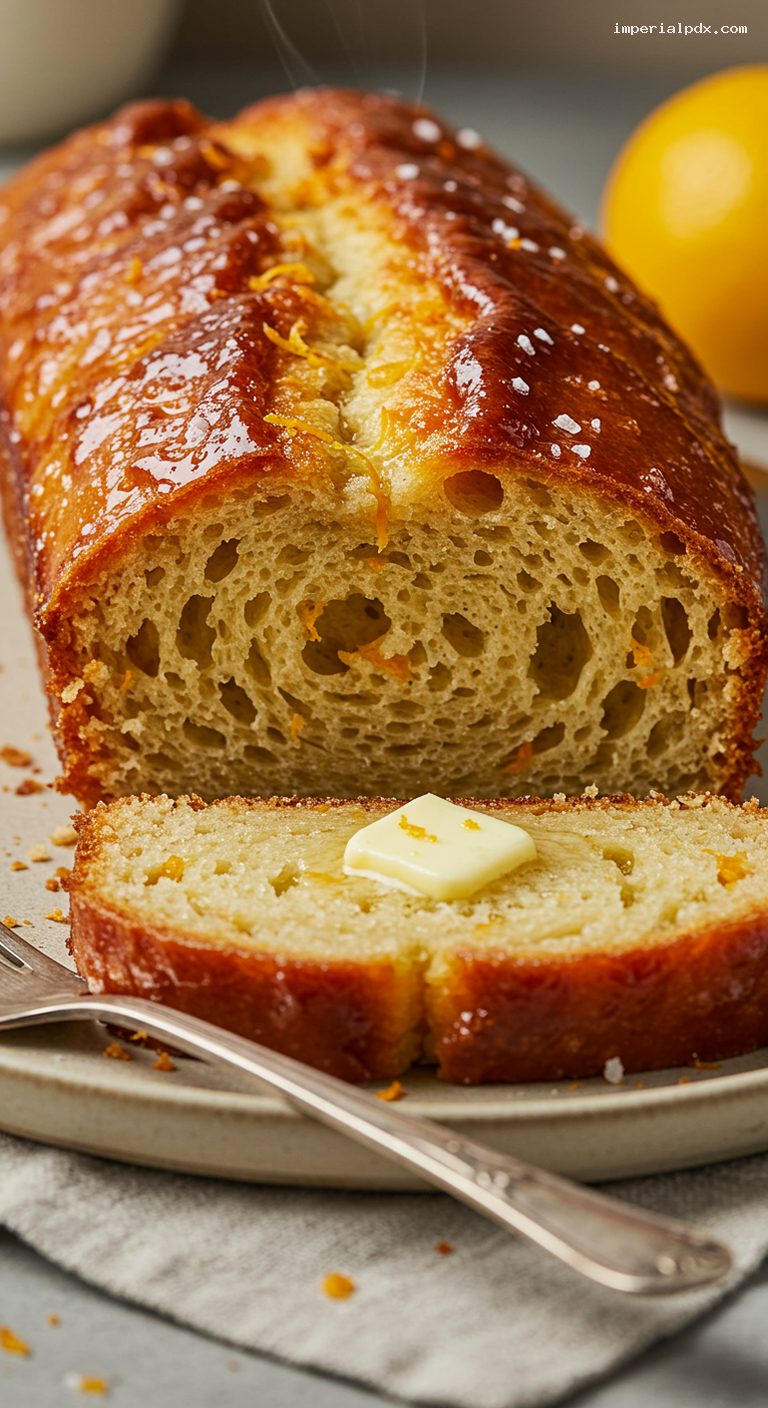
Cool in the pan for 10 minutes, then transfer to a wire rack. Optionally brush hot bread with melted butter for extra sheen and softness. Let cool at least 30 minutes before slicing for the tidiest cuts. Serve warm with salted butter; these also make outstanding slider buns.
Pro Tips
- Weigh your ingredients for best results; enriched doughs are sensitive to small variations.
- Use the windowpane test to judge gluten development; a thin, translucent stretch means you are there.
- Keep the dough warm (75–80°F) for steady fermentation; a turned-off oven with the light on works well.
- For the deepest color and shine, apply two light coats of egg wash: once before proofing and again just before baking.
- For slider buns, scale dough into 60 g portions so they bake evenly and finish together.
Variations
- Pineapple-kissed: Replace 120 ml (1/2 cup) of the milk with pineapple juice and add 1 tbsp honey; reduce sugar to 85 g for a Hawaiian-style sweetness.
- Coconut-citrus: Swap 120 ml (1/2 cup) of the milk for full-fat coconut milk; finish warm loaves with melted butter mixed with a pinch of coconut sugar.
- Braided celebration loaf: Divide dough into three equal ropes, braid, and proof on a parchment-lined sheet. Bake 25–30 minutes at 350°F until 190–195°F inside.
Storage & Make-Ahead
Cool completely, then store at room temperature in an airtight bag up to 3 days. For longer storage, slice and freeze up to 2 months; thaw at room temp or rewarm in a 300°F (150°C) oven for 8–10 minutes. For overnight dough, complete Step 3, let rise 30 minutes, then refrigerate covered up to 18 hours. Bring to room temperature, shape, proof, and bake as directed. Shaped buns can also be refrigerated after shaping for 8–12 hours; bake straight from the fridge, adding 2–3 minutes if needed.
Nutrition (per serving)
Approximate per 1/16 of the recipe: 220 calories; 7 g fat; 34 g carbohydrates; 6 g protein; 200 mg sodium; 8 g sugars. Values will vary with portion size and exact ingredients.