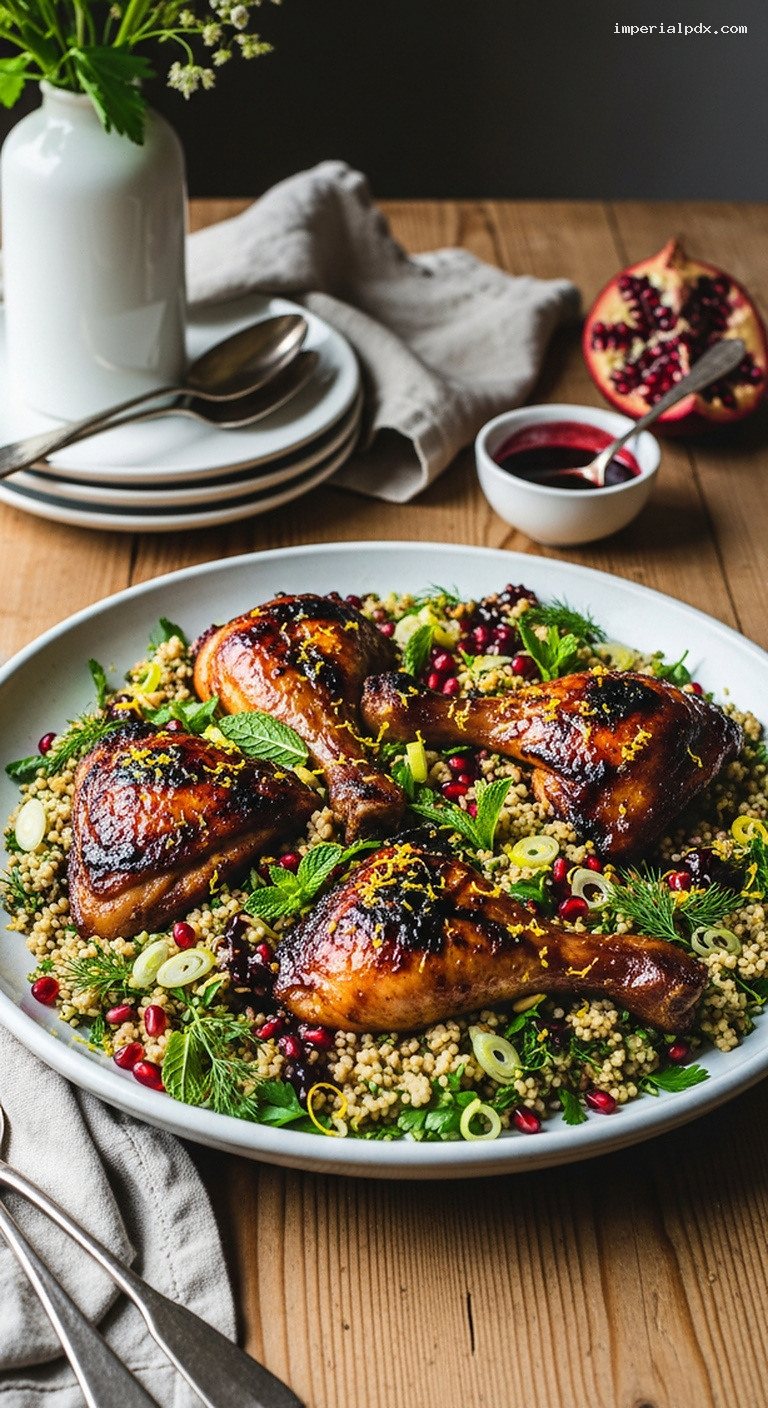
Quick Recipe Version (TL;DR)
Quick Ingredients
- 1.2 kg bone-in, skin-on chicken thighs and drumsticks (about 8 pieces)
- 1/3 cup (80 ml) pomegranate molasses (nar ekşisi), plus extra to drizzle
- 6 tbsp olive oil, divided
- 4 garlic cloves, finely grated or minced
- 1.5 tsp ground cumin
- 2 tsp sweet paprika
- 1 tsp pul biber (Aleppo/Turkish pepper) or mild chili flakes
- 1 tsp dried thyme or oregano
- 2 tsp fine sea salt, divided, plus more to taste
- 1/2 tsp freshly ground black pepper
- 1.5 cups (270 g) fine or medium bulgur wheat
- 2.5 cups (600 ml) chicken or vegetable stock
- 1 small onion, finely chopped
- 1 tbsp tomato paste (optional)
- 1/2 cup chopped fresh flat-leaf parsley
- 1/4 cup chopped fresh mint or dill
- 2 spring onions, thinly sliced
- Zest and juice of 1 lemon
- 1/2 cup pomegranate seeds (arils), for serving (optional)
- 2 tbsp toasted pine nuts or walnuts, for garnish (optional)
Do This
- 1. Pat chicken dry and season with 1 tsp salt and black pepper. Preheat oven to 200°C / 400°F.
- 2. Whisk pomegranate molasses, 3 tbsp olive oil, garlic, cumin, paprika, pul biber, thyme, and 1/2 tsp salt. Reserve 3 tbsp, then coat chicken with the rest. Marinate while the oven heats.
- 3. Arrange chicken skin-side up on a parchment-lined tray. Roast 25 minutes.
- 4. Meanwhile, sauté onion in 1 tbsp olive oil. Add tomato paste (if using), bulgur, and stock. Simmer 10–12 minutes, then cover off-heat for 10 minutes.
- 5. Brush chicken with reserved pomegranate mixture. Roast 15–20 minutes more, until deep golden and internal temp reaches 74°C / 165°F. Rest 10 minutes.
- 6. Fluff bulgur with a fork. Stir in herbs, spring onions, lemon zest and juice, 2 tbsp olive oil, and salt to taste.
- 7. Serve chicken over herby bulgur, drizzled with extra pomegranate molasses and topped with pomegranate seeds and nuts.
Why You’ll Love This Recipe
- Sweet-tangy pomegranate molasses caramelizes into a glossy, flavorful glaze on the chicken.
- Herby bulgur makes a complete, comforting base that soaks up all the delicious pan juices.
- Mostly hands-off roasting: simple techniques, big flavor, minimal fuss.
- Beautiful enough for guests, easy enough for a weeknight.
Grocery List
- Produce: Garlic, 1 small onion, fresh flat-leaf parsley, fresh mint or dill, spring onions, 1 lemon, pomegranate (for seeds, optional)
- Dairy: Butter (optional, if using instead of some olive oil in the bulgur)
- Pantry: Bone-in, skin-on chicken thighs and drumsticks; pomegranate molasses (nar ekşisi); bulgur wheat; chicken or vegetable stock; tomato paste; olive oil; pine nuts or walnuts (optional); ground cumin; sweet paprika; pul biber or chili flakes; dried thyme or oregano; fine sea salt; black pepper
Full Ingredients
For the Nar Ekşili Tavuk (Pomegranate Molasses Roast Chicken)
- 1.2 kg bone-in, skin-on chicken thighs and drumsticks (about 8 medium pieces)
- 1 tsp fine sea salt (to season the chicken)
- 1/2 tsp freshly ground black pepper
Pomegranate-Garlic Marinade & Glaze
- 1/3 cup (80 ml) pomegranate molasses (nar ekşisi)
- 3 tbsp olive oil
- 4 garlic cloves, finely grated or very finely minced
- 1.5 tsp ground cumin
- 2 tsp sweet paprika (or 1 tsp sweet + 1 tsp smoked, if you like)
- 1 tsp pul biber (Aleppo/Turkish pepper) or mild chili flakes (reduce to 1/2 tsp for less heat)
- 1 tsp dried thyme or dried oregano
- 1/2 tsp fine sea salt
For the Herby Bulgur
- 1.5 cups (270 g) fine or medium bulgur wheat
- 2.5 cups (600 ml) chicken or vegetable stock (low-sodium preferred)
- 1 small onion, very finely chopped
- 1 tbsp tomato paste (optional, for a warm, savory note)
- 1 tbsp olive oil or unsalted butter (for sautéing)
- 1/2 tsp fine sea salt, plus more to taste
Herb & Lemon Finish
- 1/2 cup loosely packed fresh flat-leaf parsley, finely chopped
- 1/4 cup fresh mint or dill, finely chopped (or a mix)
- 2 spring onions, thinly sliced
- Zest of 1 lemon (finely grated)
- 2 tbsp freshly squeezed lemon juice
- 2 tbsp extra-virgin olive oil
For Serving & Garnish (Optional but Recommended)
- 2–3 tbsp extra pomegranate molasses, for drizzling
- 1/2 cup pomegranate seeds (arils)
- 2 tbsp toasted pine nuts or roughly chopped walnuts
- Extra chopped herbs, to sprinkle on top
Step-by-Step Instructions
Step 1: Prep the chicken and preheat the oven
Remove the chicken from the fridge 20–30 minutes before cooking if possible, so it is not ice-cold. This helps it cook more evenly and stay juicy.
Pat each piece of chicken very dry with paper towels; dry skin is the key to good browning. Place the chicken in a large bowl or shallow dish. Sprinkle with 1 tsp fine sea salt and 1/2 tsp freshly ground black pepper, rubbing it all over the pieces, including under the skin where you can. Set aside.
Preheat your oven to 200°C / 400°F. Line a large baking tray or roasting pan with parchment paper or lightly oil it for easier cleanup. Make sure the tray is big enough for the chicken pieces to sit in a single layer without crowding.
Step 2: Make the pomegranate-garlic marinade
In a medium bowl, whisk together the pomegranate molasses, 3 tbsp olive oil, grated or minced garlic, ground cumin, sweet paprika, pul biber (or chili flakes), dried thyme or oregano, and 1/2 tsp fine sea salt until smooth and glossy.
Important: Before adding the chicken, scoop out about 3 tbsp of this mixture into a small bowl. This reserved portion will be your final glaze and will never touch raw chicken, so it is safe to brush on at the end of cooking.
Pour the remaining marinade (the larger portion) over the seasoned chicken. Use your hands or tongs to turn the pieces until they are thoroughly coated, making sure some of the marinade gets under the skin as well. Let the chicken marinate at room temperature while the oven finishes preheating, 15–20 minutes. If you prefer to marinate longer, cover and refrigerate for up to 12 hours, then bring back towards room temperature before roasting.
Step 3: Roast the chicken until nearly done
Arrange the marinated chicken pieces skin-side up on the prepared baking tray, spacing them out so hot air can circulate. Scrape any excess marinade from the bowl over the chicken.
Place the tray on the middle rack of the preheated oven and roast for 25 minutes.
After 25 minutes, the chicken should be starting to brown and the pomegranate marinade will have begun to caramelize around the edges. If your oven has hot spots, rotate the tray for even cooking.
Step 4: Start the bulgur while the chicken roasts
While the chicken is in the oven, make the bulgur. In a medium saucepan with a lid, heat 1 tbsp olive oil or butter over medium heat. Add the finely chopped onion and a pinch of salt. Cook, stirring frequently, for 4–5 minutes, until the onion is soft and translucent but not browned.
If using tomato paste, stir it in now and cook for about 1 minute to caramelize it slightly; it should darken in color and smell sweet and savory.
Add the bulgur to the pan and stir for 30–60 seconds to lightly toast it in the fat. Pour in the stock and add 1/2 tsp fine sea salt (reduce the salt if your stock is already salty). Stir well, bring to a gentle boil, then reduce the heat to low, cover with a tight-fitting lid, and simmer for 10–12 minutes, until most of the liquid is absorbed and the bulgur is tender with a slight bite.
Turn off the heat, keep the lid on, and let the bulgur steam for another 10 minutes. Do not stir yet; this resting time helps it finish cooking and stay fluffy.
Step 5: Glaze and finish roasting the chicken
After the chicken has roasted for about 25 minutes (from Step 3), remove the tray from the oven. The pieces should be about two-thirds cooked.
Using a pastry brush or spoon, generously brush the chicken with the reserved pomegranate-garlic mixture you set aside earlier (the portion that never touched raw chicken). Try to coat mainly the tops and sides, where the glaze will caramelize beautifully.
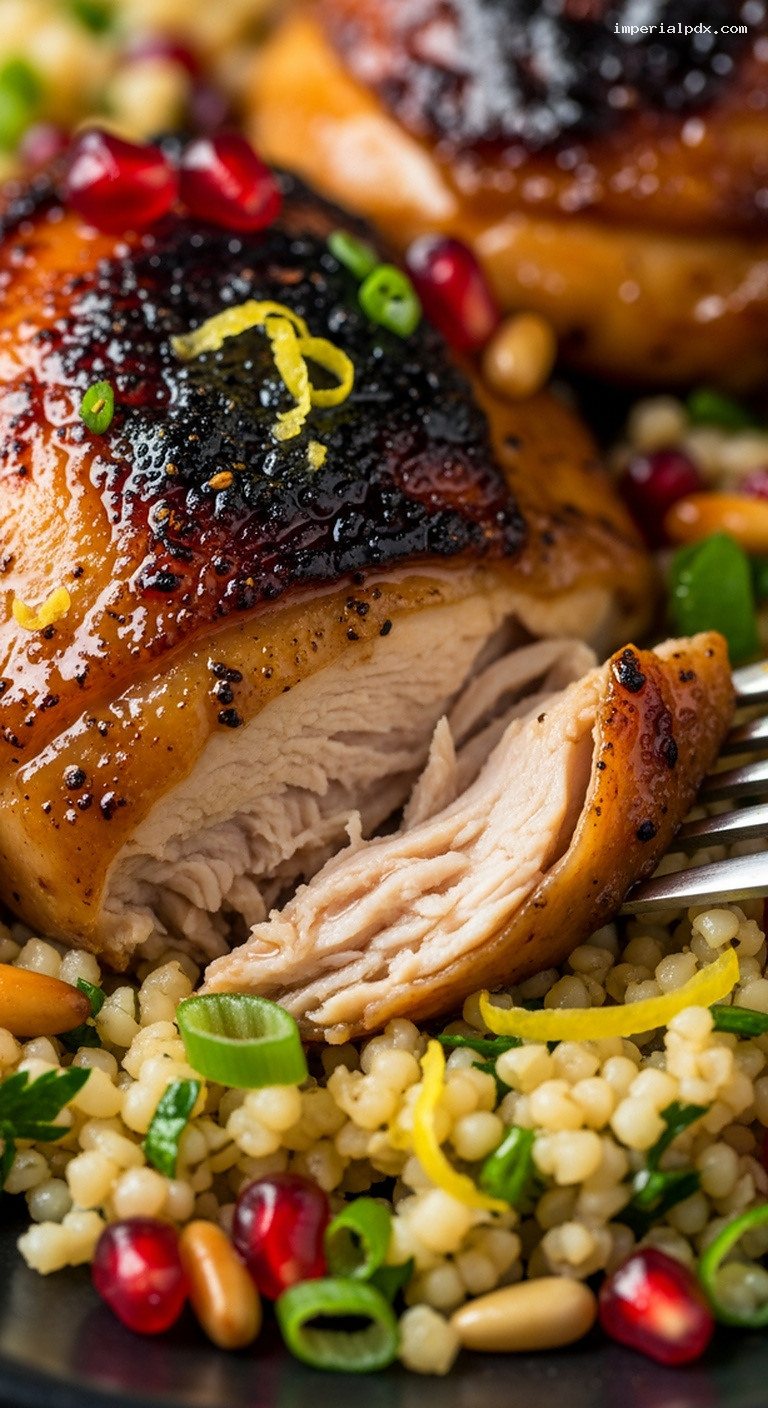
Return the tray to the oven and roast for a further 15–20 minutes, until the chicken is deep mahogany in color, glossy, and lightly charred at the edges. The internal temperature at the thickest part (not touching bone) should reach at least 74°C / 165°F.
If you would like even deeper color, you can switch on the broiler (grill) for the last 2–3 minutes, watching closely so the sugars in the pomegranate molasses do not burn.
Once done, transfer the chicken to a warm plate or board and let it rest for 10 minutes so the juices redistribute.
Step 6: Finish the herby bulgur
While the chicken is finishing and resting, uncover the bulgur. Fluff it gently with a fork to separate the grains.
Add the chopped parsley, chopped mint or dill, sliced spring onions, lemon zest, lemon juice, and 2 tbsp extra-virgin olive oil. Toss lightly with a fork until everything is evenly distributed and the grains are glistening. Taste and adjust seasoning with more salt or lemon juice as needed.
If the bulgur seems a little dry, you can stir in an extra drizzle of olive oil or a splash of hot stock or water.
Step 7: Plate, garnish, and serve
On a large serving platter or individual plates, spoon a generous bed of herby bulgur. Arrange the roasted chicken pieces on top or slightly to the side so the beautiful glaze is visible.
Drizzle a little extra pomegranate molasses over the chicken and bulgur for shine and an extra tangy note. Scatter with pomegranate seeds and toasted pine nuts or walnuts, if using, and finish with a final sprinkle of chopped fresh herbs.
Serve warm, making sure everyone gets plenty of bulgur to catch the sweet, tangy, savory juices from the chicken.
Pro Tips
- Pat the chicken very dry. Any surface moisture will steam instead of roast, so drying the skin well is key to good browning and a lacquered finish.
- Do not skip reserving part of the marinade. Keeping some aside before adding the chicken gives you a clean, safe glaze to brush on near the end for maximum flavor and shine.
- Use a hot oven. Roasting at 200°C / 400°F helps the pomegranate molasses caramelize instead of just sliding off the chicken.
- Let the bulgur rest covered. Turning off the heat and letting it steam ensures tender, fluffy grains that are not mushy.
- Adjust the tang and heat at the end. More lemon and pul biber at the table let each person tune the brightness and spiciness to taste.
Variations
- Sheet-pan dinner with vegetables: Add wedges of red onion, chunks of carrot, or halved baby potatoes to the tray around the chicken. Toss them in a little olive oil, salt, and a spoonful of pomegranate molasses. Roast alongside, turning once.
- Boneless chicken option: Use boneless, skin-on chicken thighs. Reduce the initial roasting time to about 15 minutes before glazing, then another 10–12 minutes after glazing, until cooked through.
- Whole-grain twist: Swap the bulgur for freekeh or whole wheat couscous, adjusting liquid and cooking times according to package directions, and finish with the same herb and lemon mixture.
Storage & Make-Ahead
Leftover chicken and bulgur keep well. Cool completely, then store in airtight containers in the refrigerator for up to 3 days. Reheat gently in a covered dish in a 160°C / 325°F oven until warmed through, or in the microwave with a splash of water or stock to keep the bulgur moist. You can also make the marinade up to 2 days in advance and store it in the fridge; reserve part for glazing, then toss the rest with the chicken up to 12 hours before cooking. The chopped herbs are best added fresh just before serving, but you can cook the plain bulgur ahead and reheat it with a little stock, then stir in herbs and lemon at the last minute.
Nutrition (per serving)
Approximate values for 1 serving (1/4 of the recipe): about 780 kcal, 48 g protein, 60 g carbohydrates, 34 g fat, 6 g fiber, 11 g sugar, 1150 mg sodium. Actual values will vary based on exact ingredients used, portion sizes, and optional garnishes.