Quick Recipe Version (TL;DR)
Quick Ingredients
- 1.5 kg bone-in lamb shoulder or leg, cut into 6–8 chunks
- 2 cups (400 g) long-grain rice
- 3 large yellow onions + 4 spring onions (scallions)
- 4 garlic cloves
- 1 small carrot (optional)
- 1½ cups (200 g) peas (fresh or frozen)
- 1 cup fresh dill, chopped, plus extra for garnish
- About 7½ cups (1.8 L) unsalted lamb or chicken stock or water, divided
- Olive oil, unsalted butter, lemon juice, bay leaves, ground cumin, ground allspice, salt, black pepper
- Lemon wedges and plain yogurt for serving (optional)
Do This
- 1. Toss lamb with olive oil, lemon juice, salt, pepper, allspice, and cumin; marinate 30 minutes (or up to 24 hours).
- 2. Brown lamb in a Dutch oven; add onion, carrot, some garlic, bay leaves, and stock; cover and braise at 160°C / 325°F for about 1 hour 15 minutes, until just tender.
- 3. Meanwhile, rinse and soak rice 20–30 minutes. Strain braising liquid, skim fat, and reserve 3½ cups hot broth.
- 4. Sauté sliced onions and scallion whites in butter and oil; add remaining garlic, drained rice, peas, dill, scallion greens, salt, and pepper; cook 2–3 minutes until glossy.
- 5. Spread rice in pot, nestle lamb pieces on top, pour in reserved hot broth, dot with butter; cover tightly and bake at 180°C / 350°F for 30–35 minutes.
- 6. Rest covered for 15 minutes, then fluff rice, garnish with more dill and lemon, and serve hot with yogurt if you like.
Why You’ll Love This Recipe
- A true centerpiece: tender spring lamb and fragrant dill rice baked together in one beautiful pot.
- Deep flavor with simple techniques: the rice is cooked in lamb broth, so every grain tastes rich and savory.
- Perfect for gatherings: easy to scale, stays warm well, and looks impressive straight from the oven.
- Springy and fresh: peas, dill, and lemon keep this hearty dish bright and balanced.
Grocery List
- Produce: 3 large yellow onions, 4 spring onions (scallions), 4 garlic cloves, 1 small carrot (optional), 1½ cups peas (fresh or frozen), 1 large bunch fresh dill, 2 lemons
- Dairy: Unsalted butter, plain whole-milk yogurt (optional, for serving)
- Pantry: 1.5 kg bone-in lamb shoulder or leg, long-grain rice, unsalted lamb or chicken stock (or bouillon + water), extra-virgin olive oil, bay leaves, ground cumin, ground allspice, fine sea salt, freshly ground black pepper
Full Ingredients
For the Lamb Braise
- 1.5 kg bone-in lamb shoulder or leg (about 3–3.5 lb), cut into 6–8 large chunks
- 2 tsp fine sea salt
- 1 tsp freshly ground black pepper
- 2 tbsp extra-virgin olive oil, divided
- 2 tbsp fresh lemon juice
- ½ tsp ground allspice
- ½ tsp ground cumin
- 4 garlic cloves, minced, divided (2 for the braise, 2 for the rice)
- 1 large yellow onion, thickly sliced
- 1 small carrot, cut into chunks (optional, for sweetness)
- 2 bay leaves
- 4 cups (960 ml) unsalted lamb or chicken stock, or water
For the Dill Rice and Vegetables
- 2 cups (400 g) long-grain rice (such as Baldo, Calrose, or basmati)
- 1½ cups (200 g) fresh or frozen peas
- 2 medium yellow onions, thinly sliced
- 4 spring onions (scallions), white and green parts separated, thinly sliced
- 3 tbsp unsalted butter
- 1 tbsp extra-virgin olive oil
- 1 cup (loosely packed, about 30 g) fresh dill fronds, finely chopped
- 1¼ tsp fine sea salt (for the rice mixture; adjust to taste, especially if your broth is salted)
- ½ tsp freshly ground black pepper
- 3½ cups (830 ml) hot lamb broth reserved from the braise (top up with water or stock if needed)
For Finishing and Serving
- 2 tbsp unsalted butter, cut into small pieces
- 2–3 tbsp fresh dill, finely chopped (for garnish)
- Lemon wedges
- Plain whole-milk yogurt (optional, for serving alongside)
Step-by-Step Instructions
Step 1: Marinate and Season the Lamb
Pat the lamb pieces dry with paper towels and place them in a large bowl or shallow dish. In a small bowl, whisk together 1 tbsp of the olive oil, the lemon juice, 2 tsp salt, 1 tsp black pepper, ½ tsp allspice, and ½ tsp cumin.
Pour this mixture over the lamb and rub it in with your hands so every piece is lightly coated. Cover and let the lamb marinate for at least 30 minutes at room temperature while you begin your other prep. For deeper flavor, you can marinate it in the refrigerator for up to 24 hours; if you do, bring it back toward room temperature for about 30 minutes before cooking.
Step 2: Brown the Lamb and Start the Braise
Preheat your oven to 160°C / 325°F.
Heat the remaining 1 tbsp olive oil in a heavy 5–6 L (5–6 qt) Dutch oven or other oven-safe pot with a tight-fitting lid over medium-high heat. Shake excess marinade off the lamb pieces (do not discard the marinade) and brown them in batches, 3–4 minutes per side, until nicely golden. Avoid crowding the pot so they sear rather than steam. Transfer browned lamb to a plate.
Add the sliced onion and carrot to the same pot with a pinch of salt. Cook over medium heat, stirring often, for 5–7 minutes, until the onion begins to soften and take on color. Stir in 2 of the minced garlic cloves and the bay leaves and cook for 30–60 seconds, just until fragrant.
Tip any remaining marinade into the pot. Pour in the 4 cups (960 ml) stock or water and bring to a gentle boil, scraping up any browned bits from the bottom. Return the lamb and any accumulated juices to the pot. The liquid should come at least halfway up the sides of the lamb pieces.
Step 3: Oven-Braise the Lamb and Prepare the Rice
Cover the pot tightly with its lid and transfer it to the preheated oven. Braise for about 1 hour 15 minutes, or until the lamb is tender when pierced with a fork but not yet falling completely off the bone. Turn the lamb pieces once halfway through cooking so they cook evenly.
While the lamb braises, place the rice in a bowl and rinse it under cold water, swishing with your fingers and draining, until the water runs mostly clear. Cover the rinsed rice with plenty of fresh cold water and let it soak for 20–30 minutes. This helps the grains cook up long and separate. Drain well in a fine-mesh sieve just before using.
When the lamb is tender, carefully remove the pot from the oven. Lift the lamb pieces out onto a plate and tent loosely with foil to keep warm. Strain the braising liquid through a fine sieve into a large heatproof jug or bowl, discarding the cooked onion, carrot, bay leaves, and any whole spices. Skim off excess fat from the surface.
Measure out 3½ cups (830 ml) of the hot broth for cooking the rice. If you have less, top up with water or additional stock. If you have more, reserve it to serve on the side or for another use. Increase the oven temperature to 180°C / 350°F.
Step 4: Make the Dill-Onion Rice Base
Wipe out the Dutch oven if it looks very dirty, but it is fine to leave a light coating of flavor on the bottom. Place it over medium heat and add the 3 tbsp butter and 1 tbsp olive oil.
Once the butter has melted and foams, add the 2 thinly sliced onions and the white parts of the sliced spring onions along with about ½ tsp of the salt. Cook, stirring often, for 8–10 minutes, until the onions are soft and lightly golden around the edges. You want sweetness and flavor, not deep caramelization.
Stir in the remaining 2 minced garlic cloves and cook for 30–60 seconds until fragrant. Add the drained rice and cook, stirring gently, for 2–3 minutes, until the grains look glossy and slightly translucent at the edges. This light toasting helps keep the rice fluffy.
Add the peas, the chopped dill (1 cup), the green parts of the spring onions, the remaining ¾ tsp salt (or to taste), and ½ tsp black pepper. Fold everything together so the rice, herbs, and vegetables are evenly distributed, then spread the mixture into an even layer in the pot.
Step 5: Assemble the Lamb and Rice for Baking
Carefully pour the reserved 3½ cups (830 ml) hot lamb broth over the rice mixture. The liquid should just cover the rice by about 1 cm (½ inch); the lamb pieces will sit mostly above the surface.
Nestle the braised lamb pieces on top of the rice, arranging them evenly so each serving will get a nice portion of meat. Gently press the lamb down so the bones sit partly into the rice but the browned tops remain exposed.
Dot the top with the 2 tbsp butter pieces. Cover the pot tightly with its lid. If your lid is not very tight, place a sheet of parchment and then foil over the top before adding the lid to help trap steam.
Step 6: Bake, Rest, and Serve
Transfer the covered pot to the 180°C / 350°F oven and bake for 30–35 minutes. The rice should be tender and the liquid absorbed. Avoid lifting the lid during this time, as escaping steam can lead to unevenly cooked rice.
Once done, remove the pot from the oven but leave it covered. Let it rest for 15 minutes off the heat. This resting time allows the rice to finish steaming and firms up the grains so they stay fluffy.
After resting, uncover the pot. If you like, lift the lamb pieces out temporarily so you can gently fluff the rice with a fork, loosening it all the way to the bottom. Taste the rice and adjust with a little more salt, pepper, or a squeeze of lemon if needed. Scatter the chopped fresh dill over the rice, then nestle the lamb back on top.
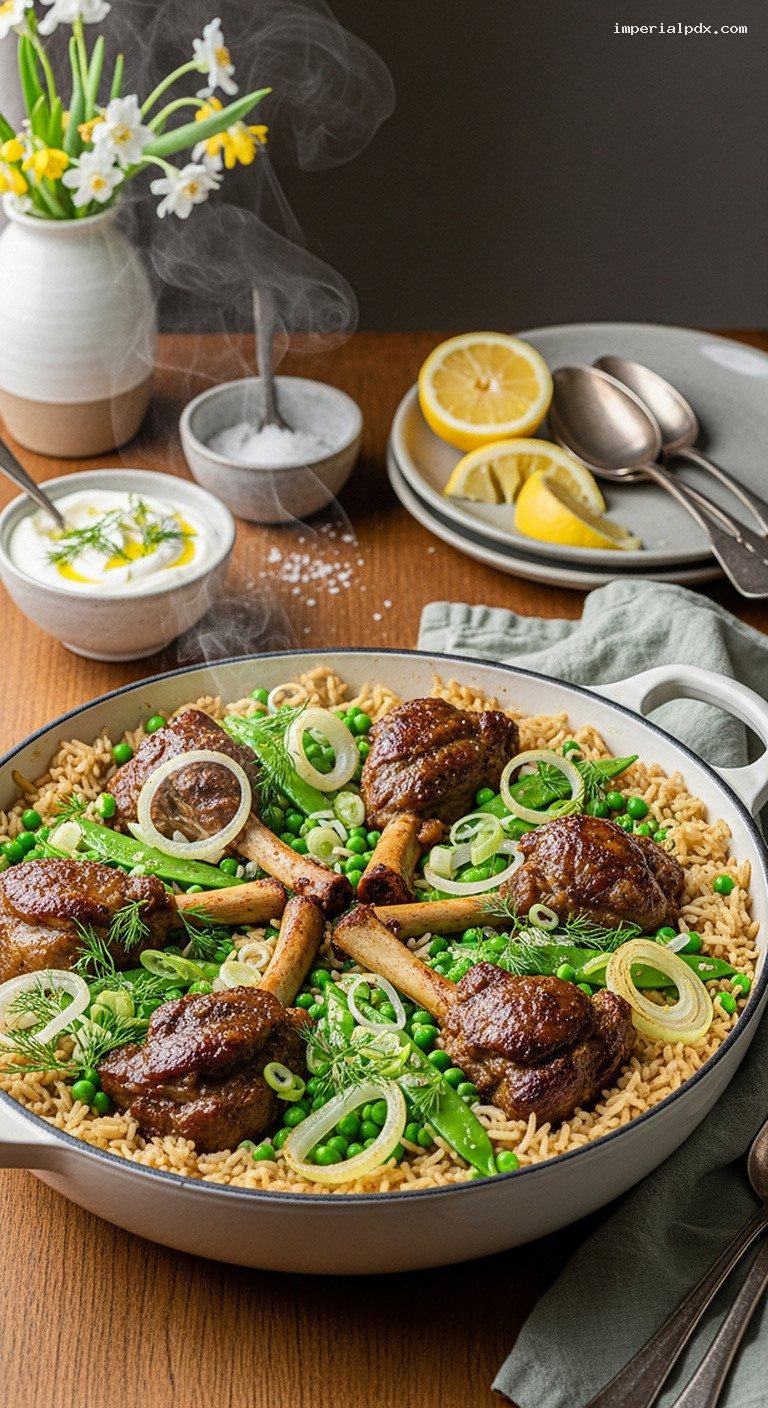
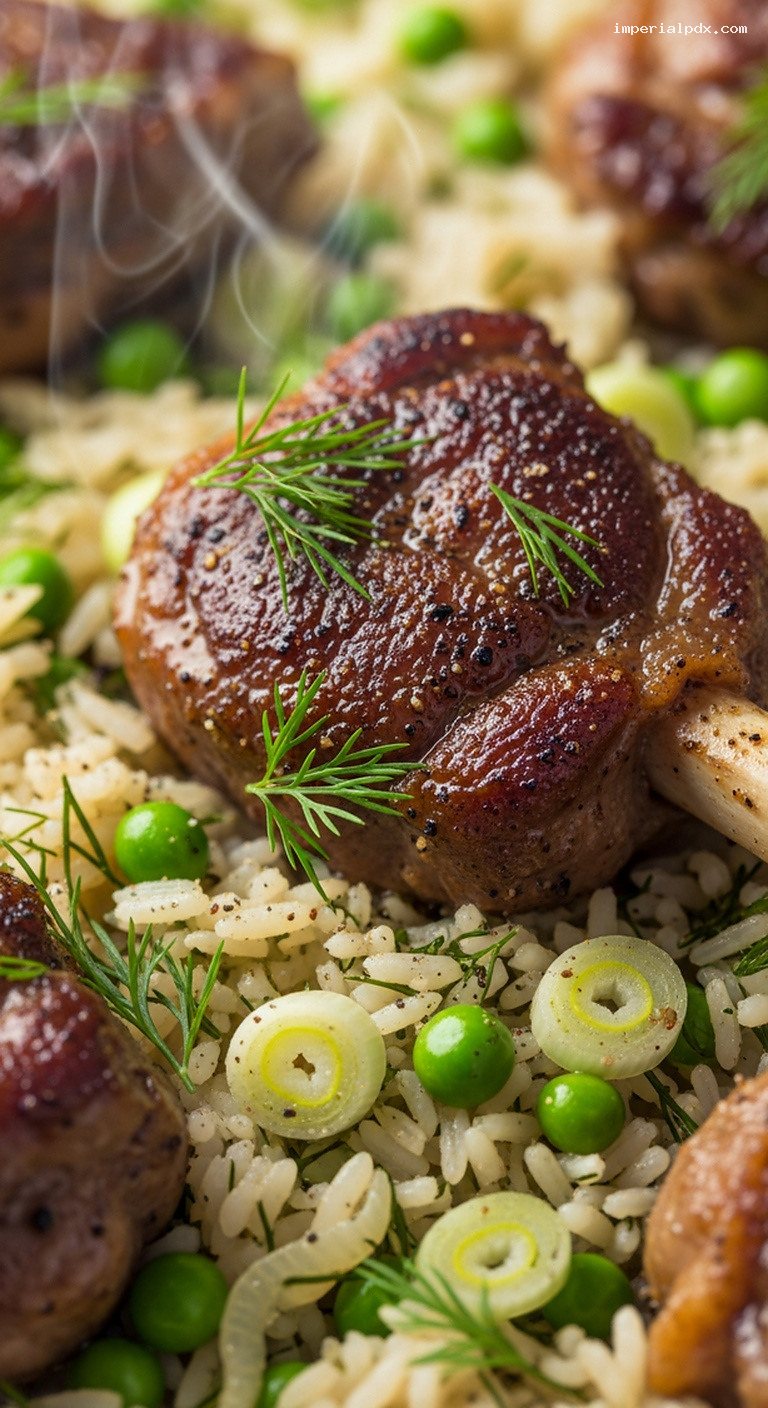
Serve the kuzu kapama straight from the pot at the table, with lemon wedges and a bowl of plain yogurt on the side. Each plate should get a scoop of dill-scented rice with peas and onions, crowned with a piece of tender, bone-in lamb.
Pro Tips
- Use the right pot: A heavy, 5–6 L (5–6 qt) Dutch oven with a tight lid is ideal. Thin pots heat unevenly and can scorch the rice on the bottom.
- Soak the rice: Rinsing and soaking the rice is key for fluffy, separate grains. If you skip soaking, the rice may need a few extra tablespoons of broth and a few extra minutes to cook.
- Do not overcook the lamb in the first stage: The lamb should be tender but still hold together after the braise, because it will cook further in the oven with the rice.
- Keep the broth hot: Add the lamb broth to the rice while it is piping hot. Hot liquid helps the rice start cooking evenly and reduces the risk of mushy spots.
- Resist peeking: Once the pot is in the oven with the rice, keep the lid on until the end of cooking and resting. Steam is what makes the rice tender and aromatic.
Variations
- Extra-green spring version: Add 1–2 cups of blanched fava beans, sliced asparagus tips, or quartered baby artichokes along with the peas for an even more springlike dish. Stir them gently into the rice before baking.
- Saffron and mint twist: Steep a pinch of saffron threads in 3 tbsp hot broth and add it to the rice, along with 2–3 tbsp chopped fresh mint (in addition to or instead of some of the dill) for a golden, delicately perfumed version.
- Chicken kapama: Substitute 1.5 kg bone-in, skin-on chicken thighs and drumsticks for the lamb. Reduce the initial braise time to about 40–45 minutes and check that the chicken is cooked through (juices run clear) after the final bake.
Storage & Make-Ahead
Leftover kuzu kapama keeps very well. Let the dish cool to room temperature, then transfer rice and lamb together into airtight containers and refrigerate for up to 3–4 days. Reheat gently in a covered baking dish at 160°C / 325°F with a splash of water or extra broth until hot, or warm individual portions in a covered skillet over low heat. You can also freeze portions for up to 2 months; thaw overnight in the refrigerator before reheating.
For entertaining, you can braise the lamb (Steps 1–3) up to 1 day ahead. Store the lamb and strained broth separately in the fridge. Shortly before serving, warm the broth, prepare the dill-onion rice base (Step 4), assemble (Step 5), and bake as directed.
Nutrition (per serving)
Approximate values for 1 of 6 servings (without yogurt): about 780 kcal; 35 g protein; 55 g carbohydrates; 38 g fat; 3 g fiber; 1,200–1,400 mg sodium (highly dependent on stock and added salt). These numbers are estimates and will vary based on the specific lamb cut, stock, and exact amounts of fat skimmed from the broth.