Quick Recipe Version (TL;DR)
Pennsylvania Dutch Potato Bread with a Golden Butter Crust
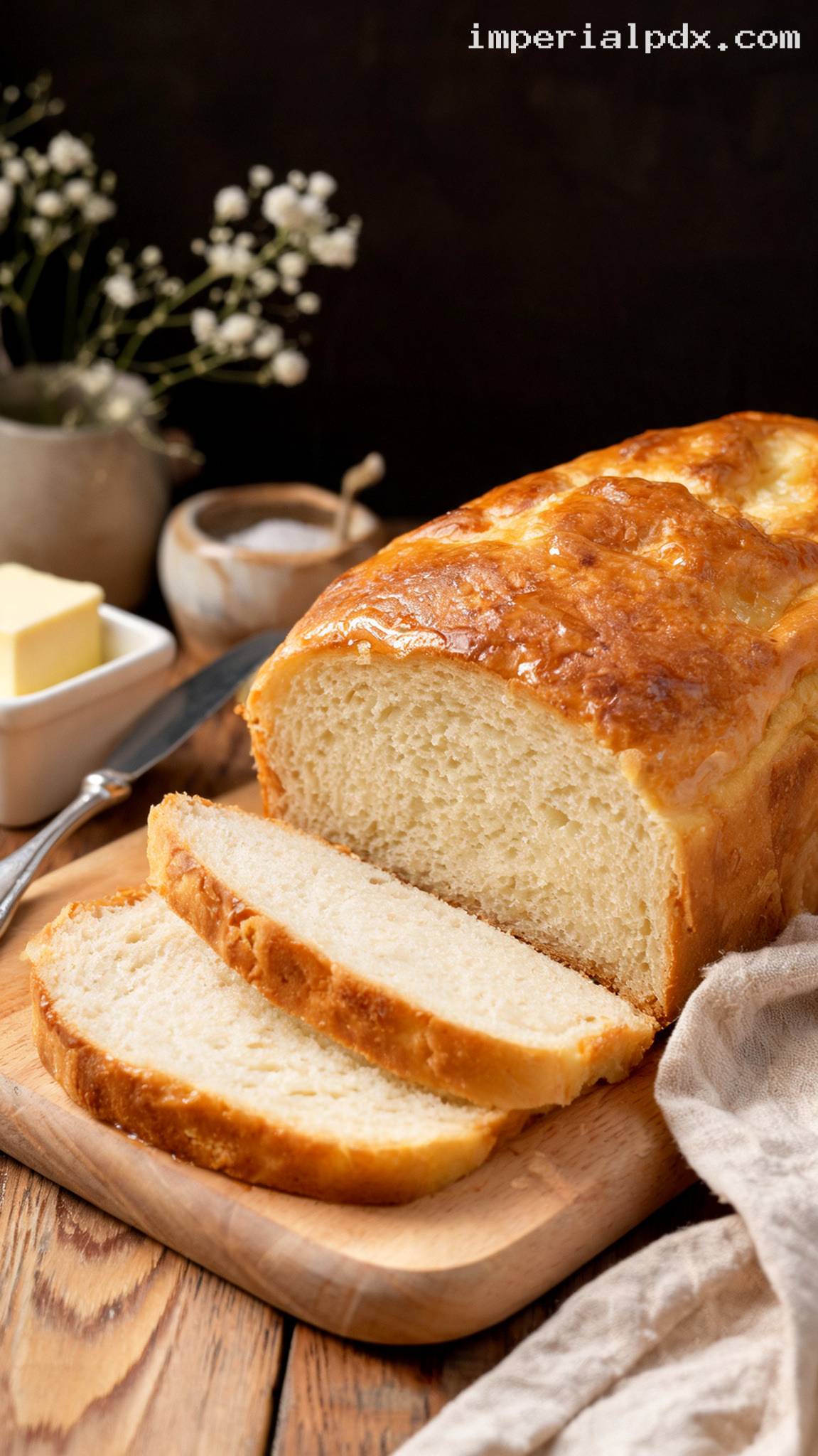
A soft, old-fashioned yeast loaf with a tender potato-enriched crumb and a buttery golden crust. It is wonderful for sandwiches, morning toast, or soaking up the last spoonful of soup.
Quick Ingredients
- 3/4 cup (180 g) plain mashed russet potato, cooled until lukewarm
- 3/4 cup (180 ml) whole milk, warmed to 105–110°F (41–43°C)
- 2 1/4 teaspoons (7 g) active dry yeast
- 2 tablespoons (25 g) granulated sugar
- 3 1/2 cups (420 g) all-purpose flour, plus up to 1/4 cup (30 g) as needed
- 1 1/2 teaspoons (9 g) fine table salt
- 5 tablespoons (70 g) unsalted butter, divided: 3 tablespoons for the dough, 1 tablespoon before baking, and 1 tablespoon after baking
- 1 teaspoon (5 g) softened unsalted butter, for greasing the pan
Do This
- 1. Peel and cube a russet potato. Simmer in unsalted water for about 15 minutes, drain thoroughly, and mash. Measure 3/4 cup (180 g); cool for about 10 minutes, until lukewarm.
- 2. Stir the warm milk, sugar, and yeast together. Let stand for 10 minutes, until foamy.
- 3. Mix in the mashed potato, 3 tablespoons melted and cooled butter, salt, and flour. Knead for 8–10 minutes by hand, adding extra flour sparingly, until smooth and slightly tacky.
- 4. Cover and let rise in a warm spot for about 60 minutes, until doubled.
- 5. Shape into a loaf and place in a buttered 9 × 5-inch pan. Cover and let rise for about 30 minutes, until the center stands 1 inch above the rim.
- 6. Brush with 1 tablespoon melted butter. Bake at 350°F (177°C) for 35–40 minutes, until golden and the center reaches 195–200°F (91–93°C).
- 7. Brush with the remaining 1 tablespoon melted butter. Remove from the pan after 5 minutes and cool on a rack for at least 1 hour before slicing.
Why You’ll Love This Recipe
- Exceptionally soft slices: Mashed potato helps the crumb hold moisture, so the bread stays tender longer than a basic white loaf.
- A delicious butter crust: Butter before baking encourages a golden finish, while a second brushing afterward keeps the crust soft and flavorful.
- Everyday ingredients: No specialty flour, sourdough starter, or bread machine required.
- Useful from breakfast to supper: The gently sweet flavor suits sandwiches, toast, grilled cheese, and hearty soups.
Grocery List
- Produce: 1 medium-large russet potato, about 10 ounces (280 g), to make 3/4 cup mashed potato.
- Dairy: Whole milk and 75 g unsalted butter, including the butter for greasing the pan.
- Pantry: All-purpose flour, active dry yeast, granulated sugar, and fine table salt.
Full Ingredients
For the Potato
- 1 medium-large russet potato, about 10 ounces (280 g), peeled and cut into 1-inch pieces; use exactly 3/4 cup (180 g) cooked, plain mashed potato
- Unsalted water, enough to cover the potato pieces by 1 inch
For the Dough
- 3/4 cup (180 ml) whole milk, warmed to 105–110°F (41–43°C)
- 2 tablespoons (25 g) granulated sugar
- 2 1/4 teaspoons (7 g) active dry yeast, equivalent to one standard packet
- 3/4 cup (180 g) prepared mashed potato, cooled to no warmer than 110°F (43°C)
- 3 tablespoons (42 g) unsalted butter, melted and cooled until lukewarm
- 1 1/2 teaspoons (9 g) fine table salt
- 3 1/2 cups (420 g) all-purpose flour, divided, plus up to 1/4 cup (30 g) for dough adjustment and light dusting
For the Pan and Golden Butter Crust
- 1 teaspoon (5 g) softened unsalted butter, for greasing the loaf pan
- 1 tablespoon (14 g) unsalted butter, melted, for brushing before baking
- 1 tablespoon (14 g) unsalted butter, melted, for brushing after baking
Helpful equipment: A 9 × 5-inch loaf pan, large mixing bowl, potato masher or ricer, pastry brush, cooling rack, and instant-read thermometer. A stand mixer with a dough hook is helpful but optional.
Step-by-Step Instructions
Step 1: Cook and mash the potato
Place the peeled potato pieces in a small saucepan and cover with unsalted water by 1 inch. Bring to a boil, then reduce the heat and simmer for about 15 minutes, until the pieces break apart easily when pressed with a fork.
Drain thoroughly. Return the potatoes to the warm, empty saucepan for 1 minute off the heat so excess moisture can evaporate. Mash or rice until completely smooth, without adding milk, butter, or salt. Measure exactly 3/4 cup (180 g) into a bowl and spread it out slightly. Let cool for about 10 minutes, until lukewarm and no hotter than 110°F (43°C). Save any extra potato for another use.
Step 2: Activate the yeast
While the potato cools, combine the milk, sugar, and yeast in a large mixing bowl or the bowl of a stand mixer. The milk should be 105–110°F (41–43°C): comfortably warm, not hot. Stir and let stand for 10 minutes.
The mixture should develop a foamy cap or visible bubbles. If it remains completely inactive, replace the yeast and start again before adding the other ingredients.
Step 3: Mix a soft dough
Add the lukewarm mashed potato, 3 tablespoons melted and cooled butter, and salt to the yeast mixture. Stir until the potato is well distributed.
Add 3 cups (360 g) flour and mix until a shaggy dough forms. Gradually work in the remaining 1/2 cup (60 g) flour. The dough should be soft and a little sticky rather than stiff or dry. Potato moisture varies, so judge the texture before adding any of the extra flour.
Step 4: Knead until smooth and elastic
Knead on a lightly floured surface for 8–10 minutes, or with a dough hook on low speed for 6–8 minutes. Add extra flour only 1 tablespoon at a time, using no more than the additional 1/4 cup (30 g), including any flour used for dusting.
The finished dough should feel supple and slightly tacky, but it should not coat your hands in a thick paste. In a mixer, it should pull away from the sides while remaining lightly attached at the bottom. A small piece should stretch into a thin, somewhat translucent sheet before tearing.
Step 5: Let the dough rise
Shape the dough into a ball and place it in a clean bowl. Cover with a lid, reusable cover, or plastic wrap. Let rise in a draft-free spot at about 75–80°F (24–27°C) for approximately 60 minutes, until doubled in volume.
Use the dough’s size rather than the clock as your final guide. A cooler kitchen may add 20–30 minutes to this rise.
Step 6: Shape the loaf and proof again
Grease a 9 × 5-inch loaf pan with 1 teaspoon softened butter. Gently press the risen dough to release large air pockets, then pat it into an 8 × 10-inch rectangle on a lightly floured surface.
Starting at an 8-inch edge, roll the dough into a snug log. Pinch the seam closed, tuck the ends underneath, and place seam-side down in the prepared pan. Cover loosely and let rise for about 30 minutes, until the center of the loaf stands approximately 1 inch above the pan’s rim. It should look puffy, and a gentle fingertip indentation should spring back slowly.
During this second rise, preheat the oven to 350°F (177°C), with a rack in the lower-middle position.
Step 7: Brush with butter and bake until golden
Gently brush the top of the risen loaf with 1 tablespoon melted butter, taking care not to press down on the dough. Bake for 35–40 minutes, until the top is a rich golden brown and an instant-read thermometer inserted into the center registers 195–200°F (91–93°C).
Check the color after 25 minutes. If the top is already deeply golden, tent it loosely with foil for the remaining baking time. A hollow sound when tapped is helpful, but the internal temperature is the more dependable doneness check.
Step 8: Finish with butter and cool before slicing
Immediately brush the hot loaf with the remaining 1 tablespoon melted butter. Let it sit in the pan for 5 minutes, then gently turn it out onto a cooling rack.
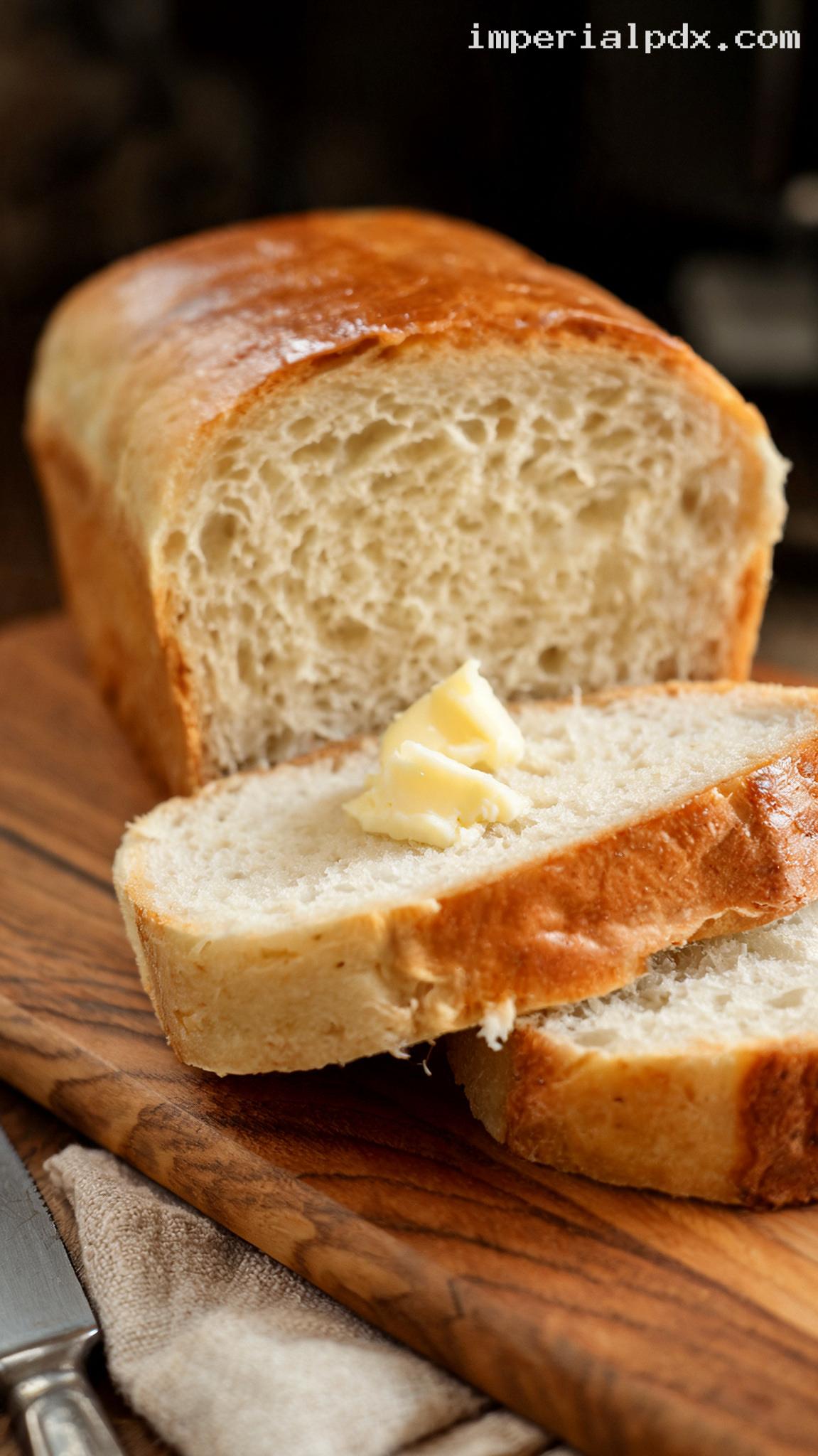
Cool out of the pan for at least 1 hour, preferably until the center is no longer warm, before slicing with a serrated knife. The crumb continues setting as it cools; cutting too soon can make this moist potato bread seem gummy. Serve with butter, build your favorite sandwich, or toast thick slices the next morning.
Pro Tips
- Weigh the mashed potato: Different potatoes and mashing methods can produce very different cup measurements. Using 180 g keeps the dough more consistent.
- Keep the mash plain: Leftover mashed potatoes are suitable only if they contain no added milk, butter, salt, or seasonings that would change the dough.
- Do not chase away every bit of tackiness: Too much flour is the easiest way to lose the soft, tender crumb. Give the dough a few minutes of kneading before deciding it needs more.
- Watch the proof, not just the timer: A loaf that rises too far can collapse or wrinkle during baking. Bake when it is puffy and about 1 inch above the rim.
- Expect a soft crust: This is a tender sandwich loaf, not a crackly artisan bread. The second butter brushing is meant to soften the golden crust.
Variations
- Light whole-wheat potato bread: Replace 1/2 cup (60 g) of the all-purpose flour with 1/2 cup (60 g) whole-wheat flour. If the dough feels firm after mixing, add 1 tablespoon (15 ml) extra milk. Rising may take slightly longer.
- Buttery potato dinner rolls: Divide the dough into 12 equal pieces after the first rise. Shape into balls and arrange in a buttered 9 × 13-inch pan. Let rise for 30–45 minutes, until puffy, then brush with the pre-bake butter. Bake at 350°F (177°C) for 22–27 minutes, until golden and 195–200°F (91–93°C) inside. Brush with the finishing butter.
Storage & Make-Ahead
Room temperature: Once completely cool, store the loaf in a bread bag or airtight container for up to 3 days. Slice only what you need to help the rest stay moist. Avoid refrigerating the baked loaf, which speeds staling.
Freezing: Slice the cooled bread, separate portions with parchment if desired, and seal in a freezer bag for up to 2 months. Toast slices directly from frozen or thaw the wrapped loaf at room temperature.
Prepare the potato ahead: Cook and mash the potato up to 3 days ahead, refrigerating it promptly in a covered container at 40°F (4°C) or below. Measure 180 g and gently warm it until lukewarm before mixing the dough.
Overnight option: After shaping, cover the loaf pan and refrigerate immediately for 8–12 hours instead of completing the second rise at room temperature. The next day, let it stand at room temperature until puffy and about 1 inch above the rim, usually 1–2 hours, checking early in case it rose substantially overnight. Brush with butter and bake as directed.
Nutrition (per serving)
Calories: 154 kcal | Carbs: 25g | Protein: 3.5g | Fat: 4.5g | Saturated Fat: 2.7g | Fiber: 1g | Sugar: 2.3g | Sodium: 227mg | Cholesterol: 11mg
Estimated per slice when the loaf is cut into 16 slices, using 420 g flour and all listed butter. Additional flour and variations will change the values.