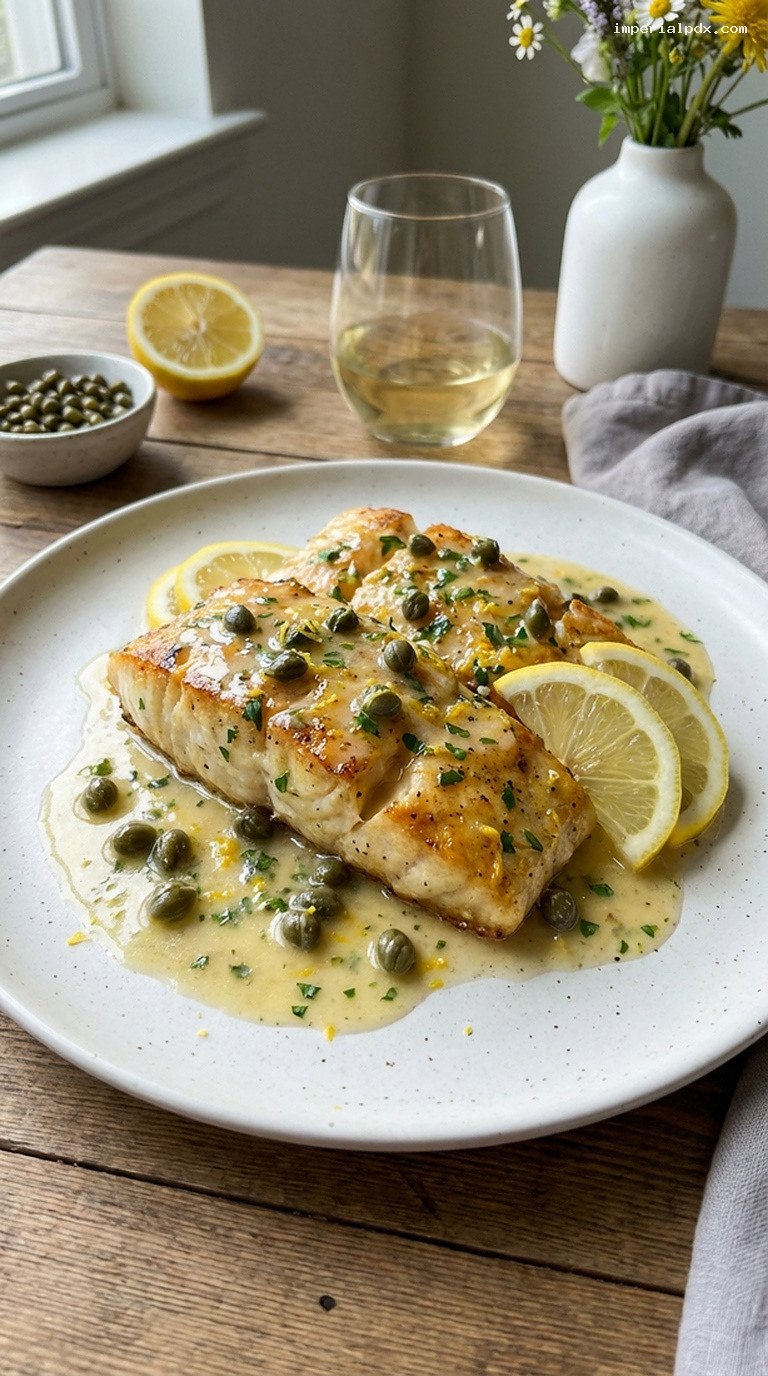
Quick Recipe Version (TL;DR)
Quick Ingredients
- 8 Tbsp (113 g) unsalted butter, very cold, cut into 1/2-inch cubes
- 1/2 cup (120 ml) dry white wine
- 2 Tbsp fresh lemon juice (from about 1 lemon)
- 1 tsp finely grated lemon zest
- 2 Tbsp brined capers, drained (rinse if very salty)
- 2 small garlic cloves, minced
- 2 Tbsp finely chopped fresh parsley
- 1/4–1/2 tsp kosher salt, to taste
- 1/8 tsp freshly ground black pepper, to taste
Do This
- 1. Prep: Cut butter into cubes and keep it chilled. Mince garlic, chop parsley, zest and juice the lemon, and drain the capers.
- 2. Reduce: In a small saucepan, combine wine, lemon juice, and garlic. Bring to a simmer over medium heat and reduce to about half (4–5 minutes).
- 3. Lower heat: Turn heat to low so the liquid is hot but not boiling.
- 4. Emulsify: Whisk in the cold butter a few cubes at a time, letting each addition melt into a creamy sauce before adding more. Keep the heat low so it never boils.
- 5. Finish: When the sauce is glossy and slightly thickened, whisk in lemon zest, capers, parsley, salt, and pepper. Taste and adjust seasoning.
- 6. Serve: Spoon immediately over pan-seared cod, chicken cutlets, or roasted vegetables.
- 7. Hold briefly: Keep warm over the lowest heat or in a warm (not hot) spot; do not let it boil or the sauce may separate.
Why You’ll Love This Recipe
- Bright, zesty flavor from lemon and white wine balanced by rich, silky butter.
- Restaurant-style sauce that comes together in about 20 minutes with simple ingredients.
- Extremely versatile: perfect over fish, chicken piccata style, or roasted vegetables.
- Step-by-step emulsifying method so your sauce turns out smooth and never greasy or broken.
Grocery List
- Produce: 1–2 lemons, fresh parsley, 2 garlic cloves (plus optional shallot), vegetables if roasting (such as broccoli, asparagus, or green beans)
- Dairy: Unsalted butter
- Pantry: Dry white wine, jar of capers, kosher salt, black pepper, olive oil (for cooking fish, chicken, or vegetables), all-purpose flour (optional for chicken piccata)
Full Ingredients
Lemon-Caper Butter Sauce (for 4 servings)
- 8 Tbsp (113 g) unsalted butter, very cold, cut into 1/2-inch cubes
- 1/2 cup (120 ml) dry white wine (such as Sauvignon Blanc, Pinot Grigio, or a dry Chardonnay)
- 2 Tbsp fresh lemon juice (from about 1 medium lemon)
- 1 tsp finely grated lemon zest (from the same lemon, if possible)
- 2 Tbsp brined capers, drained (rinse briefly if they taste very salty), roughly chopped if large
- 2 small garlic cloves, minced (about 2 tsp)
- 2 Tbsp finely chopped fresh flat-leaf parsley
- 1/4–1/2 tsp kosher salt, to taste
- 1/8 tsp freshly ground black pepper, to taste
- Optional: 1–2 Tbsp low-sodium chicken broth or water, to thin the sauce if needed
Optional Pan-Seared Cod (serves 4)
- 4 cod fillets (about 5–6 oz / 140–170 g each), skinless
- 1 Tbsp olive oil
- 1 Tbsp unsalted butter
- 3/4 tsp kosher salt
- 1/4 tsp freshly ground black pepper
- Optional garnish: extra lemon wedges and chopped parsley
Optional Chicken Piccata-Style (serves 4)
- 4 small boneless, skinless chicken breasts or 2 large cut in half horizontally (about 1 1/2 lb / 680 g total)
- 1/2 tsp kosher salt
- 1/4 tsp freshly ground black pepper
- 1/3 cup (40 g) all-purpose flour, for light dredging
- 2 Tbsp olive oil
- 1 Tbsp unsalted butter
Optional Roasted Vegetables (serves 4)
- 1 lb (450 g) vegetables, such as broccoli florets, asparagus, or green beans
- 2 Tbsp olive oil
- 1/2 tsp kosher salt
- 1/4 tsp freshly ground black pepper
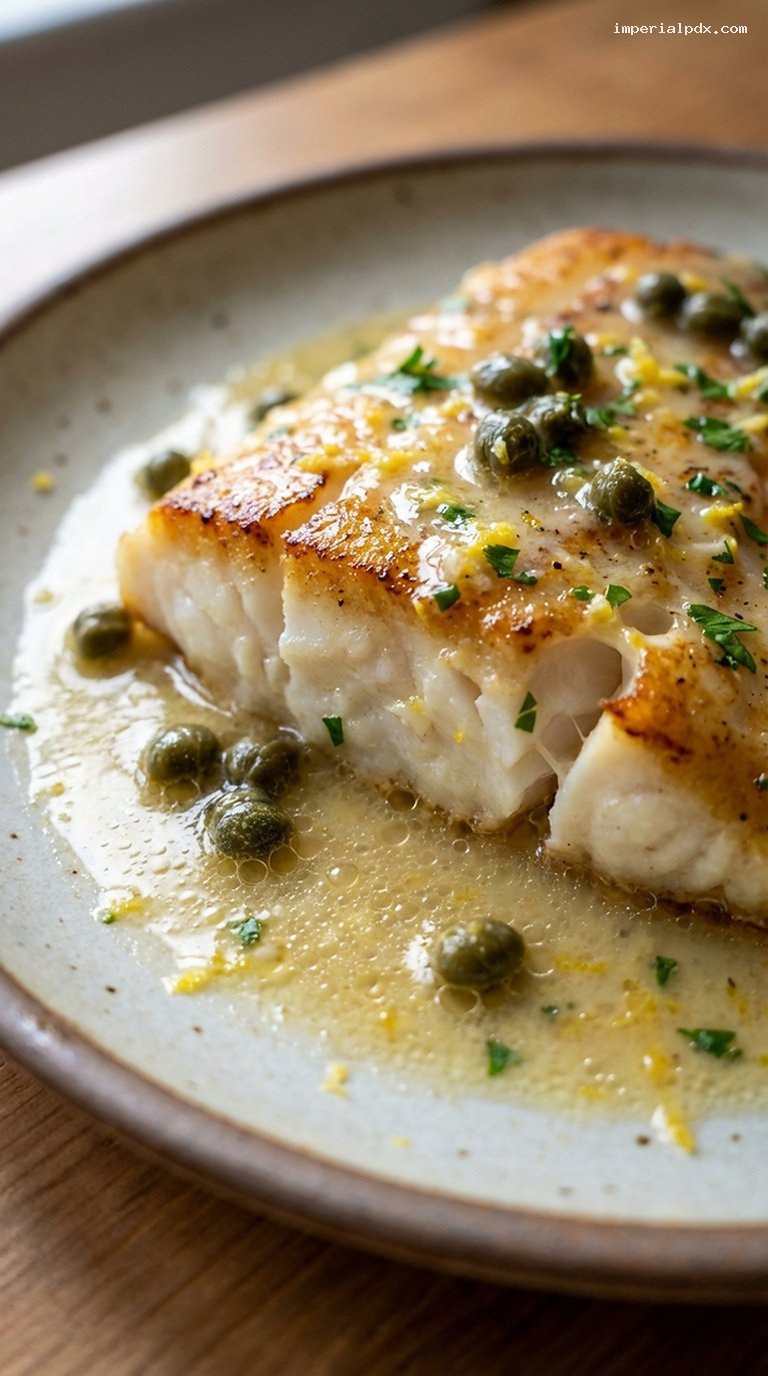
Step-by-Step Instructions
Step 1: Prep all your ingredients
Start by preparing everything so the sauce comes together smoothly. Cut the butter into 1/2-inch cubes and place it back in the refrigerator; it needs to be very cold for a stable emulsion. Mince the garlic, finely chop the parsley, finely grate the lemon zest, and squeeze the lemon juice. Drain the capers and give them a quick rinse if they taste extremely salty, then pat them dry on a paper towel.
If you plan to serve this with cod, chicken, or roasted vegetables, pat the protein dry with paper towels and prepare any vegetables by trimming and cutting them into bite-size pieces. Having everything ready will make the cooking process much easier.
Step 2: Make the flavorful wine reduction
In a small saucepan or skillet (8 or 9 inches is ideal), combine the dry white wine, lemon juice, and minced garlic. Place the pan over medium heat and bring the mixture to a gentle simmer. Allow it to simmer briskly, stirring occasionally, until the liquid is reduced by about half and smells very fragrant, 4–5 minutes. You should be left with roughly 1/4–1/3 cup of concentrated liquid.
This reduction intensifies the wine and lemon flavors and softens the raw bite of the garlic, forming the base of your sauce.
Step 3: Lower the heat and start emulsifying the butter
Turn the heat down to low. The liquid should be hot and steamy but not rapidly boiling. Add 2–3 cubes of cold butter to the pan and whisk constantly until they are almost fully melted and the sauce looks creamy and slightly thicker. Continue adding the butter a few cubes at a time, whisking continuously.
The key here is gentle heat: the sauce should never boil once you start adding butter, or it may separate. If it starts to bubble, briefly lift the pan off the heat while you continue whisking, then return it to the burner once it calms down.
Step 4: Finish the sauce with lemon, capers, and herbs
Once all of the butter is incorporated and the sauce looks glossy and smooth, remove the pan from the heat or keep it over the very lowest setting. Whisk in the lemon zest, capers, and chopped parsley. The capers should be evenly distributed throughout the sauce, with flecks of lemon zest and green herbs visible.
Taste the sauce, then season with kosher salt and black pepper. Start with about 1/4 teaspoon salt and a pinch of pepper, then adjust to your liking. If the sauce seems very thick, whisk in 1–2 tablespoons of warm water or low-sodium chicken broth until it reaches a spoonable consistency that lightly coats the back of a spoon.
Step 5: Keep the sauce warm (without breaking it)
To hold the sauce while you finish your fish, chicken, or vegetables, keep it over the lowest possible heat on the stove. You want it warm and fluid, but never simmering. Alternatively, you can place the saucepan over a burner that is turned off but still slightly warm, or set it over a pot of very warm (not boiling) water like a simple double boiler.
If at any point the sauce starts to look greasy or separated, remove it from the heat and vigorously whisk in 1 teaspoon of cold water or a small cube of cold butter to bring it back together.
Step 6: Cook your cod, chicken, or vegetables (optional but recommended)
For pan-seared cod: Season the cod fillets on both sides with the salt and pepper. Heat the olive oil and butter in a large nonstick or stainless steel skillet over medium-high heat until the butter is melted and the fat is shimmering. Add the cod and cook for 3–4 minutes per side, depending on thickness, until the fish is opaque and flakes easily with a fork (internal temperature about 145°F / 63°C). Transfer to warm plates.
For chicken piccata-style: If using large chicken breasts, slice them in half horizontally to create thinner cutlets. Pat dry and season with salt and pepper. Lightly dredge each piece in flour, shaking off excess. Heat the olive oil and butter in a large skillet over medium-high heat. Add the chicken and cook 3–4 minutes per side until golden and cooked through (internal temperature 165°F / 74°C). Transfer to a plate and tent loosely with foil while you finish the sauce (you can make the sauce in the same pan, scraping up the browned bits for extra flavor).
For roasted vegetables: Preheat the oven to 425°F (220°C). Toss your vegetables with the olive oil, salt, and pepper and spread them in a single layer on a baking sheet. Roast for 15–20 minutes, stirring once, until tender and nicely browned at the edges.
Step 7: Plate and serve with the lemon-caper butter sauce
Arrange the seared cod, chicken cutlets, or roasted vegetables on warm plates or a serving platter. Give the sauce a final whisk to make sure everything is well combined. Spoon the warm lemon-caper butter sauce generously over the top, making sure each portion gets plenty of capers and herbs.
Garnish with extra chopped parsley and a few thin lemon slices or wedges, if desired. Serve immediately while everything is hot and the sauce is silky.
Pro Tips
- Use very cold butter: Cold butter is critical for a stable emulsion. Cut it in advance and keep it chilled until you are ready to whisk it in.
- Control the heat: Once you start adding butter, the sauce should never boil. Gentle heat keeps it smooth instead of oily.
- Reduce the wine enough: Let the wine and lemon juice reduce until syrupy and fragrant. This concentrates the flavor and prevents a watery sauce.
- Balance the salt: Capers are naturally salty. Taste before adding too much salt, especially if your butter is salted or you did not rinse the capers.
- Fix a broken sauce: If the sauce separates, remove it from the heat and whisk in 1 teaspoon of cold water or a small cube of cold butter until it comes back together.
Variations
- Creamy lemon-caper butter sauce: After reducing the wine and lemon juice, whisk in 2–3 tablespoons of heavy cream and simmer for 1 minute before adding the butter. This yields a slightly thicker, creamier sauce that clings beautifully to chicken and vegetables.
- Brown butter twist: Brown 4 tablespoons of the butter in a separate pan until deeply golden and nutty, then whisk it into the sauce along with the remaining cold butter. The nutty brown butter adds a rich, toasty flavor that pairs especially well with roasted vegetables.
- Herb-forward version: Add 1 tablespoon each of chopped fresh chives or tarragon along with the parsley for a more aromatic, herb-focused sauce.
Storage & Make-Ahead
This sauce is at its absolute best when made right before serving, but you have a couple of options:
Make-ahead base: Up to 1 day in advance, you can complete Step 2 (the wine, lemon, and garlic reduction). Cool it, then refrigerate in a covered container. When ready to serve, gently rewarm the reduction, then emulsify the cold butter and finish the sauce as directed.
Storing finished sauce: If you have leftover sauce, let it cool to room temperature, then refrigerate in an airtight container for up to 2 days. It will solidify. Reheat very gently in a small pan over low heat with 1–2 tablespoons of water or broth, whisking constantly. Do not let it boil; otherwise, it can separate.
Leftover fish, chicken, or vegetables can be stored separately in airtight containers in the refrigerator for up to 3 days. Reheat gently and top with rewarmed sauce.
Nutrition (per serving)
Approximate nutrition for the sauce only (1/4 of the recipe, not including fish, chicken, or vegetables): about 210 calories; 23 g fat; 14 g saturated fat; 1 g carbohydrates; 0 g fiber; 0 g sugar; 1 g protein; around 260 mg sodium (this will vary based on how much salt you add and how salty your capers are). When served over lean fish or chicken and plenty of vegetables, this sauce provides rich flavor while keeping the overall meal balanced.