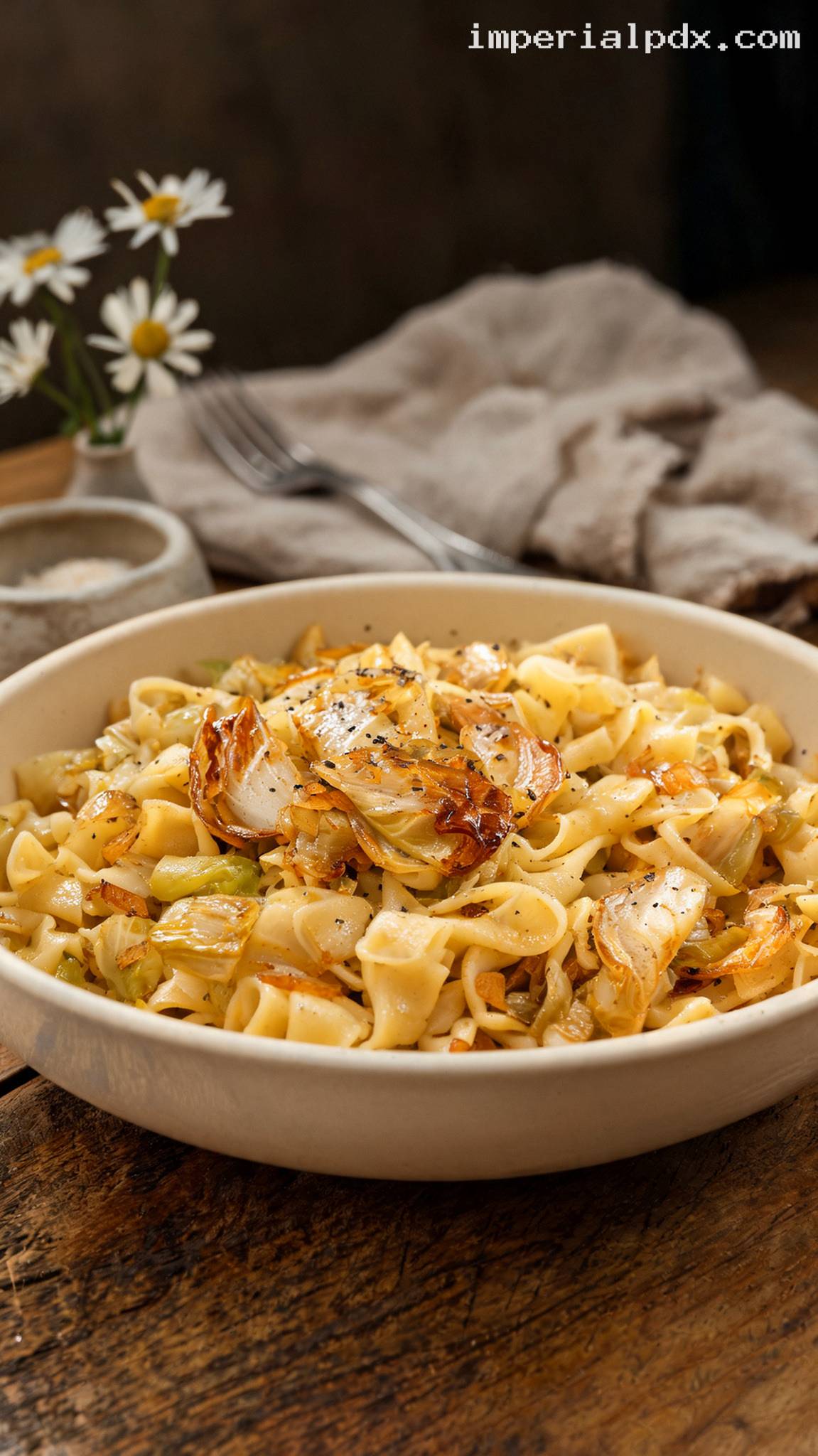
Quick Recipe Version (TL;DR)
Quick Ingredients
- 300 g (10.6 oz) dried fleckerl or small egg pasta squares
- 800 g (1 lb 12 oz) trimmed green cabbage, cut into small squares
- 250 g (8.8 oz) yellow onions, finely diced
- 45 g (3 tablespoons) unsalted butter
- 15 ml (1 tablespoon) neutral oil
- 8 g (2 teaspoons) granulated sugar
- 6 g (1 teaspoon) fine sea salt, divided, plus 12 g (2 teaspoons) for the pasta water
- 2 g (1 teaspoon) freshly ground black pepper, divided
- 15 ml (1 tablespoon) apple cider vinegar
- 3 liters water for boiling pasta; reserve 120 ml (½ cup) before draining
Do This
- 1. Cut the cabbage into 1.5 cm (⅝-inch) squares and finely dice the onions.
- 2. Heat the butter and oil in a large, deep skillet over medium heat for 1 minute. Cook the onions for 8 minutes, then stir in the sugar for 1 minute.
- 3. Add the cabbage and ½ teaspoon salt. Cover and cook for 5 minutes; uncover and cook over medium-low heat for 30 minutes, stirring regularly, until deeply golden and tender.
- 4. Meanwhile, bring 3 liters water and 2 teaspoons salt to a boil. Cook the pasta for 8 minutes, or according to its package directions. Reserve ½ cup cooking water, then drain.
- 5. Stir the vinegar into the cabbage for 1 minute. Add the pasta, ¼ cup reserved water, remaining ½ teaspoon salt, and ¾ teaspoon pepper. Toss over medium heat for 3 minutes.
- 6. Loosen with more reserved water if needed. Finish with the remaining ¼ teaspoon pepper and serve hot.
Why You’ll Love This Recipe
- Simple ingredients, big flavor: Slowly browned cabbage and onions turn wonderfully sweet and savory.
- Comforting without meat: This Austrian favorite makes a satisfying vegetarian main course with no meat substitutes needed.
- Budget-friendly: A modest amount of pasta and an everyday cabbage become four generous servings.
- Beautifully balanced: Butter adds richness, black pepper brings warmth, and a little vinegar keeps everything lively.
Grocery List
- Produce: 1 medium green cabbage, approximately 1 kg (2.2 lb) before trimming; 2 medium yellow onions, enough for 250 g peeled.
- Dairy: Unsalted butter.
- Pantry: Dried fleckerl or small egg pasta squares, neutral oil, granulated sugar, fine sea salt, black pepper, and apple cider vinegar.
Full Ingredients
For the Caramelized Cabbage
- 800 g (1 lb 12 oz) green cabbage, weighed after removing the core and damaged outer leaves
- 250 g (8.8 oz) yellow onions, peeled and finely diced
- 45 g (3 tablespoons) unsalted butter
- 15 ml (1 tablespoon) neutral oil, such as sunflower or canola oil
- 8 g (2 teaspoons) granulated sugar
- 6 g (1 teaspoon) fine sea salt, divided into two ½-teaspoon portions
- 2 g (1 teaspoon) freshly ground black pepper, divided into ¾ teaspoon and ¼ teaspoon
- 15 ml (1 tablespoon) apple cider vinegar
For the Pasta
- 300 g (10.6 oz) dried fleckerl, ideally squares approximately 2 cm (¾ inch) across
- 3 liters water
- 12 g (2 teaspoons) fine sea salt, for the cooking water
- 120 ml (½ cup) reserved pasta cooking water; use 60 ml (¼ cup) initially and the remainder only as needed
Pasta substitute: If you cannot find fleckerl, break wide, dried egg noodles into roughly 2 cm (¾-inch) pieces. Small, flat pieces are the goal: they should mingle with the cabbage rather than overwhelm it.
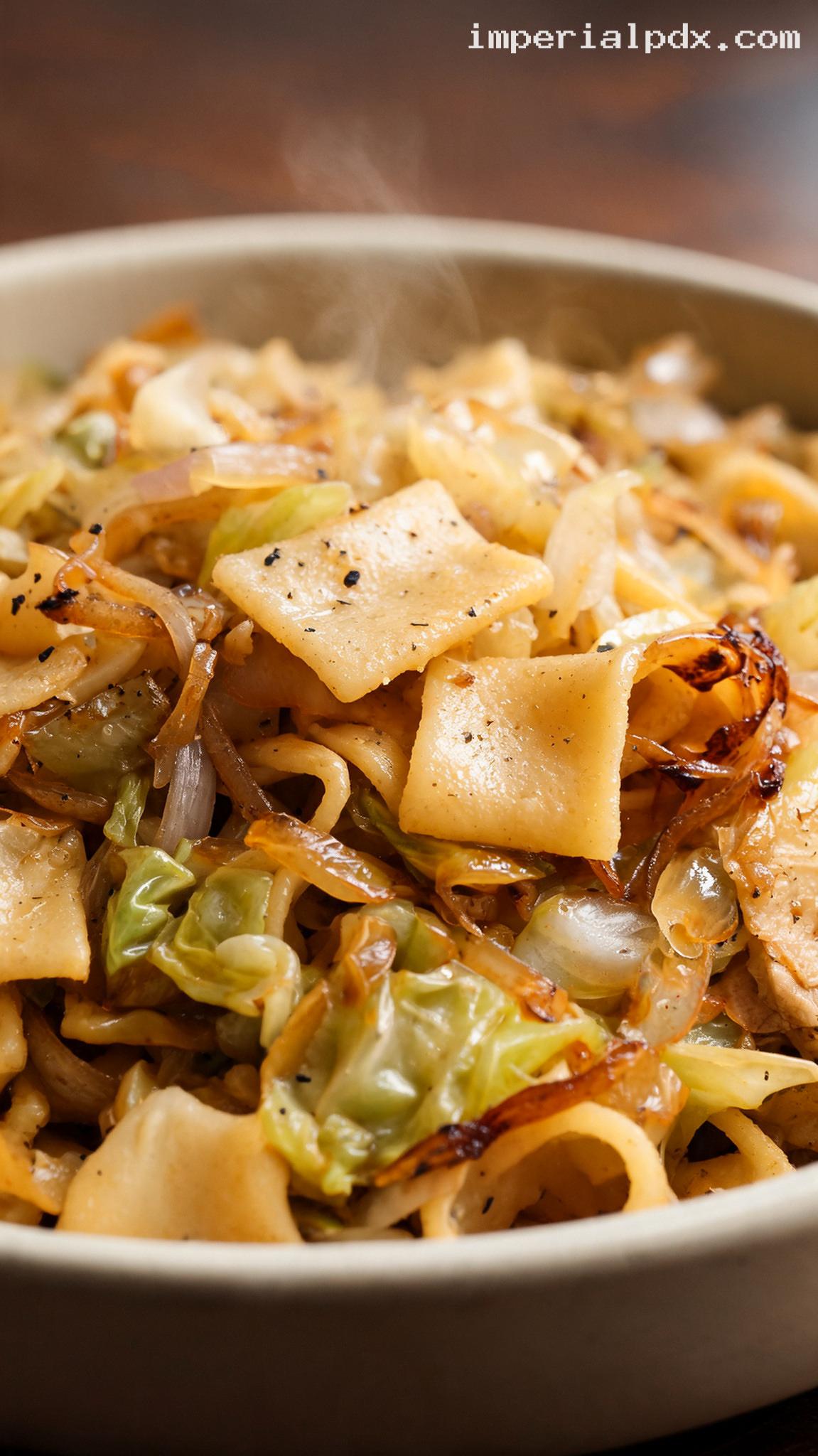
Step-by-Step Instructions
Step 1: Prepare the cabbage and onions
Remove the cabbage’s damaged outer leaves, quarter it, and cut out the tough core. Weigh out 800 g of trimmed cabbage, then cut it into approximately 1.5 cm (⅝-inch) squares. Separate any tightly packed pieces with your fingers. Peel and finely dice the onions.
Have a large, heavy, deep skillet or wide Dutch oven ready, ideally about 30 cm (12 inches) across. A broad cooking surface helps moisture evaporate so the cabbage can brown.
Step 2: Soften the onions
Add the butter and oil to the skillet and heat over medium heat for 1 minute, until the butter has melted and begins to foam. Add the onions and cook for 8 minutes, stirring frequently, until softened and pale golden. If they begin developing dark edges, lower the heat slightly.
Step 3: Add a little caramel sweetness
Sprinkle the sugar evenly over the onions. Cook over medium heat for 1 minute, stirring continuously, until the sugar dissolves and the onions look glossy. You are looking for a light caramel color, not dark or smoking sugar.
Step 4: Slowly brown the cabbage
Add the cabbage and ½ teaspoon of the salt. Toss thoroughly to coat it in the buttery onions; the pan will look full at first. Cover and cook over medium heat for 5 minutes, stirring once halfway through, until the cabbage begins to wilt.
Uncover, reduce the heat to medium-low, and cook for 30 minutes. Stir and scrape the bottom every 3 minutes, giving the cabbage time to make contact with the pan between stirs. It should become very tender, with golden-brown edges and darker caramelized patches.
Use the color as your guide: If the cabbage is still wet and pale near the end, raise the heat to medium for the final 5 minutes. If it starts scorching, lower the heat immediately. Depending on the cabbage’s moisture and your pan, reaching a deep golden color may take a few extra minutes.
Step 5: Cook the pasta while the cabbage browns
During the uncovered cabbage-cooking stage, bring 3 liters water to a rolling boil in a large pot. Add the 12 g salt. Time the pasta so it finishes close to the end of the cabbage’s cooking time.
Add the pasta and cook for 8 minutes, or follow the package’s stated al dente time if different. Stir occasionally to keep the squares from sticking together. Before draining, scoop out 120 ml (½ cup) cooking water. Drain the pasta without rinsing.
Step 6: Bring everything together
Once the cabbage is tender and browned, add the vinegar and stir over medium heat for 1 minute, scraping up the flavorful browned bits from the bottom of the pan.
Add the drained pasta, 60 ml (¼ cup) reserved cooking water, the remaining ½ teaspoon salt, and ¾ teaspoon black pepper. Toss gently over medium heat for 3 minutes, until the pasta and cabbage are evenly mixed and lightly glossy. There should be no pool of liquid in the pan.
Step 7: Finish and serve
Use the final 1 minute to check the texture and portion the dish. If it seems dry, add the remaining pasta water in 15 ml (1 tablespoon) additions, tossing after each addition; you may not need it all.
Divide among four warmed shallow bowls and sprinkle with the remaining ¼ teaspoon black pepper. Serve immediately. A crisp cucumber salad or lightly dressed green salad makes a refreshing accompaniment.
Pro Tips
- Choose green cabbage: Ordinary white or green cabbage gives the familiar sweet flavor and sturdy texture. Red cabbage changes both the color and character of the dish.
- Do not rush the browning: Tender cabbage is only halfway there. The golden patches are what give Krautfleckerl its rich, savory sweetness.
- Keep the pieces small: Cabbage pieces slightly smaller than the pasta squares help every forkful contain both.
- Grind the pepper fresh: Its warm, fragrant bite is a defining flavor, not just a final decoration.
- Aim for a light coating: This is not a saucy pasta. The finished squares should glisten with butter and cooking juices without sitting in liquid.
Variations
- Vegan Krautfleckerl: Use egg-free pasta and replace the 45 g butter with 45 ml (3 tablespoons) additional neutral oil. Keep the original tablespoon of oil, for 60 ml oil total.
- With caraway: Add 1 g (½ teaspoon) lightly crushed caraway seeds during the final minute of cooking the onions for a warm, earthy accent.
- Without added sugar: Omit the 2 teaspoons sugar and skip its 1-minute cooking stage. Let the cabbage brown for an additional 5 minutes if needed; the flavor will be a little less sweet.
Storage & Make-Ahead
Refrigerate: Cool leftovers promptly and refrigerate in an airtight container within 2 hours of cooking. Store for up to 4 days.
Reheat: For one serving, place the pasta in a skillet with 30 ml (2 tablespoons) water. Cover and heat over medium-low heat for 5 minutes, then uncover and toss for 2 minutes. Continue heating if necessary until the center reaches 74°C (165°F).
Make ahead: Cook the cabbage mixture through the vinegar addition up to 2 days ahead, then cool and refrigerate. Reheat it thoroughly in the skillet while you cook fresh pasta, then finish with the reserved pasta water, remaining salt, and pepper.
Freeze: Freeze cooled portions for up to 2 months. Thaw overnight in the refrigerator before reheating. The pasta will be softer after freezing, so freshly cooked pasta is best when making the cabbage ahead.
Nutrition (per serving)
Estimated for one-quarter of the recipe. Sodium varies with the pasta and the amount of salted cooking water absorbed.
Calories: 510 kcal | Carbs: 74g | Protein: 14g | Fat: 16g | Saturated Fat: 7g | Fiber: 9g | Sugar: 12g | Sodium: 850mg | Cholesterol: 87mg


