Quick Recipe Version (TL;DR)
Quick Ingredients
- 1.2 kg boneless pork loin, center cut (about 2.6 lb)
- 36 g kosher salt (about 2 tbsp, but weigh if possible)
- 14 g sugar (about 1 tbsp)
- 3 g pink curing salt #2 (Prague Powder #2, about 1/2 tsp)
- 4 g cracked black pepper (about 2 tsp), plus extra for coating
- 4 g fennel seeds, toasted and lightly crushed (about 2 tsp), plus extra for coating
- 3 garlic cloves, finely minced
- 1 tsp crushed red pepper flakes (optional)
- Zest of 1 small lemon or orange (optional)
- 60 ml dry white wine (1/4 cup, optional, for wiping before drying)
Do This
- 1. Trim pork loin of surface fat and silverskin; weigh it and record the starting weight.
- 2. Mix salt, sugar, pink curing salt #2, pepper, fennel, garlic, and optional chili/zest into a uniform cure.
- 3. Rub cure all over pork, pressing it into every surface; seal in a food-safe bag and refrigerate 10 days, turning once daily.
- 4. Rinse pork briefly, pat very dry, optionally wipe with white wine, then coat lightly with extra pepper and fennel.
- 5. Tie tightly with butcher’s twine and/or place in a casing; prick out any air pockets, then weigh again and record this number.
- 6. Hang in a curing chamber at 12–15°C (54–59°F) and 70–80% humidity for about 30 days, until it loses 35–40% of its weight.
- 7. Wrap and chill overnight, then slice paper-thin and serve; store tightly wrapped in the refrigerator.
Why You’ll Love This Recipe
- It transforms a simple pork loin into an elegant, aromatic Italian-style cured meat with very little active work.
- Thin slices have a delicate, lean texture and a beautiful fennel, garlic, and black pepper aroma.
- Perfect for cheese boards, antipasti platters, or a special snack with crusty bread and a glass of wine.
- A great “gateway” project if you are curious about home charcuterie and want to try dry-curing safely.
Grocery List
- Produce: 3 garlic cloves, 1 lemon or orange (for zest, optional)
- Dairy: None
- Pantry: Boneless pork loin, kosher salt, sugar, pink curing salt #2 (Prague Powder #2), whole black peppercorns, fennel seeds, crushed red pepper flakes (optional), dry white wine (optional), butcher’s twine, optional natural or collagen casing
Full Ingredients
For the Herb-Cured Pork Loin (Lonzino)
- 1.2 kg boneless, center-cut pork loin, well trimmed (about 2.6 lb)
Dry Cure Mix (for 1.2 kg pork loin)
- 36 g kosher salt (3.0% of meat weight; about 2 tbsp, but weigh if possible)
- 14 g granulated sugar (about 1 tbsp)
- 3 g pink curing salt #2 (Prague Powder #2, 0.25% of meat weight; about 1/2 tsp, but weigh for accuracy)
- 4 g whole black peppercorns, cracked (about 2 tsp)
- 4 g fennel seeds, lightly toasted and crushed (about 2 tsp)
- 3 garlic cloves, finely minced or pressed
- 1 tsp crushed red pepper flakes (optional, for gentle heat)
- Zest of 1 small lemon or orange (optional, for a citrusy note)
For Drying and Finishing
- 60 ml dry white wine (1/4 cup, optional, for wiping the cured loin before hanging)
- 1–2 tsp extra cracked black pepper, for exterior coating
- 1–2 tsp extra crushed fennel seeds, for exterior coating
- Butcher’s twine, for tying
- Optional: 1 beef bung or large natural casing, or an appropriate collagen casing, for encasing the meat
To Serve
- Crusty bread or crackers
- Olives, pickles, or cornichons
- Hard cheeses (such as Parmigiano-Reggiano, Pecorino) or soft cheeses (such as fresh goat cheese)
- Extra-virgin olive oil and flaky sea salt, to finish
Step-by-Step Instructions
Step 1: Trim and Weigh the Pork Loin
Start with a fresh, good-quality boneless pork loin. Place it on a clean cutting board. With a sharp knife, trim away any large thick caps of surface fat, leaving only a very thin layer if you like. Remove any silverskin (the thin, shiny membrane) by sliding the knife just under it and peeling it away; this helps the cure penetrate evenly and improves texture.
Now weigh the trimmed pork loin accurately with a digital scale and write down this number. The recipe amounts given are for a 1.2 kg piece; if your piece is significantly lighter or heavier, scale all cure ingredients by weight (see note: salt is 3% of meat weight, curing salt #2 is 0.25%). Record this starting weight clearly; later, you will use it to calculate weight loss to determine when the lonzino is fully dried.
Step 2: Prepare the Dry Cure Mix
In a small dry skillet over medium-low heat, lightly toast the fennel seeds for 1–2 minutes, stirring often, until fragrant. Do not let them brown deeply; you just want them aromatic. Transfer to a plate to cool, then crush them lightly with a mortar and pestle or the bottom of a heavy pan.
In a bowl, combine the kosher salt, sugar, pink curing salt #2, cracked black pepper, crushed fennel seeds, minced garlic, and optional crushed red pepper flakes and citrus zest. Mix very thoroughly so the pink curing salt #2 is evenly distributed throughout the mixture. This is important for both flavor and safety. Keep pink curing salt #2 clearly labeled and out of reach of children; it is not table salt and must be used exactly as directed.
Step 3: Rub with Cure and Refrigerate for 10 Days
Place the pork loin in a non-reactive container or large zip-top bag. Sprinkle the cure mix all over, pressing it into every surface and into any crevices. Make sure no area is left bare. Any cure left in the bowl should be poured into the bag or container with the pork.
If using a container, cover tightly; if using a bag, press out as much air as possible, or vacuum seal if you have a sealer. Lay the pork in the refrigerator, ideally at 1–4°C (34–39°F). Cure for 10 days. Once per day, turn the pork over and massage it through the bag to redistribute the brine that forms. Over time, you will see liquid drawn out and the meat will feel firmer; this is normal and desired.
Step 4: Rinse, Dry, and Prepare for Hanging
After 10 days, remove the pork from the bag. Rinse it quickly under cold running water to remove excess surface cure. Do not soak; you just want to remove the salty crust. Pat it very dry with clean paper towels. If using, moisten a clean cloth or paper towel with the white wine and gently wipe the entire surface of the meat; this adds a subtle aromatic note and helps clean the surface.
On a clean board, sprinkle a thin layer of extra cracked black pepper and crushed fennel seeds. Roll the loin over this mixture to create a light, even coating. This exterior crust will be visible when sliced and adds both flavor and aroma.
Now you have two options. For a more traditional shape and protection, slide the loin into a prepared casing (beef bung, large natural casing, or collagen casing), then tie off the ends and prick any visible air pockets with a sterile needle or skewer. Alternatively, skip the casing and simply tie the loin tightly lengthwise and crosswise with butcher’s twine every 2–3 cm (about 1 inch) to keep a uniform, compact shape.
Step 5: Weigh Again and Hang in the Curing Chamber
Weigh the prepared, tied (and possibly cased) pork loin and record this new starting weight. This is the number you will use to calculate 35–40% weight loss. For example, if it now weighs 1,150 g, then a 35% loss target means you will remove it when it weighs about 748 g.
Transfer the loin to a curing chamber or controlled space set to approximately 12–15°C (54–59°F) with 70–80% relative humidity and very gentle air circulation. Many home curers use a modified refrigerator or wine fridge with external temperature and humidity controllers and a small humidifier. If you do not have a way to control temperature and humidity, do not attempt long-term dry-curing; it is unsafe.
Hang the loin from a stainless-steel hook or from its twine so it does not touch any surfaces or other meats. Make sure air can circulate all around it. Close the chamber and let it dry.
Step 6: Dry Until 35–40% Weight Loss
Drying time will vary, but for a 1.2 kg loin at the temperatures and humidity given, expect about 30–45 days. Begin checking the weight weekly after the first 2 weeks. Each time, remove the loin briefly, weigh it, and return it to the chamber promptly.
As it dries, the lonzino will become firmer and slightly darker in color. A fine, white, powdery surface mold is common and usually desirable; it helps protect the meat and contributes to flavor. However, fuzzy, brightly colored, black, or green molds are not acceptable. If you see anything that looks off or smells unpleasantly sour, musty, or rotten, err on the side of safety and discard the product.
When the loin has lost 35–40% of its original post-cure weight and feels uniformly firm from edge to center (with just a slight give), it is ready. For a lean cut like pork loin, 35–38% is often a good target for a tender yet sliceable texture.
Step 7: Rest, Slice Thinly, and Serve
Once your lonzino has reached the target weight loss, remove it from the curing chamber. If using a casing, peel it off. Wrap the lonzino loosely in parchment or butcher paper and refrigerate it for 12–24 hours; this rest helps equalize moisture inside and makes it easier to slice.
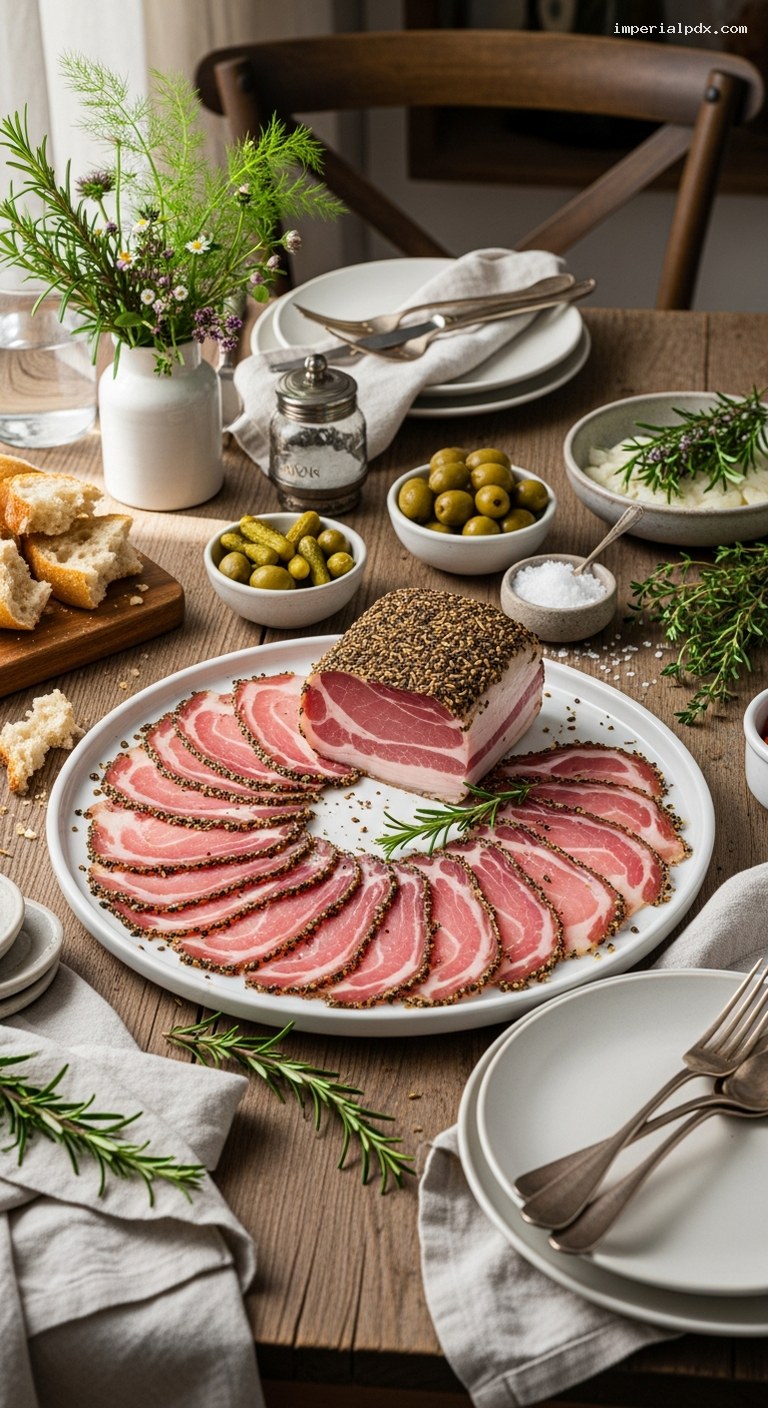
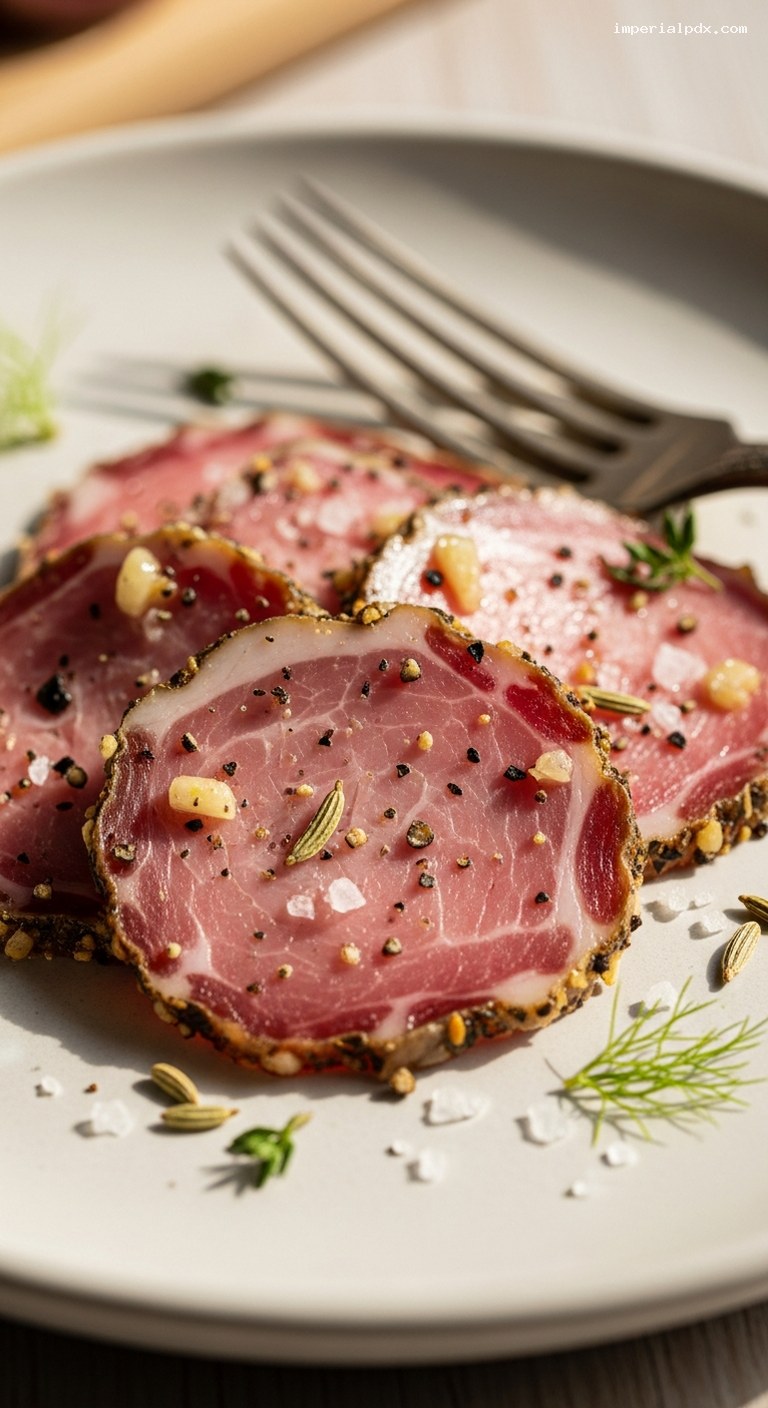
To serve, place the chilled lonzino on a cutting board and use a very sharp knife or meat slicer to cut paper-thin slices across the grain. The interior should be a rosy pink with a slightly darker outer rim and a fragrant edge of fennel and black pepper.
Arrange slices on a platter with crusty bread, olives, pickles, and cheese. Drizzle lightly with extra-virgin olive oil and finish with a few flakes of sea salt if you like. Serve at cool room temperature so the aromas of pork, garlic, fennel, and pepper bloom fully.
Pro Tips
- Use a scale, not measuring spoons. For safety and consistent flavor, weigh both the meat and the cure ingredients in grams. Remember: salt at 3% of meat weight, pink curing salt #2 at 0.25% of meat weight.
- Keep everything meticulously clean. Sanitize your knives, cutting boards, and hands before starting. Use clean hooks, twine, and containers to minimize unwanted bacteria.
- Control temperature and humidity. A curing chamber in the 12–15°C (54–59°F) and 70–80% humidity range is ideal. Too warm, too cold, or too dry environments can lead to unsafe or poor-quality results.
- Track weight in a notebook. Write down the starting weight, weekly weights, and your target weight. This keeps you focused on objective measurements instead of guessing doneness.
- When in doubt, throw it out. If the lonzino develops strange odors, slimy patches, or brightly colored molds, do not risk it. Food safety comes first, especially with dry-cured products.
Variations
- Spicy Calabrian-Style: Increase crushed red pepper flakes to 2 tsp and add 2 tsp smoked paprika to the cure mix. The finished lonzino will have a gentle heat and a subtle smoky aroma.
- Herby Rosemary and Garlic: Add 2 tsp finely chopped fresh rosemary (patted very dry) and 1 tsp dried thyme to the cure; omit the citrus zest. The flavor leans earthier and more herbal.
- Citrus and Juniper: Add 1 tsp lightly crushed juniper berries and double the lemon or orange zest. This version is particularly aromatic and pairs wonderfully with gin or dry white wine.
Storage & Make-Ahead
Lonzino is, by nature, a make-ahead project. The curing and drying process takes about 40 days, so plan at least 6 weeks before you want to serve it. Once it has finished drying:
Store the whole piece tightly wrapped in parchment or butcher paper, then place it in a partially closed plastic bag or container in the refrigerator. This helps prevent it from drying out too quickly while still letting it breathe a bit. Properly stored, a whole piece can keep for several weeks to a couple of months, with flavor slowly concentrating over time.
For sliced lonzino, wrap the slices tightly in parchment and then plastic wrap or place in an airtight container and refrigerate. For best texture and flavor, enjoy within 5–7 days. Always let slices sit at room temperature for about 10–15 minutes before serving so the fat and aromas soften and bloom. As with any cured meat, people who are pregnant, elderly, or immunocompromised should consult medical advice before consuming.
Nutrition (per serving)
Approximate values for a 30 g (about 6–8 thin slices) serving of lonzino:
Calories: ~90 kcal; Protein: ~9 g; Fat: ~6 g; Saturated fat: ~2 g; Carbohydrates: ~0 g; Sugars: ~0 g; Sodium: ~480 mg. These numbers are estimates and will vary with exact drying level, trim, and salt used.