Quick Recipe Version (TL;DR)
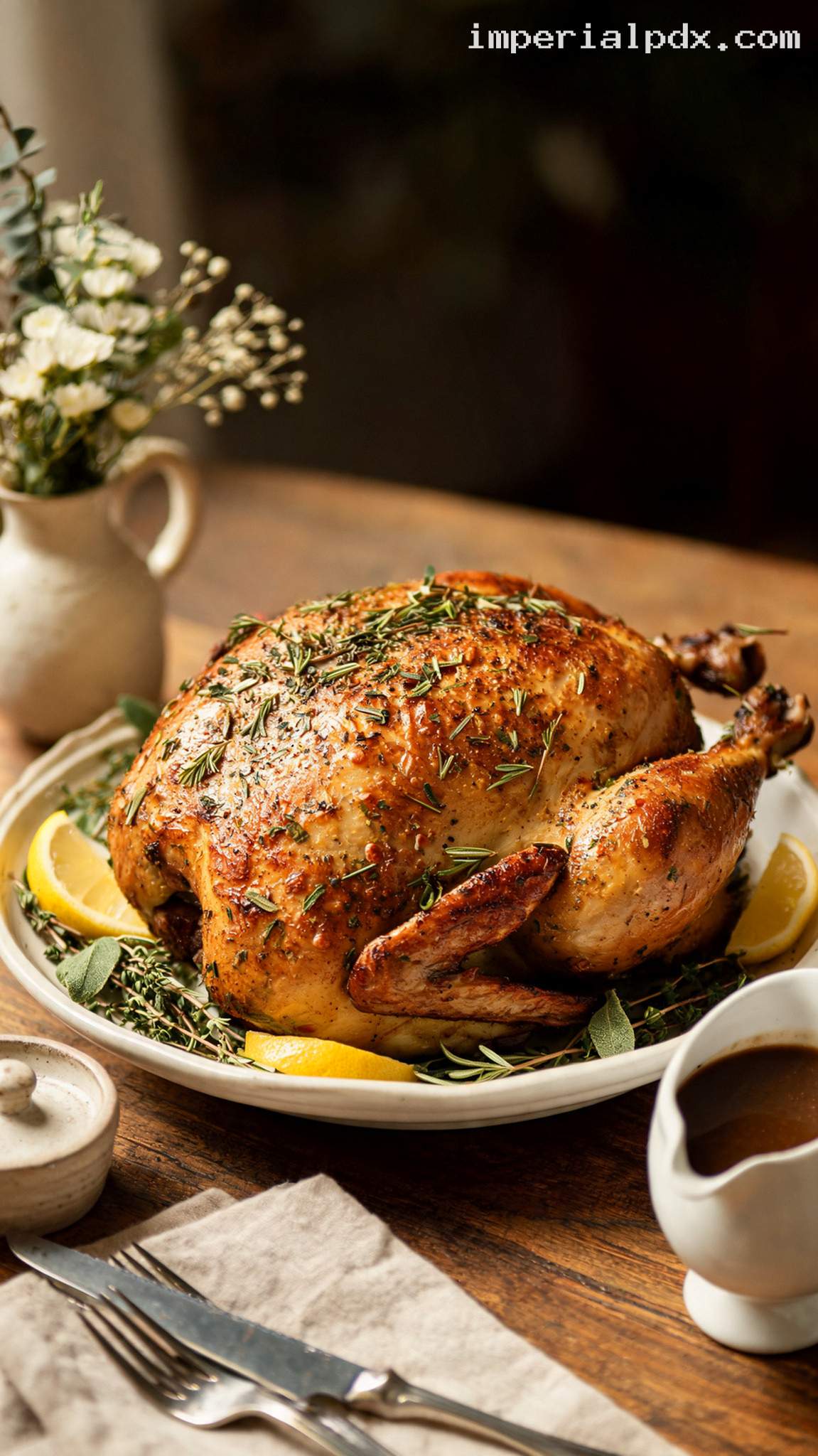
Herb-Butter Roast Turkey with Garlic and Lemon
A golden Christmas centerpiece with crisp, buttery skin, juicy meat, fragrant fresh herbs, and a rich gravy made from the roasting-pan drippings.
Quick Ingredients
- 1 whole 12-pound (5.4 kg) turkey, fully thawed, preferably unbrined
- 3/4 cup (170 g) unsalted butter, softened
- 2 tablespoons finely chopped fresh rosemary, plus 2 sprigs
- 2 tablespoons fresh thyme leaves, plus 4 sprigs
- 1 tablespoon finely chopped fresh sage, plus 2 whole leaves
- 10 garlic cloves: 4 finely minced and 6 lightly smashed
- 2 medium lemons: finely grate 2 tablespoons zest, then quarter 1 lemon and cut the other into serving wedges
- 1 tablespoon (18 g) fine sea salt and 2 teaspoons freshly ground black pepper
- 2 medium yellow onions, quartered; 2 medium carrots, cut into 2-inch pieces; 2 celery stalks, cut into 2-inch pieces
- 4 cups (960 ml) low-sodium chicken or turkey stock, divided, plus water as needed
- 1/2 cup (60 g) all-purpose flour
- 4 tablespoons (60 ml) reserved turkey fat, supplemented with unsalted butter if needed
- For the gravy: up to 1/4 teaspoon fine sea salt and 1/4 teaspoon black pepper
Do This
- 1. Heat a conventional oven to 425°F (220°C). Remove the turkey’s giblets and neck, then pat the turkey thoroughly dry. Do not rinse it.
- 2. Mix the softened butter with the chopped herbs, minced garlic, lemon zest, 2 teaspoons salt, and 2 teaspoons pepper. Spread two-thirds beneath the breast skin and the remainder over the outside.
- 3. Season the cavity with the remaining 1 teaspoon salt. Loosely add the quartered lemon, smashed garlic, and whole herbs. Set the turkey breast-side up on a rack over the vegetables and 2 cups stock.
- 4. Roast for 30 minutes, then reduce the oven to 325°F (165°C). Roast approximately 2 hours 45 minutes more, checking early. The breast, innermost thigh, and innermost wing must each reach at least 165°F (74°C).
- 5. Rest the turkey for 45 minutes. Strain and separate the pan drippings, reserving 4 tablespoons fat. Add the remaining stock and enough water to the defatted juices to make 4 cups liquid.
- 6. Cook the reserved fat and flour for 2 minutes. Gradually whisk in the measured liquid, bring to a boil, and simmer for 8–10 minutes. Season, carve the turkey, and serve with gravy and lemon wedges.
Why You’ll Love This Recipe
- Classic Christmas flavor: Rosemary, thyme, sage, garlic, and lemon make every slice wonderfully fragrant.
- Golden skin and juicy meat: Herb butter beneath the skin seasons the breast directly, while a hot start encourages beautiful browning.
- Gravy without guesswork: Measured drippings, stock, fat, and flour create a smooth, savory gravy.
- A manageable holiday centerpiece: No wet brine, frequent basting, or complicated equipment required.
Grocery List
- Poultry: One 12-pound whole turkey, preferably unbrined and not injected with a salt solution.
- Produce: 2 medium lemons, 1 large head garlic yielding 10 cloves, 2 medium yellow onions, 2 medium carrots, 2 celery stalks, and fresh rosemary, thyme, and sage.
- Dairy: 3/4 cup unsalted butter, plus up to 4 tablespoons extra if the pan does not provide enough fat for the gravy.
- Pantry: 4 cups low-sodium chicken or turkey stock, all-purpose flour, fine sea salt, and freshly ground black pepper.
Full Ingredients
For the Turkey
- 1 whole 12-pound (5.4 kg) turkey, fully thawed, preferably unbrined
- 1 teaspoon (6 g) fine sea salt, for the cavity
- 1 medium lemon, zested for the butter below, then quartered
- 6 garlic cloves, peeled and lightly smashed
- 2 fresh rosemary sprigs
- 4 fresh thyme sprigs
- 2 fresh sage leaves
For the Garlic-Lemon Herb Butter
- 3/4 cup (170 g) unsalted butter, softened but not melted
- 2 tablespoons finely chopped fresh rosemary leaves
- 2 tablespoons fresh thyme leaves
- 1 tablespoon finely chopped fresh sage leaves
- 4 garlic cloves, finely minced
- 2 tablespoons finely grated lemon zest, from the 2 lemons used in this recipe
- 2 teaspoons (12 g) fine sea salt
- 2 teaspoons freshly ground black pepper
For the Roasting Pan
- 2 medium yellow onions, peeled and quartered
- 2 medium carrots, approximately 150 g total, cut into 2-inch pieces
- 2 celery stalks, approximately 100 g total, cut into 2-inch pieces
- 2 cups (480 ml) low-sodium chicken or turkey stock
- Water, added in 1/2-cup (120 ml) increments only if the pan begins to dry out
For the Pan Gravy
- 4 tablespoons (60 ml) fat reserved from the roasting pan; supplement with unsalted butter if needed
- 1/2 cup (60 g) all-purpose flour
- Defatted turkey pan juices
- 2 cups (480 ml) low-sodium chicken or turkey stock
- Enough water to bring the combined defatted pan juices and gravy stock to 4 cups (960 ml)
- Up to 1/4 teaspoon fine sea salt, as needed
- 1/4 teaspoon freshly ground black pepper
For Serving
- 1 medium lemon, zested for the butter above, then cut into wedges
- Optional: 2 rosemary sprigs, 4 thyme sprigs, and 4 sage leaves for the platter
Step-by-Step Instructions
Step 1: Thaw, dry, and prepare the turkey
If your turkey is frozen, allow approximately 3 days to thaw on a rimmed tray in a refrigerator kept at 40°F (4°C) or below. Check that the cavity is free of ice before cooking. A refrigerator-thawed turkey can remain refrigerated for another 1–2 days before roasting.
Remove the giblets and neck from both cavities, and remove any plastic packaging or leg holder that is not oven-safe. Reserve the neck and giblets for another use, if desired. Do not rinse the raw turkey: splashing can spread bacteria around your kitchen. Pat the skin and cavity thoroughly dry with paper towels.
For especially crisp skin, place the dried turkey on a rack over a rimmed tray and refrigerate uncovered for 12–24 hours before continuing. This optional drying time is not included in the total recipe time.
Step 2: Heat the oven and prepare the roasting pan
Position an oven rack in the lower third of the oven, leaving enough room above the turkey for air to circulate. Heat a conventional oven to 425°F (220°C).
Scatter the onions, carrots, and celery in a sturdy roasting pan. Pour in 2 cups (480 ml) stock and set a roasting rack over the vegetables. Have kitchen twine, foil, and an instant-read thermometer ready.
Step 3: Mix the fragrant herb butter
Finely grate 2 tablespoons zest from the 2 lemons, avoiding the bitter white pith. Quarter one lemon for the cavity and cut the other into wedges for serving.
In a bowl, combine the softened butter, chopped rosemary, thyme leaves, chopped sage, minced garlic, lemon zest, 2 teaspoons salt, and 2 teaspoons black pepper. Stir until evenly combined. The butter should be soft enough to spread, but not liquid.
Step 4: Butter and season the turkey
Starting at the neck end, gently slide your fingers between the breast meat and skin, taking care not to tear the skin. Spread approximately two-thirds of the herb butter directly over both breasts beneath the skin. Rub the remaining butter over the outside of the breast, legs, and thighs.
Sprinkle the remaining 1 teaspoon salt inside the main cavity. Loosely add the quartered lemon, 6 smashed garlic cloves, 2 rosemary sprigs, 4 thyme sprigs, and 2 sage leaves. Do not pack them tightly; hot air needs room to circulate.
Tuck the wing tips beneath the shoulders and loosely tie the legs together with kitchen twine. Place the turkey breast-side up on the roasting rack. Wash your hands and clean any surfaces or utensils that touched raw poultry.
Step 5: Roast until golden and safely cooked
Roast at 425°F (220°C) for 30 minutes. Without removing the turkey, reduce the oven temperature to 325°F (165°C) and continue roasting for approximately 2 hours 45 minutes. The estimated total roasting time is 3 hours 15 minutes, but your thermometer—not the clock—determines when it is ready.
Begin checking the temperature after 2 hours 30 minutes of total roasting time. Insert the thermometer into the thickest part of the breast, the innermost thigh, and the innermost wing, without touching bone. All three locations must reach at least 165°F (74°C) before the turkey leaves the oven. Check both sides if the bird appears to be cooking unevenly.
If the breast becomes deeply golden before the turkey is cooked, loosely cover just the breast with foil. If the pan begins to dry out or the vegetables start scorching, carefully add 1/2 cup (120 ml) water at a time. There is no need to baste; keeping the oven closed helps maintain steady heat and crisp skin.
Step 6: Rest the turkey and collect the drippings
Transfer the turkey to a large carving board or serving platter, keeping any juices that collect beneath it. Rest for 45 minutes before carving. Leave it uncovered for the crispest skin, or cover very loosely with foil in a cool kitchen.
Remove the roasting rack. Pour the pan contents through a fine-mesh strainer into a heatproof jug or fat separator, pressing the vegetables lightly to release their juices, then discard the vegetables. If flavorful browned bits remain in the pan, loosen them with 1/2 cup (120 ml) of the stock reserved for the gravy and a wooden spoon, then strain this liquid into the jug. Do not scrape in any blackened, bitter bits.
Allow the fat to rise and separate it from the juices. Reserve 4 tablespoons (60 ml) fat for the gravy, adding unsalted butter if necessary. Combine the defatted juices with the remaining gravy stock, then add enough water to make exactly 4 cups (960 ml) liquid. The 1/2 cup stock used for loosening the browned bits counts toward the 2 cups reserved for gravy.
Step 7: Make the rich pan gravy
Heat the reserved 4 tablespoons fat in a medium saucepan over medium heat. Whisk in the flour and cook for 2 minutes, whisking constantly, until the mixture is smooth and lightly golden.
Gradually whisk in the measured 4 cups liquid, starting with a small splash to form a smooth paste before adding the rest. Bring to a gentle boil, then reduce the heat and simmer for 8–10 minutes, whisking frequently, until the gravy coats the back of a spoon.
Stir in 1/4 teaspoon black pepper. Taste before adding any salt, since the drippings are already seasoned; add up to 1/4 teaspoon salt if needed. If the gravy becomes thicker than you like, whisk in hot water, 1 tablespoon (15 ml) at a time. Add any resting juices from the turkey, then return the gravy to a simmer for 1 minute.
Step 8: Carve and serve
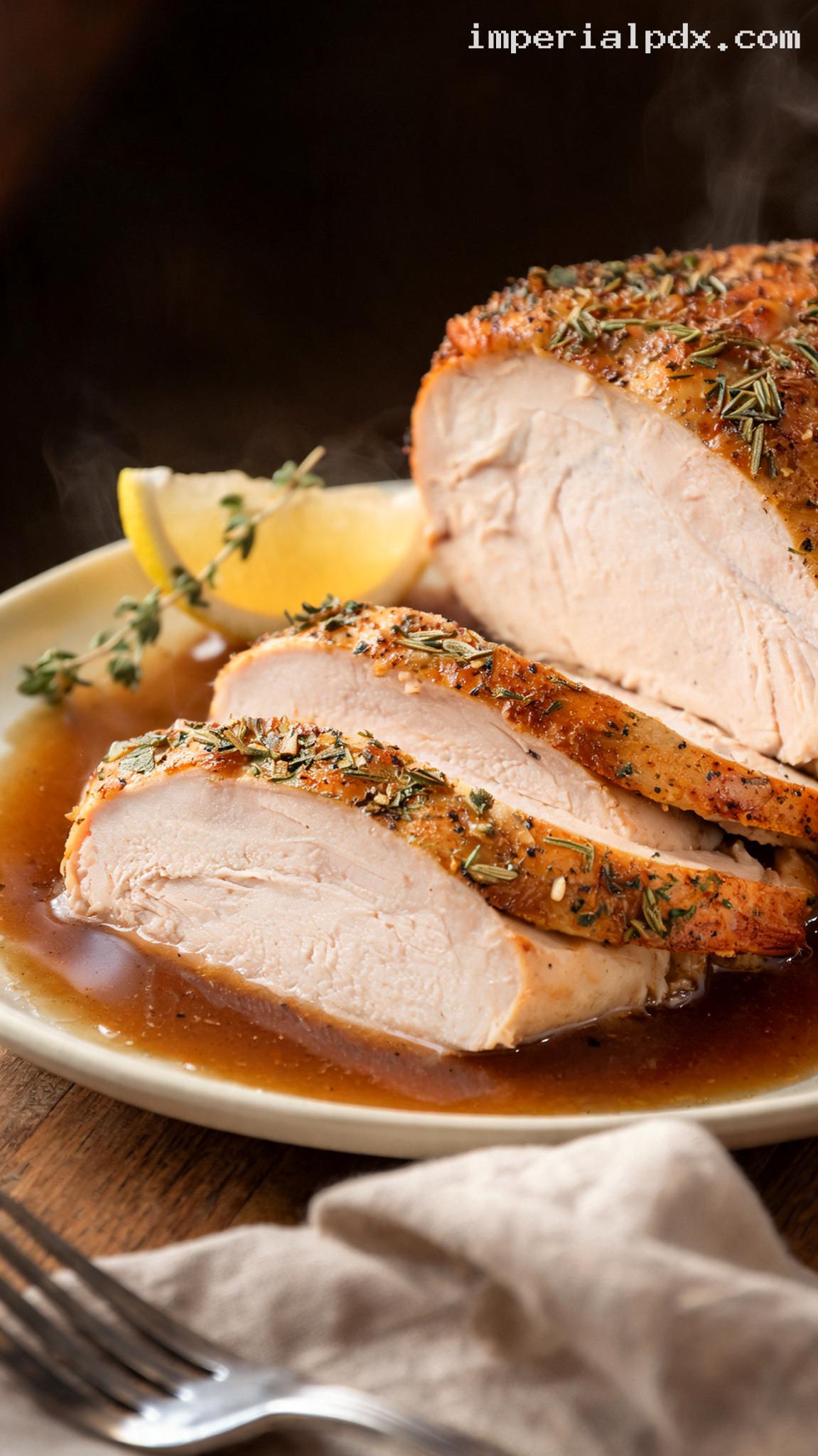
Remove the kitchen twine and discard the cooked cavity aromatics. Separate the legs and thighs, then remove each breast from the breastbone in one piece. Slice the breast meat across the grain into approximately 1/2-inch-thick slices.
Arrange the carved meat on a warm platter, keeping the crisp skin facing upward. Add the fresh lemon wedges and optional rosemary, thyme, and sage. Serve immediately with the hot gravy alongside so everyone can add as much as they like without softening all that lovely skin.
Pro Tips
- Check the turkey label: This seasoning is designed for an unbrined bird. If yours is kosher, pre-brined, or injected with a salt solution, omit the cavity salt and reduce the salt in the butter to 1 teaspoon; taste the gravy before adding more.
- Dry skin makes a difference: Pat the turkey very thoroughly dry. Optional overnight refrigerator drying improves browning even further.
- Keep the butter soft, not melted: Softened butter stays where you spread it; melted butter tends to run straight into the pan.
- Use a thermometer in several places: Turkey shape, starting temperature, and oven accuracy all affect roasting time. A pop-up timer is not a substitute for checking the meat.
- Cook stuffing separately: This recipe’s timing is for an unstuffed turkey with a few loose aromatics. Bake bread stuffing in its own dish for more predictable cooking and a crisp top.
Variations
- Orange and sage: Replace the 2 lemons with 2 medium oranges, using 2 tablespoons orange zest in the butter, 1 quartered orange in the cavity, and wedges from the other for serving. Increase the chopped sage to 2 tablespoons.
- White wine gravy: Replace 1/2 cup (120 ml) of the gravy stock with dry white wine. Use the wine to loosen the browned bits and simmer it in the roasting pan for 3 minutes before straining and measuring the gravy liquid.
- Gluten-free gravy: Omit the flour and the 4 tablespoons gravy fat. Bring the 4 cups measured gravy liquid to a simmer. Whisk together 1/4 cup (32 g) cornstarch and 1/4 cup (60 ml) cold water, whisk into the simmering liquid, and cook for 2–3 minutes until thickened.
Storage & Make-Ahead
Make ahead: Prepare the herb butter up to 2 days ahead, cover, and refrigerate. Let it soften for 30–45 minutes before spreading. Chop the roasting vegetables up to 1 day ahead and refrigerate separately. You can butter and prepare the thawed turkey up to 12 hours before roasting; refrigerate it on its rack and keep the total refrigerated time after thawing within 1–2 days.
Refrigerate: Within 2 hours of cooking, remove leftover meat from the bones and refrigerate in shallow, covered containers. Store the meat and gravy separately at 40°F (4°C) or below for 3–4 days. Freeze for up to 3 months for best quality.
Reheat: Place sliced turkey in a baking dish with 1/4 cup (60 ml) stock per pound (450 g) of meat. Cover and heat at 325°F (165°C), beginning to check after 20 minutes, until the meat reaches 165°F (74°C); allow approximately 20–30 minutes for a shallow layer. Bring gravy to a rolling boil on the stovetop, stirring and adding a little water if needed.
Nutrition (per serving)
Estimated for one-twelfth of the turkey and gravy; actual values vary with the amount of skin, butter, and gravy served.
Calories: 600 kcal | Carbs: 9g | Protein: 65g | Fat: 34g | Saturated Fat: 12g | Fiber: 1g | Sugar: 3g | Sodium: 850mg | Cholesterol: 245mg