Quick Recipe Version (TL;DR)
Quick Ingredients
- Butter + sugar for coating 4 x 8 oz (240 ml) ramekins
- 4 tbsp (56 g) unsalted butter
- 1/4 cup (30 g) all-purpose flour
- 1 cup (240 ml) whole milk, warmed
- 2/3 cup (140 g) granulated sugar, divided
- Pinch fine salt
- Zest of 1 large orange
- 4 large egg yolks
- 5 large egg whites, room temperature
- 3 tbsp Grand Marnier (orange liqueur)
- 1 tsp vanilla extract
- 1/2 tsp cream of tartar or 1 tsp lemon juice
- Powdered sugar, for dusting
Do This
- 1. Heat oven to 400°F (200°C). Generously butter 4 ramekins, coat with sugar, and place on a baking sheet.
- 2. Make base: cook butter and flour 1 minute, whisk in warm milk, 1/3 cup (70 g) sugar, salt, and orange zest; simmer until thick.
- 3. Off heat, whisk in yolks, Grand Marnier, and vanilla; cool to lukewarm.
- 4. Beat egg whites with cream of tartar to soft peaks; gradually add remaining 1/3 cup (70 g) sugar and beat to glossy stiff peaks.
- 5. Fold a third of the whites into the base, then gently fold in the rest; fill ramekins to the top and level.
- 6. Run a thumb around the inside rim, then bake 15–18 minutes until puffed and golden, with a slight wobble.
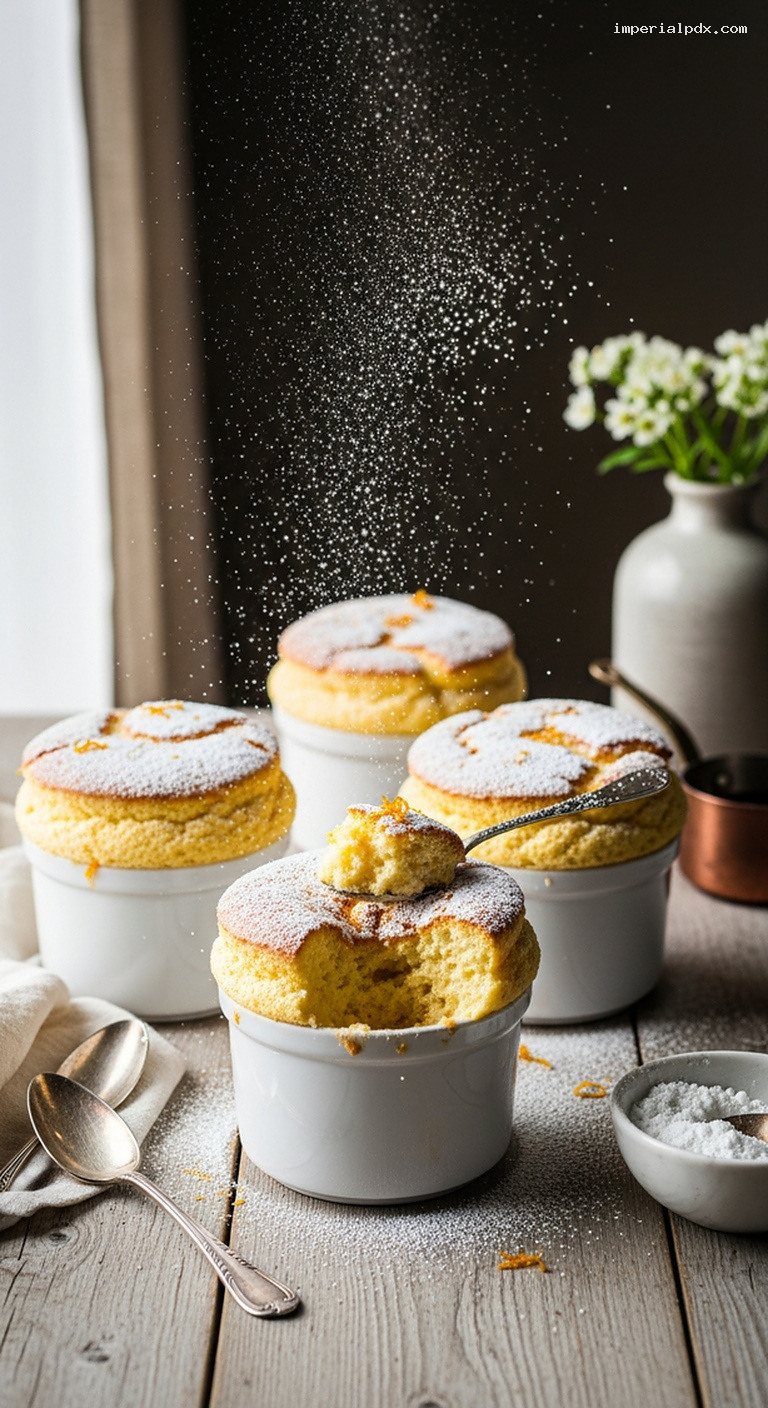
- 7. Dust generously with powdered sugar and serve immediately.
Why You’ll Love This Recipe
- Airy, cloud-like texture with a deep citrus aroma and gentle warmth from Grand Marnier.
- Impressive, tall-rising dessert that feels restaurant-fancy yet is very doable at home.
- Uses simple, familiar ingredients you probably already have, plus one special bottle.
- Ready in under an hour, but feels like a celebration every time it comes to the table.
Grocery List
- Produce: 1 large orange (for zest)
- Dairy: Whole milk, unsalted butter, eggs
- Pantry: Granulated sugar, powdered sugar, all-purpose flour, fine salt, cream of tartar or lemon juice, vanilla extract, Grand Marnier (orange liqueur)
Full Ingredients
For Preparing the Ramekins
- 1 tbsp unsalted butter, softened
- 2 tbsp granulated sugar (for coating the ramekins)
For the Grand Marnier Soufflé Base
- 4 tbsp (56 g) unsalted butter
- 1/4 cup (30 g) all-purpose flour
- 1 cup (240 ml) whole milk, just warm (not boiling)
- 1/3 cup (70 g) granulated sugar
- Pinch fine salt
- Zest of 1 large orange (about 1 tbsp, finely grated)
- 4 large egg yolks (reserve whites for meringue)
- 3 tbsp Grand Marnier (orange liqueur)
- 1 tsp pure vanilla extract
For the Meringue
- 5 large egg whites, room temperature (4 from the separated eggs + 1 extra white)
- 1/2 tsp cream of tartar or 1 tsp fresh lemon juice
- 1/3 cup (70 g) granulated sugar
For Serving
- Powdered sugar (icing sugar), for generous dusting
- Optional: extra orange zest or very thin orange strips, for garnish
Step-by-Step Instructions
Step 1: Prepare the oven and ramekins
Place a rack in the center of your oven and preheat to 400°F (200°C). Soufflés need strong, even heat, so give the oven a good 15–20 minutes to get fully hot.
Generously butter the inside of four 8-ounce (240 ml) ramekins. Be sure to brush the butter all the way up to the very rim and slightly above it, using upward strokes. This helps the soufflé climb straight up as it bakes.
Add a spoonful of granulated sugar to each ramekin and rotate to coat the bottom and sides evenly. Tap out any excess sugar. Set the prepared ramekins on a rimmed baking sheet; the sheet makes it easier to move them quickly in and out of the oven.
Step 2: Make the orange-scented soufflé base
In a medium saucepan, melt 4 tbsp (56 g) butter over medium heat. Stir in the 1/4 cup (30 g) flour and cook, whisking constantly, for about 1 minute. The mixture will look like a thick paste (a roux), but it should not brown.
Gradually pour in the warm milk, whisking all the time to avoid lumps. Add 1/3 cup (70 g) sugar, a pinch of salt, and the orange zest. Continue to cook, whisking, until the mixture thickens to the consistency of a loose pudding and starts to bubble, 2–3 minutes.
Remove the pan from the heat. Let it cool for 2–3 minutes, then whisk in the egg yolks, one at a time, followed by the Grand Marnier and vanilla. The mixture should be smooth and glossy. Transfer to a large mixing bowl and let it cool to just lukewarm while you prepare the meringue. If a skin starts to form, lay a piece of plastic wrap directly on the surface.
Step 3: Beat the egg whites to glossy peaks
Place the 5 egg whites in a clean, grease-free bowl (metal or glass is best). Add the cream of tartar or lemon juice. Using a stand mixer with whisk attachment or a hand mixer, beat on medium speed until the whites look foamy and opaque.
Increase speed to medium-high and very gradually sprinkle in the remaining 1/3 cup (70 g) sugar. Continue beating until the meringue forms glossy, stiff peaks: when you lift the beaters, the peaks should stand up straight with just a slight curl at the tip, and the meringue should look smooth and shiny, not dry.
Take care not to overbeat; dry, clumpy meringue is harder to fold and will not rise as well.
Step 4: Lighten and fold the soufflé mixture
Whisk the lukewarm base briefly to loosen it. Start by adding about one-third of the meringue to the base and whisk or stir it in fairly briskly. This lightens the mixture so the remaining whites can be folded more gently.
Now switch to a large spatula. Add the remaining meringue in two additions, folding gently: cut down through the center of the bowl, sweep along the bottom, and lift up, turning the bowl as you go. The goal is to combine without deflating the air you just whipped in. A few small streaks of white are better than overmixing.
As soon as the mixture is mostly uniform and airy, stop folding. The batter should look light and billowy.
Step 5: Fill the ramekins and prepare for baking
Divide the soufflé mixture evenly among the prepared ramekins. They should be filled all the way to the top, or very close. Use a small offset spatula or the back of a spoon to level the tops.
For a classic “top hat” look and to help them rise straight, run your thumb or a clean fingertip around the inside edge of each ramekin, wiping a shallow channel (about 1/4 inch / 5 mm) all the way around the rim. This little groove lets the soufflé rise neatly without catching on the edge.
Give the baking sheet a gentle tap on the counter to release any large air pockets, then place it near the oven so you can move quickly.
Step 6: Bake and serve immediately
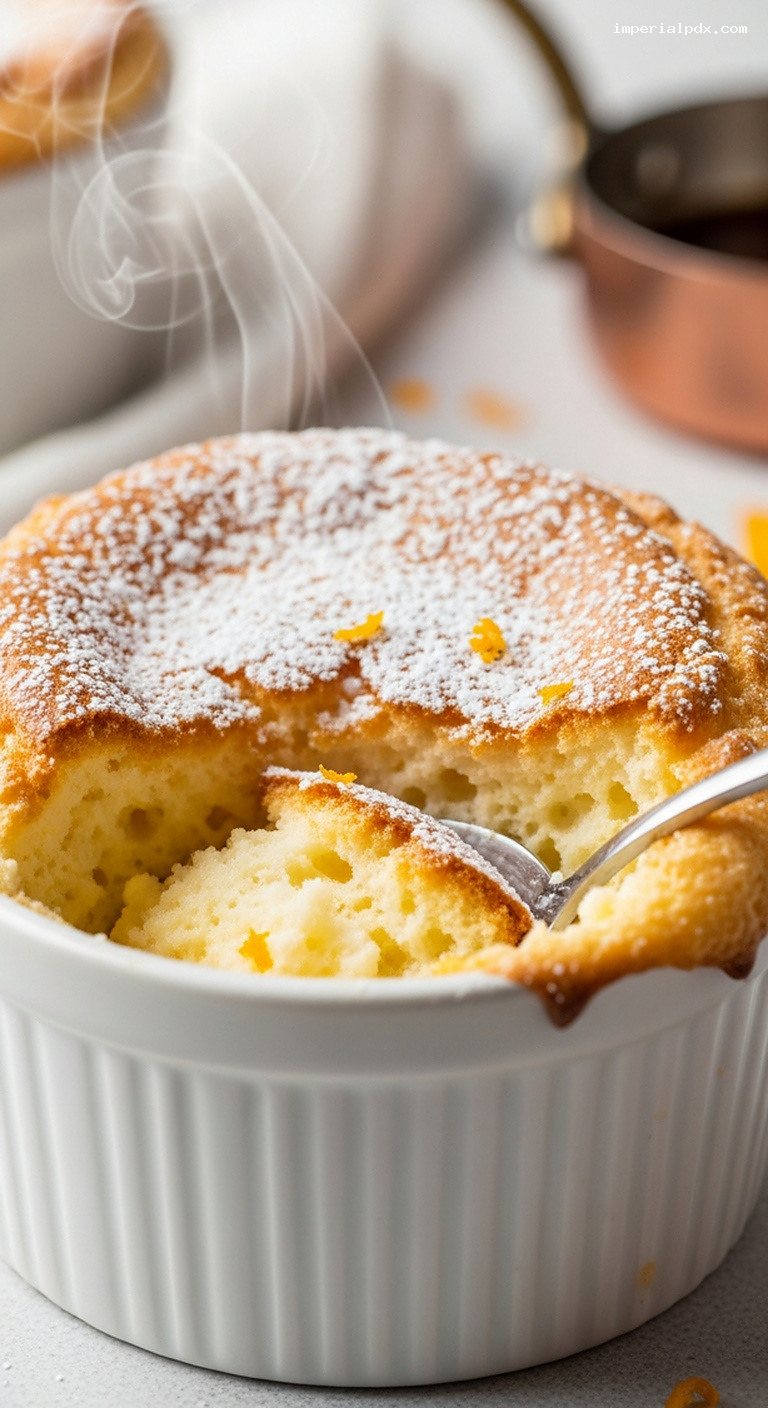
Slide the baking sheet with ramekins into the preheated oven and close the door gently. Bake at 400°F (200°C) for 15–18 minutes, without opening the oven during the first 12 minutes. The soufflés are done when they are tall, golden on top, and just slightly wobbly in the center when you gently nudge the baking sheet.
Remove from the oven and, working quickly, dust the tops generously with powdered sugar. If you like, add a whisper of extra orange zest on top.
Serve immediately, within 2–3 minutes of coming out of the oven, while the soufflés are at their tallest and airiest. Invite everyone to the table before they come out of the oven so nobody misses the moment.
Pro Tips
- Room-temperature eggs rise better. Separate eggs while cold, then let whites sit at room temperature about 20–30 minutes before whipping.
- Clean bowl and whisk are essential. Any trace of grease can prevent whites from whipping properly. Wipe the bowl and whisk with a little vinegar or lemon juice, then dry before using.
- Do not overmix when folding. Stop folding as soon as the batter looks mostly uniform. Overmixing knocks out the air that makes the soufflé rise.
- Preheat thoroughly. A fully heated oven gives the initial blast of heat the soufflé needs. Avoid opening the door until the last few minutes.
- Serve straight away. All soufflés start to deflate after a few minutes. Have plates ready and guests seated before you pull them from the oven.
Variations
- Extra boozy version: After baking, poke a tiny hole in the center of each soufflé with a spoon handle and drizzle in 1–2 tsp of warm Grand Marnier just before serving.
- Vanilla–orange soufflé: Reduce Grand Marnier to 1 tbsp and increase vanilla to 2 tsp for a softer citrus note and stronger vanilla aroma.
- Chocolate Grand Marnier twist: Whisk 2 oz (55 g) melted dark chocolate into the warm base before adding the yolks for a rich chocolate-orange soufflé.
Storage & Make-Ahead
Soufflé au Grand Marnier is at its best the moment it leaves the oven, so it is not ideal for traditional leftovers. However, you can make parts ahead:
Up to 1 day ahead: Prepare the orange soufflé base through the step of adding yolks, Grand Marnier, and vanilla. Press plastic wrap directly on the surface, cool, then refrigerate. Before baking, bring to room temperature and whisk to loosen.
Up to 1 hour ahead: Butter and sugar the ramekins and keep them covered at room temperature. You can also warm the milk and have all ingredients measured out.
Once baked, leftovers can be covered and refrigerated, but the texture will be more like a soft, airy pudding than a tall soufflé. Enjoy cooled leftovers within 1–2 days; they are nice with extra powdered sugar or a spoonful of whipped cream.
Nutrition (per serving)
Approximate values per individual soufflé (1 of 4): about 330 calories, 10 g protein, 17 g fat, 32 g carbohydrates, 26 g sugar, 0.7 g fiber, 170 mg sodium. These numbers are estimates and will vary based on exact ingredients and portion sizes.