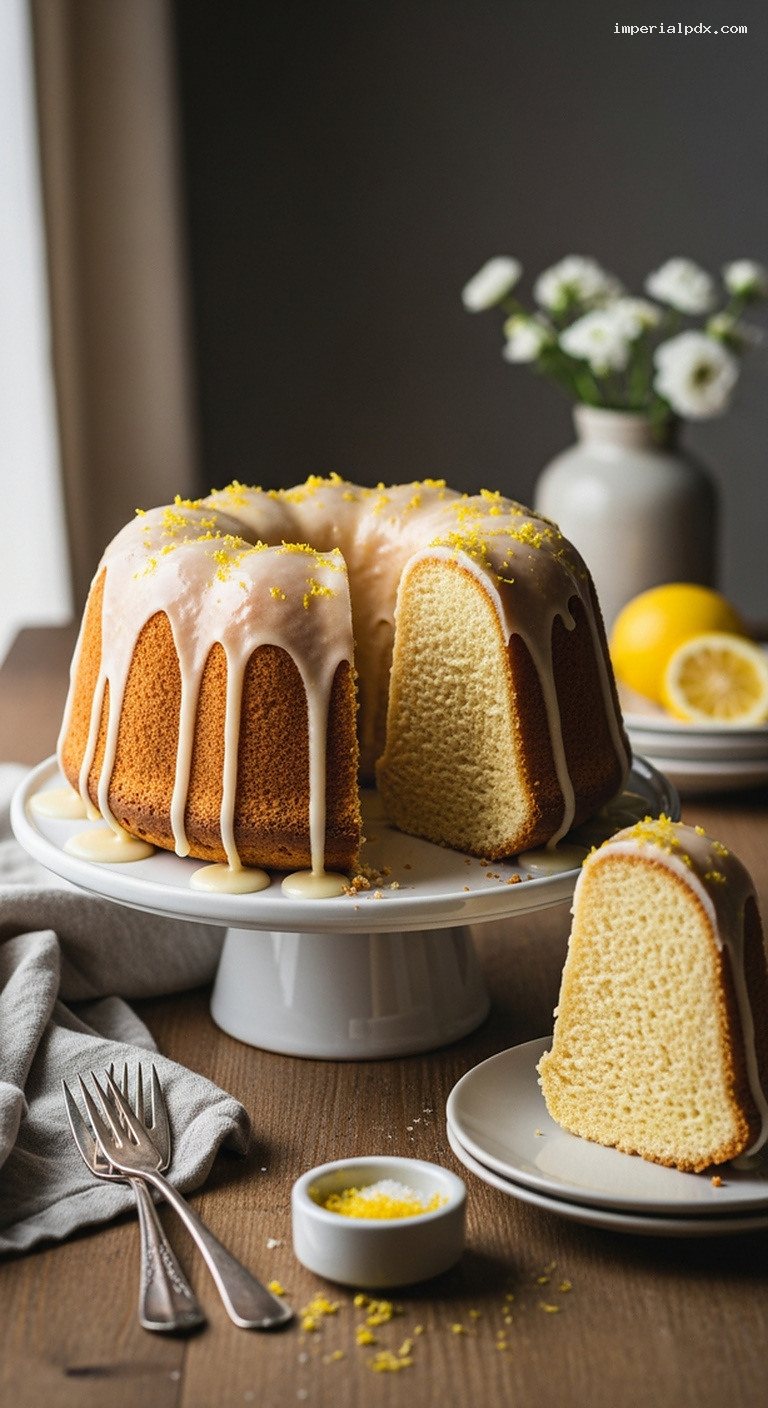
Quick Recipe Version (TL;DR)
Quick Ingredients
- 2 cups (240 g) cake flour
- 1 3/4 cups (350 g) granulated sugar, divided
- 2 1/2 tsp baking powder + 1/2 tsp fine salt
- 8 large eggs, separated, room temperature
- 1/2 cup (115 g) unsalted butter, melted and cooled
- 1/2 cup (120 ml) whole milk, room temperature
- Zest of 2 lemons (or 1 orange) + 2 tsp vanilla extract
- 1 1/2 cups (180 g) powdered sugar
- 2–3 tbsp fresh lemon or orange juice (for glaze)
Do This
- 1. Preheat oven to 325°F (165°C). Have an ungreased 10-inch (25 cm) tube/angel food pan ready.
- 2. Whisk flour, baking powder, and salt. In another bowl, whisk egg yolks with 1 1/4 cups sugar, then mix in milk, melted butter, citrus zest, and vanilla. Add dry ingredients to make a smooth batter.
- 3. In a clean bowl, whip egg whites to soft peaks, slowly adding remaining 1/2 cup sugar until glossy medium-firm peaks form.
- 4. Fold one-third of the meringue into the batter to lighten, then gently fold in the rest until no streaks remain.
- 5. Pour into the tube pan, smooth the top, and bake 55–65 minutes, until golden and a skewer comes out clean.
- 6. Invert the pan immediately and cool 90 minutes. Unmold, then drizzle with powdered sugar–citrus juice glaze and serve.
Why You’ll Love This Recipe
- Feather-light yet rich: the airy structure of chiffon with the flavor of a butter cake.
- Elegant but simple: no mixer tricks beyond whipping egg whites, and mostly pantry ingredients.
- Versatile flavor base: beautiful with lemon, orange, or pure vanilla, plus endless topping options.
- Perfect make-ahead dessert: stays soft and moist for days, ideal for gatherings and celebrations.
Grocery List
- Produce: 2–3 lemons (or 1–2 oranges), optional fresh berries for serving.
- Dairy: 8 large eggs, unsalted butter, whole milk, optional heavy cream (for serving).
- Pantry: Cake flour, granulated sugar, powdered (confectioners’) sugar, baking powder, fine salt, pure vanilla extract.
Full Ingredients
For the Gâteau Mousseline
- 2 cups (240 g) cake flour, spooned and leveled
- 2 1/2 tsp baking powder
- 1/2 tsp fine sea salt
- 1 3/4 cups (350 g) granulated sugar, divided
- 8 large eggs, separated, at room temperature
- 1/2 cup (115 g) unsalted butter, melted and cooled to just warm
- 1/2 cup (120 ml) whole milk, at room temperature
- Zest of 2 lemons or 1 large orange (finely grated, no white pith)
- 2 tsp pure vanilla extract
For the Citrus Glaze
- 1 1/2 cups (180 g) powdered (confectioners’) sugar, sifted
- 2–3 tbsp freshly squeezed lemon or orange juice
- 1–2 tsp whole milk or cream, as needed for consistency (optional)
- Extra finely grated citrus zest, for sprinkling on top (optional)
Optional To Serve
- Lightly sweetened whipped cream
- Fresh berries or thin citrus slices
- A dusting of powdered sugar, in addition to or instead of the glaze
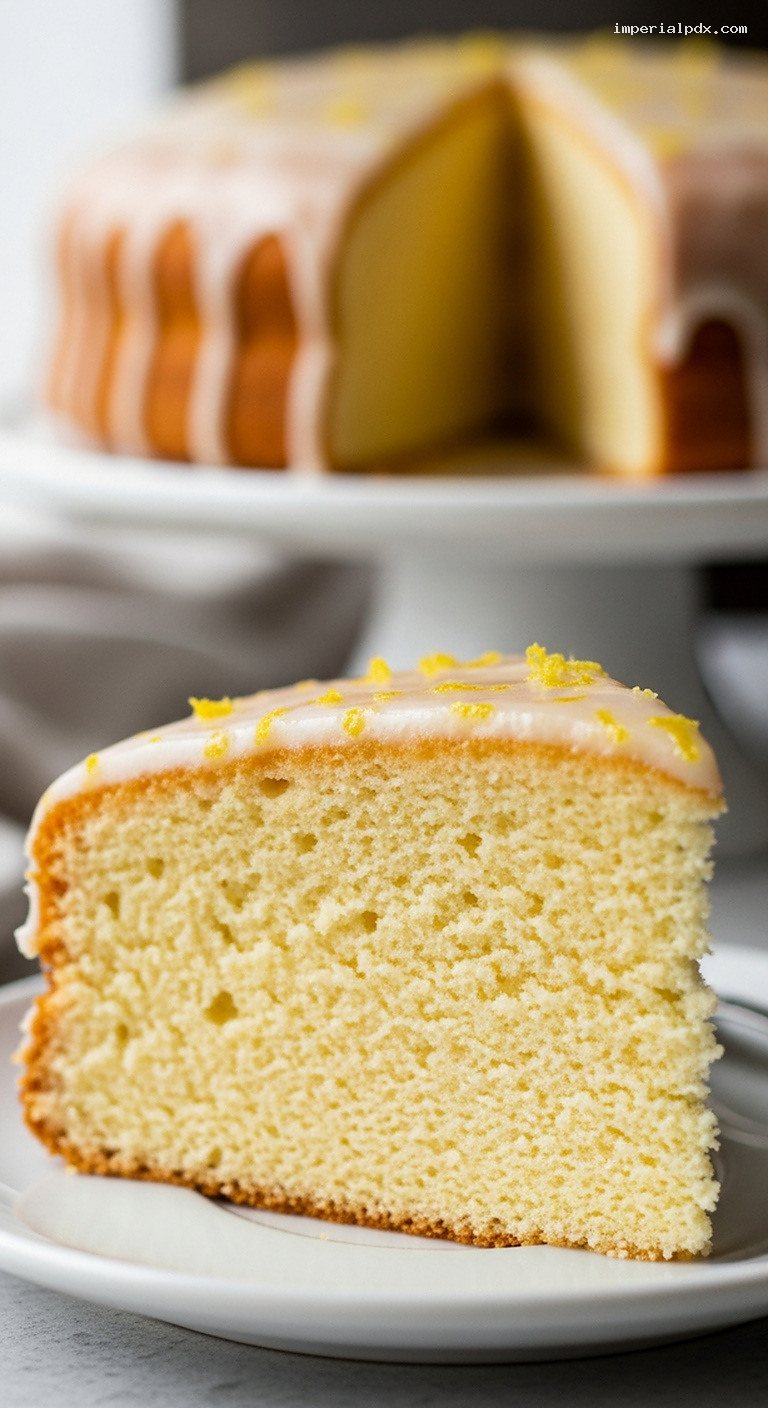
Step-by-Step Instructions
Step 1: Prepare the pan and preheat the oven
Adjust an oven rack to the lower-middle position and preheat the oven to 325°F (165°C).
Use an ungreased 10-inch (25 cm) tube or angel food cake pan with a removable bottom, if possible.
Do not grease or line the pan: the batter needs to cling to the sides as it bakes and rises, which helps create the ultra-tall, airy crumb.
Make sure your eggs, milk, and melted butter are at room temperature. This helps the batter come together smoothly and gives better volume when whipping the egg whites.
Step 2: Mix the dry ingredients
In a medium bowl, whisk together the cake flour, baking powder, and salt until well combined and lump-free.
Set aside. Pre-measuring and combining your dry ingredients helps prevent overmixing later, which can toughen this delicate cake.
Step 3: Make the rich yolk batter
In a large mixing bowl, add the 8 egg yolks and 1 1/4 cups (250 g) of the granulated sugar.
Whisk vigorously for 1–2 minutes, until the mixture looks pale and slightly thickened.
Whisk in the melted, cooled butter in a slow stream, followed by the milk, citrus zest, and vanilla extract. The mixture should look smooth and glossy.
Sprinkle the dry ingredients over the yolk mixture. Whisk gently just until you no longer see dry flour.
The batter will be fairly thick and smooth. Do not overmix; once combined, stop whisking to keep the texture tender.
Step 4: Whip the egg whites into a glossy meringue
In a very clean, dry bowl (a stand mixer bowl works well), add the 8 egg whites.
Using a hand mixer or stand mixer fitted with the whisk attachment, beat on medium speed until the whites are foamy and opaque.
Increase the speed to medium-high and, while beating, gradually sprinkle in the remaining 1/2 cup (100 g) granulated sugar.
Continue whisking until the meringue forms medium-firm peaks: when you lift the whisk, the tip of the peak should stand up with just a slight bend at the top, and the meringue should be thick and glossy, not dry.
Step 5: Fold the meringue into the batter
Using a large rubber spatula, stir about one-third of the meringue into the yolk batter, folding fairly briskly.
This “sacrificial” portion loosens the batter and makes it easier to incorporate the rest without deflating.
Add the remaining meringue in two additions, this time folding very gently.
Use broad, sweeping motions: cut down through the center of the bowl, scrape along the bottom, and lift up and over, rotating the bowl as you go.
Fold just until no obvious streaks of white remain. A few tiny streaks are better than overmixing and losing volume.
Step 6: Bake, invert, and cool the gâteau mousseline
Immediately pour the batter into the ungreased tube pan. Run a thin knife or skewer through the batter in a gentle swirl to pop any large air bubbles, then smooth the top.
Bake at 325°F (165°C) for 55–65 minutes. The cake is done when the top is deep golden, springs back when lightly pressed, and a skewer inserted into the center comes out clean or with just a few moist crumbs.
Remove the pan from the oven and immediately invert it onto its legs (if your pan has them) or over the neck of a sturdy bottle.
Let the cake cool completely upside down, about 90 minutes. This prevents the delicate crumb from collapsing as it cools.
Step 7: Unmold, glaze, and serve
Once the cake is fully cool, run a thin, sharp knife around the outer edge of the pan and around the center tube to loosen the cake.
If your pan has a removable bottom, push it up and out, then run the knife between the cake and the base to free it.
Invert the cake onto a serving plate.
For the glaze, whisk the powdered sugar with 2 tbsp of citrus juice. Add more juice, a few drops at a time, and a spoonful of milk or cream if using, until the glaze is thick but pourable and forms a ribbon that disappears back into the bowl after a few seconds.
Drizzle the glaze slowly over the cooled cake, letting it drip down the sides.
Sprinkle with extra zest, if desired. Slice with a long, sharp serrated knife using a gentle sawing motion to keep the crumb airy.
Serve as is, or with whipped cream and fresh berries.
Pro Tips
- Room temperature is key: Cold eggs and milk make it harder to whip and fold the batter properly. Take them out of the fridge 30–45 minutes before starting.
- Use cake flour for the finest crumb: Cake flour’s lower protein keeps this gâteau exceptionally soft and silky. If you must substitute, use 2 cups all-purpose flour minus 4 tbsp, plus 4 tbsp cornstarch, sifted well.
- Perfect meringue texture: Stop beating at medium-firm peaks. Overbeaten, dry meringue will not fold well and can cause the cake to shrink or form tunnels.
- Do not skip inverting: Cooling the cake upside down is crucial for maintaining its lofty, mousseline texture. If your pan has no legs, balance it over a sturdy bottle.
- Let it cool completely before glazing: A warm cake will melt the glaze, making it runny and dull instead of satiny and beautifully draped.
Variations
- Pure Vanilla Mousseline: Omit the citrus zest and increase vanilla to 1 tbsp. Serve with macerated berries and softly whipped cream for a classic, understated dessert.
- Orange–Almond Mousseline: Use orange zest, add 1/2 tsp almond extract to the batter, and sprinkle toasted sliced almonds over the fresh glaze.
- Lemon Poppy Seed Mousseline: Add 2–3 tbsp poppy seeds to the dry ingredients and use lemon zest and juice. The speckled crumb and bright flavor are especially lovely for brunch.
Storage & Make-Ahead
Once completely cool and glazed, store the gâteau mousseline at room temperature, covered with a cake dome or wrapped loosely in foil, for up to 3 days.
The crumb actually stays soft and moist, making it an excellent make-ahead dessert.
For longer storage, wrap the unglazed, fully cooled cake (whole or in slices) tightly in plastic wrap, then in foil, and freeze for up to 2 months.
Thaw overnight in the refrigerator, bring to room temperature, then glaze before serving.
Leftover slices can also be frozen individually and thawed at room temperature for a quick, elegant treat.
Nutrition (per serving)
Approximate values per slice (1 of 12): about 390 calories, 6 g protein, 55 g carbohydrates, 16 g fat, 9 g saturated fat, 185 mg cholesterol, 230 mg sodium, and 0.5 g fiber.
Values will vary slightly based on exact ingredients and thickness of glaze.