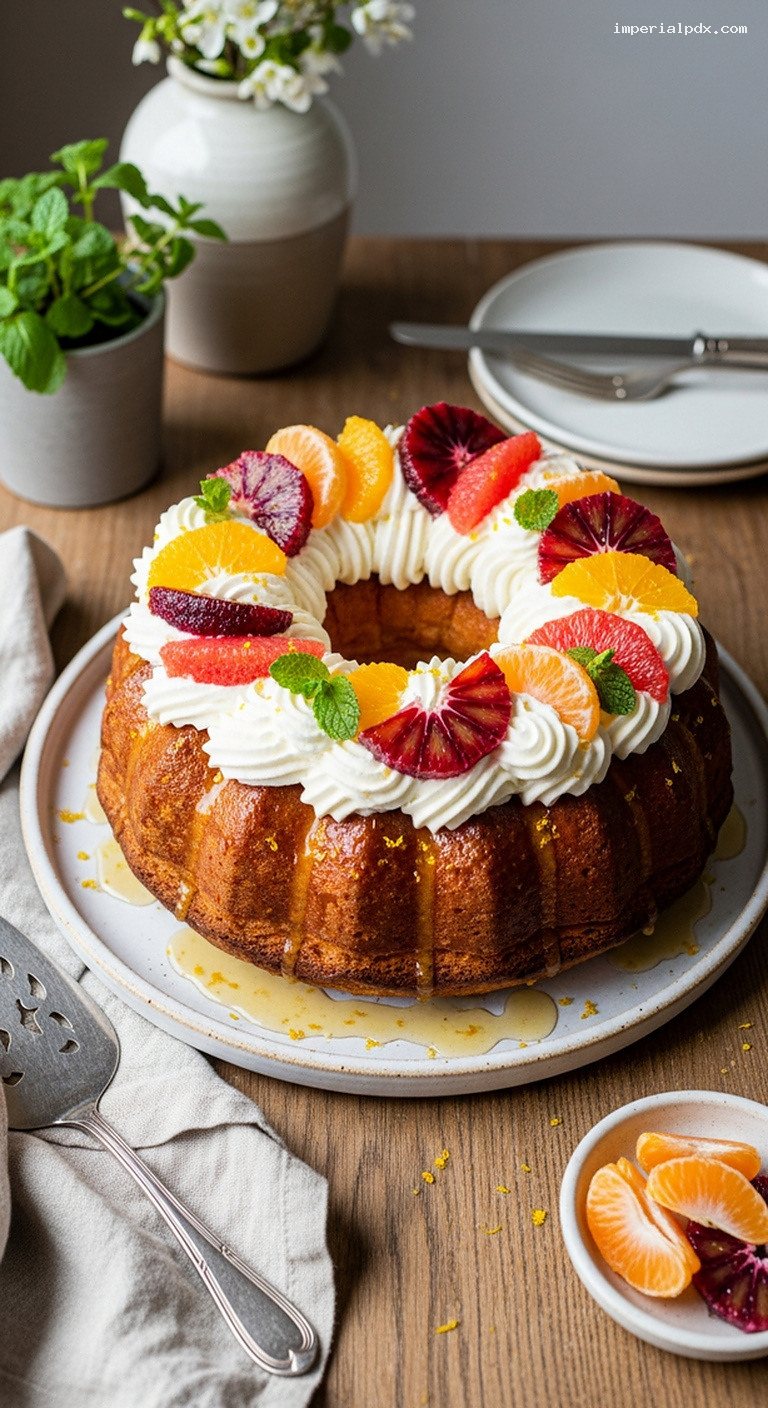
Quick Recipe Version (TL;DR)
Quick Ingredients
- 240 g (2 cups) all-purpose or bread flour
- 7 g (2 1/4 tsp) active dry yeast
- 75 g (6 tbsp) granulated sugar, divided
- 1/2 tsp fine salt
- 120 ml (1/2 cup) warm whole milk
- 3 large eggs, room temperature
- 80 g (6 tbsp) unsalted butter, very soft
- 1 tsp vanilla extract
- Finely grated zest of 1 orange + 1 lemon
- 240 ml (1 cup) water
- 200 g (1 cup) granulated sugar (for syrup)
- 120 ml (1/2 cup) fresh orange juice
- 60 ml (1/4 cup) fresh lemon juice
- 2 tbsp orange liqueur (optional)
- 2–3 oranges, 1 grapefruit, 2 clementines (for segments)
- 240 ml (1 cup) heavy cream
- 2 tbsp powdered sugar
- 2 tbsp apricot jam + 1 tbsp water (glaze, optional)
Do This
- 1. Butter and flour a 22–24 cm (9–9.5 inch) savarin or ring pan. Bloom yeast in warm milk with a little sugar.
- 2. Mix flour, remaining sugar, salt, zest, eggs, and yeast mixture. Beat until smooth, then work in soft butter to make a sticky, elastic dough.
- 3. Let dough rise in a greased bowl until doubled (about 1 hour). Spoon into prepared pan, smooth, and rise again until puffed (30–40 minutes).
- 4. Bake at 180°C / 350°F for 22–25 minutes, until deep golden and springy. Cool 10 minutes, then unmold onto a rack.
- 5. Simmer water, sugar, citrus juices, and zest strips 5–8 minutes. Stir in orange liqueur off the heat.
- 6. Place warm savarin in a shallow dish and slowly ladle warm syrup over until thoroughly soaked. Cool completely.
- 7. Whip cream with powdered sugar and vanilla. Glaze savarin with warmed apricot jam if using, top with whipped cream and fresh citrus segments. Serve.
Why You’ll Love This Recipe
- It is wonderfully light yet indulgent: a buttery yeast cake that drinks up tangy citrus syrup.
- Bright, fresh citrus segments and softly whipped cream keep every bite refreshing, not heavy.
- Ring shape and jewel-toned fruit make it a showstopping centerpiece for brunch or dessert.
- Most of the work is hands-off rising and soaking time, so it is very doable for home bakers.
Grocery List
- Produce: 3–4 oranges, 1 lemon, 1 grapefruit, 2 clementines or mandarins, optional extra citrus (blood orange, lime), fresh mint (optional for garnish).
- Dairy: Unsalted butter, whole milk, heavy cream, 3 large eggs.
- Pantry: All-purpose or bread flour, granulated sugar, powdered (icing) sugar, active dry yeast, fine salt, vanilla extract, apricot jam, orange liqueur (such as Grand Marnier or Cointreau, optional).
Full Ingredients
For the Savarin Dough
- 240 g (2 cups) all-purpose flour or bread flour
- 7 g (2 1/4 teaspoons) active dry yeast (or instant yeast; see Pro Tips)
- 75 g (6 tablespoons) granulated sugar
- 1/2 teaspoon fine sea salt
- 120 ml (1/2 cup) whole milk, warmed to 38–40°C / 100–105°F
- 3 large eggs, at room temperature
- 80 g (6 tablespoons) unsalted butter, very soft but not melted
- 1 teaspoon vanilla extract
- Finely grated zest of 1 untreated orange
- Finely grated zest of 1 untreated lemon
- Extra butter and flour for preparing the pan
For the Citrus Syrup
- 240 ml (1 cup) water
- 200 g (1 cup) granulated sugar
- 120 ml (1/2 cup) freshly squeezed orange juice (about 2 oranges)
- 60 ml (1/4 cup) freshly squeezed lemon juice (about 1 lemon)
- Peel of 1 orange, cut into wide strips with a vegetable peeler
- Peel of 1/2 lemon, cut into wide strips (optional but lovely)
- 2 tablespoons orange liqueur (Grand Marnier, Cointreau, or similar), optional but recommended
For the Fruit Topping
- 2 oranges, segmented (supremed)
- 1 pink or ruby grapefruit, segmented
- 2 clementines or mandarins, segmented
- Optional: 1 blood orange or additional citrus for variety, sliced or segmented
- Fresh mint leaves, for garnish (optional)
For the Whipped Cream
- 240 ml (1 cup) heavy cream, well chilled
- 2 tablespoons powdered (icing) sugar, sifted
- 1/2 teaspoon vanilla extract
For the Glaze (Optional but Beautiful)
- 2 tablespoons apricot jam or apricot preserves
- 1 tablespoon water
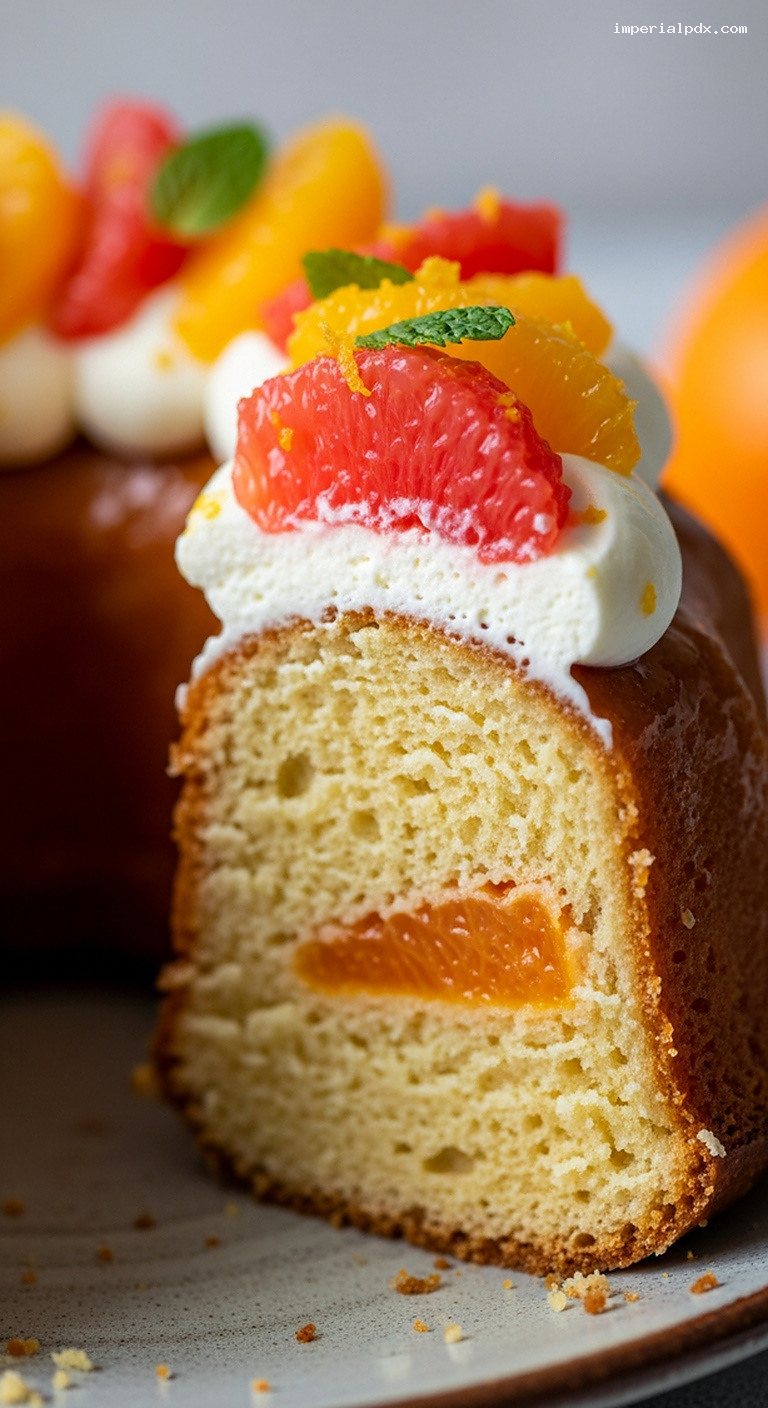
Step-by-Step Instructions
Step 1: Prepare the pan and proof the yeast
Generously butter a 22–24 cm (9–9.5 inch) savarin or ring mold, making sure you get into all the curves. Dust lightly with flour, then tap out the excess. Set aside.
In a small bowl, stir together the warm milk, 1 teaspoon of the granulated sugar (taken from the 75 g for the dough), and the active dry yeast. Let stand for 5–10 minutes until the mixture looks foamy and creamy on top. If it does not foam, your yeast may be inactive; start again with fresh yeast. If you are using instant yeast, you can skip this proofing step and add it directly to the flour in the next step, using the warm milk on its own.
Step 2: Make the citrus-scented dough
In a large mixing bowl (or the bowl of a stand mixer), combine the flour, the remaining granulated sugar, and the salt. Add the finely grated orange and lemon zest and rub it into the flour mixture briefly with your fingertips to release the oils.
Add the eggs, vanilla, and the foamy yeast-milk mixture. Beat with a sturdy wooden spoon or the paddle attachment of a stand mixer on medium speed for 3–4 minutes, until smooth and elastic. The dough will be thick but very sticky.
Add the very soft butter, a tablespoon or so at a time, mixing well after each addition. At first it may look greasy or separated, but keep beating until the butter is fully incorporated and the dough is glossy, stretchy, and still quite soft. This can take another 4–5 minutes with a mixer or 6–8 minutes by hand. Scrape down the sides of the bowl as needed.
Step 3: First rise until doubled
Scrape the dough into a lightly buttered bowl, smoothing the top with a spatula. The dough will not hold a firm shape; that is fine. Cover the bowl with plastic wrap or a clean, slightly damp kitchen towel.
Let the dough rise at warm room temperature (about 24–27°C / 75–80°F) until doubled in size, about 1 hour. If your kitchen is cool, this may take up to 1 1/2 hours. The dough will become puffed and airy.
Step 4: Fill the savarin mold and proof again
Once the dough has doubled, gently deflate it with a spatula. Scoop or pour the dough into the prepared savarin mold, distributing it evenly around the ring. Because the dough is loose, it will settle; use a damp spatula or lightly oiled fingers to smooth the surface and even out the thickness.
Cover the pan loosely with lightly oiled plastic wrap or an inverted large bowl, leaving room for the dough to rise. Let it proof at warm room temperature until it has risen nearly to the rim of the mold and looks light and slightly jiggly, about 30–40 minutes.
Near the end of this rise, preheat your oven to 180°C / 350°F with a rack in the middle position.
Step 5: Bake the savarin
When the dough is well risen, carefully remove the cover and place the mold on the center oven rack. Bake for 22–25 minutes, or until the savarin is a deep golden brown, pulls slightly away from the sides of the pan, and springs back when lightly pressed. A skewer inserted into the thickest part should come out clean.
Transfer the pan to a wire rack and cool for 10 minutes. Then place the rack over a baking sheet, invert the savarin onto the rack, and carefully lift off the mold. If it resists, tap the pan gently or give it a few more minutes to steam before trying again. Let the savarin cool until just warm while you prepare the syrup.
Step 6: Make the citrus syrup
While the savarin bakes or cools, prepare the syrup. In a medium saucepan, combine the water, sugar, orange juice, lemon juice, and the wide strips of orange and lemon peel. Bring to a gentle boil over medium heat, stirring until the sugar dissolves.
Reduce the heat and simmer for 5–8 minutes, until the syrup has slightly thickened and is very fragrant. Remove from the heat and let cool for 5 minutes. Stir in the orange liqueur, if using. Keep the syrup warm; warm syrup soaks into the cake more readily than cold.
Step 7: Soak, glaze, and top with fruit and whipped cream
Place the warm savarin, still on the wire rack, into a shallow rimmed dish or clean roasting pan to catch drips. Slowly ladle the warm citrus syrup over the savarin, letting it soak in before adding more. Rotate the ring as you work so it absorbs the syrup evenly. Use a spoon to scoop up any syrup that pools in the dish and pour it over again. This soaking step can take 10–15 minutes; the savarin should feel heavy and very moist when fully soaked.
Let the soaked savarin cool completely to room temperature. If using the apricot glaze, gently heat the apricot jam and water in a small saucepan until melted and smooth, then brush it over the top and sides of the savarin for a soft sheen.
Prepare the fruit by cutting away the peel and pith from the oranges, grapefruit, and clementines, then cutting between the membranes to release clean segments (supremes). Pat them dry gently with paper towels so they do not dilute the whipped cream.
For the whipped cream, whisk the chilled heavy cream, powdered sugar, and vanilla together (by hand or with a mixer) until soft peaks form. The cream should be thick enough to hold its shape but still billowy.
Transfer the savarin to a serving platter. Spoon or pipe the whipped cream in a generous ring on top. Arrange the citrus segments over and around the cream in a decorative pattern, mixing colors and sizes. Drizzle with a little of the remaining syrup, if you like, and garnish with a few fresh mint leaves. Serve at once or within a couple of hours.
Pro Tips
- Use instant yeast easily: You can swap active dry yeast for the same weight of instant yeast. Skip the proofing step and mix the instant yeast directly with the flour; warm the milk separately.
- Soft butter is key: The butter should be very soft, almost like a thick cream, so it blends smoothly into the dough. If it is too cold, the dough will look lumpy and take much longer to come together.
- Do not rush the soak: A good savarin is thoroughly saturated. Give the cake time to absorb all the syrup, ladling it over in several passes rather than dumping it all at once.
- Control the sweetness: For a slightly less sweet dessert, reserve 2–3 tablespoons of the syrup and use it only if you want more moisture just before serving.
- Make it shine: The optional apricot glaze gives a beautiful patisserie-style gloss and also helps keep the cake moist if you are serving it later.
Variations
- Tropical twist: Replace half of the orange juice in the syrup with passion fruit juice and top the savarin with a mix of citrus and ripe mango or pineapple pieces.
- Berry-citrus savarin: Keep the citrus syrup but top the whipped cream with a mix of fresh berries (raspberries, blueberries, strawberries) plus a little extra orange zest.
- Almond-citrus savarin: Add 40 g (1/3 cup) finely ground almonds and 1/2 teaspoon almond extract to the dough, and sprinkle toasted sliced almonds over the whipped cream before serving.
Storage & Make-Ahead
The savarin is best on the day it is soaked and decorated, when the texture is at its lightest and the fruit is freshest. However, you can plan ahead in a few ways:
Up to 1 day ahead: Bake the savarin, cool completely, wrap tightly in plastic, and keep at room temperature. Prepare the syrup and store it covered in the refrigerator; rewarm gently before soaking the cake.
Soaked but undecorated: You can soak the savarin in syrup up to 6 hours before serving. Once soaked and cooled, cover it loosely to prevent drying. Decorate with whipped cream and fruit shortly before serving so the cream and citrus segments stay fresh.
Leftovers: Store leftover savarin (with cream and fruit) covered in the refrigerator for up to 2 days. The texture will become softer and more pudding-like as it sits. For the best experience, let chilled slices sit at room temperature for 15–20 minutes before serving.
Nutrition (per serving)
Approximate values per serving (1/10 of the recipe, including syrup, fruit, and whipped cream): about 430 calories; 20 g fat; 25 g saturated fat; 55 g carbohydrates; 3 g fiber; 35 g sugars; 7 g protein; 230 mg sodium. These numbers are estimates and will vary based on exact ingredients, toppings, and portion sizes.