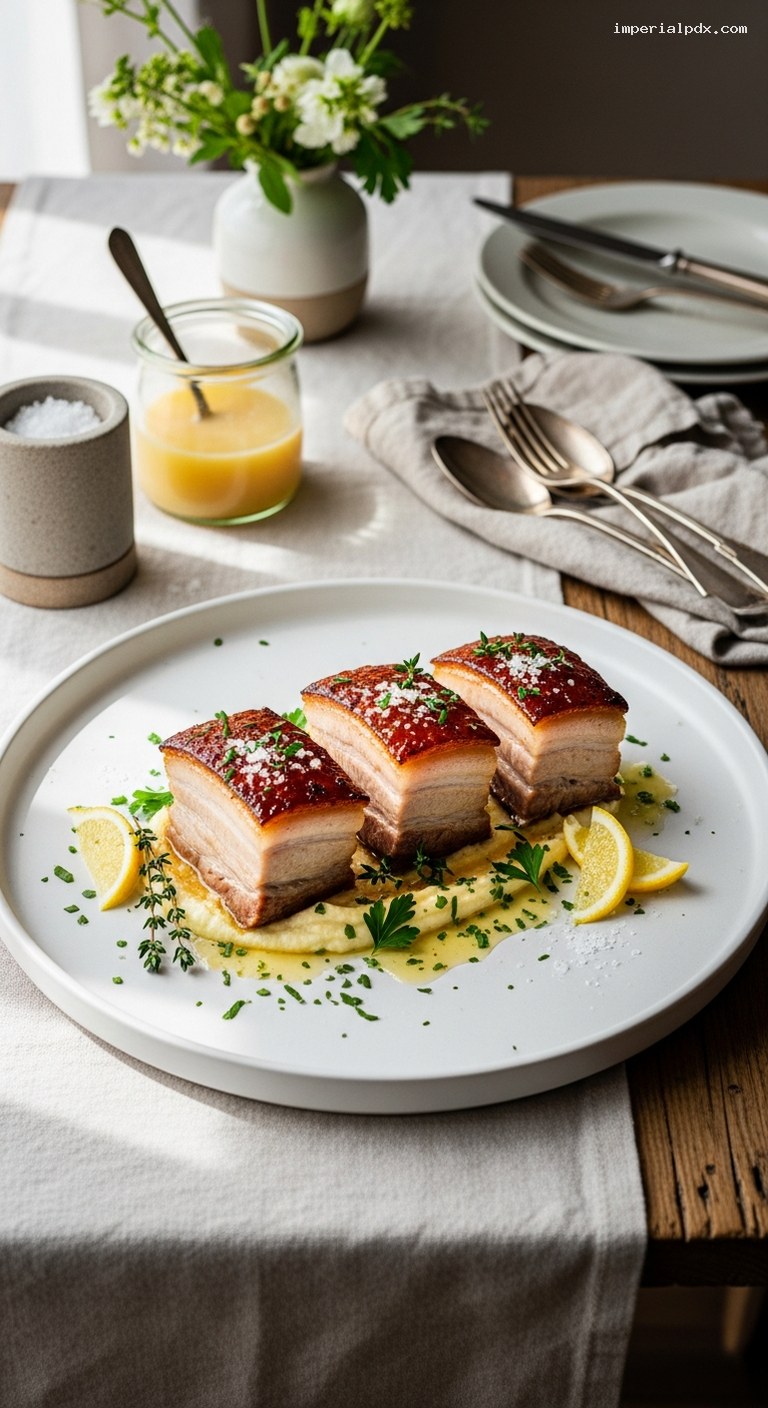
Quick Recipe Version (TL;DR)
Quick Ingredients
- 3 lb (1.4 kg) skin-on pork belly, cut into 4 thick slabs
- 3 tbsp kosher salt (2 tbsp if using Morton’s)
- 2 tsp granulated sugar
- 6 garlic cloves, smashed
- 2 tsp freshly ground black pepper
- 2 tsp fresh thyme leaves (or 4 sprigs)
- 2 tsp minced fresh rosemary (or 2 sprigs)
- 3 bay leaves, crumbled
- 4–5 cups (950–1200 ml) rendered pork fat, lard, or duck fat (enough to fully submerge)
- Flaky salt, a splash of lemon juice or vinegar, and chopped fresh herbs for serving
Do This
- 1. Mix salt, sugar, pepper, garlic, and herbs. Rub all over pork belly slabs. Cover and refrigerate 12–24 hours.
- 2. Rinse cure lightly off pork, pat very dry, and arrange in a snug single layer in a heavy oven-safe pot.
- 3. Cover completely with melted fat. Transfer to a 250°F (120°C) oven and cook 3–3½ hours until very tender.
- 4. Let pork cool to room temperature in the fat, then chill at least 4 hours or overnight to firm up.
- 5. To serve, gently lift slabs from fat, scrape off excess, and pat dry. Cut into portions if desired.
- 6. Sear belly pieces skin-side down in a hot skillet 5–8 minutes, then brown other sides until deep golden and crisp.
- 7. Rest briefly, slice thickly, sprinkle with flaky salt, a touch of acid, and fresh herbs. Serve hot.
Why You’ll Love This Recipe
- Ultra-tender, almost custardy pork belly with shatteringly crisp skin.
- Nearly all the work is hands-off: cure, slow-poach in fat, then sear when you are ready to eat.
- Make-ahead friendly: keep the pork in its fat for days and crisp portions as needed.
- Restaurant-worthy results with simple ingredients and straightforward steps.
Grocery List
- Produce: Garlic, fresh thyme, fresh rosemary, lemon (or small bottle of vinegar), fresh parsley or chives (for garnish)
- Dairy: None
- Pantry: Pork belly, kosher salt, granulated sugar, black pepper, bay leaves, rendered pork fat or lard (or duck fat), flaky salt
Full Ingredients
Pork Belly & Cure
- 3 lb (1.4 kg) skin-on pork belly, cut into 4 thick slabs, about 2 inches (5 cm) wide
- 3 tbsp kosher salt (Diamond Crystal); use 2 tbsp if using Morton’s, which is saltier
- 2 tsp granulated sugar
- 2 tsp freshly ground black pepper
- 6 garlic cloves, smashed
- 2 tsp fresh thyme leaves, or 4 sprigs thyme
- 2 tsp minced fresh rosemary, or 2 small sprigs rosemary
- 3 bay leaves, crumbled
For Poaching in Fat
- 4–5 cups (950–1200 ml) rendered pork fat, lard, or duck fat, melted
- Optional: 1 small onion, thickly sliced, for extra aroma
- Optional: 4 garlic cloves, smashed, to perfume the fat
For Finishing & Serving
- Flaky sea salt (such as Maldon), to finish
- Freshly ground black pepper, to taste
- 1–2 tsp fresh lemon juice or mild vinegar (such as sherry or rice vinegar), to brighten
- 2 tbsp chopped fresh herbs (parsley, chives, or more thyme), for garnish
- Optional: crusty bread, creamy mashed potatoes, or a simple salad, for serving
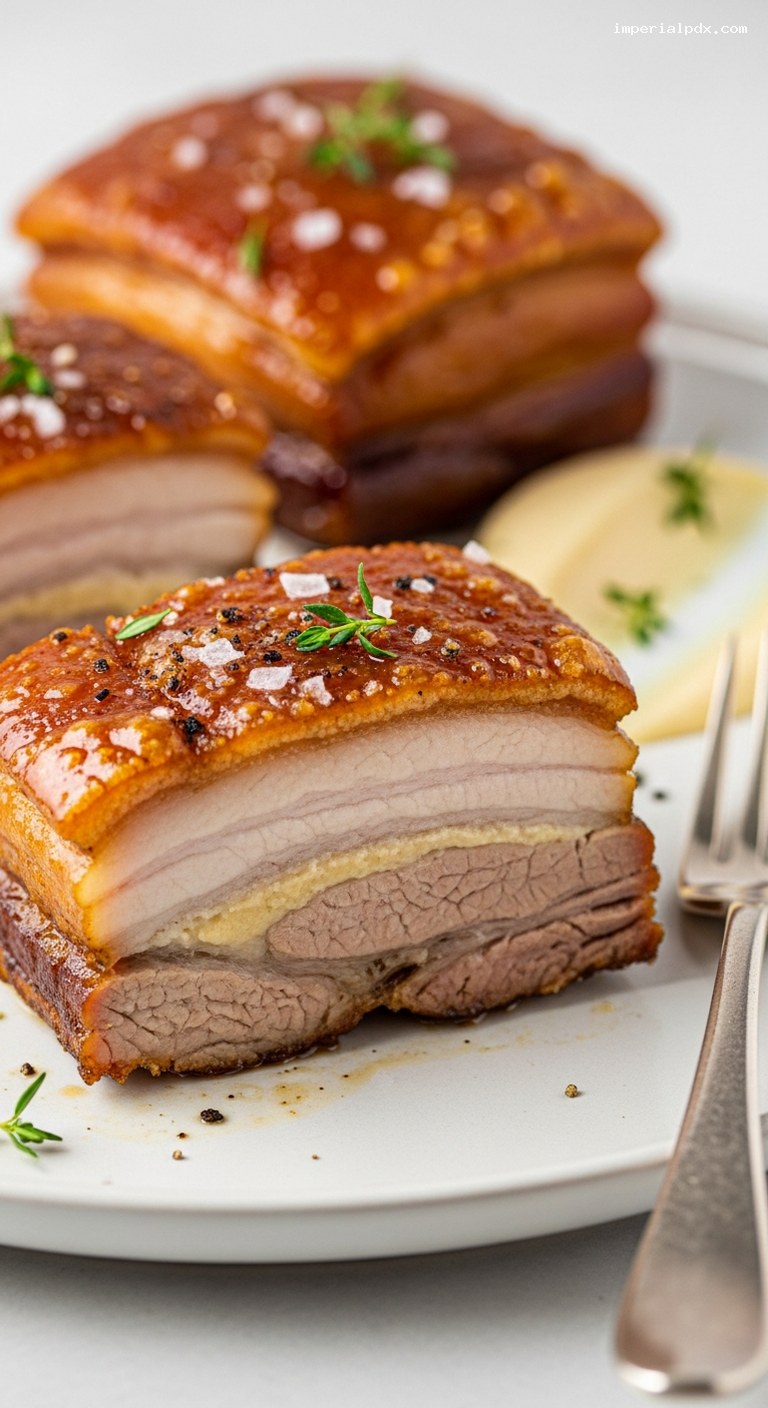
Step-by-Step Instructions
Step 1: Prep the Pork Belly Slabs
If your pork belly is in one large piece, cut it crosswise into 4 thick slabs, each about 2 inches (5 cm) wide. You want hefty pieces so they stay juicy and slice beautifully once cooked. Leave the skin on; it will become wonderfully crisp later.
Pat the pork belly completely dry with paper towels. Dry meat cures more evenly and will brown better when you crisp it at the end.
Step 2: Make the Garlic-Herb Cure and Season the Pork
In a small bowl, combine the kosher salt, sugar, black pepper, thyme, rosemary, and crumbled bay leaves. Stir to distribute the herbs evenly. Add the smashed garlic cloves to the bowl (or you can press them directly onto the meat).
Place the pork belly slabs in a shallow dish or on a rimmed baking sheet. Rub the seasoning mixture all over each piece of pork, coating all sides. Make sure the garlic and herbs are pressed into the surface so they stay in contact during the cure.
Step 3: Cure the Pork Belly Overnight
Cover the seasoned pork tightly with plastic wrap, or place the slabs in a zip-top bag or lidded container. Refrigerate for at least 12 hours and up to 24 hours. During this time, the salt will draw out moisture and then be reabsorbed, seasoning the meat all the way through.
If you remember, flip the pieces once halfway through the curing time so both sides cure evenly, but do not worry if you forget; it will still work well.
Step 4: Rinse, Dry, and Nestle in the Pot
Preheat your oven to 250°F (120°C).
Remove the pork belly from the fridge. Gently rinse each slab under cool running water to remove excess surface salt and herbs so the finished pork does not become overly salty or bitter. Pat the pork very dry with paper towels. This step is important; water will cause the fat to splatter later.
Arrange the pork belly in a heavy, oven-safe pot or Dutch oven in a single snug layer. If using, tuck in the onion slices and extra smashed garlic cloves around the meat. They will perfume the fat and add a subtle sweetness.
Step 5: Cover with Fat and Slow-Poach in the Oven
Melt the rendered pork fat, lard, or duck fat in a saucepan if it is solid. Carefully pour the warm (not sizzling hot) fat over the pork belly until the meat is completely submerged by at least 0.5 inch (1 cm). If you are short on fat, you can top up with a little neutral oil, but aim for mostly rendered fat for the best flavor.
Cover the pot with a lid or tightly with foil and place it in the preheated 250°F (120°C) oven. Cook for 3–3½ hours, until the pork is very tender when pierced with a skewer or knife, but not completely falling apart. It should offer almost no resistance in the center.
Step 6: Cool, Chill, and Let the Pork Set
Turn off the oven and carefully remove the pot. Let the pork belly cool in the fat at room temperature for about 1 hour. This gradual cooling helps the meat stay moist.
Once mostly cooled, transfer the pot to the refrigerator (uncovered until fully chilled, then covered). Chill at least 4 hours or overnight, until the fat solidifies around the pork and the slabs are firm to the touch. This resting time lets the meat absorb more flavor and makes it much easier to slice and sear neatly.
Step 7: Crisp the Pork Belly and Serve
When you are ready to eat, gently pry the pork belly slabs from the chilled fat using a spoon or spatula. Let any excess fat drip back into the pot, then scrape off any thick clumps clinging to the meat. Pat the pieces very dry again with paper towels.
Cut the chilled slabs into your desired portion size (for example, 6–8 rectangles). Heat a large skillet (cast iron is ideal) over medium to medium-high heat. Add a thin film of the rendered fat from the pot. Place the pork pieces in the pan skin-side down first. Cook, without moving them, for 5–8 minutes, until the skin is deeply golden, blistered, and crisp.
Turn the pieces to brown the other sides, about 2–3 minutes per side, until they are hot all the way through and nicely caramelized. Transfer to a board or plate and let rest for 3–5 minutes. Slice as desired (into thick slices or cubes), sprinkle with flaky salt and black pepper, and finish with a light squeeze of lemon juice or splash of vinegar plus a shower of fresh herbs. Serve immediately, while the contrast between crisp exterior and custardy interior is at its best.
Pro Tips
- Do not skimp on drying. After rinsing off the cure and again before searing, dry the pork thoroughly. Moisture is the enemy of crisp, glassy skin.
- Keep the temperature gentle. Confit is about low and slow: if the fat is simmering vigorously, the heat is too high. The surface should barely move, with just the faintest shimmer.
- Use a snug pot. A pot that fits the pork closely means you need less fat to fully submerge the meat, and the cooking will be more even.
- Press for ultra-neat slices. For restaurant-style cubes, place a piece of parchment over the pork while it chills, set a flat plate or small tray on top, and weigh it down with a few cans. Chill pressed for several hours.
- Save that fat. Strain and refrigerate the confit fat. It is packed with flavor and is fantastic for roasting potatoes, sautéing greens, or starting soups.
Variations
- Asian-inspired Pork Belly Confit: Add 1 star anise, 1 teaspoon fennel seeds, and a 2-inch (5 cm) piece of ginger to the cure. Finish the crispy pork with a drizzle of soy sauce and a squeeze of lime, and garnish with sliced scallions and cilantro.
- Smoky Paprika Confit: Add 2 teaspoons smoked paprika and 1 teaspoon ground coriander to the cure. Finish with a sprinkle of extra smoked paprika and serve over creamy mashed potatoes.
- Garlic-Chili Version: Add 1–2 teaspoons crushed red pepper flakes or Aleppo pepper to the cure. After crisping, drizzle the pork with a simple chili-garlic oil and garnish with chopped parsley.
Storage & Make-Ahead
This recipe is ideal for making ahead. Once the pork belly has finished its slow cook and cooled in the fat, you can keep the meat fully submerged in the fat in the refrigerator for up to 5 days. To store, make sure the pork is completely covered by solidified fat and the container is tightly covered. When you want to serve, simply lift out as many pieces as you need, scrape off excess fat, and crisp in a skillet straight from the fridge (add a couple of extra minutes to the searing time to heat through). Leftover crisped pork can be refrigerated for 2–3 days and reheated gently in a skillet or a 325°F (165°C) oven until warmed and re-crisped. For longer storage, you can freeze the cooked pork belly fully submerged in fat for up to 1 month; thaw overnight in the refrigerator before searing.
Nutrition (per serving)
Approximate values per serving (1/6 of recipe): 650 calories; 18 g protein; 60 g fat; 20 g saturated fat; 1–2 g carbohydrates; 0 g fiber; 0–1 g sugar; about 950–1100 mg sodium (will vary depending on how much cure is rinsed off and how much surface fat you eat). This is a rich, indulgent dish, best served in small portions alongside lighter vegetables or salads.