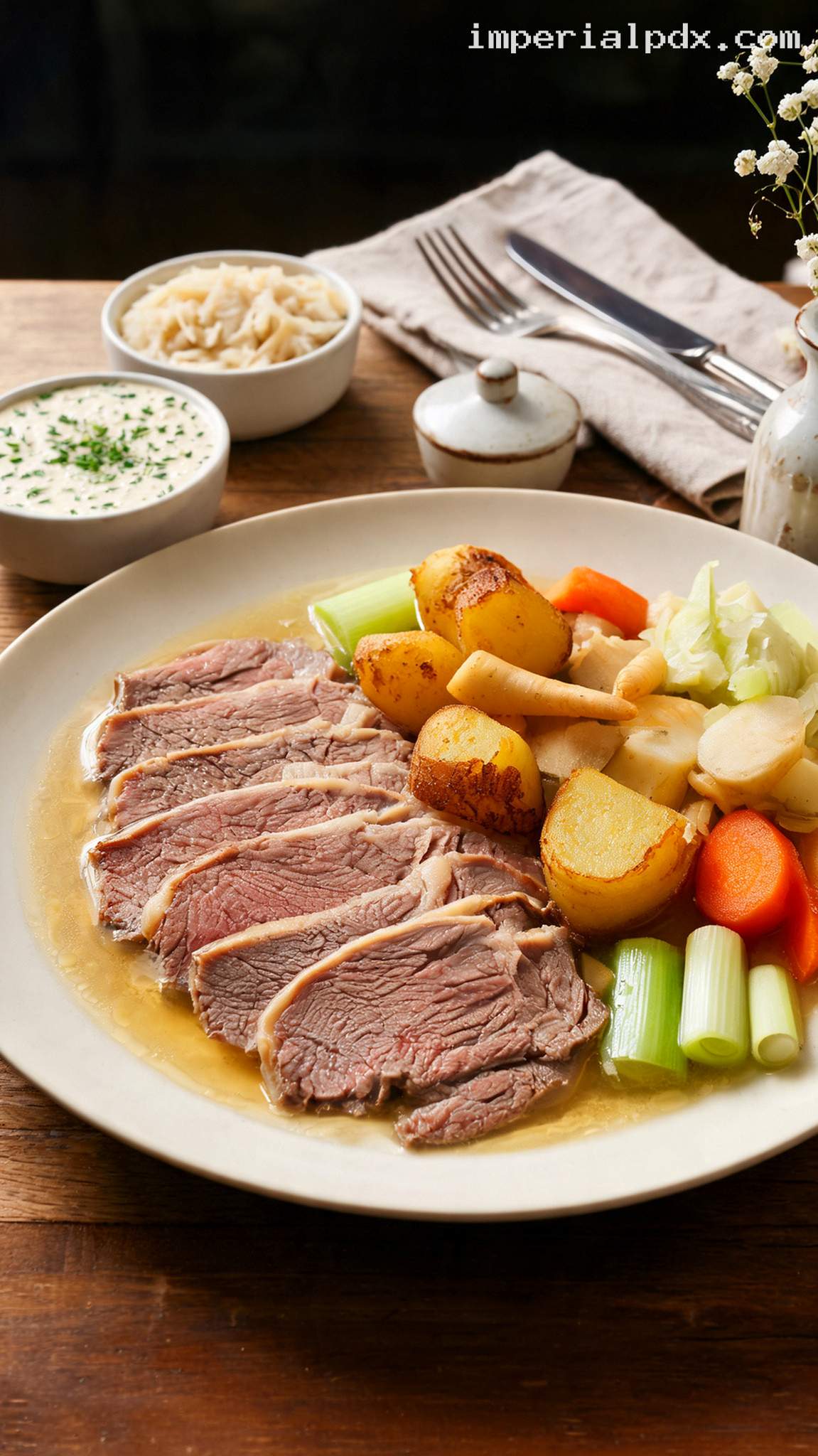
Quick Recipe Version (TL;DR)
Quick Ingredients
- Beef and broth: 1.5 kg (3 lb 5 oz) beef rump cap, 3 liters water, 18 g fine sea salt, 1 onion (200 g), 2 bay leaves, 10 black peppercorns, and 10 g parsley sprigs.
- Root vegetables: 300 g carrots, 200 g parsnips, 250 g peeled celeriac, and 150 g cleaned leek.
- Crisp potatoes: 1.2 kg (2 lb 10 oz) Yukon Gold potatoes, 3 tablespoons (45 ml) neutral oil, 1 teaspoon (6 g) fine sea salt, and 1/4 teaspoon ground black pepper.
- Chive sauce: 40 g crustless white bread, 1/4 cup (60 ml) whole milk, 150 g sour cream, 150 g plain Greek yogurt, 2 teaspoons (10 g) Dijon mustard, 1 tablespoon (15 ml) lemon juice, 20 g chopped chives, 1/4 teaspoon fine sea salt, and 1/8 teaspoon ground black pepper.
- Apple-horseradish: 300 g peeled, cored tart apple, 30 g freshly grated horseradish, 1 tablespoon (15 ml) lemon juice, 1 tablespoon (15 ml) apple cider vinegar, 2 teaspoons (8 g) sugar, and 1/4 teaspoon fine sea salt.
Do This
- 1. Brown the halved onion, cut sides down, in a dry stockpot for 6 minutes. Add 3 liters water, broth salt, bay leaves, peppercorns, and parsley; bring to a boil.
- 2. Add the beef and lower the heat. Gently simmer at 88–93°C (190–199°F) for 3 hours, skimming during the first 15 minutes.
- 3. Add the carrots, parsnips, celeriac, and leek for the final 45 minutes of simmering.
- 4. Soak the bread in milk for 5 minutes, then blend with the remaining chive sauce ingredients except the chives. Fold in the chives and chill. Grate the apple and mix with all the apple-horseradish ingredients; chill separately.
- 5. When the beef has 45 minutes left, heat the oven to 220°C (425°F). Cut the potatoes into 4 cm chunks, simmer for 10 minutes, drain, and steam-dry for 5 minutes.
- 6. Toss the potatoes with oil, salt, and pepper. Roast for 45 minutes, turning after 25 minutes.
- 7. Rest the cooked beef for 15 minutes, loosely covered with a little broth. Slice across the grain and serve with vegetables, crisp potatoes, both cold sauces, and a spoonful of hot broth.
Why You’ll Love This Recipe
- Comforting and elegant: Tender beef, sweet root vegetables, and a clear, fragrant broth make a lovely Sunday dinner.
- Wonderful contrasts: Crisp potatoes meet creamy chive sauce and a bright, tangy apple-horseradish condiment.
- Mostly hands-off cooking: Once the beef is gently simmering, you have plenty of time to prepare the accompaniments.
- A taste of Vienna at home: This home-friendly version pairs classic Austrian boiled beef with easy oven-crisped potatoes.
Grocery List
- Meat: A 1.5 kg beef rump cap, preferably the pointed rump cut sold for Tafelspitz.
- Produce: Onion, carrots, parsnips, celeriac, leek, Yukon Gold potatoes, parsley, chives, 2 tart apples, fresh horseradish root, and 1 lemon.
- Dairy: Whole milk, sour cream, and plain Greek yogurt.
- Bakery: Soft white bread.
- Pantry: Neutral oil, Dijon mustard, apple cider vinegar, sugar, fine sea salt, ground black pepper, whole black peppercorns, and bay leaves.
Full Ingredients
For the Beef and Broth
- 1.5 kg (3 lb 5 oz) boneless beef rump cap, in one piece, with its fat cap trimmed to about 5 mm (1/4 inch)
- 3 liters water, plus up to 500 ml hot water if needed to keep the meat submerged
- 1 tablespoon (18 g) fine sea salt
- 1 large yellow onion, about 200 g, washed and halved through the root, with clean brown skin left on
- 2 dried bay leaves
- 10 whole black peppercorns
- 10 g flat-leaf parsley sprigs
- 300 g carrots, peeled and cut into 5 cm lengths
- 200 g parsnips, peeled and cut into 5 cm lengths
- 250 g peeled celeriac, cut into 4 cm chunks
- 150 g cleaned leek, white and light-green parts only, cut into 5 cm lengths and thoroughly rinsed
Butcher’s note: Ask for the pointed rump cut used for Tafelspitz. Beef rump cap, also sold as top sirloin cap or picanha in some markets, is a practical alternative. Keep the thin fat cap attached: it contributes flavor and helps the slices stay succulent.
For the Crisp Potatoes
- 1.2 kg (2 lb 10 oz) Yukon Gold potatoes, peeled and cut into 4 cm chunks
- 3 tablespoons (45 ml) neutral oil, such as sunflower or canola oil
- 1 teaspoon (6 g) fine sea salt
- 1/4 teaspoon ground black pepper
For the Creamy Chive Sauce
- 40 g soft white bread, weighed after removing the crusts, torn into small pieces
- 1/4 cup (60 ml) whole milk
- 150 g sour cream
- 150 g plain Greek yogurt, preferably 2% fat
- 2 teaspoons (10 g) Dijon mustard
- 1 tablespoon (15 ml) freshly squeezed lemon juice
- 20 g fresh chives, finely sliced
- 1/4 teaspoon (1.5 g) fine sea salt
- 1/8 teaspoon ground black pepper
This easy, egg-free chive sauce uses soaked bread for a soft, spoonable texture and yogurt for a pleasantly fresh finish.
For the Apple-Horseradish Condiment
- 300 g peeled, cored tart apple, from about 2 medium Granny Smith apples
- 30 g peeled fresh horseradish root, finely grated
- 1 tablespoon (15 ml) freshly squeezed lemon juice
- 1 tablespoon (15 ml) apple cider vinegar
- 2 teaspoons (8 g) granulated sugar
- 1/4 teaspoon (1.5 g) fine sea salt
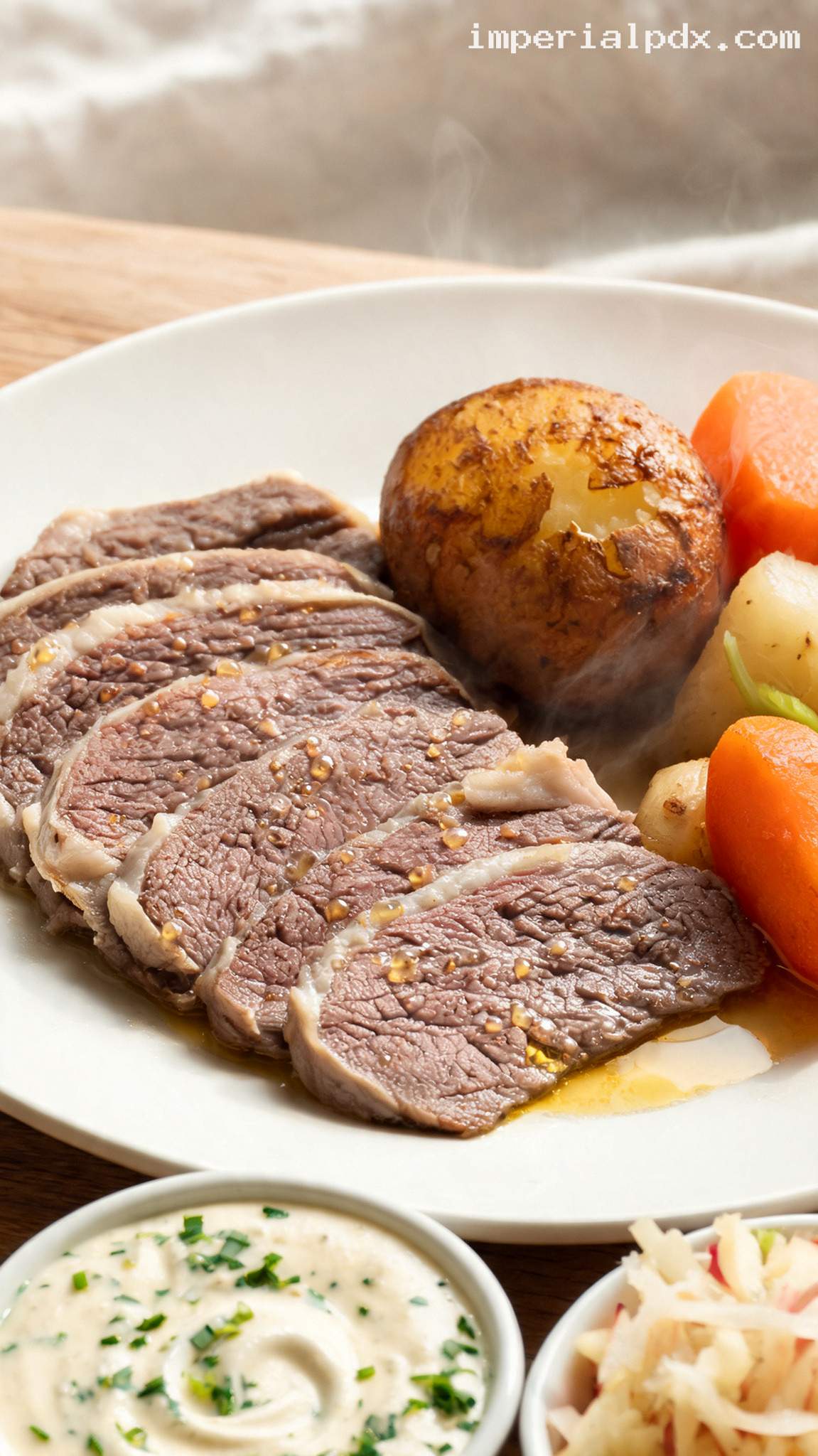
Step-by-Step Instructions
Step 1: Prepare the vegetables and brown the onion
Prepare all the vegetables as listed, keeping the carrots, parsnips, celeriac, and leek separate from the onion. Pat the beef dry and trim any excessively thick fat, leaving a layer about 5 mm (1/4 inch) thick. Do not rinse the raw beef.
Place a heavy 7-liter stockpot over medium-high heat. Add the onion halves, cut sides down, without oil. Cook for 6 minutes, until the cut surfaces are deeply browned. A little dark charring is welcome; it gives the broth its warm golden color.
Step 2: Start the beef in the aromatic broth
Carefully pour 3 liters water into the pot. Add the 18 g salt, bay leaves, peppercorns, and parsley. Bring to a boil over high heat, allowing approximately 15 minutes.
Lower the beef into the hot liquid, fat side up, and immediately reduce the heat. The liquid should just cover the meat; add up to 500 ml hot water if necessary. Bring it back to a very gentle simmer, then start a 3-hour cooking timer. Skim away the pale foam that rises during the first 15 minutes.
Step 3: Simmer gently and add the root vegetables
Keep the broth at 88–93°C (190–199°F), with only an occasional small bubble breaking the surface. Partially cover the pot, leaving the lid slightly ajar. Avoid a rolling boil, which can tighten the meat and cloud the broth. Check the liquid level every 45 minutes and add a little hot water from the measured allowance if needed.
After the beef has simmered for 2 hours 15 minutes, add the carrots, parsnips, celeriac, and leek. Continue gently simmering for the remaining 45 minutes. The beef is ready when a thin skewer slides into the thickest part with little resistance. If it still feels firm after 3 hours, continue in 15-minute intervals until tender, removing the vegetables once they are soft but still holding their shape.
Step 4: Make the two cold accompaniments
While the beef simmers, prepare the chive sauce. Combine the bread and milk in a bowl and soak for 5 minutes. Transfer to a blender or small food processor with the sour cream, yogurt, mustard, lemon juice, salt, and pepper. Blend for 30–45 seconds, until smooth. Fold in the sliced chives, cover, and refrigerate for at least 30 minutes.
For the apple-horseradish condiment, combine the lemon juice, vinegar, sugar, and salt in a second bowl. Coarsely grate the apples directly into the bowl, tossing immediately so they do not brown. Stir in the finely grated horseradish. Cover and refrigerate for at least 20 minutes. Grate fresh horseradish in a well-ventilated spot and avoid leaning directly over it; its fumes can be surprisingly strong.
Step 5: Parboil and roughen the potatoes
When the beef has approximately 45 minutes of simmering time remaining, heat a conventional oven to 220°C (425°F), or a fan oven to 200°C. Place a large, heavy rimmed baking sheet in the oven to heat.
Put the potato chunks in a saucepan, cover with cold water by 2 cm, and bring to a boil. Reduce to a steady simmer and cook for 10 minutes from the start of simmering. The outsides should be tender, while the centers still offer a little resistance.
Drain thoroughly and leave in the colander for 5 minutes to steam-dry. Return to the empty saucepan, cover, and shake gently a few times to fluff the edges. Add the oil, 6 g salt, and pepper, then toss carefully to coat.
Step 6: Roast the potatoes until crisp
Carefully remove the hot baking sheet from the oven. Spread the potatoes over it in a single layer, leaving space between the pieces. Roast for 45 minutes, turning them with a thin spatula after 25 minutes.
The potatoes are ready when their edges are deeply golden and crisp and the centers are soft. With the suggested timing, they should finish as the beef completes its resting time. If the beef needs longer, keep the finished potatoes uncovered in a 100°C (210°F) oven for up to 20 minutes.
Step 7: Rest, slice, and serve the Tafelspitz
Lift the tender beef onto a warm, deep platter. Spoon 120 ml (1/2 cup) hot broth over it and cover loosely with foil. Rest for 15 minutes. Meanwhile, lift the vegetables from the broth and keep them covered and warm. Strain the broth through a fine-mesh sieve and skim excess fat from the surface.
Slice the beef across the grain into 1 cm-thick slices. Arrange on warm plates with the root vegetables and crisp potatoes. Spoon about 30 ml (2 tablespoons) hot broth around each portion of beef, keeping it away from the potatoes so they stay crisp.
Serve both chilled sauces in small bowls alongside. Divide them evenly among the six servings, letting everyone alternate between cool, creamy chives and the tart apple-horseradish bite. Save the remaining broth for soup or another meal.
Pro Tips
- Gentle heat matters most: A few lazy bubbles are ideal. If the broth is moving vigorously, lower the heat or move the pot partly off the burner.
- Judge tenderness, not just the clock: The cut’s shape and connective tissue can change the cooking time. The stated total assumes the beef becomes tender after 3 hours of simmering.
- Find the grain before slicing: Look for the direction of the muscle fibers and cut perpendicular to them. This makes a noticeable difference in tenderness.
- Dry potatoes make crisp potatoes: Do not skip the steam-drying step, and avoid crowding the baking sheet.
- Keep the crisp and creamy elements separate: Serve the sauces alongside rather than pouring them over the entire plate.
Variations
- Use prepared horseradish: Replace the 30 g fresh horseradish with 45 g drained prepared horseradish, not creamy horseradish sauce. Reduce the apple cider vinegar to 1 teaspoon (5 ml).
- Swap the root vegetables: Replace the 250 g celeriac with 250 g peeled turnip, cut into the same 4 cm chunks.
- Make it gluten-free: Use 40 g gluten-free white bread in the chive sauce and check the mustard and prepared horseradish labels if using them.
Storage & Make-Ahead
Refrigerating: Within 2 hours of cooking, transfer leftover beef and vegetables to shallow containers with enough broth to keep them moist. Refrigerate at 4°C (40°F) or below for up to 3–4 days. Store the potatoes separately for up to 3 days. Keep the chive sauce refrigerated for up to 3 days and the apple-horseradish condiment for up to 2 days; the apple mixture may release juice and its horseradish flavor will mellow.
Making ahead: The beef and broth can be cooked 1 day ahead. Cool promptly in shallow containers and refrigerate, then remove the solidified fat from the chilled broth. The chive sauce can also be made 1 day ahead. For the freshest flavor and color, make the apple-horseradish condiment on serving day.
Reheating: Warm sliced beef and vegetables gently in broth, covered, until they reach 74°C (165°F); begin checking after 10 minutes. Reheat potatoes on a baking sheet at 220°C (425°F) for 12–15 minutes, until hot and crisp. Keep both sauces cold. Freeze the beef in broth for up to 3 months; the dairy sauce and apple condiment are best made fresh.
Nutrition (per serving)
Calories: 920 kcal | Carbs: 76g | Protein: 58g | Fat: 43g | Saturated Fat: 16g | Fiber: 10g | Sugar: 21g | Sodium: 1050mg | Cholesterol: 160mg
Estimated for one-sixth of the beef, vegetables, potatoes, and both sauces, with a small serving of broth. Values vary with the beef’s fat content and how much broth is served; leftover broth is not included.


