Quick Recipe Version (TL;DR)
Quick Ingredients
- 1 medium green/white cabbage (about 1.8 kg trimmed)
- 2 medium carrots, peeled and grated (about 200 g)
- 40 g non-iodized fine sea salt (2% of veg weight; see note)
- Optional: 1–2 tsp caraway seeds; 1/2 cup (60 g) fresh/frozen cranberries
- Optional: 2 bay leaves; 6–8 black peppercorns; 4–6 juniper berries
- If needed: 2% top-up brine (20 g non-iodized salt per 1 liter dechlorinated water)
Do This
- 1) Core and finely shred cabbage; grate carrots. Weigh combined veg and calculate 2% salt.
- 2) Toss veg with salt; rest 5 minutes; massage 5–10 minutes until brine pools.
- 3) Pack tightly into a clean 2–3 L jar, sprinkling in optional caraway/cranberries and bay.
- 4) Press down firmly so veg is submerged; add a weight. Top up with 2% brine only if needed.
- 5) Ferment at 18–22°C (65–72°F), covered, 3–10 days. Burp daily and keep veg submerged.
- 6) Start tasting day 3. Tangy and crunchy is ideal; continue until your preferred sourness.
- 7) Refrigerate to slow fermentation. Enjoy as a snack, side, or in shchi.
Why You’ll Love This Recipe
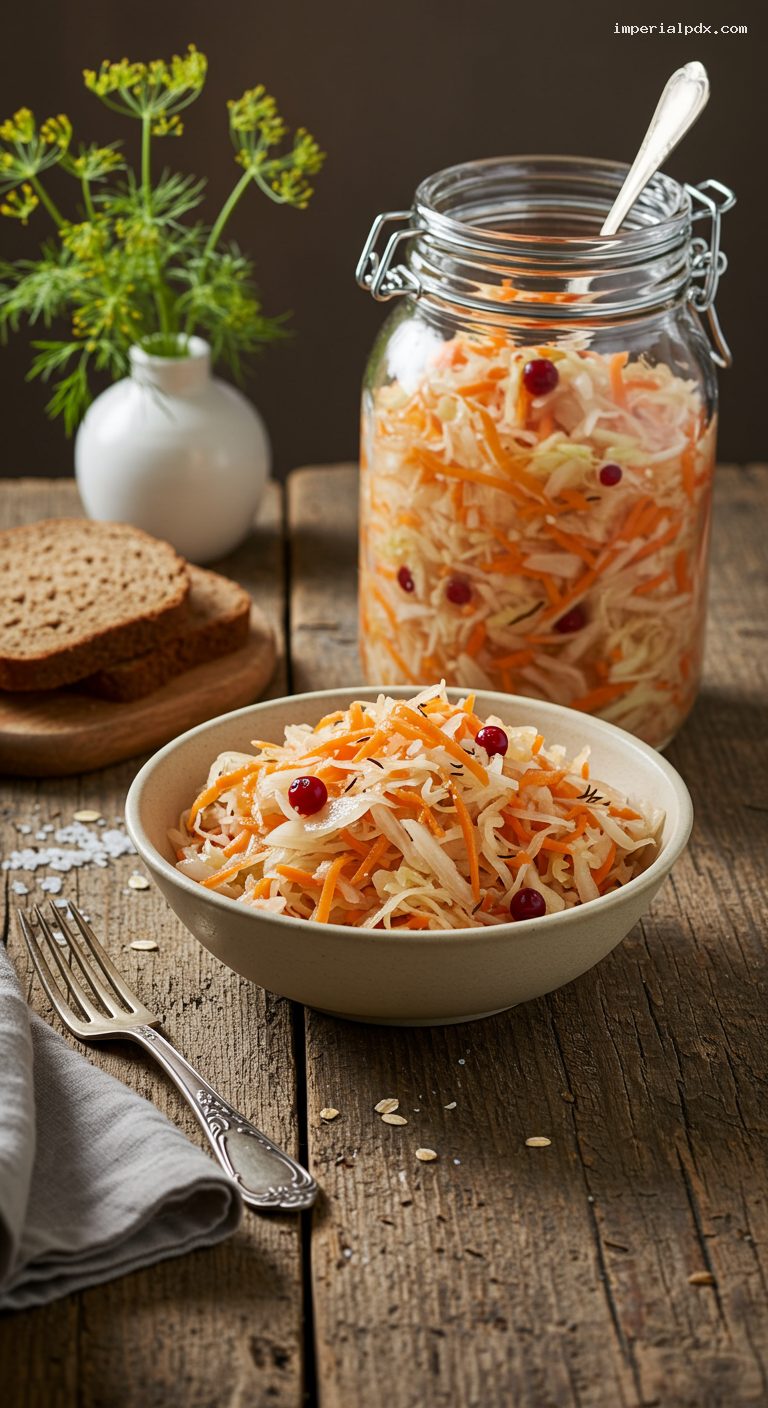
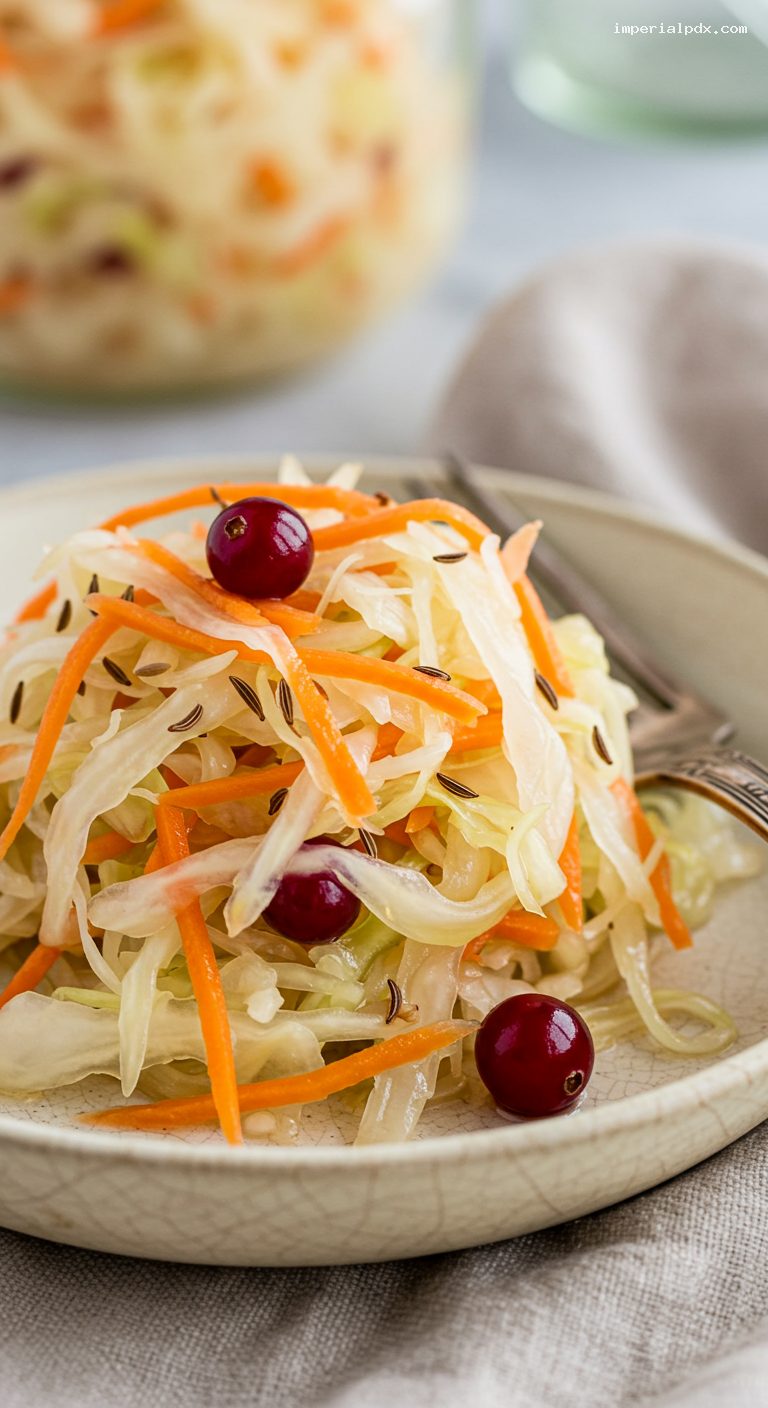
- Classic Slavic flavor: crisp cabbage, sweet carrot, subtle caraway, and tart cranberry pop.
- No vinegar needed—lacto-fermentation builds natural tang and probiotics.
- Minimal gear and just a few ingredients; the cabbage makes its own brine.
- Versatile: snack from the jar, spoon onto meats and potatoes, or simmer into shchi.
Grocery List
- Produce: 1 medium green/white cabbage, 2 carrots, optional fresh/frozen cranberries, optional garlic, optional fresh dill (for serving)
- Dairy: None
- Pantry: Non-iodized sea salt, caraway seeds, bay leaves, black peppercorns, juniper berries (optional)
Full Ingredients
Core Mix
- 1 medium green/white cabbage (about 1.8 kg trimmed weight)
- 2 medium carrots, peeled and coarsely grated (about 200 g)
- 40 g non-iodized fine sea salt (2% of vegetable weight; adjust to your actual weight)
Traditional Add-Ins (Optional, choose any)
- 1–2 tsp caraway seeds
- 1/2 cup (60 g) fresh or frozen cranberries
- 2 bay leaves
- 6–8 black peppercorns
- 4–6 juniper berries, lightly crushed
If Needed: Top-Up Brine (2%)
- 500 ml dechlorinated water + 10 g non-iodized salt (or scale to 1 L water + 20 g salt)
Equipment
- 1 large bowl
- Clean 2–3 liter glass jar or small fermentation crock
- Fermentation weight (glass weight, scrubbed stone, or small zip-top bag filled with brine)
- Tamper or clean rolling pin (for pressing)
- Kitchen scale (strongly recommended)
Step-by-Step Instructions
Step 1: Weigh and prep the vegetables
Remove tough outer leaves from the cabbage, then quarter and remove the core. Finely shred the cabbage with a knife, mandoline, or food processor. Peel and coarsely grate the carrots. Weigh the combined vegetables; you should have roughly 2,000 g. Calculate salt at 2% of the vegetable weight (for 2,000 g veg, use 40 g salt).
Step 2: Salt, rest, and massage to draw brine
In a large bowl, sprinkle the salt over the shredded cabbage and carrot. Toss well and let rest 5 minutes to start drawing moisture. Massage firmly with clean hands for 5–10 minutes until the cabbage softens and a generous puddle of brine forms at the bottom of the bowl. You should be able to squeeze a handful and have brine drip freely.
Step 3: Pack the jar with optional aromatics
Place a few cranberries, peppercorns, juniper, and a bay leaf in the bottom of a clean 2–3 liter jar (if using). Add a few handfuls of the cabbage mixture, tamping each addition to eliminate air pockets and force brine up. Sprinkle in caraway and more cranberries as you go. Continue until all veg is packed, leaving at least 3–5 cm headspace at the top.
Step 4: Submerge the vegetables completely
Press the cabbage firmly so the brine rises to cover it. Place a weight on top to keep everything submerged. If the brine doesn’t rise above the vegetables within 30 minutes, top up just enough with 2% brine (20 g salt per 1 liter dechlorinated water). Cover the jar loosely (fermentation lid, cloth with rubber band, or a lid left slightly ajar to allow gas to escape) and set the jar on a plate to catch any overflow.
Step 5: Ferment at the right temperature
Ferment at 18–22°C (65–72°F) for 3–10 days. Warmer rooms ferment faster; cooler rooms take longer. Check daily: make sure the cabbage remains submerged, press it down if needed, and “burp” the jar if using a regular lid to release CO₂. Expect bubbling and a pleasantly sour, bready aroma as lactic acid bacteria get to work.
Step 6: Taste and decide when it’s done
Begin tasting on day 3. When the kraut is delightfully tangy yet still crunchy, it’s ready. Many people like 5–7 days at 20°C; at cooler temps you may prefer 7–10 days. If a harmless white yeast (kahm) appears on the surface, skim it. Discard only if you see colorful or fuzzy mold, or smell anything off.
Step 7: Chill to finish and store
Remove the weight, pack the cabbage down once more, ensure it’s covered by brine, and seal the jar. Refrigerate to slow fermentation. The flavor will continue to deepen over the next 1–2 weeks. Serve straight from the jar, in salads, alongside roasted meats and potatoes, or simmer gently into shchi.
Pro Tips
- Weigh your vegetables and salt: 2% by weight gives consistent crunch and balanced salinity.
- Use dechlorinated water (filtered or rested overnight) for any top-up brine; chlorine can inhibit fermentation.
- Shred fairly thin (2–3 mm). Too thick = slow fermentation; too fine = softer texture.
- Keep oxygen out: pack tightly, use a proper weight, and keep everything under the brine line.
- Temperature drives timing: 18–22°C is the sweet spot for clean flavor and crisp texture.
Variations
- Caraway-Forward: Double the caraway (2 tsp) and add 1 tsp mustard seeds for a classic deli vibe.
- Cranberry-Garlic: Add 1/2 cup cranberries plus 1 small clove garlic, thinly sliced, for a garlicky-sour-sweet profile.
- Dill and Pepper: Add 2 tbsp chopped fresh dill stems and 1 tsp whole peppercorns for a fresh herbal note.
Storage & Make-Ahead
Refrigerated, kvashennaya kapusta keeps 2 to 6 months. Always use a clean utensil and keep the cabbage submerged in brine to maintain quality. If brine drops, top up with 2% brine. For make-ahead, ferment to just shy of your ideal sourness, then chill; it will slowly deepen in flavor over the next week.
Nutrition (per serving)
Approximate for 1/2 cup (85 g): 18 calories; 0 g fat; 4 g carbohydrates; 2 g fiber; 2 g sugars; 1 g protein; 350–450 mg sodium (varies with brine coverage and drain). Values are estimates.