Quick Recipe Version (TL;DR)
Quick Ingredients
- 1 whole head garlic
- 3 tbsp extra-virgin olive oil, divided
- 1 large yellow onion, thinly sliced
- 1/2 tsp sugar
- 1/2 cup dry red wine
- 1 can (28 oz / 800 g) crushed tomatoes
- 1 can (14.5 oz / 410 g) diced tomatoes, undrained
- 2 tbsp tomato paste
- 1 tsp dried oregano
- 1/4–1/2 tsp red pepper flakes (to taste)
- 1 tsp fine sea salt (plus more to taste)
- 1/2 tsp freshly ground black pepper
- 1 packed cup fresh basil leaves, torn
Do This
- 1. Heat oven to 400°F (200°C). Slice the top off the garlic head, drizzle with 1 tbsp oil, wrap in foil, and roast 35–40 minutes until soft and golden.
- 2. Meanwhile, cook sliced onion in 2 tbsp oil over medium-low heat with a pinch of salt, stirring often, 18–22 minutes until deep golden and caramelized.
- 3. Stir in sugar and cook 1 minute. Add red wine and simmer 2–3 minutes, scraping up browned bits.
- 4. Add crushed and diced tomatoes, tomato paste, oregano, red pepper flakes, salt, and pepper. Bring to a simmer, then cook on low 20–25 minutes, stirring occasionally.
- 5. Squeeze roasted garlic cloves into the sauce and mash them in. Simmer 5 minutes more, then stir in torn basil and adjust seasoning.
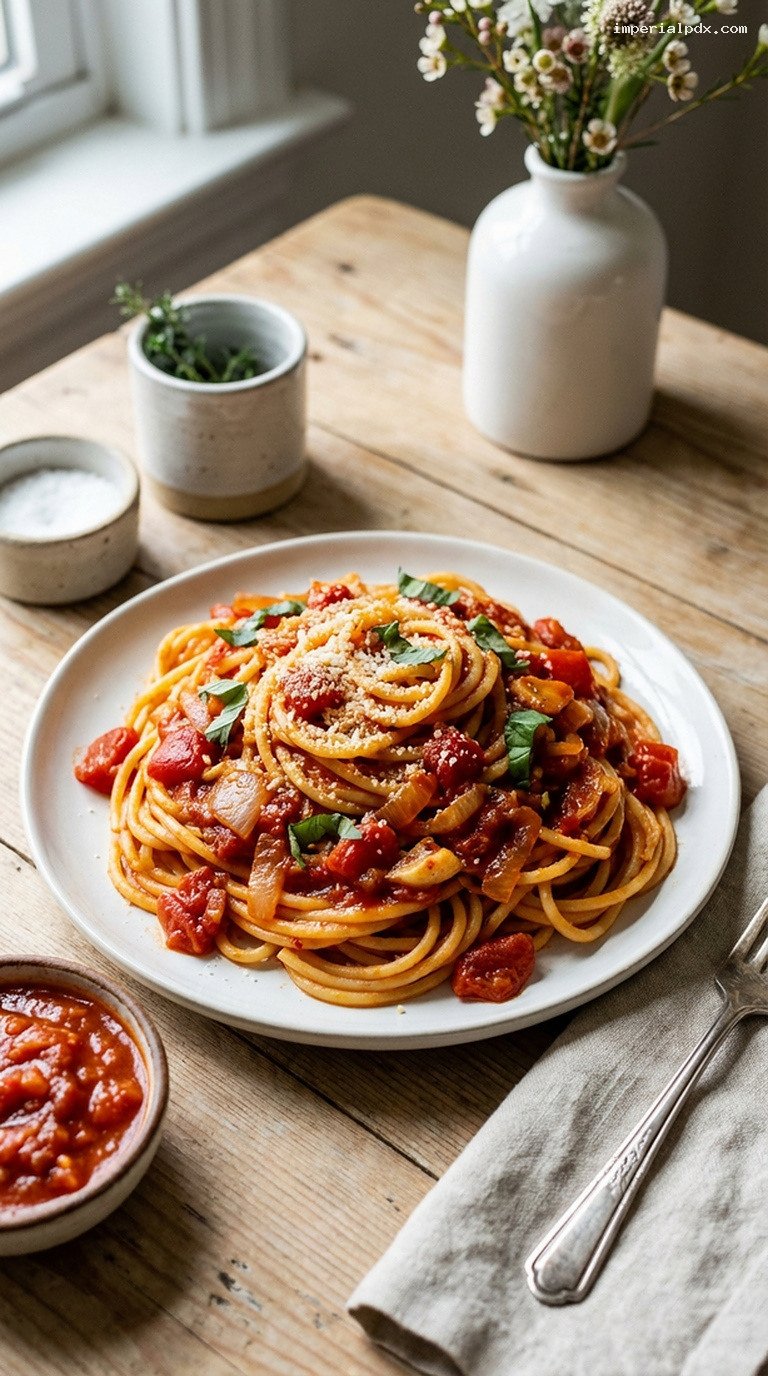
- 6. Toss with hot spaghetti (adding a splash of pasta water if needed) or spoon generously over pan-fried eggplant. Serve hot.
Why You’ll Love This Recipe
- Layers of flavor from slow-cooked caramelized onions, sweet roasted garlic, and a gentle splash of red wine.
- Chunky, rustic tomato texture that clings beautifully to pasta or nestles between slices of eggplant.
- Simple ingredients and mostly hands-off simmering, but tastes like it cooked all afternoon.
- Versatile base sauce: serve with spaghetti, eggplant, meatballs, or use as a pizza and baked pasta sauce.
Grocery List
- Produce: 1 whole head garlic, 1 large yellow onion, 1 large bunch fresh basil, 1–2 medium eggplants (optional, for serving)
- Dairy: Parmesan or Pecorino Romano cheese (optional, for serving)
- Pantry: Extra-virgin olive oil, dry red wine, 1 can crushed tomatoes (28 oz / 800 g), 1 can diced tomatoes (14.5 oz / 410 g), tomato paste, dried oregano, red pepper flakes, sugar, fine sea salt, black pepper, spaghetti or pasta of choice
Full Ingredients
Tomato-Garlic Marinara
- 1 whole head garlic
- 3 tbsp extra-virgin olive oil, divided
- 1 large yellow onion, thinly sliced (about 2 cups / 200 g)
- 1/2 tsp sugar
- 1/2 cup (120 ml) dry red wine (such as Chianti, Sangiovese, or Cabernet Sauvignon)
- 1 can (28 oz / 800 g) crushed tomatoes
- 1 can (14.5 oz / 410 g) diced tomatoes, undrained
- 2 tbsp tomato paste
- 1 tsp dried oregano
- 1/4–1/2 tsp red pepper flakes, to taste
- 1 tsp fine sea salt, plus more to taste
- 1/2 tsp freshly ground black pepper, plus more to taste
- 1 packed cup fresh basil leaves (about 25–30 leaves), torn by hand
To Serve (Optional, Choose Your Adventure)
- 12–16 oz (340–450 g) spaghetti or other long pasta
- 1–2 medium eggplants, sliced into 1/2-inch (1.25 cm) rounds
- Extra olive oil for pan-frying eggplant
- Salt and pepper, to season eggplant
- Freshly grated Parmesan or Pecorino Romano cheese
- Additional fresh basil leaves, for garnish
Step-by-Step Instructions
Step 1: Roast the Garlic Until Soft and Sweet
Preheat your oven to 400°F (200°C). Take the whole head of garlic and slice about 1/4 inch (6 mm) off the top to expose the cloves. Place the head, cut side up, on a small piece of foil. Drizzle with 1 tablespoon of the olive oil and sprinkle with a tiny pinch of salt. Wrap the foil tightly around the garlic to form a sealed packet and set it directly on the oven rack or on a small baking tray.
Roast for 35–40 minutes, until the cloves are very soft, lightly golden, and smell sweet and nutty. Set aside to cool just enough to handle. Keep the oven free; you can roast eggplant later if you prefer baking to pan-frying.
Step 2: Slowly Caramelize the Onions
While the garlic roasts, heat the remaining 2 tablespoons olive oil in a large, wide saucepan or deep skillet over medium-low heat. Add the sliced onion and a pinch of salt. Cook, stirring occasionally, until the onions turn soft, translucent, and then deep golden brown, 18–22 minutes. Adjust the heat as needed so they brown slowly without burning; a little patience here builds a lot of flavor.
When the onions are a rich caramel color and smell sweet, sprinkle in the 1/2 teaspoon sugar. Cook, stirring, for 1 minute to deepen their flavor further.
Step 3: Deglaze with Red Wine and Build the Base
Pour in the red wine. It should sizzle. Use a wooden spoon to scrape up any browned bits from the bottom of the pan; that is pure flavor. Simmer the wine for 2–3 minutes over medium heat until reduced by about half and no longer smells strongly boozy.
Stir in the tomato paste and cook for 1 minute to toast it slightly. This step helps remove any raw tomato taste and adds a richer, deeper flavor to your sauce.
Step 4: Add Tomatoes and Simmer Until Thick and Chunky
Add the crushed tomatoes and diced tomatoes with all their juices. Stir well to combine with the onion mixture. Sprinkle in the dried oregano, red pepper flakes, 1 teaspoon salt, and 1/2 teaspoon black pepper. Bring the sauce up to a gentle simmer over medium heat.
Once it starts to bubble, reduce the heat to low and partially cover the pot (leave the lid slightly ajar). Simmer for 20–25 minutes, stirring every few minutes, until the sauce has thickened slightly and the flavors begin to meld. You should see small, lazy bubbles rather than a vigorous boil; slow simmering keeps the sauce bright yet rich.
Step 5: Fold In Roasted Garlic and Fresh Basil
When the sauce has finished its initial simmer, unwrap the roasted garlic. Squeeze the base of the head so the soft cloves pop out into a small bowl or directly into the pot. Use a fork to mash the cloves into a paste if needed, then stir them thoroughly into the sauce.
Simmer the sauce for another 5 minutes so the roasted garlic flavor infuses throughout. Taste and adjust seasoning with more salt, pepper, or red pepper flakes if you like a little heat. Turn off the heat and stir in the torn basil leaves. Tearing instead of chopping helps keep their flavor and aroma bright.
Step 6: Cook the Pasta (If Using)
Bring a large pot of salted water (it should taste pleasantly salty, like the sea) to a boil. Add the spaghetti and cook according to package directions until al dente. Before draining, scoop out about 1 cup (240 ml) of the starchy pasta cooking water and set it aside.
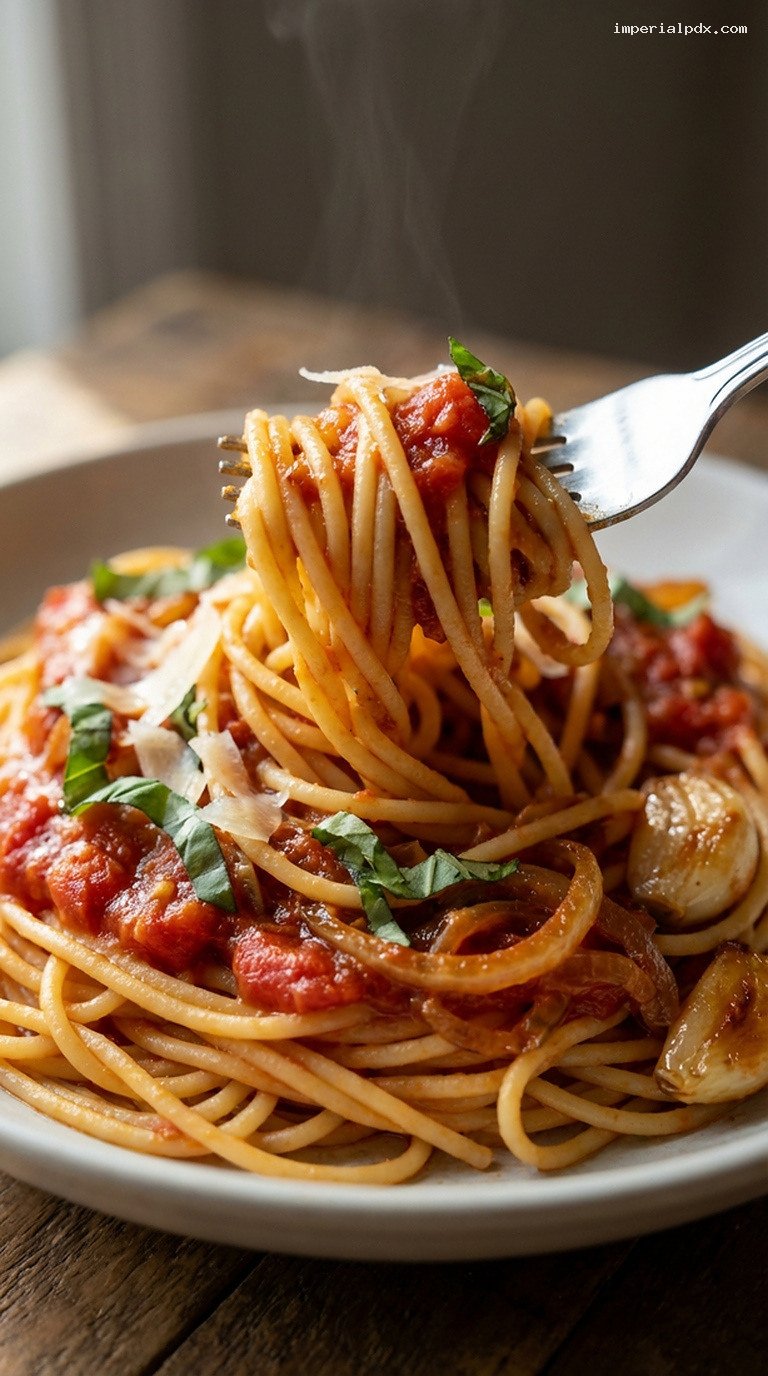
Drain the pasta and return it to the pot. Add enough marinara sauce to generously coat the noodles (about 2–3 cups), along with a splash of the reserved pasta water. Toss over low heat for 1–2 minutes until the sauce clings silkily to the pasta. Add more sauce or pasta water as needed to reach your preferred consistency.
Step 7: Pan-Fry the Eggplant (Optional) and Serve
For a lovely eggplant pairing, slice eggplant into 1/2-inch (1.25 cm) rounds. Lightly salt both sides and let sit for 15–20 minutes to draw out excess moisture, then pat dry. Heat a thin layer of olive oil in a large skillet over medium heat. Fry eggplant slices in batches for 3–4 minutes per side, until golden brown and tender. Season with a little pepper while hot.
To serve, either pile spaghetti onto warm plates and spoon extra marinara over the top, or arrange pan-fried eggplant slices on a platter and generously spoon the chunky tomato-garlic sauce over them. Finish with more torn basil and freshly grated Parmesan or Pecorino, if using. Serve immediately while hot and fragrant.
Pro Tips
- Take your time with the onions. If they are browning too quickly, lower the heat. Deeply caramelized onions are key to the sauce’s sweetness and depth.
- Choose a wine you would drink. A dry red with good flavor (but not overly oaky) adds complexity. If avoiding alcohol, use low-sodium vegetable or chicken broth instead.
- Simmer gently, not aggressively. A soft, slow simmer keeps the sauce bright and prevents it from turning too heavy or bitter.
- Tear, don’t chop, basil. Tearing bruises the leaves less and keeps both color and flavor fresher in the finished sauce.
- Adjust the texture to your liking. For a smoother sauce, use an immersion blender for a few quick pulses, or chop the diced tomatoes finer before adding.
Variations
- Olive & Capers Marinara: Stir in 1/3 cup chopped pitted olives and 2 tbsp capers during the last 5 minutes of simmering for a briny, puttanesca-style twist.
- Spicy Arrabbiata-Style: Increase red pepper flakes to 1–1 1/2 teaspoons and add a pinch of smoked paprika for a fiery, smoky kick.
- Hearty Vegetable Marinara: Sauté 1 diced carrot and 1 diced celery stalk with the onions to add sweetness, body, and extra vegetables to the sauce.
Storage & Make-Ahead
Let the sauce cool to room temperature, then transfer to airtight containers. Refrigerate for up to 5 days. The flavors actually deepen and improve after a day or two, making this an excellent make-ahead sauce.
For longer storage, freeze in portions (1–2 cups each) for up to 3 months. Thaw overnight in the refrigerator, or gently reheat from frozen over low heat with a splash of water, broth, or tomato juice. Stir occasionally until hot and smooth. If the sauce thickens too much in the fridge, loosen it with a little water, wine, or broth as it reheats.
Nutrition (per serving)
Approximate values for 1 of 6 servings of sauce (not including pasta, eggplant, or cheese): about 110 calories; 6 g fat; 14 g carbohydrates; 3 g fiber; 7 g sugars (mostly from tomatoes and onions); 3 g protein; 430 mg sodium. Values will vary based on exact brands and any additional salt, oil, or garnishes used.