Quick Recipe Version (TL;DR)
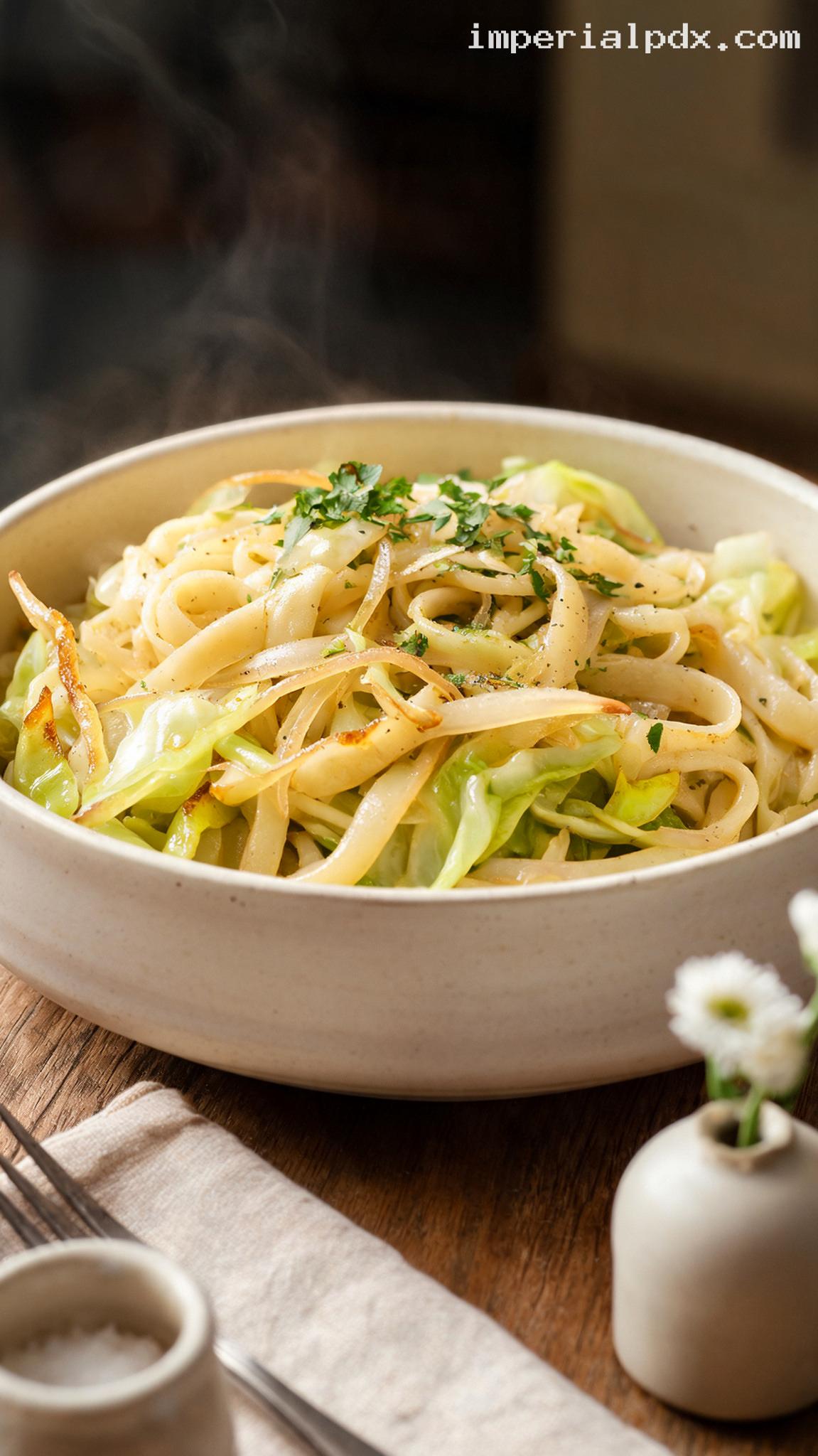
Amish-Style Buttered Cabbage and Egg Noodles brings together tender cabbage, naturally sweet onions, and broad egg noodles in a buttery, peppery farmhouse meal. Slow sautéing gives the vegetables their gentle sweetness; a little garlic adds warmth without overpowering them.
Quick Ingredients
- 12 ounces (340 g) dry broad egg noodles
- 2 pounds (907 g) green cabbage, weighed after coring, thinly shredded
- 1 large sweet onion, about 10 ounces (283 g) peeled, thinly sliced
- 8 tablespoons (113 g) unsalted butter, divided into 6 tablespoons and 2 tablespoons
- 2 garlic cloves (6 g), finely minced
- 1 teaspoon (6 g) fine salt, divided into 3/4 teaspoon and 1/4 teaspoon
- 1/2 teaspoon (1 g) freshly ground black pepper
- 4 quarts (3.8 liters) water for boiling noodles; reserve 1/2 cup (120 ml) before draining
- 1 tablespoon (2 g) chopped fresh parsley, optional, for serving
Do This
- 1. Core and shred the cabbage into 1/4-inch ribbons. Thinly slice the onion and mince the garlic.
- 2. Melt 6 tablespoons butter over medium-low heat for 2 minutes. Add the onion and cook for 8 minutes, stirring occasionally. Meanwhile, start heating the noodle water.
- 3. Add the cabbage, 3/4 teaspoon salt, and black pepper. Cover and cook for 8 minutes, then uncover and cook for 18 minutes, stirring occasionally, until soft and lightly golden.
- 4. During the final portion of the cabbage cooking time, boil the noodles for 8 minutes, or until tender according to the package. Reserve 1/2 cup cooking water, then drain.
- 5. Stir the garlic into the vegetables and cook for 1 minute. Add the remaining 2 tablespoons butter and let it melt for 1 minute.
- 6. Add the noodles, remaining 1/4 teaspoon salt, and 1/4 cup reserved cooking water. Toss over medium-low heat for 2 minutes. Add more reserved water if needed, garnish with optional parsley, and serve warm.
Why You’ll Love This Recipe
- Simple ingredients, satisfying flavor: Cabbage, onions, butter, and noodles become something much more comforting than their short shopping list suggests.
- Naturally sweet vegetables: Gentle cooking softens the cabbage and brings out the onion’s sweetness without adding sugar.
- A lovely buttery texture: Broad noodles catch the tender vegetables, while a splash of cooking water helps the butter coat everything evenly.
- Flexible farmhouse comfort: Serve it as a meatless main course or alongside roast chicken, pork, or sausage.
Grocery List
- Produce: 1 medium green cabbage, approximately 2 1/2 pounds before trimming; 1 large sweet onion; 2 garlic cloves; optional fresh parsley.
- Dairy: 1 stick unsalted butter, 8 tablespoons (113 g).
- Pantry: 12 ounces broad egg noodles, fine salt, and black pepper.
Full Ingredients
Vegetables and Aromatics
- 2 pounds (907 g) trimmed green cabbage: Remove damaged outer leaves and the hard core, then cut into ribbons approximately 1/4 inch wide.
- 1 large sweet onion, 10 ounces (283 g) after peeling: Halve through the root and slice approximately 1/8 inch thick.
- 2 garlic cloves (6 g): Finely mince.
Noodles and Cooking Water
- 12 ounces (340 g) dry broad egg noodles: Use regular dried noodles rather than fresh or frozen noodles for the stated cooking time.
- 4 quarts (3.8 liters) water: For boiling the noodles; leave this water unsalted because the dish receives a measured amount of salt separately.
- 1/2 cup (120 ml) reserved noodle cooking water: Begin with 1/4 cup (60 ml) when tossing; keep the remainder available as needed.
Butter and Seasonings
- 8 tablespoons (113 g) unsalted butter, divided: Use 6 tablespoons (85 g) for the vegetables and 2 tablespoons (28 g) to finish the dish.
- 1 teaspoon (6 g) fine salt, divided: Use 3/4 teaspoon with the cabbage and 1/4 teaspoon when adding the noodles.
- 1/2 teaspoon (1 g) freshly ground black pepper.
Optional Finish
- 1 tablespoon (2 g) chopped fresh parsley: A light sprinkle adds color and freshness without changing the dish’s simple character.
Step-by-Step Instructions
Equipment: A 12-inch deep skillet with a lid or a wide 6-quart Dutch oven, a separate large pot for the noodles, a colander, and a sturdy spoon or tongs. This is a stovetop recipe; no oven is needed.
Step 1: Prepare the vegetables
Remove any damaged outer cabbage leaves. Quarter the cabbage, cut out the firm core, and weigh out 2 pounds of trimmed cabbage. Slice it into ribbons approximately 1/4 inch wide. Peel and halve the onion, then slice it approximately 1/8 inch thick. Mince the garlic and keep it separate from the other vegetables.
Measure the butter and seasonings before you begin. The cabbage looks bulky at first, but it will shrink considerably as it cooks.
Step 2: Gently soften the sweet onion
Place the deep skillet or Dutch oven over medium-low heat. Add 6 tablespoons butter and allow it to melt for 2 minutes. Add the sliced onion and cook for 8 minutes, stirring every 2 minutes, until softened and translucent with a few pale golden edges.
The butter should bubble gently rather than smoke. If the onion begins browning quickly, lower the heat. Meanwhile, put 4 quarts water in the separate noodle pot and bring it to a boil over high heat. Once boiling, cover and reduce the heat to maintain a gentle simmer until you are ready to cook the noodles.
Step 3: Slowly cook the cabbage
Add the shredded cabbage, 3/4 teaspoon fine salt, and 1/2 teaspoon black pepper to the onions. Toss thoroughly to coat the cabbage with butter. Cover and cook over medium-low heat for 8 minutes, stirring once halfway through. The vegetables will release moisture and begin to soften.
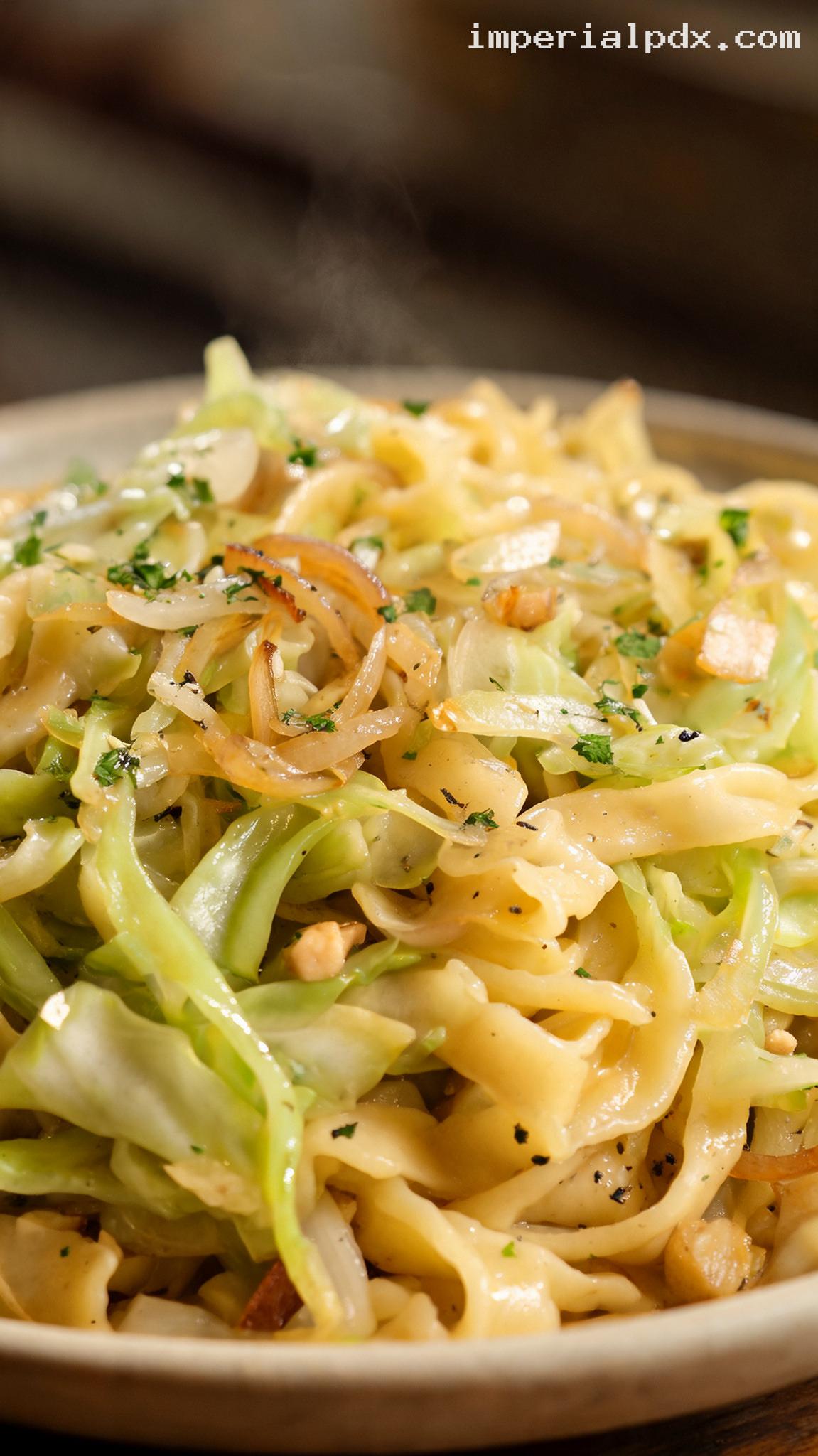
Remove the lid and continue cooking for 18 minutes, stirring every 3 minutes and scraping up any lightly golden bits from the bottom. Let the cabbage rest against the hot pan between stirs so a few edges can turn golden. By the end, it should be very tender and reduced in volume, with only light caramelization—not crisp or deeply browned.
If the pan becomes dry before the cabbage is tender, add 1 tablespoon water and lower the heat slightly. Avoid turning up the heat to rush the process; gentle cooking is what gives this dish its soft texture and naturally sweet flavor.
Step 4: Cook and drain the egg noodles
When the cabbage has approximately 8 minutes of uncovered cooking time remaining, return the noodle water to a full boil over high heat. Add the egg noodles, stir immediately, and cook uncovered for 8 minutes, stirring occasionally. Check the package instructions if your brand requires a different cooking time; the noodles should be tender but still hold their shape.
Before draining, carefully scoop out 1/2 cup cooking water. Drain the noodles without rinsing. If they finish slightly before the vegetables, leave them in the warm noodle pot for the brief wait rather than letting them sit in the colander and dry out.
Step 5: Add the garlic and finishing butter
Once the cabbage is tender, stir in the minced garlic and cook over medium-low heat for 1 minute, stirring continuously. It should smell fragrant without turning brown.
Add the remaining 2 tablespoons butter and stir for 1 minute, until melted. Adding some butter at the end gives the finished noodles a fresh, rich buttery flavor.
Step 6: Toss everything together and serve
Add the drained noodles, remaining 1/4 teaspoon fine salt, and 1/4 cup reserved cooking water to the cabbage mixture. Gently toss over medium-low heat for 2 minutes, lifting the vegetables through the noodles until everything is evenly coated.
The finished dish should be moist and glossy, with no pool of liquid at the bottom. If it seems dry, add the remaining reserved cooking water 1 tablespoon at a time, using only what you need. Divide among six bowls or plates, sprinkle with the optional parsley, and serve immediately while warm and buttery.
Pro Tips
- Choose a wide, heavy pan: A broad cooking surface helps excess moisture evaporate and encourages gentle golden edges. If your skillet cannot comfortably hold the raw cabbage, use the Dutch oven.
- Keep the heat gentle: Medium-low heat softens the vegetables without scorching the butter. The goal is tender cabbage with scattered golden edges, not a dark fried finish.
- Do not rinse the noodles: Their surface starch helps the butter and cooking water form a light coating that clings to the noodles.
- Add garlic near the end: Garlic can become bitter during a long sauté, so give it just 1 minute after the cabbage has softened.
- Use the reserved water thoughtfully: Start with the measured 1/4 cup, then add more only if needed. You want glossy noodles, not a broth.
Variations
- Caraway cabbage noodles: Add 1/2 teaspoon caraway seeds with the garlic for a gently earthy flavor that pairs especially well with cabbage.
- Extra-garlicky version: Increase the garlic to 4 cloves (12 g), keeping the same 1-minute cooking time.
- Bacon addition: Fold in 4 cooked, chopped bacon slices with the noodles. Choose lower-sodium bacon if possible; this variation will increase the recipe’s sodium and fat.
Storage & Make-Ahead
Refrigerate: Transfer leftovers to shallow, airtight containers and refrigerate within 2 hours of cooking. Store for 3–4 days at 40°F (4°C) or below.
Reheat: For each serving, add 1–2 tablespoons water and warm in a covered skillet over medium-low heat for 5–7 minutes, stirring occasionally. Alternatively, microwave in a covered, microwave-safe bowl in 1-minute intervals, stirring between intervals. Heat leftovers to an internal temperature of 165°F (74°C).
Make ahead: Slice the cabbage and onion up to 24 hours in advance and refrigerate them in separate airtight containers. You can also cook the cabbage-and-onion mixture a day ahead, stopping before adding the garlic and finishing butter. Refrigerate promptly, then reheat thoroughly before completing the recipe with freshly cooked noodles.
Freeze: Freeze cooled portions for up to 2 months. Thaw overnight in the refrigerator before reheating. The dish remains comforting, although the cabbage and noodles will be softer after freezing.
Nutrition (per serving)
Estimated for one-sixth of the recipe, excluding the optional parsley and variations. Values vary with the noodle brand and exact ingredient weights.
Calories: 411 kcal | Carbs: 54g | Protein: 11g | Fat: 18g | Saturated Fat: 10g | Fiber: 6g | Sugar: 8g | Sodium: 440mg | Cholesterol: 88mg