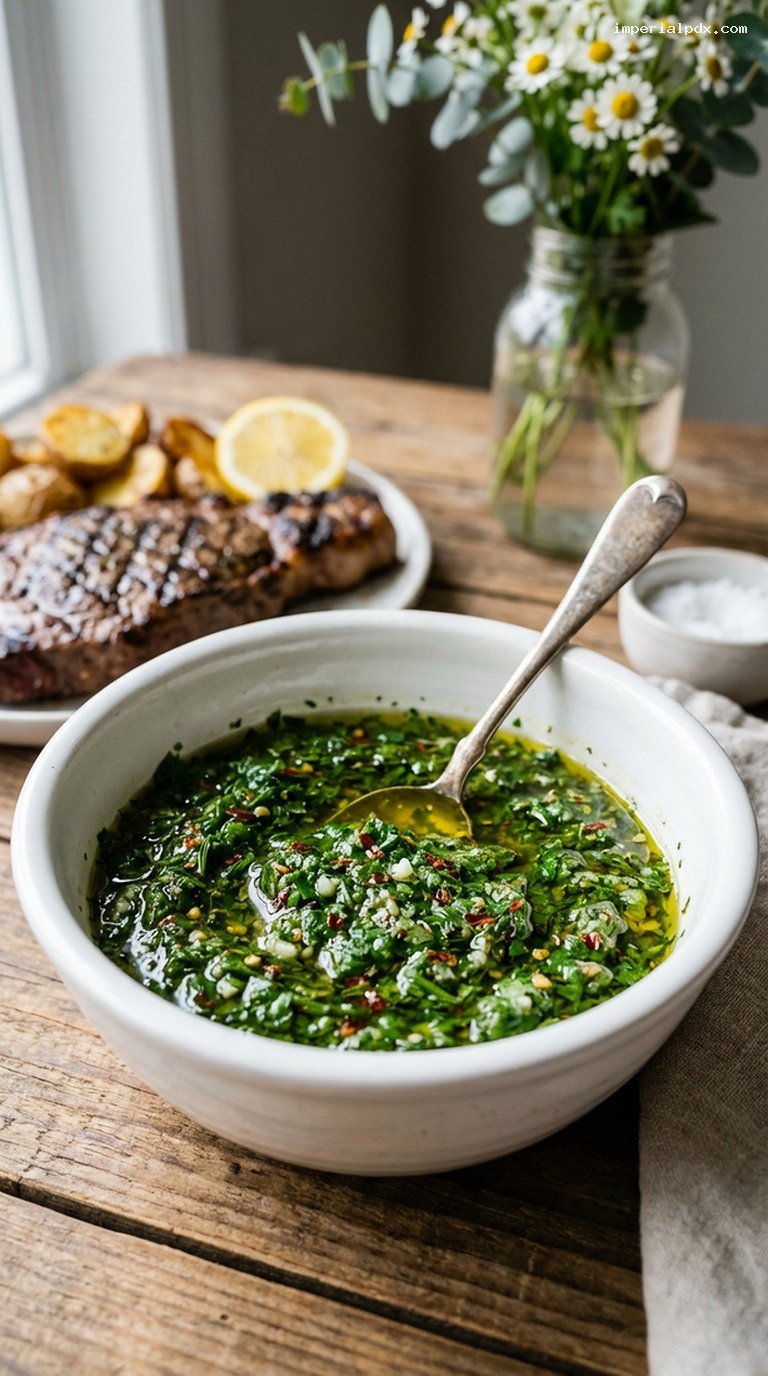
Quick Recipe Version (TL;DR)
Quick Ingredients
- 1 cup packed fresh flat-leaf parsley leaves (about 30 g)
- 1/2 cup packed fresh cilantro leaves (about 15 g)
- 2 tbsp fresh oregano leaves, chopped (or 2 tsp dried oregano)
- 3 garlic cloves, finely minced (about 1 1/2 tbsp)
- 1/2 tsp red pepper flakes (or to taste)
- 1/3 cup red wine vinegar
- 1/2 cup extra-virgin olive oil
- 3/4 tsp kosher salt, plus more to taste
- 1/4 tsp freshly ground black pepper
- 1–2 tbsp water, as needed to loosen (optional)
Do This
- 1. Rinse and thoroughly dry parsley, cilantro, and oregano; remove any tough stems.
- 2. Finely chop all herbs and garlic by hand (or pulse in a food processor, being careful not to puree).
- 3. In a bowl, combine chopped herbs, garlic, red pepper flakes, salt, and black pepper.
- 4. Stir in red wine vinegar until everything is evenly moistened.
- 5. Slowly add olive oil while stirring, then add 1–2 tbsp water if you like a looser sauce.
- 6. Taste and adjust salt, pepper, vinegar, or red pepper flakes; let sit 10 minutes before serving over grilled steak, roasted potatoes, or fish.
Why You’ll Love This Recipe
- It is incredibly fresh, bright, and herbaceous, with just the right kick of garlic and chili.
- Takes 15 minutes, no cooking, and instantly transforms steak, potatoes, fish, chicken, or veggies.
- Made mostly from pantry staples and a handful of fresh herbs you can find at any grocery store.
- Keeps well for several days, so you can make it ahead and use it all week as a finishing sauce or marinade.
Grocery List
- Produce: Fresh flat-leaf parsley, fresh cilantro, fresh oregano (or you may use dried oregano), garlic.
- Dairy: None required.
- Pantry: Extra-virgin olive oil, red wine vinegar, red pepper flakes, kosher salt, freshly ground black pepper (optional: steak, potatoes, or fish for serving).
Full Ingredients
Chimichurri Verde
- 1 cup packed fresh flat-leaf parsley leaves and tender stems (about 30 g)
- 1/2 cup packed fresh cilantro leaves and tender stems (about 15 g)
- 2 tbsp fresh oregano leaves, finely chopped
(or 2 tsp dried oregano if fresh is unavailable) - 3 medium garlic cloves, very finely minced (about 1 1/2 tbsp)
- 1/2 tsp red pepper flakes
(use 1/4 tsp for mild, up to 3/4 tsp for spicy) - 3/4 tsp kosher salt, plus more to taste
- 1/4 tsp freshly ground black pepper
- 1/3 cup red wine vinegar
- 1/2 cup extra-virgin olive oil
- 1–2 tbsp water, as needed, to loosen the sauce (optional)
Optional For Serving
- Grilled or pan-seared steak (such as flank, skirt, ribeye, or sirloin)
- Roasted potatoes (small waxy potatoes or fingerlings work beautifully)
- Firm white fish, such as cod, halibut, or sea bass, grilled or roasted
- Lemon wedges, for squeezing over finished dishes (optional but lovely)
Step-by-Step Instructions
Step 1: Prep and Dry the Herbs
Rinse the parsley, cilantro, and fresh oregano (if using) under cool running water to remove any grit or soil. Shake off excess water, then lay the herbs out on a clean kitchen towel or paper towels. Gently pat them very dry. Removing as much water as possible helps the chimichurri taste bright instead of diluted, and it also helps it keep longer in the fridge.
Strip the leaves and tender stems of parsley and cilantro from any very thick, woody stems. For oregano, strip the leaves from the stems entirely. A few thin stems are fine and add flavor, but avoid anything tough or fibrous.
Step 2: Finely Chop the Herbs and Garlic
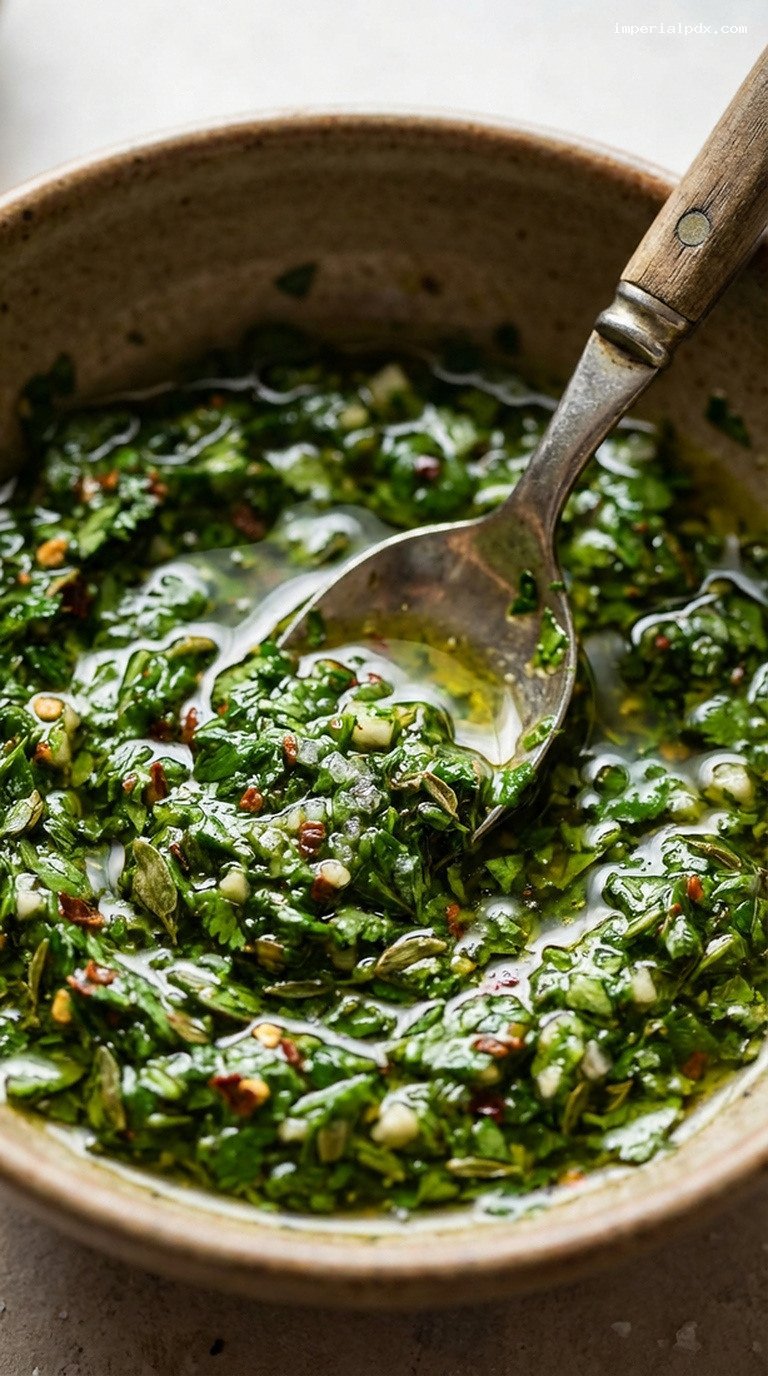
Gather the parsley, cilantro, and oregano on a cutting board and chop them very finely with a sharp knife. You are aiming for tiny pieces, not a paste: visible flecks of green that will suspend nicely in oil. This texture is what gives chimichurri its beautiful, rustic look and satisfying bite.
Finely mince the garlic until it is almost paste-like. Smaller pieces of garlic will blend better into the sauce and give you a more even flavor in every spoonful. Add the chopped herbs and garlic to a medium mixing bowl.
Step 3: Season with Vinegar, Chili, Salt, and Pepper
To the bowl with the herbs and garlic, add the red pepper flakes, kosher salt, and black pepper. Pour in the red wine vinegar and stir well to thoroughly moisten the herbs. The vinegar not only adds a bright, tangy flavor but also helps soften the herbs slightly, so the sauce tastes cohesive instead of leafy.
At this stage, taste a small bit. It should taste quite sharp and salty; the oil you are about to add will mellow everything out. If it seems flat now, add a pinch more salt or vinegar before moving on.
Step 4: Stream in the Olive Oil
Slowly pour in the extra-virgin olive oil while stirring constantly with a spoon or small whisk. The goal is to evenly distribute the oil so that every bit of herb is coated and glistening. You should end up with a loose, spoonable sauce where the chopped herbs and garlic are suspended in a shiny green pool of oil and vinegar.
If you prefer a slightly looser chimichurri, add 1–2 tablespoons of water and stir again. This lightens the texture and makes it especially nice for drizzling over grilled steak, roasted potatoes, or fish.
Step 5: Taste and Adjust the Flavor
Taste the chimichurri and adjust it to your liking. For more tang, add an extra teaspoon or two of red wine vinegar. For more heat, sprinkle in additional red pepper flakes. If it tastes too intense, stir in a pinch more salt and a bit of olive oil or water to soften the sharpness.
Remember that chimichurri is meant to be bold and bright because it is used in small amounts on rich, savory foods. It should taste a bit stronger in the bowl than it will once it is draped over steak, potatoes, or fish.
Step 6: Rest, Serve, and Enjoy
Let the chimichurri rest at room temperature for at least 10 minutes before serving. This short rest allows the flavors of garlic, herbs, vinegar, and oil to meld together and soften, giving you a more harmonious sauce.
Before serving, give it a final stir. Spoon generously over sliced grilled steak, tuck alongside roasted potatoes, or drizzle over flaky white fish. It is also fantastic on grilled chicken, roasted vegetables, or stirred into warm cooked grains. Leftovers can be stored and enjoyed throughout the week (see Storage & Make-Ahead below).
Pro Tips
- Chop, do not puree: Use a knife for the best rustic texture. If using a food processor, pulse in very short bursts and stop while it is still chunky, never smooth.
- Dry herbs are key: Excess water from rinsing herbs will water down the flavor and make the sauce spoil faster. Take an extra minute to dry them really well.
- Adjust acidity to your dish: Serving chimichurri with rich steak? Keep it bold and tangy. Serving with delicate fish? Add a splash more oil or a spoonful of water to soften the acidity.
- Make it a marinade: Thin with a tablespoon or two of extra vinegar and oil, then use about half the batch to marinate steak, chicken, or vegetables. Reserve the rest as a finishing sauce.
- Use good olive oil: Because this is uncooked and oil-forward, a pleasant-tasting extra-virgin olive oil makes a noticeable difference.
Variations
- Classic Parsley-Forward Chimichurri: Skip the cilantro and use 1 1/2 cups packed parsley instead. Keep the rest of the recipe the same for a more traditional Argentine-style flavor.
- Citrusy Chimichurri: Add 1–2 tablespoons of fresh lemon juice and 1 teaspoon of lemon zest along with the vinegar. This is especially good with fish, shrimp, and roasted vegetables.
- Extra-Spicy Version: Add a finely minced fresh chili (such as red Fresno or jalapeño) along with the garlic, and increase the red pepper flakes to 3/4 teaspoon.
Storage & Make-Ahead
Store chimichurri in a clean glass jar or airtight container in the refrigerator for up to 4 days. For the best color and flavor, press a piece of plastic wrap directly onto the surface of the sauce before sealing, which helps reduce browning. The olive oil may solidify slightly when chilled; this is normal. Let the chimichurri sit at room temperature for 15–20 minutes, then stir well before serving.
For longer storage, you can freeze chimichurri in small portions using an ice cube tray. Once frozen, transfer the cubes to a freezer bag and store for up to 2 months. Thaw in the fridge or at room temperature, stir, and refresh with a splash of fresh olive oil or vinegar if needed.
Nutrition (per serving)
Approximate values per 2-tablespoon serving (based on 8 servings): about 125 calories; 14 g fat; 2 g saturated fat; 1 g carbohydrates; 0.5 g fiber; 0.5 g protein; 150 mg sodium. Values will vary based on the exact brands of olive oil and salt used and how much salt you add to taste.