Quick Recipe Version (TL;DR)
Quick Ingredients
- 1/2 cup (115 g) unsalted butter
- 3 large egg yolks, room temperature
- 1 tbsp fresh lemon juice (plus more to taste)
- 1 tbsp cool water (plus more as needed)
- 1/8–1/4 tsp fine sea salt, to taste
- Pinch cayenne pepper
- Optional: snipped chives or parsley; extra cayenne or smoked paprika for garnish
Do This
- 1. Gently melt 1/2 cup butter over low heat. Skim off foam and pour the clear yellow butter into a small jug, leaving white milk solids behind. Keep warm.
- 2. Set up a double boiler: bring 2.5 cm (1 inch) of water to a bare simmer in a small pot; place a heatproof bowl over it so the bottom does not touch the water.
- 3. In the bowl off the heat, whisk egg yolks, lemon juice, water, and salt until slightly thick and pale.
- 4. Place the bowl over the simmering water and whisk constantly until the yolks are thickened, creamy, and warm (about 3 minutes); do not let them scramble.
- 5. Slowly drizzle in the warm clarified butter in a thin stream, whisking continuously until the sauce is thick, glossy, and emulsified.
- 6. Whisk in cayenne and adjust seasoning with more lemon juice and salt. If too thick, whisk in a teaspoon or two of warm water.
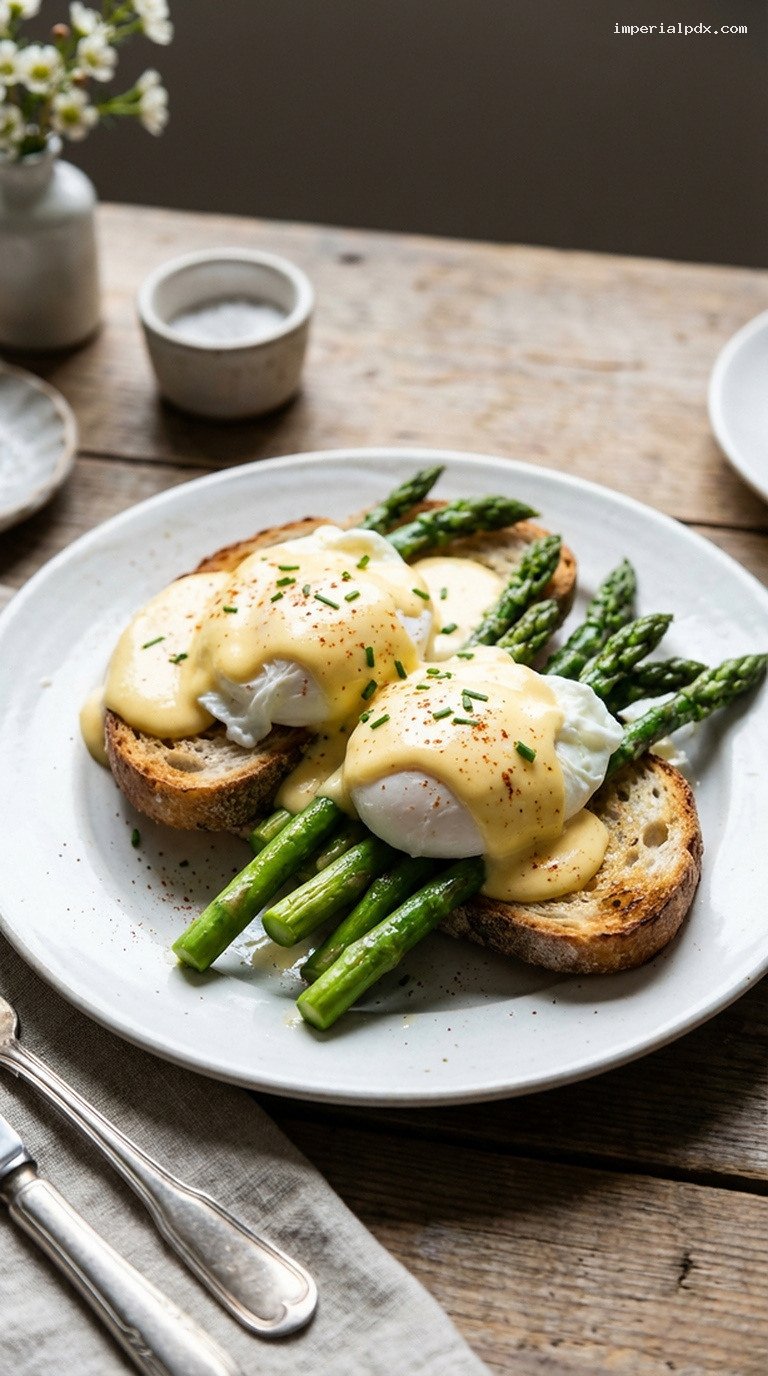
- 7. Serve immediately over poached eggs, buttered asparagus, or oven-roasted salmon, garnishing with herbs or a light dusting of cayenne if you like.
Why You’ll Love This Recipe
- A truly classic French-style hollandaise: silky, glossy, and richly buttery with a fresh lemony lift.
- Uses just a handful of everyday ingredients but feels restaurant-level and special.
- Perfect versatile sauce to dress up poached eggs, spring asparagus, or simply roasted salmon.
- Step-by-step guidance with tips for preventing curdling and fixing a broken sauce.
Grocery List
- Produce: 1 lemon; optional fresh chives or flat-leaf parsley; optional asparagus or salmon; eggs for poaching if serving with poached eggs.
- Dairy: Unsalted butter; large eggs (for the yolks and, if you like, extra for poaching).
- Pantry: Fine sea salt; cayenne pepper; optional smoked paprika; black pepper (for serving, if desired).
Full Ingredients
For the clarified butter
- 1/2 cup (115 g) unsalted butter
For the hollandaise sauce
- 3 large egg yolks, at room temperature
- 1 tbsp fresh lemon juice, plus more to taste
- 1 tbsp cool water, plus up to 1 tbsp more warm water to thin, if needed
- 1/8 tsp fine sea salt to start, plus more to taste (up to about 1/4 tsp total)
- Pinch cayenne pepper (about 1/16 tsp), plus more to taste
Optional for serving and garnish
- Freshly snipped chives or finely chopped flat-leaf parsley
- Extra pinch of cayenne pepper or smoked paprika, for a light dusting
- Poached eggs, buttered asparagus, or oven-roasted salmon
Step-by-Step Instructions
Step 1: Clarify the butter
Cut the butter into a few pieces and place it in a small saucepan over low heat. Allow it to melt gently without stirring. You will see a white, foamy layer rise to the top and some white milk solids sink to the bottom, while the middle becomes clear golden butterfat.
When the butter is fully melted and separated, skim off most of the foam from the surface with a spoon. Slowly pour the clear yellow butter into a small heatproof jug or bowl, leaving the milky white solids behind in the pan. Discard the solids. Keep the clarified butter warm but not hot; it should be pleasantly warm to the touch, not sizzling. Aim for roughly 120–140°F (50–60°C) if you are using a thermometer.
Step 2: Set up a gentle double boiler
Fill a small saucepan with about 2.5 cm (1 inch) of water and bring it to a very gentle simmer over medium-low heat, then reduce the heat so the water barely simmers. Place a heatproof bowl (preferably metal or thick glass) on top of the pan. The bottom of the bowl should sit above the water, not touching it; you want gentle steam heat, not direct boiling water.
This double boiler (also called a bain-marie) helps protect the egg yolks from overheating and scrambling. If at any point the water starts to boil vigorously, lower the heat. You want slow, steady, gentle heat throughout this recipe.
Step 3: Whisk the yolks with lemon, water, and salt
Remove the bowl from the saucepan (so it is off the heat for now). Add the egg yolks, 1 tbsp lemon juice, 1 tbsp cool water, and 1/8 tsp salt to the bowl. Whisk vigorously for 30–60 seconds until the mixture looks slightly thickened, creamy, and a bit lighter in color. This initial whisking helps build structure so the sauce can hold the butter.
Taste a drop for acidity and salt. It will still be quite sharp at this stage, but you should be able to taste a pleasant lemon flavor. You can adjust later, so resist the urge to add lots of extra lemon or salt right now.
Step 4: Gently cook the yolk mixture
Place the bowl back over the saucepan of barely simmering water. Whisk constantly, reaching into the curves of the bowl so no egg sticks or overheats on the edges. After 2–3 minutes, the yolk mixture will become thicker and more custard-like and will leave faint trails when the whisk moves through it.
You are aiming for a temperature of about 140–150°F (60–65°C) if you have an instant-read thermometer. The mixture should be warm and thickened but still smooth and glossy, with no scrambled bits. If you see any sign of tiny curds or if the bowl feels very hot, immediately remove it from the pan and whisk in a teaspoon of cool water to bring the temperature down.
Step 5: Slowly whisk in the clarified butter
With the bowl still over the gentle steam (or off the heat if your kitchen is warm), begin adding the warm clarified butter a few drops at a time, whisking constantly. Once the first few additions are completely absorbed and the mixture starts to look creamy and slightly thicker, you can increase to a very thin, steady stream.
Continue whisking vigorously while you pour in the butter. The sauce should gradually become thicker, smoother, and glossier, turning a beautiful pale golden yellow. If at any point the sauce looks greasy or like it is separating, stop adding butter and whisk in 1 tsp of warm water until it comes back together; then resume adding butter, more slowly. You may not need every last teaspoon of clarified butter if the sauce already feels very thick and rich to your taste.
Step 6: Season and adjust the thickness
Once all (or most) of the clarified butter is incorporated, remove the bowl from the heat. Whisk in a pinch of cayenne pepper. Taste the sauce and add more lemon juice, a few drops at a time, and more salt as needed until it is well balanced: buttery and rich but lifted by a bright, pleasant lemon tang and a subtle warmth from the cayenne.
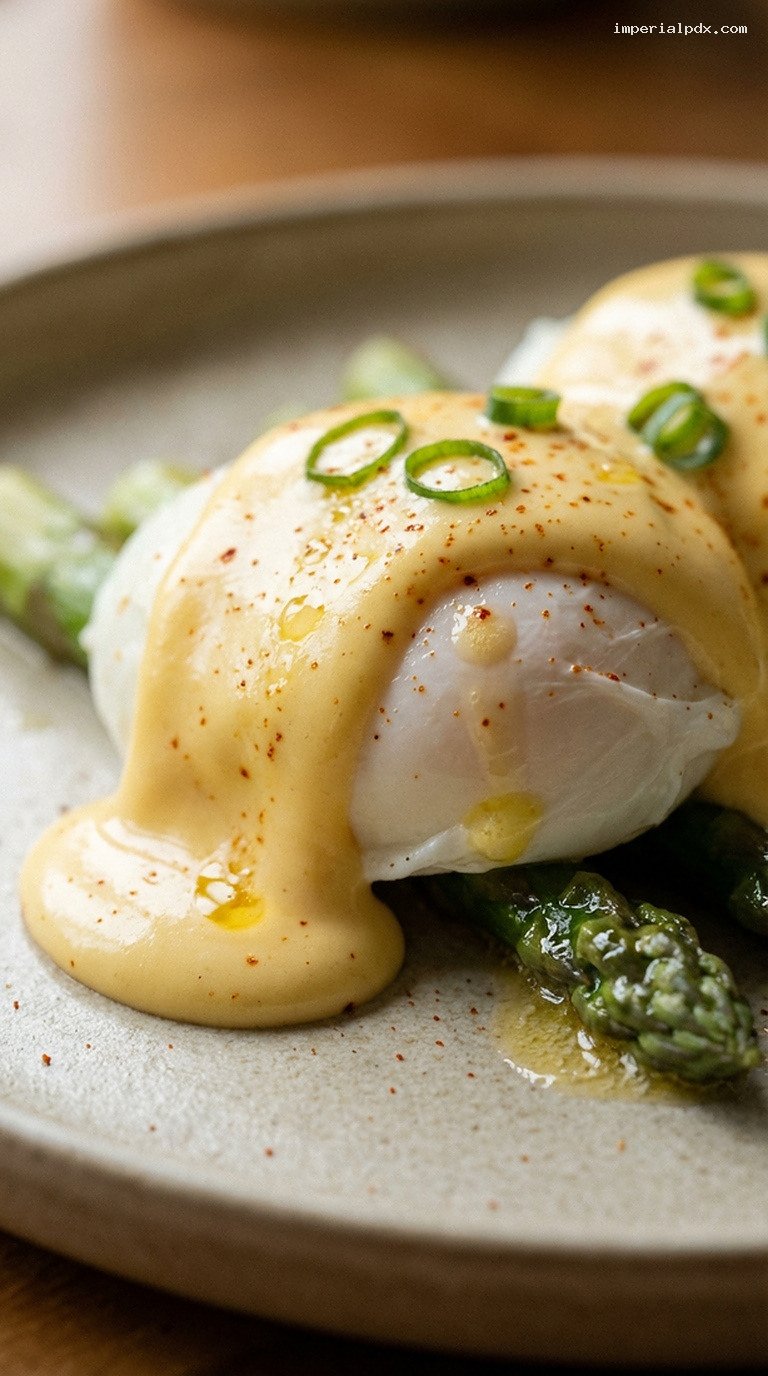
Check the consistency. For most uses, hollandaise should be thick enough to coat the back of a spoon but still pourable in a slow ribbon. If the sauce is too thick, whisk in warm water, 1 tsp at a time, until it reaches your desired texture. If it is too thin, return the bowl briefly over the hot water and whisk for 15–30 seconds to gently thicken it, being careful not to overheat.
Step 7: Serve or hold the sauce safely
Use the hollandaise as soon as possible for the best texture and safety. Spoon generously over freshly poached eggs (for eggs Benedict–style dishes), crisp-tender buttered asparagus, or simply seasoned oven-roasted salmon. If you like, garnish with a sprinkle of snipped chives or parsley and a very light dusting of cayenne or smoked paprika.
If you need to hold the sauce for a short time, keep the bowl in a warm spot (near but not over the stove, or over a pan of very warm, not simmering, water), stirring occasionally. Aim to keep the sauce just warm to the touch, not hot. For food safety, do not leave hollandaise at room temperature for more than 1–2 hours. It is best enjoyed freshly made.
Pro Tips
- Use room-temperature yolks. Cold yolks are slower to thicken and can cause the sauce to break more easily. Take eggs out of the fridge 20–30 minutes before starting or place them (in the shell) in warm tap water for 5 minutes.
- Control the heat. The water under your bowl should barely simmer. If the bowl becomes too hot to touch comfortably, remove it from the pot and whisk off the heat for a minute, adding a teaspoon of cool water if needed.
- Add butter gradually. At the beginning, be especially patient. Start with drops, then a thin stream once the emulsion has started to form. Rushing this step is the most common reason hollandaise separates.
- Thin with water, not more butter. If the sauce is too thick, whisk in warm water a teaspoon at a time until it flows easily. This keeps the flavor bright rather than overly heavy.
- How to rescue a broken sauce. If your hollandaise splits, whisk 1 fresh egg yolk with 1 tbsp water in a clean warm bowl until slightly thickened, then very slowly whisk in the broken sauce a spoonful at a time until it re-emulsifies.
Variations
- Blender hollandaise (faster method). Warm the clarified butter until hot but not scorching. Blend egg yolks, lemon juice, water, salt, and cayenne in a blender on low, then, with the motor running, drizzle in the hot butter in a thin stream until thick and creamy. Season to taste.
- Herb and lemon hollandaise. Stir 1–2 tbsp finely chopped fresh herbs (tarragon, parsley, or chives) and a little extra lemon juice into the finished sauce. This is beautiful over salmon or grilled vegetables.
- Smoky paprika hollandaise. Replace part or all of the cayenne with smoked paprika, and dust a little extra on top before serving. The gentle smokiness pairs wonderfully with roasted potatoes, asparagus, or seared fish.
Storage & Make-Ahead
Hollandaise is at its best when made right before serving. Because it is an egg-based sauce, it is not ideal for long storage and should be handled with care.
You can hold the sauce warm for up to 1 hour in a warm spot or over a pan of very warm (not simmering) water, stirring occasionally. Keep it just warm, not hot, to avoid curdling. Do not leave hollandaise at room temperature for more than 1–2 hours total for food safety reasons.
Technically, leftover hollandaise can be refrigerated in an airtight container for up to 1 day, but it often separates and becomes grainy when chilled. If you do refrigerate it, rewarm it very gently over a double boiler, whisking constantly and adding a teaspoon or two of warm water as needed to smooth it out. Even with care, it may not return to the original velvety texture. For this reason, many cooks simply make what they need and enjoy it fresh.
Nutrition (per serving)
Approximate values per serving (1 of 4, about 3 tablespoons of sauce): 240 calories; 26 g fat; 15 g saturated fat; 2 g protein; 1 g carbohydrates; 0 g fiber; 0.5 g sugar; 230 mg sodium. Actual values will vary based on exact ingredients and seasoning amounts used.