Quick Recipe Version (TL;DR)
Quick Ingredients
- 2 fresh pork tongues (about 2.5–3 lb / 1.1–1.3 kg total)
- Simmering: 3 qt water, 1 onion, 1 carrot, 1 celery stalk, 6 garlic cloves, 2 bay leaves, 1 tbsp kosher salt, 1 tsp peppercorns
- Brine: 2 cups white vinegar, 2 cups water, 3 tbsp sugar, 2 tbsp kosher salt
- Brine spices: mustard seeds, coriander seeds, peppercorns, bay leaves, garlic, chili flakes, fresh thyme (optional)
- Serving: extra-virgin olive oil, chopped fresh parsley, flaky salt, crusty bread, pickles, mustard
Do This
- 1. Rinse pork tongues under cold water. Trim any visible glands or excess fat.
- 2. Add tongues, water, onion, carrot, celery, garlic, bay leaves, salt, and peppercorns to a pot. Bring to a boil, then gently simmer 2–2¼ hours until very tender.
- 3. Let tongues cool just until you can handle them. Peel off the tough outer skin and any gristle while still warm. Discard solids; cool meat completely.
- 4. In a saucepan, combine vinegar, water, sugar, salt, and brine spices. Bring to a boil, stir to dissolve, then cool to room temperature.
- 5. Place whole or thick-sliced tongues in a glass or non-reactive container. Pour cooled brine over to completely submerge; weigh down if needed.
- 6. Cover and refrigerate at least 24 hours (48–72 hours for deeper flavor), gently turning pieces once or twice if they are large.
- 7. To serve, slice tongue very thinly across the grain. Drizzle with olive oil, sprinkle with parsley and flaky salt, and plate on a charcuterie board with bread, mustards, and pickles.
Why You’ll Love This Recipe
- Turns an old-fashioned cut into a beautifully tender, delicately spiced charcuterie-board centerpiece.
- Simple, affordable ingredients, with most of the time completely hands-off.
- Clean, tangy vinegar brine cuts through the richness and adds a nostalgic deli-style flavor.
- Perfect make-ahead appetizer: keeps well in the fridge and actually improves over a day or two.
Grocery List
- Produce: 2 fresh pork tongues (from the meat counter), 1 onion, 1 carrot, 1 celery stalk, 10 garlic cloves, fresh thyme (optional), fresh parsley for serving, small red chili or chili flakes, lemon (optional, for serving)
- Dairy: None
- Pantry: White vinegar, granulated sugar, kosher salt, black peppercorns, mustard seeds, coriander seeds, bay leaves, red pepper flakes, extra-virgin olive oil, flaky sea salt, crusty bread or crackers, mustards, pickles or cornichons
Full Ingredients
For the Simmered Pork Tongue
- 2 fresh pork tongues (about 2.5–3 lb / 1.1–1.3 kg total)
- 3 quarts (2.8 liters) cold water, or enough to cover tongues by 1–2 inches
- 1 medium yellow onion, peeled and quartered
- 1 medium carrot, cut into large chunks
- 1 celery stalk, cut into large chunks
- 6 garlic cloves, lightly crushed
- 2 bay leaves
- 1 tablespoon kosher salt (use slightly less if using fine table salt)
- 1 teaspoon whole black peppercorns
For the Tangy Pickling Brine
- 2 cups (480 ml) white vinegar (distilled or white wine vinegar)
- 2 cups (480 ml) water
- 3 tablespoons (about 40 g) granulated sugar
- 2 tablespoons (about 18 g) kosher salt
- 2 teaspoons yellow mustard seeds
- 2 teaspoons coriander seeds
- 1 teaspoon whole black peppercorns
- 1 teaspoon red pepper flakes (or 1 fresh small red chili, sliced)
- 2 bay leaves
- 4 garlic cloves, thinly sliced
- 4 small sprigs fresh thyme, or 1 teaspoon dried thyme (optional)
- 4–6 very thin slices red onion (optional, for a pretty pink tint and extra flavor)
For Serving
- 1–2 tablespoons extra-virgin olive oil
- 1–2 tablespoons finely chopped fresh flat-leaf parsley
- Flaky sea salt and freshly ground black pepper, to taste
- Crusty bread, crackers, or toasted baguette slices
- Assorted mustards (Dijon, whole-grain, or spicy brown)
- Pickles, cornichons, or pickled onions
- Lemon wedges (optional, for a bright squeeze at the table)
Step-by-Step Instructions
Step 1: Rinse and Trim the Pork Tongues
Place the pork tongues in a large bowl and rinse them thoroughly under cold running water, rubbing the surface gently to remove any blood or residue. Drain well. If you see any obvious glands, loose bits of fat, or ragged membranes around the base of the tongues, trim them away with a sharp knife. You do not need to peel the outer skin yet; that will happen after simmering, when it is much easier to remove. Set the cleaned tongues aside while you prepare the simmering aromatics.
Step 2: Simmer the Tongues Until Tender
Place the tongues in a large, heavy pot or Dutch oven. Add the onion, carrot, celery, crushed garlic cloves, bay leaves, kosher salt, and whole black peppercorns. Pour in enough cold water (about 3 quarts) to cover the tongues by at least 1–2 inches.
Set the pot over medium-high heat and bring to a gentle boil. As it heats, skim off any foam that rises to the surface with a spoon. Once boiling, reduce the heat to low so the liquid barely simmers with tiny bubbles. Cover the pot, leaving the lid slightly ajar, and cook for 2 to 2¼ hours, or until the tongues are very tender. They are done when a skewer or thin knife slides in with almost no resistance.
Step 3: Cool Slightly and Peel the Tongues
When the tongues are tender, turn off the heat and let them cool in the liquid for about 15 minutes, just until they are comfortable to handle with kitchen tongs or gloves. Lift the tongues out onto a cutting board. Strain and discard the simmering liquid and vegetables.
While the tongues are still warm (this is important), peel off the thick, pale outer skin. It should loosen and pull away in large pieces with the help of a small sharp knife. Trim away any tough connective tissue or cartilage from the base. You can leave the tongues whole for a more rustic look, or cut them into 2–3 large chunks so the brine can penetrate more quickly. Let the peeled meat cool completely to room temperature, then transfer to the refrigerator while you make the brine. Chilling briefly helps the slices hold their shape later.
Step 4: Make the Tangy Spiced Pickling Brine
In a medium saucepan, combine the vinegar, water, sugar, and kosher salt. Add the mustard seeds, coriander seeds, peppercorns, red pepper flakes or sliced chili, bay leaves, sliced garlic, thyme, and red onion slices (if using). Give everything a quick stir.
Place the pan over medium heat and bring just to a boil, stirring occasionally to help the sugar and salt dissolve. Once the mixture reaches a full simmer and the sugar and salt are completely dissolved, remove the pan from the heat. Allow the brine to cool to room temperature. This usually takes about 30–45 minutes; to speed it up, you can pour the brine into a heatproof jug and set it in a shallow bowl of cold water, stirring occasionally.
Step 5: Pack the Tongue and Add the Brine
Choose a non-reactive container such as a glass loaf pan, ceramic dish, or large canning jar that will hold the tongues snugly. Arrange the cooled, peeled tongues (whole or in large chunks) inside. If you like, tuck a few of the red onion slices or garlic pieces between them for extra flavor and visual appeal.
Pour the completely cooled brine and all its aromatics over the tongues, making sure they are fully submerged. If needed, you can top up with a little extra 1:1 mixture of vinegar and water. If the tongues want to float, place a small, clean plate or a piece of folded parchment with a heavy spoon on top as a weight to keep them under the liquid. Cover the container tightly with a lid or plastic wrap.
Step 6: Refrigerate and Let the Flavors Develop
Refrigerate the tongues in their brine for at least 24 hours before serving; 48–72 hours will give you a deeper, more pronounced pickled flavor. During this time, the meat will firm up slightly and soak in the tangy, spiced vinegar. If your tongues are packed in larger pieces, you can gently turn or rotate them once or twice during the first day to encourage even pickling.
The tongues are technically safe to eat as soon as they are cold, but the flavor is significantly better after that minimum 24-hour rest, so plan ahead if you are making this for a special board or gathering.
Step 7: Slice Thinly and Serve on a Charcuterie Board
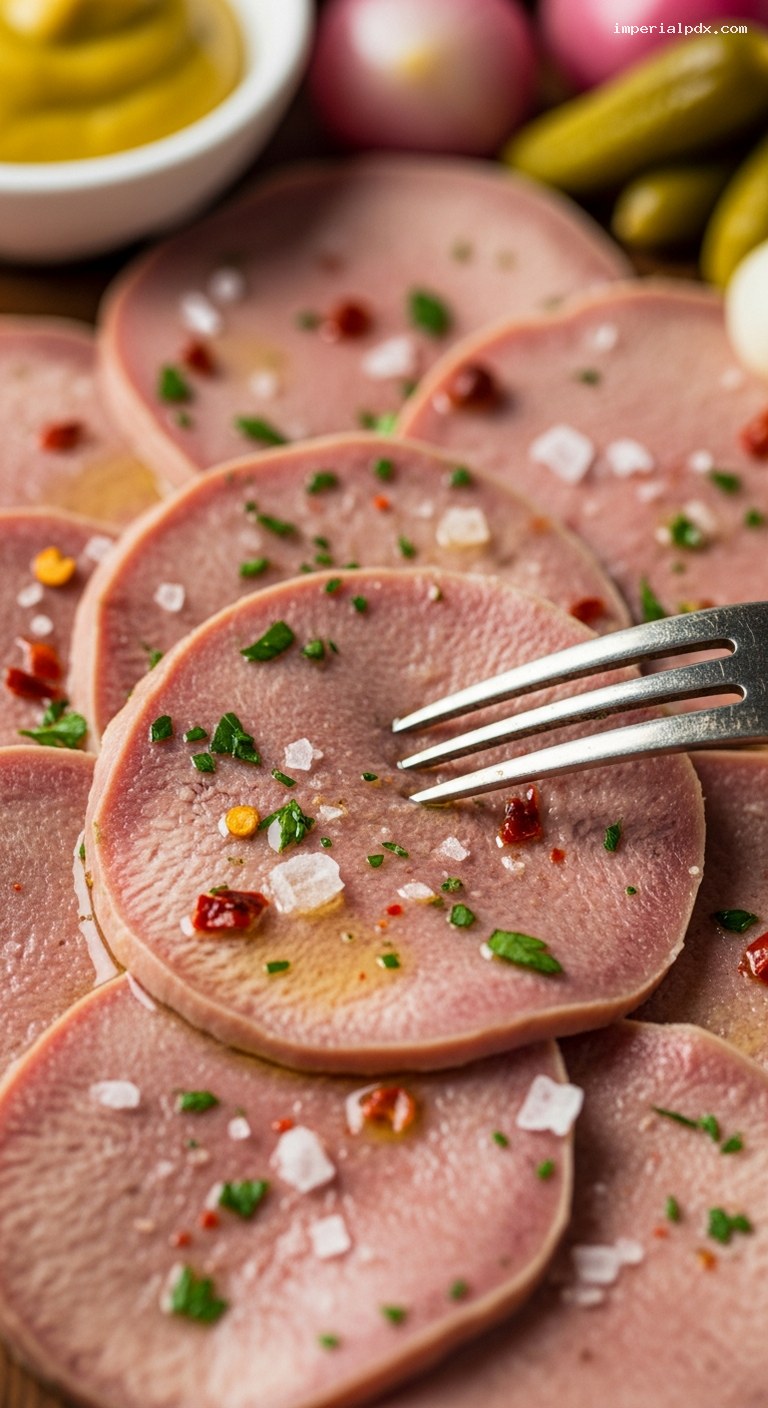
When you are ready to serve, remove the tongues from the brine and pat them very lightly with paper towels to remove excess moisture (do not rinse; that would wash away flavor). Using a sharp slicing knife, cut the tongue crosswise into very thin slices, about 1–2 mm thick, going against the grain. Thin slicing is the key to a tender, delicate bite.
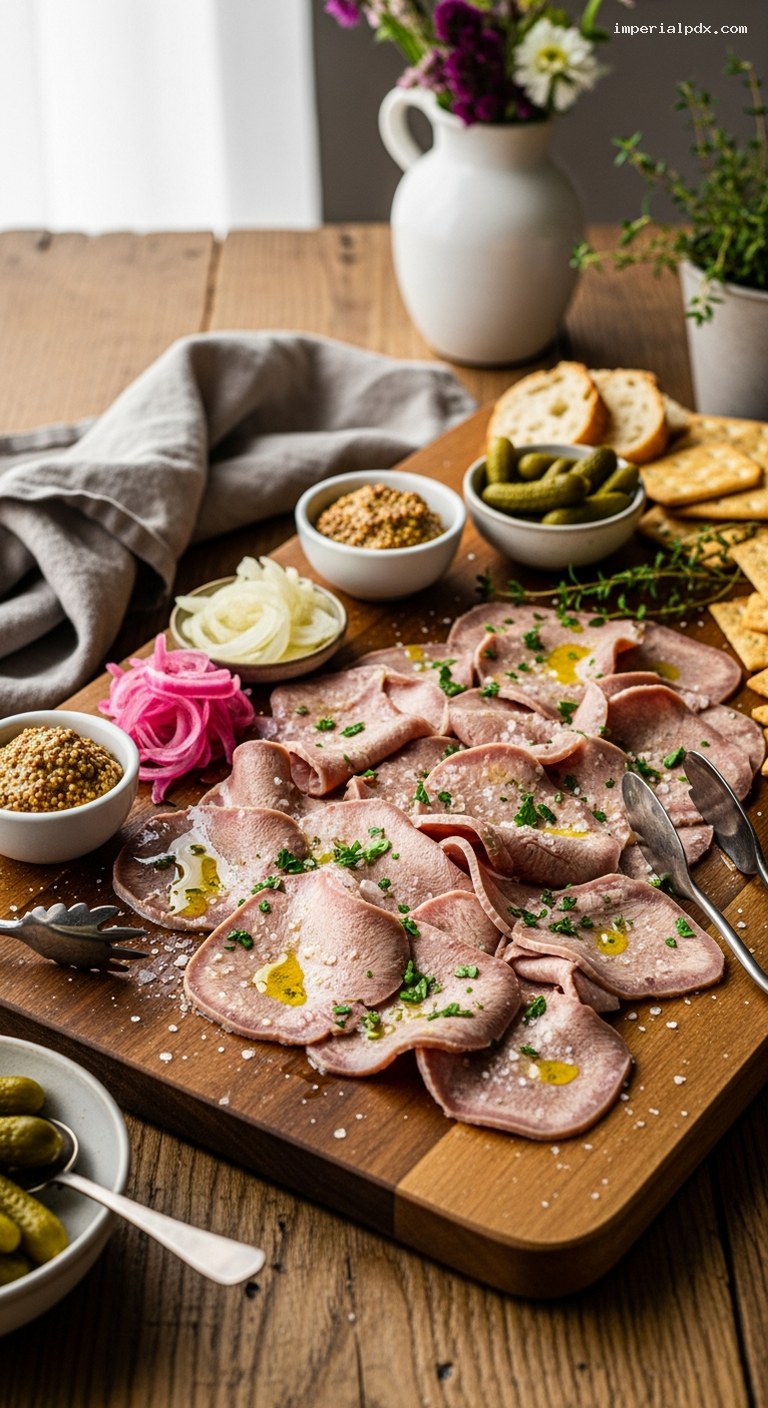
Arrange the slices in gentle overlapping rows or rosettes on a wooden board or platter. Drizzle with a little extra-virgin olive oil and sprinkle with chopped fresh parsley, flaky sea salt, and a few twists of black pepper. Add small bowls of mustard, pickles, and olives and surround with slices of crusty bread or crackers. Serve chilled or just slightly cool; the light chill keeps the meat firm enough to pick up easily, while still soft and tender.
Pro Tips
- Peel while warm: Removing the outer skin from the tongues is dramatically easier when they are still warm from the pot. If they cool too much, gently rewarm them in a bit of the cooking liquid.
- Keep the simmer gentle: A hard boil can toughen the meat and make the cooking liquid cloudy. Aim for a soft, steady simmer with just a few bubbles breaking the surface.
- Use non-reactive containers: Vinegar and metal do not mix well. Stick with glass or ceramic for both simmering (enamel-coated Dutch oven is fine) and storing the pickled tongues.
- Slice very thin: Even if the tongue is perfectly cooked, thick slices can feel dense. A sharp knife and thin slices make it delicate and charcuterie-worthy.
- Let it mellow: If the first taste straight from the brine is too sharp for you, simply pat the slices dry, drizzle with a bit of olive oil, and let them sit on the board for 10–15 minutes to soften the acidity.
Variations
- Smoky paprika brine: Add 1 teaspoon smoked paprika and a few extra garlic cloves to the brine for a lightly smoky, Spanish-style flavor that pairs beautifully with olives and Manchego.
- Herb and mustard style: Increase the mustard seeds to 1 tablespoon and add 2 teaspoons dried mixed herbs (or extra thyme and rosemary). Serve with grainy mustard and cornichons for a classic French bistro feel.
- Spicy chile-lime twist: Add 2 sliced fresh jalapeños, swap half the vinegar for apple cider vinegar, and finish the slices with lime juice and cilantro instead of parsley for a brighter, spicier profile.
Storage & Make-Ahead
Pickled pork tongue is ideal for making ahead. Once cooled and submerged in brine, it will keep in the refrigerator for up to 5 days, tightly covered. The flavor often improves over the first 2–3 days as the brine fully penetrates the meat. For best texture, keep the tongues in larger pieces in the brine and slice only what you plan to serve that day.
If you need to store it longer, you can freeze the cooked, peeled tongue (without the brine) for up to 2 months. Wrap tightly in plastic and then in foil before freezing. Thaw overnight in the refrigerator, then place in fresh, cooled brine for 24 hours before serving to reintroduce the pickled flavor. Do not freeze the tongues in vinegar brine, as the texture can become mealy.
Nutrition (per serving)
Approximate values for one appetizer serving (about 3 oz / 85 g cooked tongue, brine not consumed): 220 calories; 23 g protein; 14 g fat; 3 g saturated fat; 2 g carbohydrates; 0 g fiber; 2 g sugar; 520 mg sodium. Actual values will vary based on the exact size of the tongues and how much salt is absorbed from the brine.