Quick Recipe Version (TL;DR)
Quick Ingredients
- 12 ounces dried spaghetti
- 6 ounces pancetta, cut into 1/4-inch pieces
- 2 large eggs
- 3 large egg yolks
- 3 ounces Pecorino Romano, finely grated and divided
- 1 1/2 teaspoons freshly ground black pepper, divided
- 1 tablespoon kosher salt for the pasta water
- 1 cup reserved pasta cooking water, as needed
- 1 tablespoon finely chopped fresh chives
Do This
- 1. Whisk the eggs, egg yolks, 2 1/2 ounces Pecorino Romano, and 1 teaspoon black pepper in a bowl.
- 2. Cook the pancetta in a large skillet over medium heat for 8 to 10 minutes, until crisp.
- 3. Boil the spaghetti in 4 quarts of salted water until al dente, about 1 minute less than the package directions.
- 4. Reserve 1 cup of pasta water, then toss the drained pasta with the pancetta and its rendered fat for 30 seconds.
- 5. Remove the skillet from the heat, wait 60 seconds, and quickly toss in the egg mixture and 1/2 cup pasta water.
- 6. Add more pasta water, 1 tablespoon at a time, until the sauce is silky and coats every strand.
- 7. Serve immediately with the remaining Pecorino Romano, black pepper, and chopped chives.
Why You’ll Love This Recipe
- It transforms familiar breakfast ingredients into a satisfying pasta meal.
- The egg and cheese mixture creates a rich, silky sauce without using cream.
- Crispy pancetta adds savory flavor and a delicious contrast in texture.
- It comes together in 35 minutes with a short, practical ingredient list.
Grocery List
- Produce: Fresh chives
- Dairy and Eggs: Large eggs, Pecorino Romano
- Meat: Diced or thick-sliced pancetta
- Pantry: Dried spaghetti, kosher salt, whole black peppercorns
Full Ingredients
For the Pasta and Pancetta
- 12 ounces dried spaghetti
- 6 ounces pancetta, cut into 1/4-inch pieces
- 4 quarts water
- 1 tablespoon kosher salt
- 1 cup reserved pasta cooking water, used as needed
For the Egg and Pecorino Sauce
- 2 large eggs
- 3 large egg yolks
- 2 1/2 ounces Pecorino Romano, finely grated, about 3/4 cup loosely packed
- 1 teaspoon freshly ground black pepper
For Finishing
- 1/2 ounce Pecorino Romano, finely grated, about 2 tablespoons
- 1/2 teaspoon freshly ground black pepper
- 1 tablespoon finely chopped fresh chives
Step-by-Step Instructions
Step 1: Prepare the egg and cheese mixture
Bring the eggs to room temperature for about 15 minutes while you prepare the remaining ingredients. In a medium bowl, whisk together the 2 whole eggs, 3 egg yolks, 2 1/2 ounces of finely grated Pecorino Romano, and 1 teaspoon of black pepper. The mixture will be thick and paste-like. Set it near the stove so it is ready as soon as the pasta is cooked.
Step 2: Crisp the pancetta
Place the pancetta in a cold, large skillet with high sides. Set the skillet over medium heat and cook for 8 to 10 minutes, stirring every 1 to 2 minutes, until the pancetta is browned and crisp around the edges. Leave the pancetta and its rendered fat in the skillet, then reduce the heat to low while the pasta finishes cooking.
Step 3: Cook the spaghetti until al dente
While the pancetta cooks, bring 4 quarts of water to a rolling boil, approximately 212°F at sea level, in a large pot. Add 1 tablespoon of kosher salt, followed by the spaghetti. Cook for 1 minute less than the package directions indicate. For spaghetti with a suggested 10-minute cooking time, cook it for 9 minutes. Stir several times so the strands do not stick together.
Step 4: Reserve the starchy pasta water
Just before draining the spaghetti, scoop out 1 cup of the cloudy pasta cooking water. The starch in this water helps the egg, cheese, and pancetta fat combine into a smooth sauce. Drain the spaghetti, but do not rinse it; the hot, starchy surface is essential for the sauce.
Step 5: Combine the pasta and pancetta
Increase the heat beneath the pancetta skillet to medium. Add the drained spaghetti and toss continuously for 30 seconds, coating the strands in the rendered pancetta fat. Turn off the heat completely and move the skillet to a cool burner. Let the pasta rest for exactly 60 seconds so the pan is hot enough to thicken the eggs without immediately scrambling them.
Step 6: Create the silky carbonara sauce
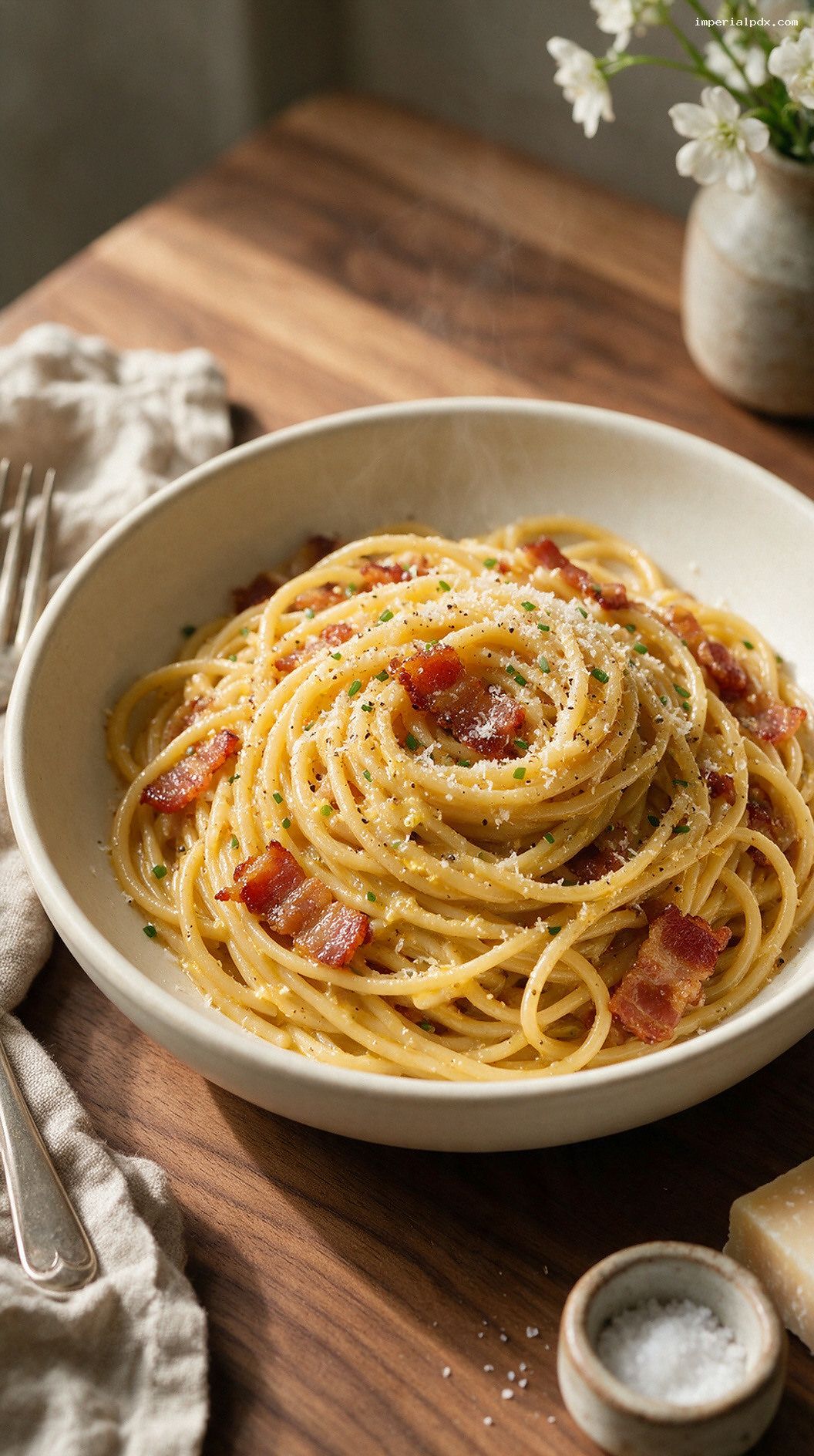
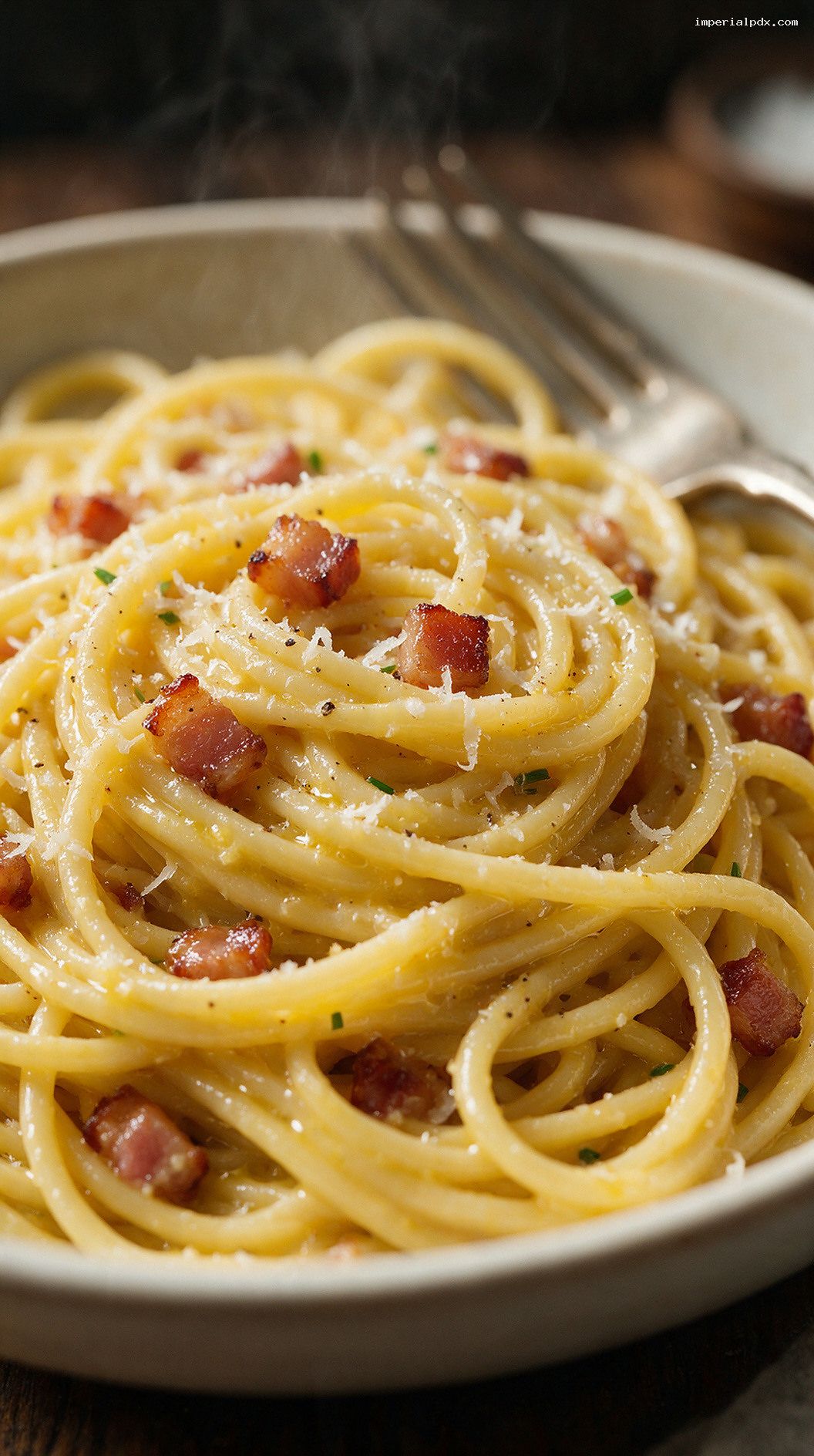
While tossing the pasta continuously with tongs, pour in the egg and Pecorino mixture followed by 1/2 cup of the reserved pasta water. Continue tossing vigorously for 1 to 2 minutes. The eggs, cheese, pasta water, and rendered fat should emulsify into a glossy, pale-gold sauce that clings to every strand. If the sauce looks thick or sticky, add more pasta water 1 tablespoon at a time until it flows smoothly.
For food safety, use pasteurized eggs when available. If checking with an instant-read thermometer, the sauce in the center of the pasta should reach 160°F. If it is below 160°F, return the skillet to the lowest heat for 10 seconds at a time while tossing constantly, removing it from the heat between intervals. Do not let the sauce exceed 170°F, or the eggs may become grainy.
Step 7: Season and serve immediately
Taste before adding any extra salt because both pancetta and Pecorino Romano are naturally salty. Divide the pasta among four warmed bowls. Finish each portion with the remaining 1/2 ounce of Pecorino Romano, the remaining 1/2 teaspoon of black pepper, and the chopped chives. Serve immediately while the sauce is warm, creamy, and fluid.
Pro Tips
- Finely grate the cheese: A fine, fluffy grate melts much more smoothly than thick shreds and reduces the chance of a clumpy sauce.
- Work away from direct heat: Residual heat from the pasta and skillet should cook the eggs gently. Adding the egg mixture over an active burner can produce scrambled eggs.
- Keep extra pasta water nearby: Carbonara thickens quickly as it rests. A spoonful of hot pasta water will loosen the sauce without diluting its flavor.
- Use freshly ground pepper: Coarsely ground black pepper contributes aroma, gentle heat, and the classic speckled appearance.
- Warm the serving bowls: Fill the bowls with hot water for 2 minutes, then dry them before plating. Warm bowls keep the sauce silky for longer.
Variations
- Smoky bacon carbonara: Replace the pancetta with 5 ounces of thick-cut bacon, cut into 1/2-inch pieces. Cook it for 8 to 10 minutes until crisp.
- Pea and pancetta carbonara: Add 1 cup of frozen peas to the boiling pasta during the final 2 minutes of cooking, then drain them with the spaghetti.
- Rigatoni breakfast carbonara: Substitute 12 ounces of rigatoni for the spaghetti and cook it for 1 minute less than the package directions. The ridges and hollow centers capture plenty of sauce and pancetta.
Storage & Make-Ahead
Carbonara is best served immediately because the egg and cheese sauce thickens as it cools. Refrigerate leftovers within 2 hours in an airtight container at 40°F or below for up to 3 days. Reheat one serving in a skillet over low heat with 1 to 2 tablespoons of water, stirring frequently, until it reaches 165°F. The reheated sauce will be thicker and less glossy than freshly made carbonara. Freezing is not recommended because the sauce can separate and become grainy. To prepare ahead, grate the cheese and dice the pancetta up to 2 days in advance; refrigerate them separately. The pancetta may also be crisped 1 day ahead and gently reheated before assembling the pasta.
Nutrition (per serving)
Calories: 610 kcal | Carbs: 64g | Protein: 29g | Fat: 27g | Saturated Fat: 12g | Fiber: 4g | Sugar: 2g | Sodium: 1120mg | Cholesterol: 285mg