Quick Recipe Version (TL;DR)
Quick Ingredients
- 1 (9 lb) bone-in pork shoulder (pork butt)
- 2 tbsp kosher salt, 2 tbsp coarse black pepper, 1 tbsp chili powder
- 2 cups apple cider vinegar, 1 tbsp red pepper flakes, 2 tsp black pepper, 2 tsp kosher salt, 1 tbsp hot sauce, 1 tbsp packed light brown sugar (optional)
- 12 sturdy buns
- Slaw: 6 cups shredded green cabbage, 1 cup shredded carrot, 1/2 cup mayonnaise, 2 tbsp apple cider vinegar, 1 tbsp sugar, 1/2 tsp celery seed, 1/2 tsp kosher salt, 1/4 tsp black pepper
Do This
- 1. Heat smoker to 250°F; set up for indirect cooking (hickory or oak recommended).
- 2. Rub pork with salt, pepper, and chili powder; smoke fat-side up.
- 3. Smoke until internal temp is 165°F (about 6 hours), then wrap tightly in foil.
- 4. Continue smoking until 195–203°F and probe-tender (about 6 more hours).
- 5. Rest wrapped 1 hour, then shred and discard large fat/bone.
- 6. Whisk vinegar-pepper sauce; toss with pork to taste (start with 1 cup, add more as desired).
- 7. Pile on buns with crunchy slaw; serve with extra sauce on the side.
Why You’ll Love This Recipe
- Bright and balanced: Tangy vinegar-pepper sauce cuts through rich pork, so the sandwich feels satisfying but not heavy.
- Classic barbecue texture: Low-and-slow smoke turns pork shoulder into juicy, shreddable strands.
- Made for a crowd: One pork butt makes a big batch, and it holds well for serving over several hours.
- Customizable heat and sweetness: Keep it sharp and peppery, or add a small touch of brown sugar for a mellow finish.
Grocery List
- Produce: green cabbage (or pre-shredded slaw mix), carrots
- Dairy: mayonnaise
- Meat: 1 (9 lb) bone-in pork shoulder (pork butt)
- Bakery: 12 sturdy buns (potato rolls or brioche-style buns work well)
- Pantry: kosher salt, coarse black pepper, chili powder, apple cider vinegar, red pepper flakes, hot sauce, light brown sugar (optional), celery seed, smoking wood (hickory or oak; optional apple wood)
Full Ingredients
For the Pork
- 1 (9 lb) bone-in pork shoulder (pork butt)
- 2 tbsp kosher salt
- 2 tbsp coarse black pepper
- 1 tbsp chili powder (American-style chili powder blend)
- Smoking wood: 4 to 6 cups wood chunks (hickory or oak recommended; optional 1 to 2 cups apple wood for sweetness)
For the Carolina Vinegar-Pepper Sauce
- 2 cups apple cider vinegar
- 1 tbsp red pepper flakes
- 2 tsp coarse black pepper
- 2 tsp kosher salt
- 1 tbsp hot sauce (optional but recommended)
- 1 tbsp packed light brown sugar (optional; keeps it sharp, not sweet)
For the Crunchy Slaw
- 6 cups finely shredded green cabbage (about 1 small head)
- 1 cup shredded carrot (about 2 medium carrots)
- 1/2 cup mayonnaise
- 2 tbsp apple cider vinegar
- 1 tbsp granulated sugar
- 1/2 tsp celery seed
- 1/2 tsp kosher salt
- 1/4 tsp black pepper
For Serving
- 12 buns (split)
- Extra vinegar-pepper sauce, for passing at the table
Step-by-Step Instructions
Step 1: Preheat the smoker and prep for indirect heat
Preheat your smoker to 250°F and set it up for indirect cooking. Add your smoking wood (hickory or oak is classic; a little apple wood is nice for aroma). Place a drip pan under where the pork will sit if your smoker setup allows.
If you’re using a water pan, fill it with hot water to help stabilize the temperature.
Step 2: Season the pork shoulder
Pat the pork shoulder dry with paper towels. In a small bowl, mix 2 tbsp kosher salt, 2 tbsp coarse black pepper, and 1 tbsp chili powder. Season the pork all over with the rub, pressing it in so it adheres. No mustard binder is needed here; the goal is a simple, traditional rub that lets the vinegar sauce shine.
Optional (but helpful): If you have time, refrigerate the seasoned pork, uncovered, for 8 to 12 hours to dry-brine. If not, proceed right away.
Step 3: Smoke until the bark sets (and hits 165°F)
Place the pork on the smoker fat-side up and close the lid. Maintain the smoker at 250°F for steady, even cooking.
Smoke until the pork reaches an internal temperature of 165°F in the thickest part (avoid touching bone with the probe), about 6 hours. This is typically when the bark looks dark and set and the meat is in the “stall” range.
Step 4: Wrap and cook until shreddable (195–203°F)
Remove the pork from the smoker and wrap it tightly in heavy-duty foil (two layers if needed to prevent leaks). Return it to the smoker at 250°F.
Continue cooking until the internal temperature reaches 195–203°F, about 6 hours more. More important than the number is texture: when you slide a probe or skewer into the meat, it should feel very tender, like room-temperature butter.
Step 5: Rest, then pull into juicy strands
Keep the pork wrapped and let it rest for 1 hour at room temperature (or in an empty cooler with a towel over it to hold heat). Resting helps the juices redistribute and makes pulling easier.
Unwrap carefully (hot steam), and pour any collected juices into a bowl. Pull the pork into strands using two forks or clean, gloved hands. Discard the bone and any large pieces of fat. Mix a few spoonfuls of the reserved juices back into the pork for extra moisture.
Step 6: Make the sharp vinegar-pepper sauce
In a bowl or measuring pitcher, whisk together:
2 cups apple cider vinegar, 1 tbsp red pepper flakes, 2 tsp black pepper, 2 tsp kosher salt, and 1 tbsp hot sauce. If you like a slightly rounder flavor, whisk in 1 tbsp packed light brown sugar. The sauce should taste punchy and peppery.
Tip: The pepper flakes will bloom and get a little hotter as the sauce sits for 10–15 minutes.
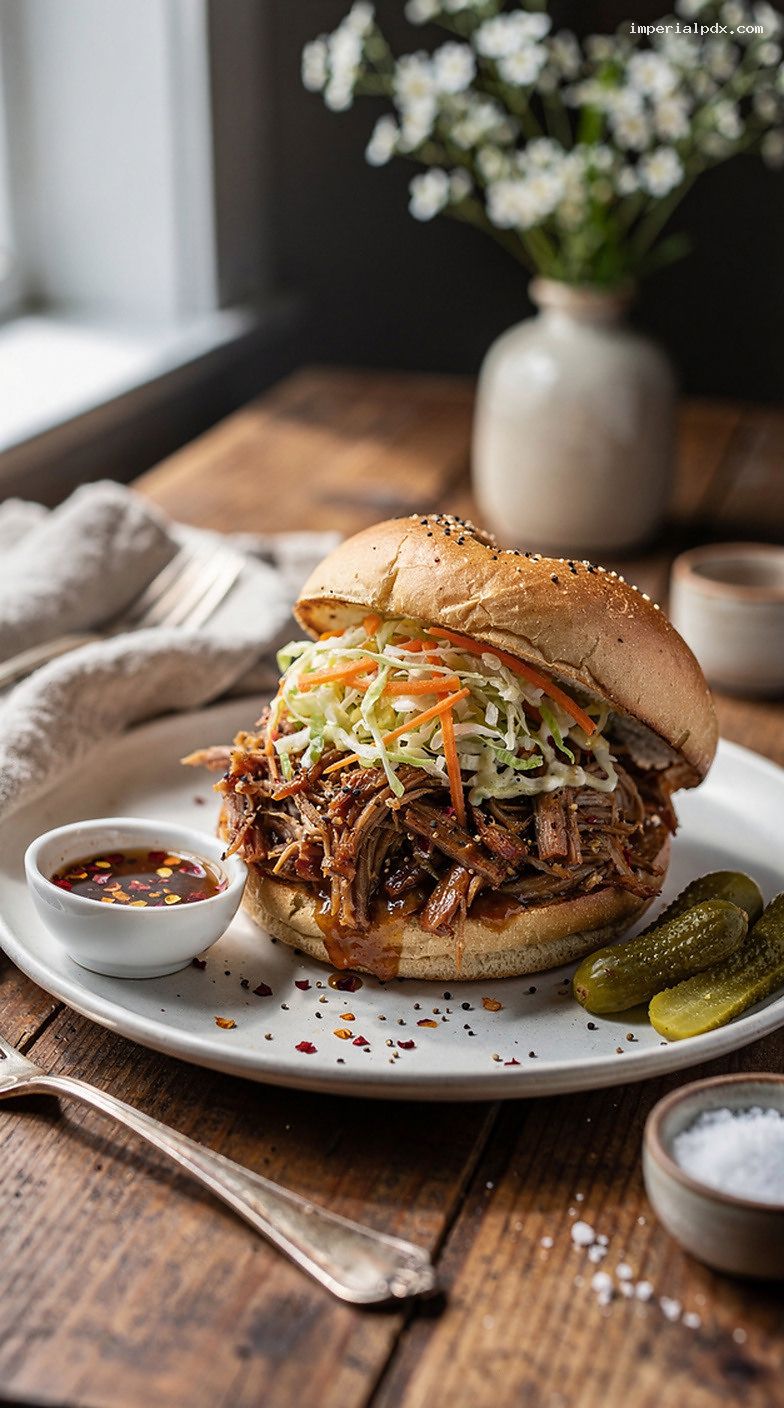
Step 7: Dress the pork and build sandwiches with crunchy slaw
Toss the pulled pork with the vinegar sauce to taste. Start with 1 cup of sauce, toss well, then add more in 1/4-cup increments until it’s tangy and juicy (many people use 1 1/2 to 2 cups total).
Make the slaw: In a large bowl, combine 6 cups cabbage and 1 cup carrot. In a small bowl, whisk 1/2 cup mayonnaise, 2 tbsp apple cider vinegar, 1 tbsp sugar, 1/2 tsp celery seed, 1/2 tsp salt, and 1/4 tsp pepper. Toss with the cabbage mixture and chill for 15 minutes for best crunch.
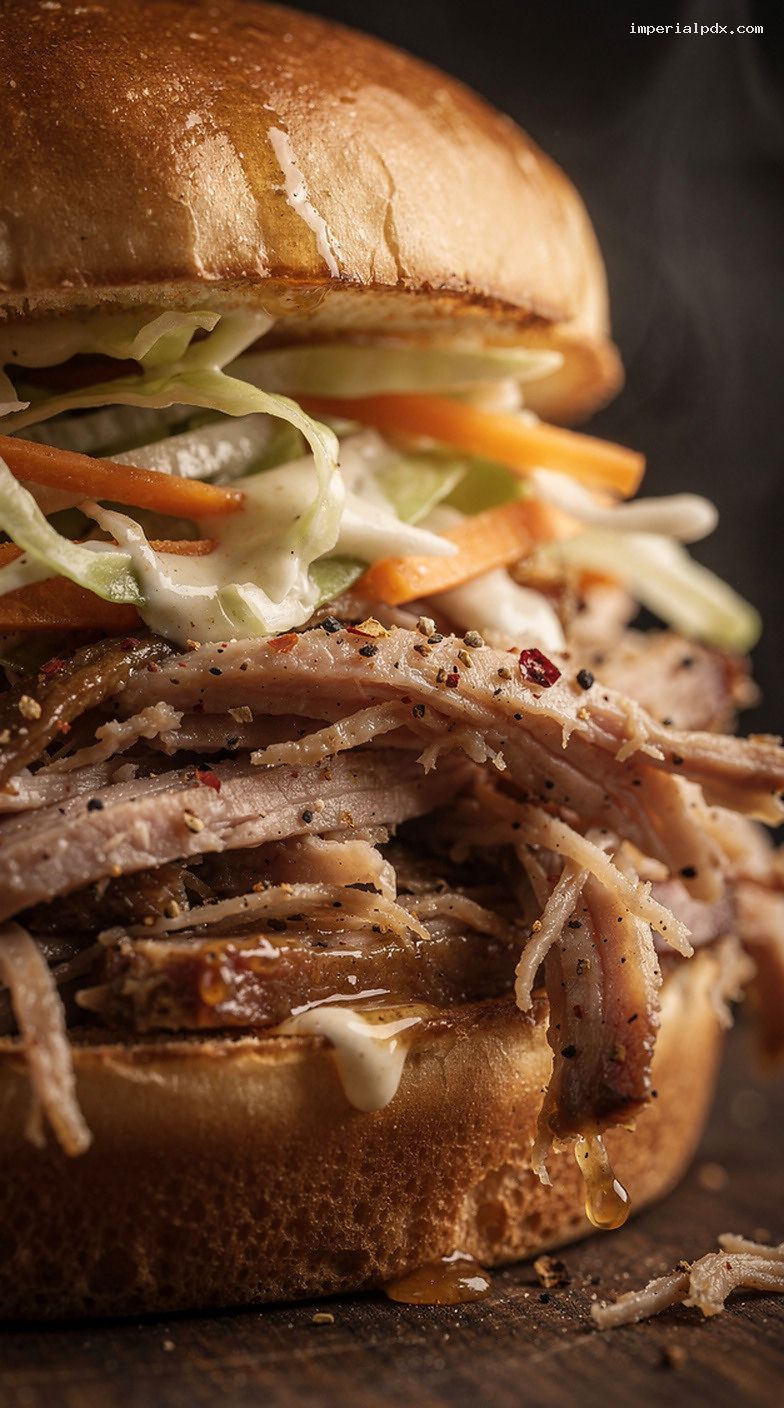
To serve, pile warm pulled pork onto buns and top with a generous handful of slaw. Pass extra vinegar-pepper sauce at the table.
Pro Tips
- Aim for tenderness, not just temperature: Start checking at 195°F, but pull the pork when it’s truly probe-tender (often closer to 200–203°F).
- Control the tang: Dress the pork gradually. You want it moist and bright, not swimming. Serving extra sauce on the side keeps everyone happy.
- Keep it moist for a party: Hold pulled pork warm in a covered pan at 170–180°F (oven or roaster). Stir in a few spoonfuls of reserved juices as needed.
- Slice the barky bits: If you get thick pieces of bark, chop them and mix back in so every sandwich has smoky flavor.
- Slaw stays crunchier if mixed later: You can shred the vegetables ahead and mix the dressing in closer to serving time.
Variations
- Extra-spicy Carolina: Increase red pepper flakes to 1 1/2 tbsp and add 1/2 tsp cayenne to the sauce.
- Eastern North Carolina-style (super simple): Skip the brown sugar and hot sauce; use only vinegar, salt, black pepper, and red pepper flakes.
- Oven finish option: If your smoker time is limited, smoke unwrapped at 250°F until 165°F, wrap, then finish in a 250°F oven until 195–203°F.
Storage & Make-Ahead
Refrigerate: Store pulled pork in an airtight container with a splash of vinegar sauce (and/or reserved juices) for up to 4 days. Store slaw separately for up to 3 days (it will soften over time).
Freeze: Freeze pulled pork (well-sauced and cooled) in freezer bags for up to 3 months. Thaw overnight in the refrigerator.
Reheat: Rewarm gently in a covered pot over low heat or in a 300°F oven until hot, adding a few tablespoons of sauce or water if needed to keep it juicy.
Make-ahead plan: Smoke the pork the day before, pull it while warm, and refrigerate with some sauce. Reheat for serving, then toss with a fresh splash of vinegar sauce to brighten it back up.
Nutrition (per serving)
Approximate, per 1 sandwich (pulled pork + bun + slaw), assuming 12 servings: 520 calories, 28 g protein, 28 g fat, 38 g carbohydrates, 2 g fiber, 9 g sugar, 980 mg sodium. Values vary by bun size, pork fat content, and how much sauce/slaw you use.