Quick Recipe Version (TL;DR)
Quick Ingredients
- 3 cups (375 g) all-purpose flour
- 2 1/4 tsp (7 g) instant or rapid-rise yeast
- 1 tbsp (15 g) granulated sugar
- 1 1/4 tsp (7 g) fine sea salt
- 1 cup (240 ml) warm water, about 105°F/40°C
- 1 cup (225 g) cold unsalted European-style butter, 82% fat
- 1 cup (200 g) granulated sugar for laminating, plus 3–4 tbsp extra for the pan and topping
- 2 tbsp (28 g) soft unsalted butter for greasing the muffin tin
- Optional: 1 tsp vanilla extract, zest of 1 small orange or 1/2 lemon
Do This
- 1. Mix flour, yeast, sugar, and salt, then add warm water (and vanilla/zest if using) and knead until smooth. Let rise 60–90 minutes until doubled, then chill 30 minutes.
- 2. Beat cold butter into a 6-inch (15 cm) square between parchment and chill until firm but pliable.
- 3. Roll dough to a 9-inch (23 cm) square, wrap the butter block like an envelope, then roll into a rectangle and fold in thirds (1st turn). Chill 20–30 minutes.
- 4. For 2 more turns, roll the dough out on a thick layer of sugar (no flour), sprinkling more sugar on top each time before folding in thirds and chilling 20 minutes between turns.
- 5. Butter and sugar a 12-cup muffin tin. Roll dough to about 10 x 14 inches (25 x 35 cm), cut into 12 squares, fold corners of each square to the center, and place in sugared muffin cups.
- 6. Proof 45–60 minutes, then bake at 400°F (200°C) for 25–30 minutes until deep golden and caramelized. Cool briefly, then carefully release from the pan while the caramel is still warm.
Why You’ll Love This Recipe
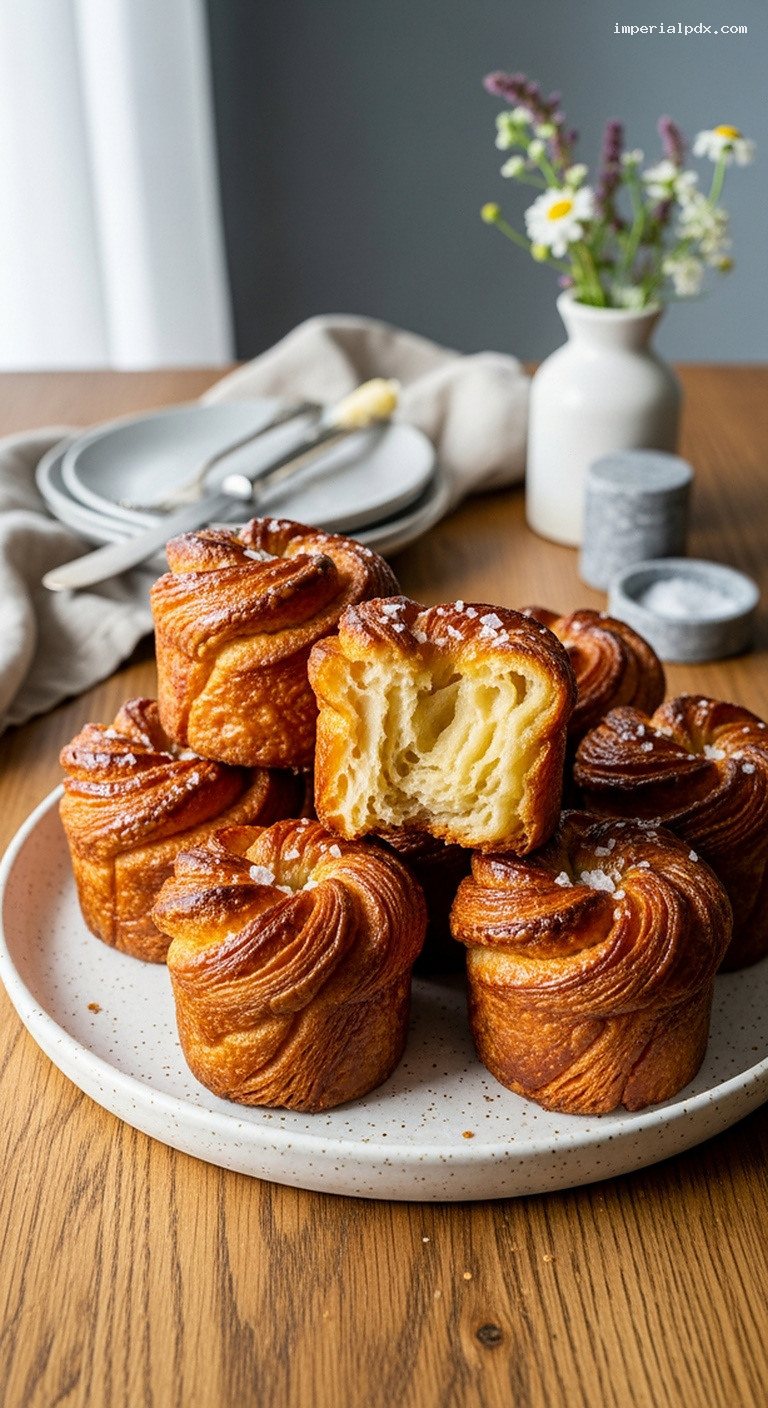
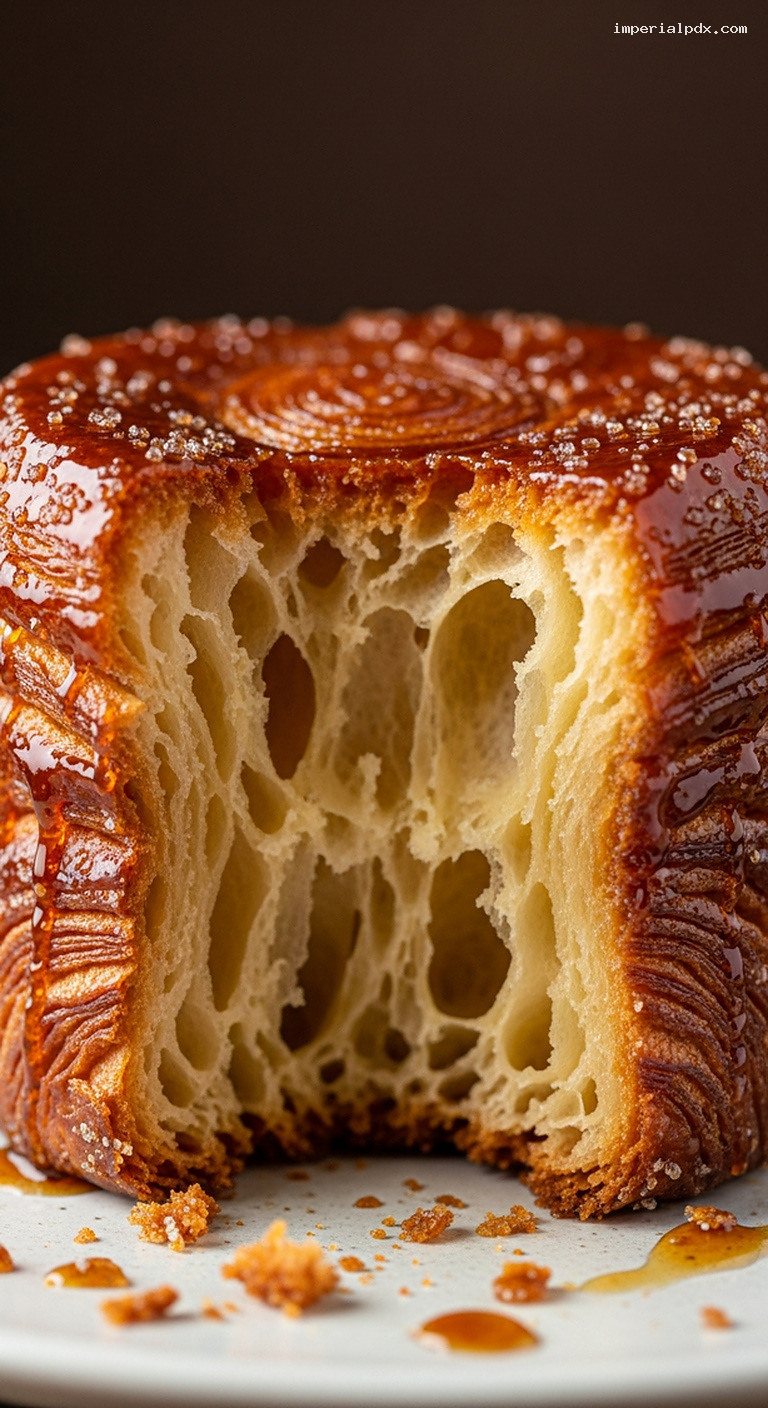
- Crisp, deeply caramelized sugar on the outside with rich, buttery, flaky layers inside.
- A simplified lamination process designed for home bakers, with clear rest times and cues.
- Uses a standard muffin tin to create individual pastries that look bakery-level impressive.
- Perfect for special breakfasts, brunch, or an afternoon coffee treat that tastes straight out of Brittany.
Grocery List
- Produce: 1 small orange or 1/2 lemon for optional zest (optional, but lovely)
- Dairy: Unsalted European-style butter (at least 82% fat content)
- Pantry: All-purpose flour, instant or rapid-rise yeast, granulated sugar, fine sea salt, vanilla extract (optional), nonstick spray (optional)
Full Ingredients
For the Yeasted Dough
- 3 cups (375 g) all-purpose flour
- 2 1/4 tsp (7 g) instant or rapid-rise yeast
- 1 tbsp (15 g) granulated sugar
- 1 1/4 tsp (7 g) fine sea salt
- 1 cup (240 ml) warm water, about 105°F/40°C
- Optional: 1 tsp vanilla extract
- Optional: Finely grated zest of 1 small orange or 1/2 lemon
For the Butter Block & Laminating
- 1 cup (225 g) unsalted European-style butter, cold
- 1 cup (200 g) granulated sugar, plus extra for dusting the work surface
For the Pan & Finishing
- 2 tbsp (28 g) unsalted butter, very soft, for greasing the muffin tin
- 3–4 tbsp (about 45–60 g) granulated sugar to coat the muffin cups and sprinkle on top
- Optional: A pinch of flaky sea salt to sprinkle on finished pastries
Step-by-Step Instructions
Step 1: Make the simple yeasted dough
In a large mixing bowl (or the bowl of a stand mixer), combine the flour, instant yeast, granulated sugar, and salt. Stir to distribute everything evenly.
Add the warm water (and vanilla extract and citrus zest, if using). Mix with a wooden spoon or the dough hook on low speed until a shaggy dough forms and no dry flour remains.
Knead by hand on a lightly floured surface for about 6–8 minutes, or in a stand mixer on medium-low for 4–5 minutes, until the dough is smooth, elastic, and slightly tacky but not sticky. If it feels very sticky, dust in just 1–2 teaspoons of extra flour at a time as needed.
Step 2: First rise, then chill the dough
Shape the dough into a ball. Lightly oil a clean bowl, place the dough inside, and turn it once to coat it lightly with oil. Cover the bowl with plastic wrap or a clean kitchen towel.
Let the dough rise at warm room temperature (around 75°F/24°C) for 60–90 minutes, until roughly doubled in size. It should feel airy and pillowy when you press it gently.
Gently deflate the dough by pressing out the air. Pat it into a rough square about 6 inches (15 cm) across. Wrap tightly in plastic and chill in the refrigerator for 30 minutes. This makes the dough easier to laminate with the butter.
Step 3: Prepare the butter block
While the dough chills, make the butter block. Place the cold butter on a sheet of parchment paper. Cut it into a few chunks and arrange them in a rough square.
Lay another piece of parchment on top. Using a rolling pin, gently pound and roll the butter into a 6 x 6 inch (15 x 15 cm) square, about 1/2 inch (1.25 cm) thick. Try to keep the edges as straight as possible.
If the butter becomes very soft or greasy at any point, slide it (still in the parchment) onto a baking sheet and refrigerate for 10–15 minutes. You want the butter to be cool but pliable, about the same softness as the chilled dough.
Step 4: Encase the butter and do the first turn
On a lightly floured surface, roll the chilled dough into a 9 x 9 inch (23 x 23 cm) square. Brush off any excess flour with a pastry brush.
Unwrap the butter block and place it in the center of the dough square like a diamond, so the corners of the butter point toward the sides of the dough. Fold the four corners of the dough up and over the butter, like an envelope, overlapping them slightly in the center. Pinch the seams well so the butter is completely enclosed.
Lightly flour the work surface again. With the sealed side facing up, roll the dough gently but firmly into a 8 x 16 inch (20 x 40 cm) rectangle, focusing on length more than width. Try to keep the edges straight and the thickness even.
Now do a simple “letter fold”: bring the right third of the dough over the center, then fold the left third over the top, just like folding a business letter. You now have a neat rectangle with one turn completed.
Wrap the dough in plastic and refrigerate for 20–30 minutes to relax the gluten and keep the butter firm.
Step 5: Add the sugar and complete two more turns
From this point, sugar replaces flour on the work surface. Have your 1 cup (200 g) granulated sugar ready in a bowl.
Sprinkle a generous layer of sugar on your work surface (about 3–4 tablespoons). Place the chilled dough on top, then sprinkle another 3–4 tablespoons of sugar over the dough. Gently press some of the sugar into the surface with your hands so it sticks.
Roll the dough again into an 8 x 16 inch (20 x 40 cm) rectangle, using more sugar instead of flour if it starts to stick. The sugar will start to press into the dough and you may feel some crunchiness under the rolling pin; this is exactly what you want.
Fold the rectangle in thirds again (letter fold). This is your second turn. Wrap and chill for another 20 minutes.
Repeat the same process one more time using more sugar on the work surface and on top of the dough. Roll to about 8 x 16 inches (20 x 40 cm), then fold in thirds for the third turn. Wrap and chill for a final 20–30 minutes.
Step 6: Prepare the pan and shape the individual pastries
Generously grease a standard 12-cup muffin tin with the 2 tbsp (28 g) soft butter, making sure to coat the bottoms and sides thoroughly. This helps the caramel release later.
Sprinkle about 1 to 1 1/2 teaspoons of sugar into the bottom of each muffin cup and tap or swirl the pan so the sugar coats the base and a little of the sides. Set aside.
Sprinkle more sugar on your work surface. Place the chilled dough on top and sprinkle additional sugar over it. Roll into a rectangle about 10 x 14 inches (25 x 35 cm), roughly 1/2 inch (1.25 cm) thick. Trim the edges slightly with a sharp knife to square them off (this helps the layers rise more evenly).
Cut the dough into 12 equal squares, about 3 x 3 inches (7.5 x 7.5 cm). For each square, bring all four corners up toward the center and pinch them together firmly, creating a little bundle.
Place each piece into a prepared muffin cup, pinched side up. Sprinkle the tops of the pastries with any remaining sugar (about 1/4–1/2 teaspoon each).
Step 7: Proof, bake, and carefully unmold
Loosely cover the muffin tin with lightly greased plastic wrap or a clean kitchen towel. Let the pastries proof at room temperature for 45–60 minutes, until puffy and slightly risen. They will not quite double, but they should look lighter and softer.
About 20 minutes before baking, preheat your oven to 400°F (200°C). Position a rack in the middle of the oven and, if possible, place a rimmed baking sheet on a lower rack to catch any drips of caramel.
Bake the kouign-amann for 25–30 minutes, until the tops are a deep golden brown and you can see dark golden caramel bubbling around the edges. If they are browning too quickly toward the end, loosely tent the top with foil for the last 5–10 minutes.
Remove the pan from the oven and let it sit for 3–5 minutes (no longer, or the caramel may harden and stick). Carefully run a thin knife around the edges of each pastry, then gently lift or invert them onto a sheet of parchment paper or a cooling rack.
If desired, finish with a tiny pinch of flaky sea salt on each while still warm. Let cool for at least 10–15 minutes before serving—the caramel is extremely hot straight from the oven.
Pro Tips
- Keep the butter and dough at similar firmness. If the butter is too soft or the dough too warm, the butter will ooze out. If either feels floppy, chill for 10–15 minutes before continuing.
- Use sugar, not flour, after the first turn. Once you start laminating with sugar, resist the urge to add flour. Extra sugar on the surface is what gives kouign-amann its signature crunchy, caramelized crust.
- Watch the color closely near the end of baking. You want a deep golden brown, but not burnt. Every oven runs differently, so start checking at 22 minutes and tent with foil if needed.
- Do not wait too long to unmold. Letting the pastries cool completely in the pan can make the caramel glue them down. Loosen and remove them while the caramel is still warm and fluid.
- Use good butter. European-style butter (at least 82% fat) gives better flavor and flakier layers. It is a butter-forward pastry; quality really shows.
Variations
- Citrus-scented kouign-amann: Use the optional orange or lemon zest in the dough and sprinkle a little extra zest over the pastries right after baking for a bright, fragrant twist.
- Cinnamon-sugar version: Stir 1–2 tsp ground cinnamon into the 1 cup (200 g) sugar used for laminating. This gives a warming, almost cinnamon-roll-like flavor with the same crunchy layers.
- One large round kouign-amann: Instead of cutting into squares, roll the finished laminated dough into a 10–11 inch (25–28 cm) circle, place in a well-buttered and sugared 9-inch (23 cm) cake pan, proof, and bake. Slice into wedges to serve.
Storage & Make-Ahead
Kouign-amann is at its very best within a few hours of baking, when the edges are crisp and the center is tender. However, leftovers can still be delicious:
Store cooled pastries in an airtight container at room temperature for up to 2 days. To refresh, warm them in a 325°F (165°C) oven for 5–8 minutes until the exterior crisps back up.
For make-ahead: after shaping the pastries in the muffin tin, cover tightly and refrigerate overnight (up to 12 hours). Let them sit at room temperature while the oven preheats and proof until puffy before baking. You can also freeze fully baked, cooled pastries for up to 1 month. Thaw at room temperature, then re-crisp in a 325°F (165°C) oven for 8–10 minutes.
Nutrition (per serving)
Approximate per pastry (1 of 12): about 380 calories, 22 g fat, 44 g carbohydrates, 4 g protein, 2 g saturated fat, 22 g sugar, 260 mg sodium. Actual values will vary based on precise ingredients and portion size.