Quick Recipe Version (TL;DR)
Quick Ingredients
- 500 g eel fillets, butterflied (fresh or thawed)
- 2 cups (400 g) Japanese short-grain rice + water for cooking
- 120 ml (1/2 cup) soy sauce
- 80 ml (1/3 cup) mirin
- 60 ml (1/4 cup) sake
- 3 tbsp sugar
- 150 g Asian greens (spinach or bok choy)
- 1 tsp sesame oil + 1 tsp soy sauce (for greens)
- 1/2 cup Japanese pickles (e.g., takuan, cucumber)
- 2 scallions, finely sliced
- Neutral oil for grilling, sesame seeds, sansho or shichimi (optional)
Do This
- 1. Rinse rice until water runs mostly clear, then cook in a rice cooker or on the stovetop; keep warm.
- 2. Simmer soy sauce, mirin, sake, and sugar for 8–10 minutes until glossy and slightly thickened; this is your kabayaki sauce.
- 3. Pat eel fillets dry, lightly score the skin, and brush all over with a thin layer of sauce.
- 4. Grill or broil eel skin-side down over medium-high heat 3–4 minutes, then flip and brush with more sauce, repeating until cooked through and lacquered (8–10 minutes total).
- 5. Quickly steam or sauté greens, then season with sesame oil, soy sauce, and a sprinkle of sesame seeds.
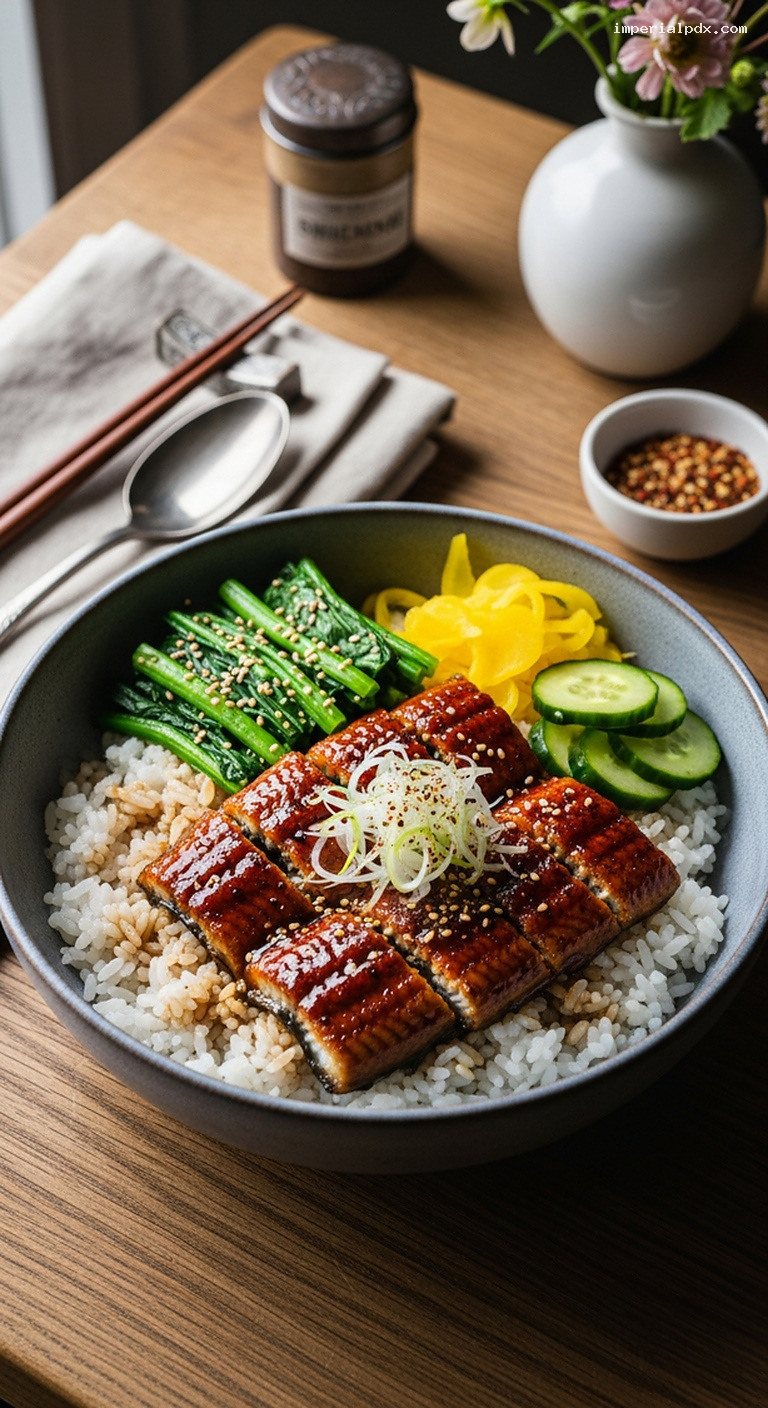
- 6. Spoon rice into bowls, top with sliced glazed eel, drizzle with extra sauce, and garnish with scallions, pickles, steamed greens, and sansho or shichimi if using.
Why You’ll Love This Recipe
- Classic Japanese unagi kabayaki flavor at home: sweet, savory, and deeply aromatic.
- Restaurant-style presentation with simple techniques and supermarket-friendly ingredients.
- Balanced meal in one bowl: tender eel, fluffy rice, crunchy pickles, and bright greens.
- Flexible method: works with a grill, oven broiler, or grill pan, plus options for pre-cooked eel.
Grocery List
- Produce: Asian greens (spinach, bok choy, or similar), scallions, fresh ginger (optional but recommended), garlic (optional), Japanese pickles (takuan, cucumber, or mixed pickles)
- Dairy: None required
- Pantry: Eel fillets (fresh, frozen, or pre-grilled vacuum-packed), Japanese short-grain rice, soy sauce, mirin, sake, sugar, neutral oil (e.g., canola), toasted sesame oil, toasted sesame seeds, rice vinegar (optional), sansho pepper or shichimi togarashi (optional), dashi stock or dashi powder (optional)
Full Ingredients
Eel and Kabayaki Sauce
- 500 g eel fillets, butterflied (about 2–3 fillets; fresh or thawed if frozen)
- 1–2 tbsp neutral oil (for grilling or broiling pan)
- 120 ml (1/2 cup) soy sauce
- 80 ml (1/3 cup) mirin
- 60 ml (1/4 cup) sake
- 3 tbsp granulated sugar (adjust to taste)
- 2 tbsp water or dashi stock (optional, for a slightly lighter sauce)
- 1 small slice fresh ginger (about 5 g), lightly crushed (optional, for aroma)
Rice
- 2 cups (400 g) Japanese short-grain rice
- Water, as needed for your rice cooker or stovetop method (about 2–2 1/4 cups / 480–540 ml)
- 1 tbsp rice vinegar (optional, for a subtle brightness)
- 1/2 tsp fine salt (or to taste)
Steamed Greens
- 150 g Asian greens (baby spinach, komatsuna, or bok choy)
- 1 tsp toasted sesame oil
- 1 tsp soy sauce
- 1 tsp toasted sesame seeds
For Serving
- 1/2 cup Japanese pickles (takuan, pickled cucumber, or mixed tsukemono)
- 2 scallions, finely sliced on the diagonal
- Extra kabayaki sauce (from above)
- Sansho pepper or shichimi togarashi, to taste (optional, for a gentle spice)
Step-by-Step Instructions
Step 1: Rinse and Cook the Rice
Place the rice in a bowl, cover with plenty of cold water, and gently swish with your fingers. Drain the water, then repeat this rinsing process 4–5 times, until the water runs mostly clear. This removes excess starch and helps the grains stay fluffy.
Drain the rice well, then transfer it to a rice cooker or a medium saucepan. Add the amount of water recommended by your rice cooker (usually about the same volume as the rice, or slightly more). If cooking on the stovetop, add about 2–2 1/4 cups (480–540 ml) water.
Cook according to your rice cooker’s instructions or, on the stovetop, bring to a boil over medium heat, then reduce to low, cover tightly, and simmer for 12–15 minutes. Turn off the heat and let the rice steam, covered, for another 10 minutes. Fluff with a rice paddle, then season with rice vinegar and salt if using. Keep warm.
Step 2: Make the Kabayaki Sauce
While the rice cooks, combine the soy sauce, mirin, sake, sugar, and water or dashi (if using) in a small saucepan. Add the ginger slice if using.
Bring to a gentle boil over medium heat, stirring to dissolve the sugar. Once it reaches a steady simmer, reduce the heat to low and cook for 8–10 minutes, stirring occasionally, until the sauce is slightly thickened and glossy. It should lightly coat the back of a spoon; it will thicken more as it cools.
Remove the ginger slice. Set aside about half of the sauce for brushing on the eel and reserve the rest for drizzling over the finished bowls. Keep warm on the lowest heat or cover and rewarm just before serving.
Step 3: Prep the Eel Fillets
If using fresh or thawed eel fillets, pat them very dry on both sides with paper towels. This helps them grill better and accept the glaze. If your fillets are long, you can cut them into shorter pieces (about 10–12 cm each) so they are easier to handle and serve.
With a sharp knife, lightly score the skin side of each fillet in a crosshatch pattern, making very shallow cuts about 1–1.5 cm apart. Do not cut all the way through. This helps render some fat and prevents the skin from curling too much as it cooks.
Place the fillets on a tray, skin side down, and brush both sides with a thin layer of kabayaki sauce. Let them sit at room temperature for 5–10 minutes while you heat your grill or broiler.
Step 4: Grill and Glaze the Eel
Preheat your grill or oven broiler to medium-high (about 220–230°C / 425–450°F). If using an outdoor grill or grill pan, lightly oil the grates. If broiling, line a baking tray with foil and lightly oil it to prevent sticking.
Arrange the eel fillets skin-side down. Grill or broil for 3–4 minutes, until the skin begins to bubble and brown slightly. Carefully flip the fillets and brush the top with more sauce. Continue cooking another 3–4 minutes.
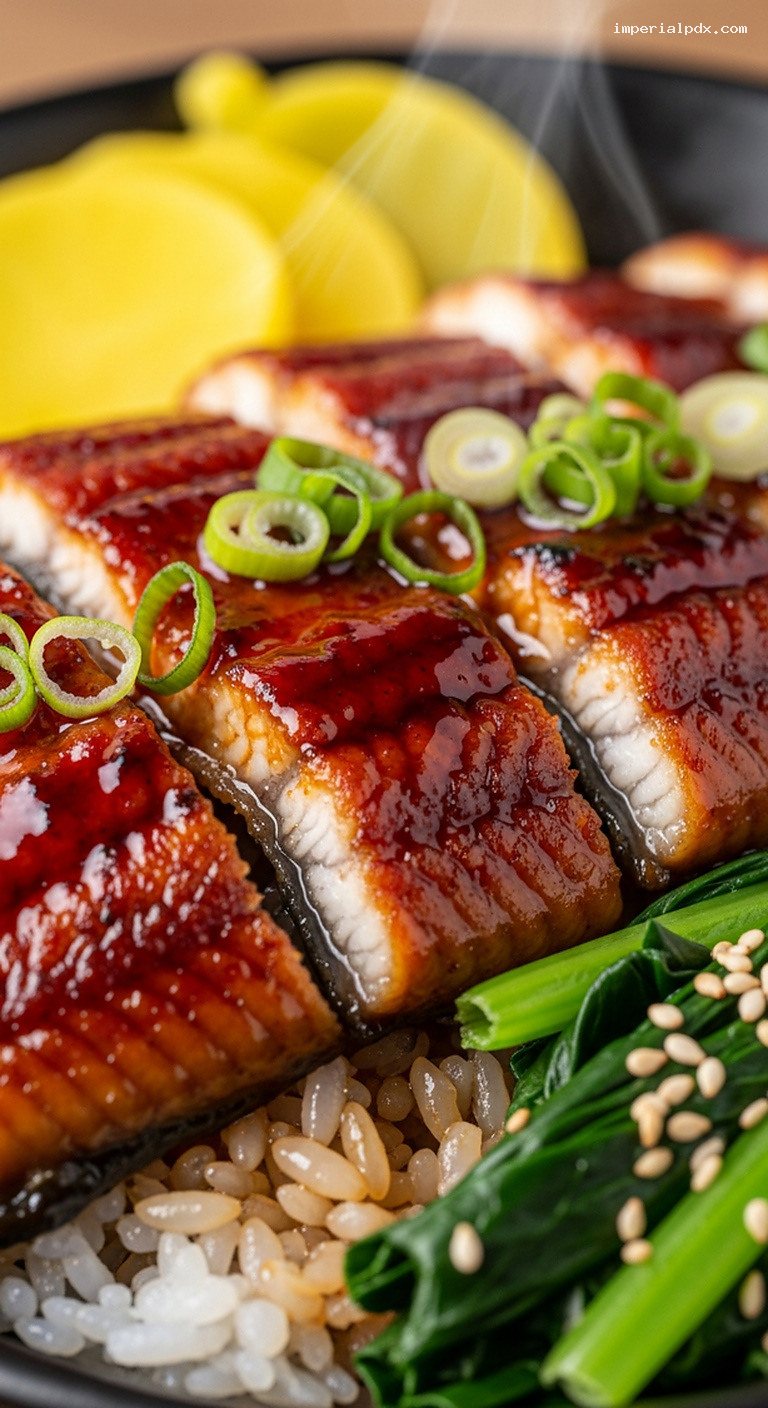
Flip once more, brushing generously with sauce each time you turn, until the eel is cooked through, tender, and deeply lacquered with a glossy, dark amber glaze. Total cooking time will be about 8–10 minutes, depending on the thickness of the fillets. If the edges start to char too quickly, move the fillets to a cooler part of the grill or lower the oven rack.
Remove from the heat and let the eel rest for 2–3 minutes. Then cut into bite-sized strips (about 2–3 cm wide), keeping the pieces in order so you can reassemble them attractively on the rice.
Step 5: Steam the Greens
While the eel rests, quickly cook the greens. Rinse them well and trim any tough stems. For bok choy, separate the stems and leaves so they cook evenly.
Bring a small pot of water to a boil and add a pinch of salt. Blanch the greens for 30–60 seconds, just until bright green and tender-crisp. Immediately drain and rinse under cold water to stop the cooking and preserve the color. Gently squeeze out excess water.
In a small bowl, toss the greens with sesame oil, soy sauce, and sesame seeds. Taste and adjust seasoning if needed. Set aside.
Step 6: Assemble the Unagi Kabayaki Rice Bowls
Divide the hot rice among 3 deep bowls, mounding it slightly in the center. Spoon a little of the reserved warm kabayaki sauce (about 1–2 tablespoons per bowl) over the rice.
Carefully arrange the sliced eel over the top of each rice mound, re-forming the fillets so they look whole and neat. Brush or drizzle a bit more sauce over the eel so it glistens.
Add a small bundle of seasoned greens and a few pieces of Japanese pickles to each bowl. Scatter sliced scallions over the eel. If desired, lightly dust with sansho pepper or shichimi togarashi for a gentle tingle and extra aroma.
Serve immediately while the eel is hot and the rice is steaming, with any remaining sauce on the side for extra drizzling.
Pro Tips
- Do not over-reduce the sauce: It should be syrupy, not sticky. If it becomes too thick, stir in 1–2 teaspoons of water and gently reheat.
- Control the heat on the eel: Kabayaki sauce contains sugar, so it can burn easily. Keep the heat at medium-high and adjust distance from the broiler or coals if the edges darken too fast.
- Use pre-cooked eel for speed: If you buy vacuum-packed, grilled unagi, simply heat it under the broiler while brushing with your homemade sauce for 3–5 minutes until bubbling and glossy.
- Warm bowls = better texture: If possible, warm the serving bowls briefly (in a low oven or by rinsing with very hot water and drying) so the rice and eel stay hot longer.
- Slice just before serving: Rest the eel a few minutes, then slice right before assembly so the juices stay in the fish and the glaze remains shiny.
Variations
- Salmon or mackerel kabayaki: Use skin-on salmon fillets or mackerel instead of eel. Cook times may be slightly shorter; aim for just-cooked, flaky fish with a similar glaze.
- Donburi with extra veggies: Add blanched snap peas, edamame, or lightly sautéed mushrooms around the rice for a more vegetable-heavy bowl.
- Spicy kabayaki: Stir a little chili paste or shichimi togarashi into the sauce at the end for a gentle heat that complements the sweetness.
Storage & Make-Ahead
The kabayaki sauce can be made up to 5 days in advance. Store it in an airtight container in the refrigerator and rewarm gently before using. Cooked eel keeps best when stored separately from the rice: let it cool, then refrigerate in an airtight container for up to 2 days. Reheat under a hot broiler or in a toaster oven, brushing with a little extra sauce to restore shine.
Cooked rice is best fresh, but leftovers can be refrigerated in an airtight container for 1–2 days. Sprinkle with a little water and reheat covered in the microwave. Greens and pickles are best prepared the day of serving, but blanched greens will keep for about 1 day in the fridge.
For freezing, you can freeze the cooked eel (without the greens or rice) for up to 1 month, tightly wrapped. Thaw overnight in the refrigerator, then reheat and glaze again before serving.
Nutrition (per serving)
Approximate values per bowl (1/3 of recipe): about 650–750 calories; 32–38 g protein; 18–24 g fat; 80–95 g carbohydrates; 1–3 g fiber; 1,800–2,300 mg sodium (will vary depending on the brand of soy sauce and exact amount of sauce used). These numbers are estimates and will change if you substitute ingredients or adjust portion sizes.